





09
Jun
Literature Review Underscores Cognitive Impacts from Pesticide Exposure in Agricultural Workers
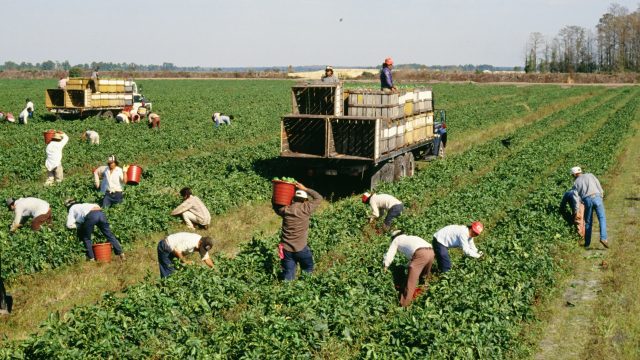
(Beyond Pesticides, June 9, 2026) In a new literature review published in Florence Nightingale Journal of Nursing, researchers identify 10 peer-reviewed studies with a statistically significant relationship between pesticide exposure and declines in cognitive function among agricultural workers. The cognitive deficits adversely impact their daily functioning and safety on the job. These adverse impacts include disruptions to visual memory, attention, language speaking, and perceptual-motor function. Two of these studies specifically compare chemical-intensive and organic farmers, finding a relationship between less synthetic pesticide exposure and improved neurological and cognitive outcomes.
While more data is needed to produce precise dose-response estimates by active ingredient/chemical mixture, the findings support a precautionary approach to pest management decisions and transitioning to organic land management, a trend that is increasing across the U.S. and worldwide.
Main Findings
The researchers identify 12 studies published between 2016 and 2023 that assessed pesticide impacts—“including insecticides, fungicides, herbicides, bactericides, rodenticides, and nematodes”—on various areas of cognitive function in agricultural workers, with 10 of those studies showing a statistically significant relationship. The main findings include:
- Two studies compare organic and chemical-intensive farmers, with one study focused on Costa Rica (Mora et al., 2022) and the other focused on the United States (Khan et al., 2018). Both studies identify that conventional farmers face more significant cognitive and neurological declines relative to organic farmers; however, researchers point out that more robust research is necessary, given that the population sizes were small and there were significant age gaps between groups. The U.S.-based study tested 357 farmers (200 conventional and 157 organic) using a cross-sectional methodology.
- A slew of neurobehavioral symptoms, including headaches, short-term memory loss, concentration difficulties, fatigue, and palpitations are linked to pesticide exposure. Pesticide spraying frequency, use of personal protective equipment, and smoking habits did have a statistically significant correlation to neurobehavioral performance. This study focused on farmers in Nepal with age groups ranging from 18-57 years, mixed nutritional status, among other factors. (Tiwari et al., 2022)
- In gathering urine samples of 48 agricultural workers (organic and conventional farmers in Costa Rica), researchers determined that “working memory in the prefrontal cortex was compromised by excessive pesticide exposure” for the conventional farmers. (Mora et al., 2022)
- Long-term exposure (greater than 10 years) was associated with 2.6-times higher risk of neurocognitive disorders compared to short-term exposures. This study was conducted in Indonesia with 66 participants ranging from 40 to 60 years-old who were exposed to insecticides for a minimum of two years. (Laksmidewi et al., 2020)
- Organophosphate pesticides are particularly associated with memory impairment and detrimental impacts on attention. Researchers associate this relationship with a decrease in acetylcholinesterase (AChE), the enzyme critical to the transmission of nerve impulses. Researchers tested 95 seasonal cotton workers in Egypt between the ages of 12 to 21 years-old based on exposure to insecticides, herbicides, and rodenticides. (Rohlman et al., 2016)
“In order to detect early signs and inform agricultural workers about the cognitive effects of pesticide exposure, occupational health nurses should do routine health examinations,” according to the authors in their recommendations section of the review. They continue: “Planning training courses on exposure reduction, the use of personal protective equipment, and appropriate pesticide usage (personal and environmental precautions) is also essential.” More broadly, public health and environmental advocates argue that the transition to organic land management is critical and that occupational health nurses are uniquely positioned to serve in this advocacy role, given their expertise on the known (and unknown/suspected) harms of chemical exposure.
Previous Coverage
The disproportionate risks of pesticide exposure to farmer and farmworker communities continue to drive calls for holistic reforms and a transition to less toxic- and organic systems, as borne out in various investigative research and studies.
In a study on early life exposure to a pesticide mixture, researchers analyze sex differences in cardiometabolic outcomes from prenatal and early life. The study was conducted by an international team of scientists led by Ana M. Mora, M.D., of the Center for Environmental Research and Community Health at the University of California, Berkeley, using data from the Center for the Health Assessment of Mothers and Children of Salinas (CHAMACOS) cohort—a long-term project covering more than 20 years and 300,000 biological samples of Latino mothers and children in an agricultural community. (See Daily News here.) CHAMACOS has served as a model institution for compiling pesticide exposure data in Monterrey County, California for decades. See Daily News here and here for additional examples.
Pesticide exposure in agricultural communities is also a crisis of women’s health in the United States. In a study of birth outcomes in Arizona, published in the Journal of Exposure Science & Environmental Epidemiology, researchers find that preconception and prenatal exposure to certain carbamates, organophosphates, and pyrethroids increases the risk of lower Apgar scores, a metric used to assess neonatal health at one minute and five minutes after birth. The results reveal that exposure to “several pesticide active ingredients at any point during preconception and/or pregnancy were associated with increased odds of low Apgar scores: the carbamates carbaryl and formetanate hydrochloride; the organophosphates diazinon and tribufos; and the pyrethroid cypermethrin.” This multi-institutional study, led by the University of Arizona with researchers from Harvard Chan School of Public Health and UCLA Fielding School of Public Health, provides novel insights, as it incorporates pesticide exposure over a 15-year period both before conception and throughout pregnancy. (See Daily News here.)
Similar, startling results have also been recorded in California communities. A California-based population study published in BMC Public Health finds that “7.5 [percent] of all pregnant people in California who gave birth in 2021 lived within 1 km [kilometer] of agricultural fields where OP pesticides [organophosphates] had been used during their pregnancy. . .” Despite a 54 percent decrease in overall use of the neurotoxic insecticide chlorpyrifos in the state between 2016 and 2021, after a statewide ban on the organophosphate insecticide in 2016, researchers found that in one California county, “more than 50 [percent] of pregnant people lived within 1 km of OP pesticide use.”
Significant disparities in exposure to pesticides are found, “with Hispanic/Latine, young people, and residents of the predominantly fruit and vegetable growing Central Coast region being most likely to live near OP pesticide applications during pregnancy.” The authors suggest that “regulatory changes to limit use or restrict applications in close proximity to residential areas could have a substantial public health benefit on children’s brain development.” (See Daily News here.)
DNA damage is significantly higher in Latinx children from rural, farmworker families than children in urban, non-farmworker families, according to a recent study published by French and American authors in the journal Exposure and Health. The study assesses pesticide exposure and DNA damage in 45 Latinx children ages 10 to 12 from rural, farmworker families (30) and urban, non-farmworker families (15). Participants were selected from a larger study, Preventing Agricultural Chemical Exposure (PACE5)—a community-based research project by the North Carolina Farmworkers Project and Wake Forest University School of Medicine that examines the health and cognitive effects of pesticide exposure in children. (See Daily News here.)
Internationally, farmworkers also face adverse health effects due to pesticide exposure. A 2025 study, published in Environmental Toxicology and Pharmacology, “investigates genotoxic effects on farmers in Paraíba, Brazil, analyzing buccal mucosa cells [cells from inside the cheek] for DNA and cellular damage,” the authors write. In comparing data from 33 pesticide-exposed agricultural workers to 29 unexposed people in a control group, the researchers report that the “findings revealed significantly higher frequencies of cellular alterations and DNA damage among exposed farmers relative to the control group, with no significant impact from factors such as smoking, alcohol consumption, or family cancer history.” (See Daily News here.) In a separate literature review, researchers identify 29 peer-reviewed scientific studies with statistically significant findings that tie pesticide use to cancer diagnoses based on data from clinical trials, as well as epidemiologic, case-control, and experimental studies. Population groups in this study are represented by impact participants in the United States, Brazil, India, France, Egypt, Columbia, Ecuador, Mexico, Italy, and Spain. (See Daily News here.)
In a recently published comparative analysis published in The Lancet Planetary Health, researchers highlight the pervasiveness of pesticide pollution in organic and nonorganic farms in Latin America (Costa Rica) and Africa (Uganda). While pesticides were detected in nearly all participating farmers, there is a significant relationship between lower biomarker concentrations (often correlating with less contamination) in urine samples of organic farmers relative to non-organic farmers. The researchers also identify older farmers as having higher herbicide and insecticide concentrations. (See Daily News here.)
Call to Action
One of the best ways to reduce pesticide dependency is to use the power of your dollar! See Eating With a Conscience to identify over 90 different common fruits, vegetables, and other wholefood products that are best to purchase organic.
You can all subscribe to receive the Action of the Week and Weekly News Update in your inbox so that you can take strategic actions calling for change from the local to international. For example, you can tell Congress, FDA, and EPA that it is past time to stop the manufacture and use of all organophosphate pesticides, which damage the nervous system and brain at low levels.
All unattributed positions and opinions in this piece are those of Beyond Pesticides.




