A growing body of evidence in scientific literature shows that pesticide exposure can adversely affect neurological, respiratory, immune, and endocrine systems in humans, even at low levels. Children are especially sensitive to pesticide exposure because they (1) take up more pesticides (relative to their body weight) than do adults, and (2) have developing organ systems that are more vulnerable to pesticide impacts and less able to detoxify harmful chemicals. Fortunately, there are proven safe, effective, and affordable ways to maintain attractive lawns and playing fields without the use of toxic pesticides. Use the resources below, information on Hazards and Alternatives, and our Tools for Change page to help get the pesticides out of your community — whether it's at the municipal, park, school, or backyard level.
In Your Backyard
Display a honey bee or ladybug yard sign. Show your neighbors that pesticide-free lawns are important for the health of your family, the environment, and the community. These painted metal signs (8" diameter) will not rust and will retain their bright colors for years. The sign comes with valuable information on organic lawn and garden management, pollinators, and how to talk to your neighbors about pesticides. You can get a head start by reading the Pesticide-Free Zone Sign Owner's Manual. Signs are available for $14 each (discount available for a purchase of 10 or more) at our online store.
Go Organic! Create your own pesticide-free space in your backyard. See, in addition to the Owner's Manual linked above, Beyond Pesticides' factsheets for information on how to manage a weed-free yard and lawn: Read Your "Weeds": A Simple Guide to Creating a Healthy Lawn. Fall is the best time to intervene and make your yard free of toxic chemicals. Read our fall lawncare fact sheet, Organic Lawn Care 101, for specific information on how to prime your yard for next year!
In Your Community 40 Common Lawn Pesticides (Factsheets and Door Hangers), Pesticide Policies & Training
NEW: Parks for a Sustainable Future. Our Parks for a Sustainable Future program provides in-depth training to assist community land managers in transitioning two public green spaces to organic landscape management while aiming to provide the knowledge and skills necessary to eventually transition all public areas in a locality to these safer practices.
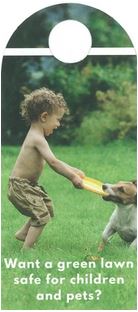
Educate. It's critically important to make people aware of both the hazards associated with cosmetic lawn care pesticides and the availability of alternative practices and products. Of the 40 most commonly used lawn pesticides, 26 are possible and/or known carcinogens, 24 have the potential to disrupt the endocrine (hormonal) system, 29 are linked to reproductive effects and sexual dysfunction, 21 have been linked to birth defects, 24 are neurotoxic, 32 can cause kidney or liver damage, and 33 are sensitizers and/or irritants. Of those same 40 lawn pesticides, 21 are detected in groundwater, 24 have the ability to leach into drinking water sources, 39 are toxic to fish and other aquatic organisms vital to our ecosystem, 33 are toxic to bees, 18 are toxic to mammals, and 28 are toxic to birds. Check out the Beyond Pesticides' Infographic! Our Safe Lawn Doorknob Hanger is a tool to help spread the word about the dangers of lawn pesticides and the ever-increasing availability of alternatives. It's an easy, non-confrontational way to engage neighbors that may be using pesticides. You can request a free pack of 25 doorknob hangers by sending an email with your name and address to [email protected]. You can order larger quantities from our online store.
Enact a Policy. Many communities across the country have taken a stand against the use of toxic pesticides on their lawns and landscapes. In 2013, Takoma Park, Maryland became the first city to ban pesticides on both private and public property. In June 2014, Ogunquit, Maine decided to be the second. Beyond Pesticides worked with community members in Takoma Park to help pass the Safe Grow Act, and created educational materials to support the city's implementation of the ordinance. You can see Beyond Pesticides' Model Ordinance and Implementation Plan here. For a list of additional cities and communities that have enacted pesticide-free policies or have pesticide-free spaces, see Beyond Pesticides' Tools for Change page. As these localities show, there is growing community demand for local pesticide regulations that prevent the pollution of local waters and stop putting residents at risk of pesticide-induced diseases.
We want to work with your community! For assistance in proposing a policy in your community, contact Beyond Pesticides at [email protected] or 1.202.543.5450.
One town in Florida decided to get serious about pesticides! With the help of Beyond Pesticides, several Palm Beach volunteer advocates produced this short video called “Where Have All The Songbirds Gone.”
Organic Land Management: Practical Tools and Techniques
2014 National Pesticide Forum
With a "how-to" focus, this workshop provides people with practical advice on adopting organic practices at home, and for local park and playing field management. This presentation was given at "Advancing Sustainable Communities: People, Pollinators and Practices," Beyond Pesticides' 32nd National Pesticide Forum, April 11–12, 2014 in Portland, Oregon.
Healthy Lawns, Clean Water Forum
Below, you can find clips from the Healthy Lawns, Clean Water Forum, which took place in Exeter, New Hampshire on May 4, 2016. The forum addressed questions such as: Are fertilizers, pesticides, insecticides, herbicides, and neonicotinoids good for you, your food, or clean water? Featured speakers included Jay Feldman, executive director of Beyond Pesticides, Chip Osborne, a nationally renowned organic turfgrass expert, and John Bochert of Eldredge Lumber and Hardware in Maine.
Jay Feldman, executive director of Beyond Pesticides
Chip Osborne, Osborne Organics
John Bochert, Eldredge Lumber and Hardware
You can view the full Healthy Lawns, Clean Water Forum video here.





 or the health of your family, the environment, and the community. These painted metal signs (8" diameter) will not rust and will retain their bright colors for years. The sign comes with valuable information on organic lawn and garden management, pollinators, and how to talk to your neighbors about pesticides. You can get a head start by reading the Pesticide-Free Zone Sign Owner's Manual. Signs are available for $14 each (discount available for a purchase of 10 or more) at our online store.
.png)