.png)
Children and Schools
.png)
Children's Health and Pesticides
Children face unique hazards from pesticide exposure. In the food they eat and the air they breathe, children take in greater amounts of pesticides (relative to their body weight) than adults, and their developing organ systems are typically more sensitive to toxic exposures. Children also come into closer contact with chemicals than adults, as a result of crawling behavior and hand to mouth contact.
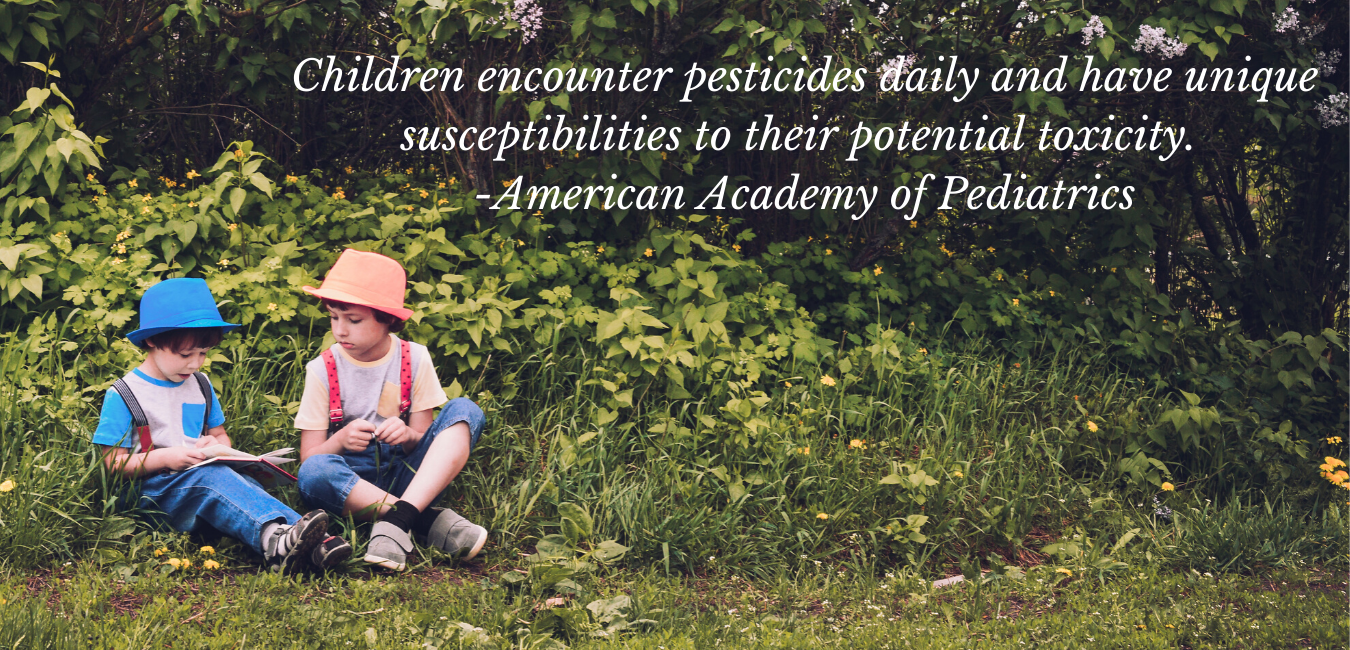
The American Academy of Pediatrics, in a landmark report on children and pesticide use, wrote, “Children encounter pesticides daily and have unique susceptibilities to their potential toxicity. Acute poisoning risks are clear, and understanding of chronic health implications from both acute and chronic exposure are emerging. Epidemiologic evidence demonstrates associations between early life exposure to pesticides and pediatric cancers, decreased cognitive function, and behavioral problems.”
The body of evidence in the scientific literature shows that pesticide exposure can adversely affect a child's neurological, respiratory, immune, and endocrine system, even at low exposure levels. Several pesticide families, such as synthetic pyrethroids, organophosphates, and carbamates, are also known to cause or exacerbate respiratory symptoms like asthma. See the scientific references on why Children and Pesticides Don’t Mix.

Healthy Schools
Beyond Pesticides promotes healthy learning environments for schoolchildren throughout the United States. To realize this goal, the organization encourages the implementation of school pest management policies and programs at the local, state, and federal levels. We educate the public on pesticide hazards and efficacy of alternatives, and develop model school district and community policies and programs that serve as positive examples.
As the science on the dangers that pesticides pose to public health continue to mount, school administrators, staff, and parents are working to change practices for the better. More and more school buildings and grounds are employing ecological pest management principles that focus on prevention, rather than the regular use of toxic pesticides.
Custodial staff and pest managers can ManageSafe by following simple steps. These include properly identifying pests, setting action or damage thresholds, monitoring and recordkeeping, and the use of structural, mechanical, cultural, and biological controls before using even least-toxic pesticides or organic compatible products. These principles can be applied to both indoor and outdoor environments, with ecological and organic methods.
In the indoor environment, an ecological pest management approach focuses on fostering a culture of pest prevention among both students and staff. It’s nothing special – just emphasize building good habits, such as cleaning up after eating, storing food in sealed containers, not leaving food or water out, and other methods that eliminate a pest’s access to food, water, or shelter.
In the outdoor environment, the organic principles apply with a focus is fostering healthy soils. School groundskeepers and landscapers play a pivotal role in this process. Rather than reaching for a chemical when a weed appears, the organic approach cultivates healthy soil biology through practices that work with, rather than against nature. We can help improve turfgrass resilience to pest and weed intrusions by caring for building the soil biological life and organic matter. Combine the use of natural soil supplements with cultural practices like mowing high, aeration, and overseeding. All of this leads to long-term cost savings from eliminating pesticides and fertilizers that are replaced by natural cycling of nutrients, and need less watering because of increased soil tilth and water retention. In sum, these practices will save schools money and prevent children’s exposure to toxic pesticides while they focus on learning.
For more information, see the latest news on children's health and pesticide use in schools, information on "critical windows of vulnerability" during childhood, current state/local policies, model laws and policies to pass in your community, and information on alternatives to pesticides, including ecological pest management.