





11
Dec
Trump Administration to U.S. Supreme Court: Pesticide Companies Cannot Be Sued for Failing to Disclose Hazards
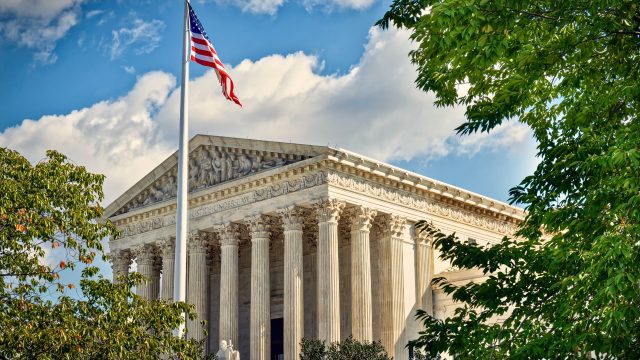
(Beyond Pesticides, December 11, 2025) In an amicus brief published on December 1, 2025, the Office of the Solicitor General (SG) and the White House are calling on the Supreme Court of the United States (SCOTUS) to grant certiorari on Bayer’s petition to shield chemical companies that fail to warn people about the potential hazards of their pesticide products. The U.S. Solicitor General D. John Sauer (former Solicitor General of Missouri, home to Bayer-Monsanto’s U.S. headquarters), in siding with the Germany-based, multinational pesticide corporation, calls for SCOTUS to take on the case, which could lead to a prohibition on state-level failure-to-warn claims based on the arguments laid out in the amicus brief.
This move sets the stage for SCOTUS to undermine the main legal argument used to hold pesticide corporations accountable for their harmful products, sending Bayer’s stock price to skyrocket 12 percentage points between December 2 and December 3 after the decision was made public. As of May 2025, Bayer has already paid at least 10 billion dollars in jury verdicts and settlements to cancer victims who have attributed their diagnoses to the use of Bayer/Monsanto’s glyphosate-based Roundup weed killer products, according to Lawsuit Information Center. Two previous petitions for review have failed to be heard by the court. (See Daily News here and here.)
The petition was filed by Monsanto (now owned by Bayer), which, aligned with the Modern Ag Alliance (a chemical industry-agribusiness group) and its political allies, has to date been mostly unsuccessful in passing state-level failure-to-warn shield laws in 10 of the 12 states where legislation was introduced in 2025. (See here and here for previous Daily News coverage.) While continuing to pursue a state strategy, the industry is applying its same game plan at the federal level, supporting legislation that would shield chemical manufacturers from failure-to-warn litigation by those who have been harmed. A provision, Section 453, has been attached to Interior-Environment Appropriations legislation (H.R. 4754) passed by the Appropriations Committee of the U.S. House of Representatives in July. It is expected that there will be an attempt to attach more comprehensive language preventing litigation in authorizing legislation, such as the Farm Bill, in early 2026.
A grassroots movement of public health and environmental advocates, farmers, farmworkers, medical professionals, businesses, and other partners is calling on Congress to protect the right to hold pesticide corporations accountable for not disclosing on their product labels warnings of chronic effects, like cancer. (See joint statement, Daily News, press release, and list of endorsing organizations for further details.)
History of Glyphosate Registration and EPA Inaction
The U.S. Environmental Protection Agency (EPA) classifies glyphosate as “not likely to be carcinogenic to humans” and continuously approves glyphosate-based Roundup product labels without cancer warnings. According to EPA, “In 1985, the initial peer review of glyphosate was conducted in accordance with the Proposed Guidelines for Carcinogen Risk Assessment. The agency classified glyphosate as a Group C chemical (Possible Human Carcinogen), based on the presence of kidney tumors in male mice.” This position was reversed based on a finding that the tumors were not statistically significant. After the International Agency for Research on Cancer (IARC) determined that glyphosate is “probably carcinogenic to humans” (Group 2A) in 2015 (see Daily News here), EPA reaffirmed its position that the weed killer not carcinogenic and in 2019 refused to approve a cancer label warning under California’s Proposition 65. (See Daily News here.)
In January of 2020, EPA released an interim decision on glyphosate, asserting a “lack of evidence the chemical causes cancer in humans.” Perhaps anticipating the potential impacts of the maxim, “as goes California, so goes the nation,” former EPA Administrator Andrew Wheeler, in the first Trump administration, commented, “It is irresponsible to require labels on products that are inaccurate when EPA knows the product does not pose a cancer risk. We will not allow California’s flawed program to dictate federal policy.” EPA’s stance on glyphosate is currently informed by the pro-business, anti-environment, public health–indifferent Trump administration.
In late September 2022, EPA announced the withdrawal of its 2020 Interim Decision on glyphosate (see EPA) after a court decision successfully challenged the agency’s findings on cancer and endangered species (see decision). The withdrawal of that Interim Decision was sparked by a U.S. Court of Appeals decision in the 9th Circuit, which allowed EPA until 2026 to revisit its registration review. Beyond Pesticides has long been engaged in education on and advocacy against glyphosate use, and was a plaintiff in the 2020 lawsuit (see Rural Coalition v. EPA filing) against EPA, represented by the Center for Food Safety (CFS).
EPA is anticipating a final registration review decision for glyphosate in 2026; however, it remains to be seen (and highly unlikely) whether regulators will account for the preponderance of evidence in the peer-reviewed independent literature on glyphosate, as they are not required to under current law. (See here for Beyond Pesticides Gateway on Pesticide Hazards and Safe Pest Management entry for glyphosate for reference.)
Solicitor General’s Amicus Brief
Should the Supreme Court take the case, the core question will be whether the Federal Insecticide, Fungicide, and Rodenticide Act (FIFRA) shields manufacturers (registrants) from state-level failure-to-warn claims because labels do not include chronic effects, like cancer.
The U.S. government argues that certiorari should be granted on three grounds:
- The Missouri Court of Appeals was incorrect in their decision in Durnell v. Monsanto (2023) because they argue that there is a prohibition on unilateral label changes for federal labeling requirements; therefore, state tort duties requiring additional warnings are expressly preempted. (More on this below.)
- There are now opposing decisions in the Third Circuit and the Ninth and Eleventh Circuits. The Third Circuit Court of Appeals ruled that state level failure-to-warn claims are expressly preempted by FIFRA.
- FIFRA §136v(b) on “Uniformity” prohibits states from requiring pesticide manufacturers from having to contend with 50 different labeling requirements.
The Solicitor General’s position in the Trump administration is a reversal from the Biden Administration’s position after Bayer’s 2022 petition for writ of certiorari. (See Daily News here for context.)
On the first point, Durnell claimed that Roundup caused his non-Hodgkin lymphoma and that Monsanto failed to provide an adequate cancer warning label under Missouri state tort law. In turn, a Missouri jury awarded $1.25 million, and the Missouri Court of Appeals held that FIFRA did not preempt the state failure-to-warn claim. Bayer appears to be attempting to reverse the current law, as clarified by SCOTUS in the previous court decision, specifically Bates v. Dow (2005). The court ruled the following:
“The long history of tort litigation against manufacturers of poisonous substances adds force to the basic presumption against preemption. If Congress had intended to deprive injured parties of a long available form of compensation, it surely would have expressed that intent more clearly. See Silkwood v. Kerr-McGee Corp., 464 U. S. 238, 251 (1984). Moreover, this history emphasizes the importance of providing an incentive to manufacturers to use the utmost care in the business of distributing inherently dangerous items.”
In pointing to the Bates case, the SG cites its focus as being crop damage, not human health risks. EPA waived an efficacy review, therefore not evaluating whether the label’s claim was accurate; by contrast, the SG alleges that EPA did fully consider human health risks and continued to conclude a cancer warning was not necessary.
The SG dismisses the relevance of the Bates decision, citing the fact that the case is about crop damage and does not address questions of adequate disclosure of adverse health effects on the product label. However, the question in the litigation underlying the jury verdicts against Bayer (Monsanto) focuses on whether EPA registration of the product, in alignment with the Bates decision, adequately informs product users of potential harm, regardless of whether that harm is to property or person. The question ultimately is whether the manufacturer is liable for harm even though it has registered its product with EPA.
However, the SG is contradicting this Supreme Court finding with the following:
“By imposing liability for petitioner’s failure to include such a warning, the state-court judgment subjected petitioner to a “requirement[] for labeling” that is “in addition to or different from those required under” FIFRA 7 U.S.C. 136v(b).”
The Bates decision was clear in the court’s intent to allow state strict liability law to be a parallel remedy to FIFRA regulation:
Private remedies that enforce federal misbranding requirements would seem to aid, rather than hinder, the functioning of FIFRA. Unlike the cigarette labeling law at issue in Cipollone, which prescribed certain immutable warning statements, FIFRA contemplates that pesticide labels will evolve over time, as manufacturers gain more information about their products’ performance in diverse settings. As one court explained, tort suits can serve as a catalyst in this process: “By encouraging plaintiffs to bring suit for injuries not previously recognized as traceable to pesticides such as [the pesticide there at issue], a state tort action of the kind under review may aid in the exposure of new dangers associated with pesticides. Successful actions of this sort may lead manufacturers to petition EPA to allow more detailed labeling of their products; alternatively, EPA itself may decide that revised labels are required in light of the new information that has been brought to its attention through common law suits. In addition, the specter of damage actions may provide manufacturers with added dynamic incentives to continue to keep abreast of all possible injuries stemming from use of their product so as to forestall such actions through product improvement.” Ferebee, 736
FIFRA §2 (7 U.S.C. § 136(q)) establishes that pesticide labels must not be false, misleading or lack adequate warnings (misbranded), meanwhile FIFRA §3 (7 U.S.C. § 136a) requires that pesticides must be registered with EPA and have an approved label before sale – the bottom line being that pesticide companies have a duty to update their labels, even if EPA does not request those label changes based on the most recent scientific evidence or if previous evidence was found to be false or fabricated.
Ironically, Bayer is being defended by the SG just as Bayer-Monsanto is in the news because a scientific journal article on glyphosate published in 2000 has been retracted by the publisher. The authors are alleged to have falsely submitted a piece ghostwritten by Monsanto without proper disclosure. (See recent U.S. Right to Know reporting for more details.)
Additionally, the SG is arguing that EPA is the final word on the labeling of glyphosate without a cancer warning, despite a finding by the 9th Circuit U.S. District Court (cited above) that found EPA’s regulatory review of glyphosate is inadequate and in violation of the law. With this finding, the SG is pointing to a pesticide label that is now under the agency’s registration review and expected to be completed in 2026. A final completed review of glyphosate by EPA, however, does not negate the finding in Bates that upholds the right of those harmed by pesticides to sue manufacturers, despite having an EPA-approved pesticide label.
Congress and State Battles
An industry-led campaign in 2025 to quash lawsuits against chemical manufacturers because of their “failure to warn” about the hazards of their pesticide products has failed to move forward in ten state legislatures with significant GOP majorities as of today’s publication (Iowa, Missouri, Idaho, Florida, Tennessee, Mississippi, Wyoming, Montana, North Carolina, and Oklahoma).
There are already bills filed in Missouri (SB 1005) and Florida (HB 443 and S 518) for the 2026 state legislative sessions, signaling that this battle is likely to continue (and expand) moving into the next calendar year.
After this failed effort at the state level, the momentum then shifted to Congress with Fiscal Year 2026 negotiations for the Interior-Environment Appropriations bill. While the House Committee-passed bill (H.R. 4754) did include failure-to-warn preemption language in the form of Section 453, the Senate version (S.2431) did not—setting up a fight as negotiations and voting around the next minibus (groups of fiscal year spending bills) continue. (See Daily News here, here, and here for additional context from July 2025 when the battle was in full force.) As of today’s publication, it is unclear the specific timeline on when the next minibus will pass and whether it will include Interior-Environment; however, Beyond Pesticides and partners continue to monitor the situation as information becomes available.
In response to the attacks on state-level failure-to-warn claims, Senator Booker (D-NJ) introduced the Pesticide Injury Accountability Act in August 2025, which would amend FIFRA to create a federal failure-to-warn claim provision. (See Daily News and associated Action of the Week calling on Senators to cosponsor the federal legislation.) If the statutory language amending FIFRA were to pass, it would override a SCOTUS decision based on a reading of the current law.
Call to Action
You can continue to stay apprised of the most pressing developments on various issues and campaigns by signing up for Weekly News Update and Action of the Week. You can also learn more about the history of pesticide preemption and failure-to-warn by reviewing the Failure-to-Warn resource hub.
All unattributed positions and opinions in this piece are those of Beyond Pesticides.
Source: Office of the Solicitor General





Please stop the pesticides. They’re killing our wildlife.
December 17th, 2025 at 6:08 pmI worked in healthcare for 39 years. Glyphosates are DANGEROUS! They shouldn’t be used.
December 17th, 2025 at 6:11 pm