





13
Jan
Agricultural and Industrial Chemicals Exhibit Antimicrobial Activity Against Human Gut Bacteria
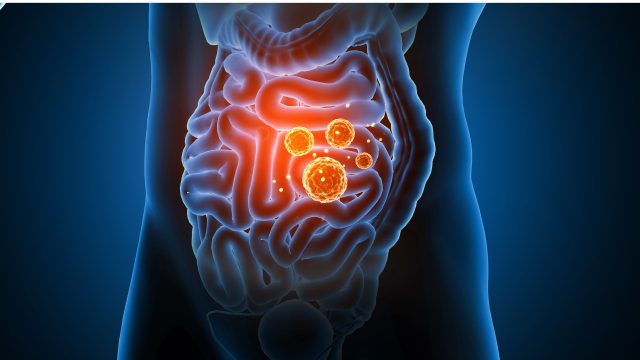
(Beyond Pesticides, January 13, 2026) An important study in Nature Microbiology challenges the entrenched assumption in the chemical industry and among regulators that synthetic chemicals can be targeted for specific uses and have limited effects beyond those uses. The categorization of chemicals into pharmaceuticals, pesticides, and industrial chemicals masks their commonalities and combined potential for deep harm to biological systems. In particular, the effects of the onslaught of xenobiotics (not naturally produced) on human gut microbiota are of increasing concern.
The study, by an international team including researchers at the National Institute of Environmental Health Sciences, Cambridge University, and Heinrich Heine University in Germany, tested a set of xenobiotics, including pharmaceutical, pesticide, and industrial compounds, against 22 human gut bacteria. Using both in silico (computers) and in vitro (laboratory experiments), they found 168 chemicals that exerted inhibitory effects on the gut bacteria. Most of these interactions had not been previously reported. Of the xenobiotic categories, fungicides and industrial chemicals were the most influential.
The researchers note that the “pervasive use” of synthetic chemicals “and environmental persistence have led to pollution levels exceeding the planetary boundary for stable and resilient Earth systems” [emphasis added] and that “safety assessments for these chemicals currently do not consider the human gut microbiome.” Given the powerful and accumulating evidence that gut microbiota interact with every human physiological system (see Beyond Pesticides’ coverage here and here), a crucial priority for regulators must be to incorporate consideration of the microbiome into safety research and policies. Currently, the authors observe, there are no available population cohort data that track both chemical exposure and microbiome dynamics.
In the current study, the researchers use a library of 1,076 compounds likely to enter food and water, including 829 pesticides, 119 known pesticide metabolites, and 75 related products such as pesticide precursors and breakdown products. The library also includes 48 industrial chemicals such as endocrine-disrupting bisphenols, carcinogenic nitrosamines, and PFAS (per- and polyfluoroalkyl substances). They screened the chemicals against 21 bacterial species common in a healthy human gut at a concentration expected to be similar to real-life blood levels of chemicals in humans. This concentration is in the micromolar range, which is typical for xenobiotic screens and, while micromolar levels are very small, they are highly relevant for biologically active chemicals such as hormones, pharmaceuticals, and pesticides. There is evidence that gut concentrations of chemicals tend to be equal to or greater than those in blood, so the researchers were able to infer reasonable exposure levels to the gut bacteria at the micromolar scale. The study involves complex computer screening of many compounds, along with lab cultures exposing bacteria to xenobiotics and analyzing the genetic consequences.
The chemicals showing the most anti-gut-bacterial activity are fungicides, industrial chemicals, and acaricides. Most chemicals inhibit only a few bacterial strains, but 24 chemicals affected more than a third of the tested species. These broad-spectrum agents include the insecticides chlordecone and ememectin benzoate, the fungicide fluazinam, the antiparasitic closantel, the flame retardant tetrabromobisphenol A (TBBPA), and the plasticizer bisphenol AF (BPAF).
In the study, some 150 chemical-bacterial interactions result in more than 90% bacterial growth reduction. To learn whether lower concentrations than the experiment’s baseline exposure produce the same inhibitory effects, the researchers tested 11 pesticides against eight bacteria in multiple concentrations, finding that there are significant effects at “substantially lower concentrations.” This includes three chemicals affecting a gut bacterium that produces butyrate, a short-chain fatty acid mediating inflammation and immune responses affecting digestion, heart health, and mood. This suggests that deleterious effects on the gut microbiome are likely to be occurring at levels akin to the very low amounts characteristic of human hormones.
The study also analyzes patterns of gene mutations appearing in bacterial populations affected by the chemicals. One set of changes is in genes controlling efflux pumps, which are structures in the cell wall by which bacteria can eject antibiotics and other unwanted toxins, as well as signaling molecules and metabolites. The researchers exposed several bacterial species, including Parabacteroides merdae, a gut bacterium that can protect against rheumatoid arthritis, to ten chemicals, including TBBPA, closantel, and glyphosate. Many of the surviving bacteria lose a gene that represses efflux pump activity. Previous research shows that loss of this gene results in resistance to the antibiotic ciproflaxin. In the current study, P. merdae’s loss of the gene makes it resistant to closantel and TBBPA, which, the authors point out, likely produces cross-resistance among a pesticide, a flame retardant, and an antibiotic.
This study dovetails with another important study by researchers from The Ohio State University and several Chinese institutions. In that study, the researchers similarly exposed a selection of intestinal microbes to a selection of pesticides. They found that, while most pesticides inhibit growth, some bacteria actually grow more under exposure. They also discovered that all gut bacteria can selectively bioaccumulate pesticides, and that this bioaccumulation contributes to the host’s prolonged exposure.
The authors of the current study note that the wide range of inhibitory effects of chemicals on gut bacteria, combined with the “immense genetic diversity of the gut microbiome,” suggesting that xenobiotic chemicals may have far more targets than has been assumed. Effects on the gut microbiome are not captured by toxicity studies in the existing analytical bins–pesticides, pharmaceutical drugs, and industrial chemicals. In fact, the authors write, “[T]oxicity studies are typically set up in ways that are incompatible with capturing gut microbiota effects.” Yet the complexity of the real-life landscape—the human and microbial genomes, epigenomes, exposomes, diet, and medications—makes devising computational methods all the more advisable to unravel the multiple mechanisms by which xenobiotics affect gut microbiota and consequently human health. To keep up with the accelerating onslaught of xenobiotics—regardless of their category—the authors urge further development of computational toxicity protocols to develop “safe-by-design product development.”
All unattributed positions and opinions in this piece are those of Beyond Pesticides.
Sources:
Industrial & agricultural chemicals exhibit antimicrobial activity against human gut bacteria in vitro
Roux et al
Nature Microbiology 2025
https://www.nature.com/articles/s41564-025-02182-6
Mapping pesticide-induced metabolic alterations in human gut bacteria
Chen et al
Nature Microbiology 2025
https://www.nature.com/articles/s41467-025-59747-6
Reinforcing Scientific Findings, Insecticide Permethrin Alters Gut Microbiome, Causing Obesity
Beyond Pesticides, September 5, 2025
https://beyondpesticides.org/dailynewsblog/2025/09/reinforcing-scientific-findings-insecticide-permethrin-found-to-alter-gut-microbiome-causing-obesity/
Reinforcing Scientific Findings, Insecticide Permethrin Alters Gut Microbiome, Causing Obesity
Beyond Pesticides, June 11, 2025
https://beyondpesticides.org/dailynewsblog/2025/06/study-maps-the-gut-microbiome-and-adverse-impacts-of-pesticide-residues/
Pesticide Exposure-Induced Gestational Anemia Mitigated by Maternal Gut Microbiota
Beyond Pesticides, May 16, 2025
https://beyondpesticides.org/dailynewsblog/2025/05/pesticide-exposure-induced-gestational-anemia-mitigated-by-maternal-gut-microbiota/




