





16
Jan
Honoring Dr. Martin Luther King, Jr., Upholding Principles of Racial, Economic, and Environmental Justice
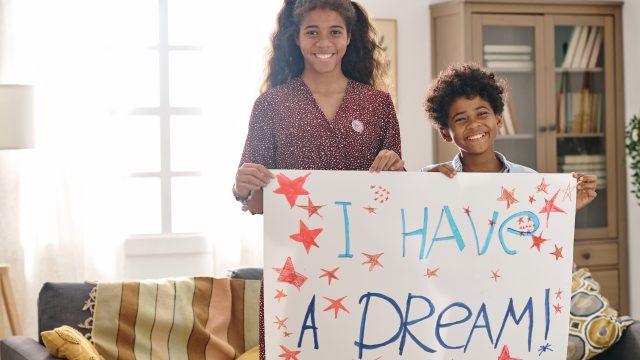
(Beyond Pesticides, January 16-19, 2026) This year marks 40 years since Martin Luther King, Jr. Day was first federally observed in 1986, three years after President Reagan initially signed the bill into law in 1983, to honor the civil rights leader. In 1994, Martin Luther King, Jr. Day became a National Day of Service, calling for action and encouraging Americans to volunteer and serve their communities with Dr. King’s message of justice and equality in mind.
Now more than ever, in the face of the administration’s action to dismantle or deregulate programs to address disproportionate harms to Black, Indigenous, and People of Color (BIPOC) communities across various federal agencies, Dr. Martin Luther King, Jr.’s words resonate: “We cannot walk alone. And as we walk we must make the pledge that we shall always march ahead. We cannot turn back.”
In the spirit of Dr. King’s fight for racial equality and human rights, this day offers a chance for reflection and the opportunity to participate both locally and more broadly in actions that support and protect disproportionately impacted communities. In celebration of Dr. King, consider reading his “I Have a Dream Speech” or listening to it here.
Environmental Justice
As the American Public Health Association says, “Environmental justice is the idea that all people and communities have the right to live and thrive in safe, healthy environments with equal environmental protections and meaningful involvement in these actions.” They continue: “Communities affected by environmental injustices are most often composed of marginalized racial/ethnic, low-wealth, rural, immigrant/refugee, indigenous and other populations that live in areas disproportionately burdened by environmental hazards, unhealthy land uses, psychosocial stressors, historical traumas and systemic racism, all of which drive environmental health disparities. This disproportionate impact of environmental hazards on people of color is also known as environmental racism, which stems from intentional institutional policies or decisions that target communities of color for undesirable land uses, such as the siting of polluting industries that release toxic and hazardous waste.”
Pesticides are a critical environmental justice issue. Although pesticide exposure is widespread, these toxic chemicals cause a range of adverse health effects, with disproportionate harm to people of color communities. Pesticide exposure itself does not discriminate, as these toxic chemicals impact the health of all men, women, and children alike. The Centers for Disease Control and Prevention (CDC) finds that over 90% of U.S. citizens carry a detectable mixture of pesticides in their bodies. However, pesticide exposure patterns tend to cause elevated rates of racial and socioeconomic health disparities and disorders (i.e., brain and nervous system disorders, cancer, endocrine disruption, learning and developmental disorders, and reproductive dysfunction, among others).
In introducing the importance of environmental justice and addressing the disproportionate risks from toxic pollution to BIPOC communities as a key part of policies and practices governing ecosystems, Dr. King encapsulated this idea in his Letter from Birmingham Jail when he wrote in 1963: “Injustice anywhere is a threat to justice everywhere. We are caught in an inescapable network of mutuality, tied in a single garment of destiny. Whatever affects one directly, affects all indirectly.” Over sixty years later, people of color in the U.S. and around the world continue to struggle with inequities that are institutionalized in the economic and social systems in place that perpetuate disproportionate harm.
Health Risks and Environmental Racism
Protecting those who unequally suffer from toxic chemical exposure ensures equality and environmental justice for all. BIPOC communities across the nation face disproportionate impacts from the chemical infrastructures in place, where petrochemical pesticides and synthetic fertilizers threaten marginalized groups. This includes farmers, farmworkers, and their families, particularly children, as well as communities living near chemical-intensive agricultural areas or chemical manufacturers that generally include BIPOC and low-income individuals.
A study titled “Pesticides and environmental injustice in the USA: root causes, current regulatory reinforcement and a path forward,” published in BMC Public Health and covered in Daily News, finds that biomarkers for 12 dangerous pesticides tracked over the past 20 years were found in the blood and urine of Black participants at average levels up to five times those in white participants. Another study from the University of Michigan finds a link between elevated rates of breast cancer incidents and chemical exposure from pesticides among African American women. This same study reveals that African American women are 40% more likely to die from breast cancer than women of any race and that triple-negative cancer (basal-liked breast cancer) is approximately three-fold higher in non-Hispanic Black women compared to non-Hispanic white women. (See Daily News here.)
A recent study in the International Journal of Environmental Research and Public Health, in analyzing 128 peer-reviewed articles, books, and reports on pesticides, environmental justice, and BIPOC communities in the U.S., finds “uneven distribution of pesticide-related health and environmental burdens along racial, ethnic, and socioeconomic lines.” The authors continue, saying: “Non-Hispanic Blacks and Mexican Americans exhibit higher pesticide biomarkers and greater exposure risks than non-Hispanic Whites. Structural racism and classism, rooted in historical systems, perpetuate these inequities, compounded by regulatory failures and power imbalances.”
A study in California shows that pregnant farmworkers and those living near agricultural fields experience pesticide drift from organophosphates. Significant disparities were found in terms of elevated exposure to pesticides, “with Hispanic/Latine, young people, and residents of the predominantly fruit and vegetable growing Central Coast region being most likely to live near OP pesticide applications during pregnancy,” the authors report. Additional Daily News coverage highlights health risks with proximity to agricultural areas. See Elevated Exposure to Wastewater Contaminants in Communities Near Ag Fields, Study Finds and Life On or Near Chemical-Intensive Farms Associated with Increase in Respiratory Diseases.
Further studies highlight how children face disproportionate exposure to pesticides and subsequent health risks. DNA damage is significantly higher in Latinx children from rural, farmworker families than children in urban, non-farmworker families, according to a study published by French and American authors in the journal Exposure and Health. Not only do farmworker children test positive for organophosphate pesticides more frequently than non-farmworker children, but the study finds that farmworker children also experience an increased frequency of DNA damage associated with the presence of organophosphate exposure. (See Daily News here.) Another study, published in Science of The Total Environment, showcases the occupational and environmental exposure pathways of fossil-fuel-based pesticide and fertilizer products that children across the globe face, particularly in rural areas of low- and middle-income countries. (See more here.) These results highlight the disparities in exposures and outcomes for children from vulnerable communities.
For a deeper look into racial disparities and how to support efforts for environmental justice, reference these additional Daily News articles:
- Disproportionate Pesticide Hazards to Farmworkers and People of Color Documented…Again
- Black, Indigenous, and People of Color Community at Disproportionate Risk from Pesticides, Study Finds
- Racial Disparities in Exposure to Ag Pesticides Documented while Trump Administration Dismantles Programs
- This Juneteenth, Support Efforts for Environmental Justice by Eliminating Pesticide Use
- This Indigenous Peoples’ Day Demands Environmental Justice and Organic Transition
A Path Forward
Justice for all people converges with the protection of biodiversity, health, and climate. (See Beyond Pesticides’ resource page on Agricultural Justice for more information.) If we are not protecting the most vulnerable in society, we ultimately adversely affect the entire society because all people are intricately linked through the web of life. Martin Luther King, Jr. Day is a time to recognize the importance and value of those who are disproportionately affected by toxic chemical production, transportation, use, and disposal (including those who live in fenceline communities near chemical plants or agricultural fields) and increase the focus on their protection through the adoption of practices and policies that no longer support environmental racism.
As Dr. King famously said, “If you can’t fly then run, if you can’t run then walk, if you can’t walk then crawl, but whatever you do you have to keep moving forward.” We at Beyond Pesticides work with people and organizations in communities nationwide to tackle what often seems like insurmountable problems, but they are problems with real solutions that are within our reach. By tapping into the power of working together, we can continue to move forward, as Dr. King says to do, in creating a sustainable future for all through implementing environmental justice with the widespread adoption of organic agriculture and land management.
Please join us in our mission of eliminating all petrochemical pesticides and fertilizers that disproportionately impact BIPOC individuals and vulnerable communities. The holistic solution that lies in organic practices protects all human health, as well as wildlife, overall biodiversity, and the ecosystems in which all life depends.
In honor of Dr. King, help build a healthy and thriving “network of mutuality” for all people by taking action, joining Beyond Pesticides as a member, and becoming a Parks Advocate for a Parks for a Sustainable Future program in communities nationwide.
“Darkness cannot drive out darkness; only light can do that.” – Dr. Martin Luther King, Jr.
Today and every day, we thank you, Dr. King, for your activism and inspiration.
All unattributed positions and opinions in this piece are those of Beyond Pesticides.
Source:
Mengistie, B., Ray, R., and Iyanda, A. (2025) Environmental and Human Health Impacts of Agricultural Pesticides on BIPOC Communities in the United States: A Review from an Environmental Justice Perspective, International Journal of Environmental Research and Public Health. Available at: https://www.mdpi.com/1660-4601/22/11/1683.




