





13
Apr
Advocates Call on Congress To Reject House Agriculture Committee Farm Bill and Extend Current Law
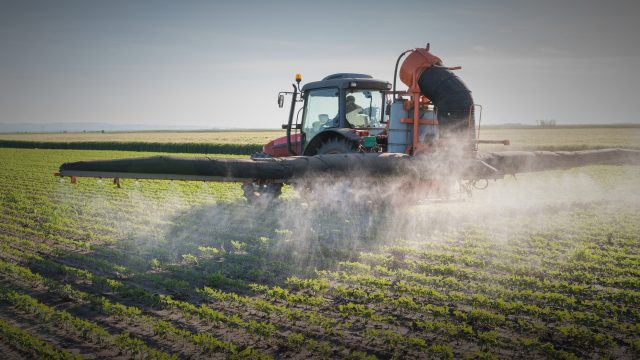
(Beyond Pesticides, April 13, 2026) There are numerous provisions—a package of provisions—in the U.S. House of Representatives Agriculture Committee Farm Bill, voted out on March 5, that seriously undermine protections of health and the environment from pesticides, according to public health and environmental advocates. In response, Beyond Pesticides and allies are calling on U.S. Representatives and Senators to reject the Farm Bill as passed out of the House Agriculture Committee and, instead, pass a one-year extension of current law to protect health and the environment.
The Committee Farm Bill contains provisions that advocates and members of Congress call “poison pills” because any one of them is so far-reaching that they make the entire measure unacceptable. The package of amendments covers critical areas of protection that have been established over decades of Congressional action.
While groups have called for major reforms, Beyond Pesticides, in an action recently released, says, “Existing pesticide law forms the foundation on which improvements should be made, not backsliding to give the chemical industry free rein.” At stake, according to the group, are core safeguards that are seen as critical to the health of farmers, consumers and the environment—judicial review of chemical manufacturers’ failure to warn about pesticide hazards, the democratic right of local governments in coordination with states to protect residents from pesticide use, and national and local site-specific regulatory action to ensure the safety of air, water, land, and food from pesticides. Overall, critics say, the Committee bill increases dependency on petrochemical fertilizers (which contribute to escalating toxic pesticide use), ignores hunger (despite a historically large $187 billion cut to the Supplemental Nutrition Assistance Program/SNAP), dismisses the notion of a fair, responsible, and accessible family farm safety net, and rolls back successful conservation investments.
The GOP Farm Bill (Farm, Food, and National Security Act of 2026, H.R. 7567) that slashes protections from pesticides now faces a vote in the full House and then moves to the U.S. Senate, where advocates are urging that the bill with its current provisions be rejected, including Section X, Subtitle C, Part 1 on “Regulatory Reform.”
At a time when documented adverse health and ecological effects from pesticide use are skyrocketing, and sustainable practices have become widely available, the bill is being characterized as a “wish list” for the chemical industry. The science connecting pesticide exposure to neurotoxicity continues to mount. A study in Discover Toxicology highlights neurotoxic pollutants as significant environmental threats, showcasing the adverse impacts on vertebrates’ neurological health from pesticides, including organophosphates, carbamates, and organochlorines. In the International Journal of Molecular Sciences, a study of gestational (during pregnancy) exposure to the neonicotinoid insecticide thiacloprid shows epigenetic effects (alterations in genes without altering underlying DNA) within prostate tissues. A literature review published in Chemico-Biological Interactions links pyrethroid insecticide exposure to cardiac dysfunction.
Besides leukemia and other cancers, childhood or in utero exposure to pesticides leads to a greater risk of asthma, ADHD, reproductive hormone production in girls, cardiometabolic disorders in boys, and suppression of the immune system, among other problems. These outcomes are unnecessary, since organic agriculture can produce any product produced by chemical-intensive agriculture. With future agriculture policy now under consideration, it is important that the Farm Bill not be used to prop up the chemical industry, but instead support organic agriculture that will not threaten vulnerable populations.
The GOP Farm Bill is a sweeping set of exemptions, waivers, and revocations undermining 50 years of laws adopted by Congress to protect farmers, consumers, and the environment.
There is opposition to the bill in Congress. Rep. Angie Craig (D-MN), condemned the GOP 2026 Farm Bill, saying it would be “‘very difficult, if not impossible’ for her to back a GOP-led farm bill because it contains ‘poison pills’ and doesn’t do enough to aid struggling farmers,” according to Politico. Make America Healthy Again advocates are also incensed over the provision that grants chemical companies immunity from lawsuits for injury when they fail to provide complete safety warnings. Representative Chellie Pingree (D-ME) has indicated that she will seek to strike provisions of the bill.
Specifically, Subtitle C of Title X, entitled Regulatory Reform, contains the following provisions that threaten human health, the ability of the U.S. Environmental Protection Agency (EPA) to keep foods free of dangerous chemicals, and that expose the environment to even greater toxic pesticides:
- Section 10201(3): Permanently excludes dozens of hazardous chemicals used in industrial agriculture from human health and environmental safety reviews that are currently required under the Federal Insecticide Fungicide and Rodenticide Act.
- Section 10202: Weakens and delays efforts to protect children, farmworkers, and public health, from dangerous pesticides by giving unprecedented authority to the USDA’s Office of Pest Management Policy to review and potentially veto any environmental or human health safeguards determined to be necessary by EPA.
- Section 10203(3): Undermines the integrity of the Endangered Species Act in an unprecedented manner by delaying protections for endangered species against dangerous pesticides by giving an internal interagency workgroup a de facto veto on any efforts to protect endangered species from pesticides, which could delay and weaken critical conservation measures.
- Section 10204: Delays the review of hundreds of pesticides for harms to human health, endangered wildlife, and endocrine disruption until 2031, leaving potentially dangerous pesticides on the market and in widespread use without any updated protective measures.
- Section 10205: Immunizes pesticide companies from their duty to warn the public about dangerous chemicals in their pesticide formulations, potentially eliminating access to the federal courts for thousands of individuals with cancer, Parkinson’s disease, and other health issues scientifically linked to pesticide exposure. See Stop Chemical Company Secrecy of Pesticide Product Hazards.
- Section 10206: Eliminates the six-decade-old authority of state and local governments to implement additional local and state-focused restrictions on the use of dangerous pesticides to protect children, farmworkers, pollinators, public health, and the environment.
- Section 10207: Erases important, long-standing safeguards to protect people and wildlife from pesticide pollution discharged directly into waterways through the Clean Water Act Pesticide General Permit (“PGP”), though the broad language would exempt pesticide approvals from the Endangered Species Act, Clean Air Act, and other bedrock environmental laws.
Beyond Pesticides’ action states: Tell U.S. Representatives and Senators to reject the Farm Bill as passed out of the House Agriculture Committee and, instead, pass a one-year extension of current law to protect health and the environment.
Letter to U.S. Representative and U.S. Senators:
Recent studies demonstrating connections between prenatal and postnatal exposure to pesticides and severe consequences for health underscore the unnecessary dangers of agriculture that relies on toxic pesticides. Besides leukemia and other cancers, exposure to pesticides leads to greater risk of asthma, ADHD, reproductive hormone production, cardiometabolic disorders, and suppression of the immune system, among other problems. These outcomes are unnecessary, since organic agriculture can produce any product produced by chemical-intensive agriculture. The Farm Bill must not be used to prop up the chemical industry but instead support organic agriculture.
The GOP Farm Bill passed out of the U.S. House Agriculture Committee on March 5 overturns core safeguards that are critical to the health of farmers, consumers and the environment—judicial review of chemical manufacturers’ failure to warn about pesticide hazards, the democratic right of local governments in coordination with states to protect residents from pesticide use, and national and local site-specific regulatory action to ensure the safety of air, water, land, and food from pesticides. Overall, the Committee bill increases dependency on petrochemical fertilizers, ignores hunger (despite a historically large $187 billion cut to the Supplemental Nutrition Assistance Program/SNAP), dismisses the notion of a fair, responsible, and accessible family farm safety net, and rolls back successful conservation investments. Subtitle C of Title X, entitled Regulatory Reform, is a sweeping set of exemptions, waivers, and revocations undermining 50 years of laws adopted by Congress to protect farmers, consumers, and the environment:
*Section 10201 permanently excludes dozens of hazardous chemicals used in industrial agriculture, including some genetically engineered “plant incorporated protectants” (pesticide incorporated plants), from human health and environmental safety reviews.
*Section 10202 weakens and delays efforts to protect children, farmworkers, and public health, from dangerous pesticides by giving unprecedented authority to the USDA’s Office of Pest Management Policy to review and potentially veto safeguards determined to be necessary by EPA.
*Section 10203 undermines the integrity of the Endangered Species Act in an unprecedented manner by delaying protections and weakening conservation measures for endangered species against dangerous pesticides.
*Section 10204 delays the review of hundreds of pesticides for harms to human health, endangered wildlife, and endocrine disruption until 2031.
*Section 10205 immunizes pesticide companies from their duty to warn the public about dangerous chemicals in their pesticide formulations, potentially eliminating access to courts for thousands of individuals with cancer, Parkinson’s disease, and other health issues scientifically linked to pesticide exposure.
*Section 10206 eliminates the six-decade-old authority of state and local governments to implement additional local and state-focused restrictions on the use of dangerous pesticides.
*Section 10207 erases important, long-standing safeguards to protect people and wildlife from pesticide pollution discharged directly into waterways through the Clean Water Act Pesticide General Permit, while broad language would exempt pesticide reviews from the Endangered Species Act, Clean Air Act, and other bedrock environmental laws.
Please reject this fundamentally flawed Farm Bill and vote for a one-year extension of current law, while Congress gets serious about protecting health and the environment.
Thank you.




