





31
Mar
Groups Decry Chemical Industry Supreme Court Argument that Product Users Can Be Harmed But Not Warned
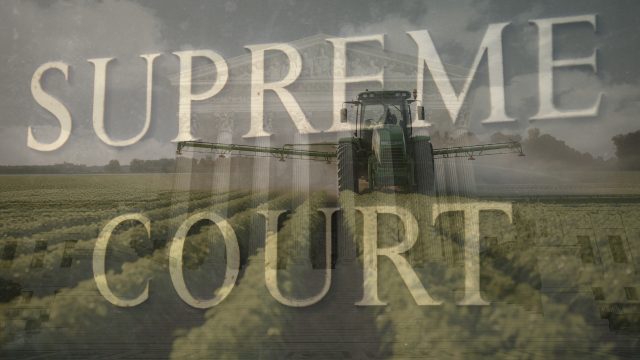
(Beyond Pesticides, March 31, 2026) A statement decrying chemical company secrecy was released today by over 200 grassroots, health, farm, farmworker, environmental, and consumer groups, socially responsible corporations, over 340 citizens from 46 states, and international partners. The statement, released before the U.S. Supreme Court tomorrow reaches the final deadline for submission of amicus briefs in a case in which Bayer/Monsanto argues, with support of the Trump administration, that it should not be required to disclose on its product labels the potential hazards of its pesticide products. Oral arguments in the case will be heard on April 27, with a decision anticipated in June. Decades of law have upheld the legal argument that chemical companies are liable for their failure to warn users of their pesticides about the harm that they could cause. Bayer/Monsanto is attempting to reverse years of case law and billions of dollars in jury verdicts and future cases in which the company has been held liable for causing cancer but not warning product users.
See statement, Stop Chemical Company Secrecy of Pesticide Product Hazards.
Chemical Industry State Campaign
The chemical industry last year launched a multi-pronged campaign to establish immunity from litigation by those who have been harmed but not warned about pesticide product hazards. It has taken the strategy to 15 states to adopt legislation that provides immunity from litigation (prevailing in two and possibly a third), the U.S. Congress, and now the Supreme Court. For more information on the chemical industry’s state campaign for a liability shield, go to Failure-to-Warn Resource Guide.
Monsanto Supreme Court Brief
The Monsanto Company, founded in 1901 and acquired by the multinational corporation Bayer AG in 2018, submitted its opening brief to the Supreme Court of the U.S. (SCOTUS) last month, seeking liability immunity from lawsuits filed by product users who have been harmed but not warned about potential product hazards. The question before SCOTUS is: “Whether the Federal Insecticide, Fungicide, and Rodenticide Act, 7 U.S.C. 136 et seq., preempts a state-law failure-to-warn claim concerning a pesticide registered by the U.S. Environmental Protection Agency (EPA), where EPA has determined that a particular warning is not required and the warning cannot be added to a product label without EPA approval.” If successful, the Court would be overturning (reversing) its 2005 decision in Bates v. Dow Agrosciences, 544 U.S. 431, which upheld EPA and state registration of pesticides as a floor of protection, without releasing manufacturers of the responsibility to warn for potential harm that is not required by EPA. Pesticide manufacturers propose the text for their product labels and EPA ensures compliance with its minimum requirements, which does not preclude them from disclosing potential adverse effects they know of or should have known. The main arguments in the Monsanto brief include: “FIFRA Expressly Preempts Durnell’s Failure-To-Warn Claim”; “FIFRA Impliedly Preempts Durnell’s Failure To-Warn Claim”; and, “Preemption Of Durnell’s Claims Is Critical To American Agriculture And Innovation.” For more detailed analysis of Monsanto’s position, see Monsanto Brief Introduced as U.S. Supreme Court Considers Liability Immunity for Pesticide Manufacturers.
The Farm Bill
The Farm Bill—the Farm, Food, and National Security Act of 2026, H.R. 7567—reported out of the Agriculture Committee in the U.S. House of Representatives yesterday strips environmental and public health protections from pesticides, reversing over 90 years of environmental laws adopted by Congress to protect farmers, consumers, and the environment that stretch back to the first Farm Bill in 1933. The Committee rejected the Protect Our Health Amendment, sponsored by Rep. Chellie Pingree (D-ME), which would have ensured that the final bill maintain three core safeguards in current law: (i) Judicial review of chemical manufacturers‘ failure to warn about pesticide hazards; (ii) Democratic right of local governments in coordination with states to protect residents from pesticide use; and, (iii) Local site-specific action to ensure protection—the safety of air, water, and land from pesticides under numerous environmental statutes. All Republicans and one Democrat (Rep. Adam Gray, D-CA) on the Committee blocked the Pingree amendment. See Farm Bill Strips Protections from Pesticides for Farmers, Consumers, and the Environment.
Glyphosate Weed Killer Called a National Security Need
After President Trump invoked the Defense Production Act of 1950 and issued an Executive Order (EO), Promoting the National Defense by Ensuring an Adequate Supply of Elemental Phosphorus and Glyphosate-Based Herbicides, U.S. Representatives Thomas Massie (R-KY) and Chellie Pingree (D-ME) stood up to say “no.” They introduced the No Immunity for Glyphosate Act (HR 7601) to undo the February 18 Executive Order, which is now being supported by a campaign to urge Congressional Representatives to cosponsor the bill. With the EO’s declaration that contains no supporting documentation or findings, the U.S. government is granting Bayer/Monsanto immunity from lawsuits for adverse health effects or damage associated with the production, transportation, use, and disposal of the weed killer glyphosate. See Bipartisan Bill Challenges Trump Giving Bayer/Monsanto Liability Immunity for Glyphosate Harm.
A History of Failure to Warn
Two analyses published on March 30, 2026 highlight the repeated failures of the U.S. Environmental Protection Agency (EPA) to incorporate warnings on pesticide products for adverse health effects, such as cancer, even when the agency finds high risks. The analyses, authored by the Center for Food Safety (CFS) and the Center for Biodiversity (CBD), were released in a press release entitled New Analyses: EPA Consistently Fails to Warn Public of Pesticide Cancer Risks. The analyses calls attention to the abundance of scientific evidence that links currently approved and legacy pesticide active ingredients to carcinogenic effects. (See analyses here and here.)
CFS’ analysis “found that pesticides have been allowed on the market with a cancer risk as high as one in every 100 people exposed, a far greater level than the EPA’s benchmark of a one in a million chance of developing cancer” and that, “Over the last 40 years, the EPA has approved 200 active ingredients that are ‘likely’ or ‘possible’ carcinogens.” The report by CBD adds to this, finding that EPA includes cancer warnings “on only 69 of 4,919 pesticide labels (1.4%) containing an active ingredient that the agency has designated a ‘likely’ human carcinogen,” as well on “just 242 of the 22,147 pesticide labels (1.1%) that contain an ingredient the agency has designated as a ‘possible’ human carcinogen.”
Pesticide labels are meant to convey warnings about pesticide active ingredients yet fail to include a variety of adverse health effects that are shown in the wide body of peer-reviewed, scientific literature. Current pesticide labels do not adequately capture the data on human health and environmental effects of the actual products on the market. (See Daily News Study Finds Pesticide Product Labels Fail to Convey Toxic Effects to Consumers.) As the press release notes: “Both analyses found that the vast majority of cancer warnings on pesticides come from obligations under Proposition 65 in California, which requires warnings on products, including pesticides, that contain hazardous levels of chemicals linked to cancer, birth defects or reproductive harm. However, most Americans are not adequately warned about products’ known cancer risks.”
Stop Chemical Company Secrecy of Pesticide Product Hazards statement
The chemical industry is asking the U.S. Supreme Court to reverse decades of jurisprudence and shield manufacturers from liability associated with those who are harmed but not warned about pesticide adverse effects like cancer, neurological or immunological conditions, reproductive dysfunction, and other chronic illnesses. Briefs are due in the case by April 1, and oral arguments will be heard on April 27, with a decision anticipated in June.
The case before the Supreme Court, Monsanto v. Durnell, is preceded by thousands of successful lawsuits and settlements against Bayer/Monsanto for the company’s failure to warn about long-term hazards on their product label. After years of litigation, Bayer/Monsanto has been held to account by juries for the cancer-causing effects of its weed killer glyphosate (RoundupTM). While the U.S. Environmental Protection Agency (EPA) does not recognize glyphosate to be cancer-causing, the International Agency for Research on Cancer finds it to be “probably carcinogenic to humans.” Because Monsanto sought to hide behind a weak regulatory review process, juries have issued verdicts that held the company responsible for failing to warn of the chemical product’s potential adverse effects. The Durnell case resulted in a jury verdict (in 2023) of $1.25 million, while the total number of jury verdicts and settlements may amount to over $10 billion in liability if the Supreme Court upholds the lower courts and over a hundred thousand additional plaintiffs make the same claim.
The chemical industry is seeking liability immunity under federal pesticide law (the Federal Insecticide, Fungicide, and Rodenticide Act), questioning whether compliance with that law, in the Court’s words, “preempts a state-law failure-to-warn claim concerning a pesticide registered by EPA, where the agency has determined that a particular warning is not required and the warning cannot be added to a product label without EPA approval.” If successful, the Court would be overturning (reversing) its 2005 decision in Bates v. Dow Agrosciences, 544 U.S. 431 (see analysis), which affirmed EPA’s approved label as minimum protection, without releasing manufacturers of the responsibility to seek approval for a label that exceeds EPA’s minimum. Pesticide manufacturers propose the text for their product labels and EPA ensures compliance with its minimum requirements, which does not preclude them from disclosing potential adverse effects they know or should have known about. EPA does not require a cancer warning (or other chronic effects typically) on pesticide product labels, even when the agency and the chemical manufacturer have identified a harm, including cancer, under EPA’s risk assessment review that it deems “acceptable.”
The Court in the Bates case made the important point that the notion of liability “emphasizes the importance of providing an incentive to manufacturers to use the utmost care in the business of distributing inherently dangerous items.” In an age of deregulation, the ability to hold chemical manufacturers accountable for warning of hazards is the keystone to minimum protection of public health. Accountability in the courts serves the interest of farmers, farmworkers, consumers, and those potentially exposed to pesticide products, as demand in the market for the safest possible products grows daily.
We, the undersigned, believe that the Supreme Court must affirm the current law that holds chemical manufacturers liable when they do not warn consumers on the product label about potential hazards associated with the use of their products.
Signatories below:
ORGANIZATIONAL SIGN-ONS
100 Grannies for a Liveable Future, Iowa
350 Bay Area Action, California
A Voice For Choice Advocacy, California
Acterra: Action for a Healthy Planet, California
Aggie Perilli Communications International, Pennsylvania
Alpenfire Orchards, LLC, Washington
Agricultural Justice Project, New York
Alaska Community Action on Toxics, Alaska
Alliance of Nurses for Healthy Environments, Maryland
American Bird Conservancy, District of Columbia
American Sustainable Business Network, District of Columbia
Americlense Technologies, Massachusetts
Angela’s Pure Salon & Spa, Florida
Arkansas Valley Audubon Society, Colorado
Athens County’s Future Action Network (ACFAN), Ohio
Baltimore Real Estate Investors Association (REIA), Maryland
Barnstable County Beekeepers Association, Massachusetts
Bear Warriors United, Inc., Florida
Bee Friendly Michigan, Michigan
Bee Friendly Williamstown, Massachusetts
Bee Kind Apiary, LLC, Hawai’i
Beyond Pesticides, District of Columbia
Bell Family Homestead, Michigan
BloomHouse Earth School Warriors, Florida
Boss Bodyworks, Texas
Boston Area Beekeepers Association, Massachusetts
Breast Cancer Prevention Partners, California
Cabbages & Kings Catering, Connecticut
Californians for Pesticide Reform, California
Cancer Prevention and Treatment Fund, District of Columbia
Carl H Ebert & Associates, Illinois
Carolina Advocates for Climate, Health, and Equity, North Carolina
Center for Environmental Health, California
Center for Food Safety, District of Columbia
Center for Progressive Reform, District of Columbia
Champlain Valley Apiaries, Vermont
Chesapeake Physicians for Social Responsibility, Maryland
Church Women United, New York
Citizens for a Clean Black Lake, Washington
Clean + Healthy, New York
CleanEarth4Kids.org, California
Clean Water Action, California
Clear Creek Land & Livestock, Nebraska
Community Alliance for Global Justice, Washington
Community for Natural Play Surfaces, California
Cumberland-Harpeth Audubon Society, Tennessee
Desert Herbals, LLC, New Mexico
Droughtscape LA, California
Eden Foods, Michigan
Ekō, California
Elders Climate Action (ECA) Northern California Chapter, California
Elders Climate Action [ECA] Southern California Chapter, California
Energymugs, Nevada
Environmental & Public Health Consulting, California
Environmental Site Developers, Inc., Connecticut
Everyday Advocates, Florida
Families Advocating for Chemicals & Toxics Safety (FACTS), California
Farmworker Association of Florida, Florida
FITNALL, Tennessee
Food and Water Watch, District of Columbia
For a Better Bayou, Louisiana
Forest Creek Studios, Oregon
Friends of Cathedral Trees Sanctuary, Oregon
Friends of the Earth, District of Columbia
Frith Music, California
Flying Rocks Farm, California
Gardeners Without Borders, Florida
Global Green Initiative, Michigan
GMO Free Kaua’i, Hawai’i
GMO Science, California
GMO/Toxin Free USA, Connecticut
Good Neighbor Community Builders, California
Gordon Hill Farm, LLC, Montana
Grassroots Environmental Education, New York
Green America, District of Columbia
Green Oakwood, Ohio
Green Party of St. Louis, Missouri
Green State Solutions, Iowa
Grow Native Massachusetts, Massachusetts
Grow Safe: Non-Toxic Missoula, Montana
Hawai’i Chapter of the American Academy of Pediatrics, Hawai’i
Hawai’i SEED, Hawai’i
Hillhouse Farms, Virginia
Institute for Responsible Technology, Iowa
Intheshadowofthewolf, Connecticut
Iowa Alliance for Responsible Agriculture, Iowa
IPM Associates, Inc., Oregon
James’ 1Solar, California
Jared Schreck LLC, Pennsylvania
Jazz SLAM, Florida
Jefferson County Farmers & Neighbors, Inc., Iowa
Jim Schulman, Architect, District of Columbia
Josie Hill Rentals, California
Jpritikin Industries, Inc., Oregon
Latino Farmers & Ranchers International, Inc., Maryland
Lawrence Bird Alliance, Kansas
Learning Disabilities Association of America, Pennsylvania
Lindsay Suter Architects, Connecticut
Livingston Law Firm, Illinois
Local Food Production Initiative, Alabama
Los Angeles Climate Reality Project, California
Los Gatos Almaden Pollinator Garden, California
Los Jardines Institute, New Mexico
LT Enterprises, Tennessee
Maddog Farm, Massachusetts
Maine Organic Farmers and Gardeners Association, Maine
Marion Audubon Society, Kansas
Maryland Children’s Environmental Health Coalition, Maryland
Maryland Ornithological Society, Maryland
Maryland Pesticide Education Network, Maryland
Massachusetts Beekeepers Association, Inc., Massachusetts
Massachusetts Pollinator Network, Massachusetts
McDaniel Honey Farm, Maryland
Mellon Farm, California
Mercury Press Inc., California
Mindflow Media, Tennessee
Minnesota River Valley Audubon Chapter, Minnesota
Missouri River Bird Observatory, Missouri
Monroe Science Educational Services, Maryland
Morningstar NEWS, Texas
Mosquito Brigade, Florida
Mothers Out Front, National, Massachusetts
Natural Grocers, Colorado
Naturalist For You, California
Naturepedic Organic Mattresses, Ohio
New Day Landmark Collective, Arkansas
New Earth Home and Garden, Michigan
Non Toxic Communities, New Hampshire
Non Toxic Portsmouth, New Hampshire
Norfolk County Beekeepers Association, Massachusetts
Northeast Organic Dairy Producers Alliance, Massachusetts
Northeast Organic Farming Association, Interstate Council, New York
Northeast Organic Farming Association, Massachusetts Chapter, Massachusetts
Northeast Organic Farming Association of New Hampshire (NOFA-NH), New Hampshire
Northeast Organic Farming Association of New Jersey (NOFA NJ), New Jersey
Northstar Nurseries, Washington
Northwest Arkansas Audubon Society, Arkansas
Northwest Center for Alternatives to Pesticides, Oregon
Oasis Spiritual Coaching & Shamanic Healing, Pennsylvania
Orange Grove Friends Meeting, Community Garden, California
Pamela Hall Real Estate, LLC, Florida
People Organized in Defense of Earth and Her Resources (PODER), Texas
Pesticide Action & Agroecology Network (PAN), California
Piermont Marsh Alliance, New York
Piermont Pier Alliance New York
Pikes Peak Permaculture, Colorado
Plant-Based Advocates, California
Pollinator Friendly Alliance, Minnesota
Pollinator Stewardship Council, Colorado
Portland Protectors, Maine
People and Pollinators Action Network (PPAN), Colorado
Progressive Action Coalition for Equity (PACE), Minnesota
Project Reuse, Hawai’i
Protect Our Pollinators, Connecticut
Protect the Peninsula’s Future, Washington
Public Employees for Environmental Responsibility (PEER), Maryland
Rachel Carson Council, Maryland
Replenishing the Earth, Missouri
Responsible Growth Management Coalition, Florida
Re:wild Your Campus, Texas
Russo Construction Company, California
Saint Charles Borromeo Center for Homelessness & Healing, Oregon
San Francisco Bay Physicians for Social Responsibility, California
San Francisco Forest Alliance, California
SAS Holdings, LLC, Oregon
Save the Park, California
Seven Springs Farm Supply, Virginia
Shenandoah Valley Faith and Climate, Virginia
S.O. Bees, Washington
Somewhere In Time, Florida
Steve Savitz, Artist, New York
St. Louis No Spray Coalition, Missouri
Stockbridge Farmers Market, Massachusetts
SS Enterprises, Montana
St. Denis Studio, New York
Stop Developing Florida, Florida
Sudi McCollum Design, California
Sumkina Bait Company, Georgia
Sun-Up Farm, West Virginia
Sustainability Solutions, Vermont
Susie Q. Zoo, Inc., Florida
SWFL Reset Center, Florida
T. Payne Farms, Illinois
The Kitteh Spa, Florida
The Last Plastic Straw, California
Texas Environmental Justice Advocacy Services, Texas
The Coming Clean network, Vermont
The Paw Shop, Missouri
Tonia Noelle Studio, Illinois
Topanga Peace Alliance, California
Toxic Free NC, North Carolina
Treehouse Festival, California
Vessel Project of Louisiana, Louisiana
WE CAN U & ME, INC, Florida
Web of Life Products, Colorado
Wilco Justice Alliance, Texas
Wildcreek Productions, California
Wisconsin Organics, Wisconsin
Wolfgang Metals Services, Pennsylvania
Vanaheim Farm, Colorado
Veggielution, California
Vessel Project of Louisiana, Louisiana
Yard Smart Marin, California
Zapped Films LLC, Arizona
International
Coordination gegen BAYER-Gefahren, Germany
Conexiones Cimaticas, Mexico
Corporate Europe Conservatory, Belgium
Safe Food Matters, Inc., Canada
Plus, 340 individual signatories from 46 states





We need to take better care of what is left of our environment, for animals, plant life, and people.
April 1st, 2026 at 7:26 pm