





27
Feb
Benefits of U.S. Organic Production Highlighted in Evidence-Based Research that Supports an Expedited Transition
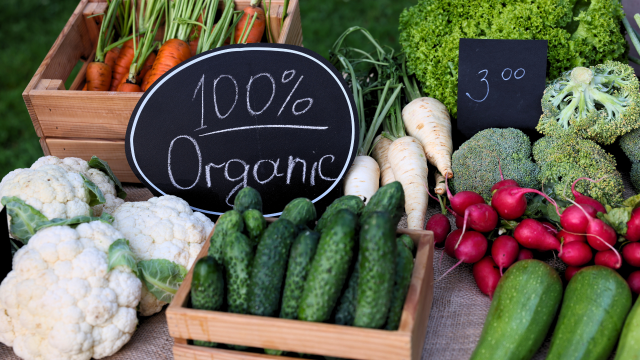
(Beyond Pesticides, February 27, 2026) Researchers at Prairie View A&M University in Texas published in the journal Sustainability a study of organic agricultural systems from 1960 to 2021, concluding that “the outlook for U.S. organic fruit and vegetables is encouraging, supported by expanding consumer demand, government support, and improved conditions for international trade.” While delivering upbeat findings, including health benefits, the study identifies tremendous obstacles to entry into organic farming, including the limited support for alternative pest management and pest control systems in the United States in recent modern history, compared to the assistance provided for highly subsidized, petrochemical-dependent agricultural practices.
Public health and environmental advocates continue to advocate for a wholesale transition to organic pest management, including calls for U.S. Representatives and Senators to cosponsor the Opportunities in Organic Act!
Study Methodology, Background, and Findings
The authors of this literature review arrived at the following conclusions on research trends for human health and environmental impacts of organic systems (for further analysis, the numbers below list citations from their report):
- “[O]rganic food has been documented to have higher antioxidant capacity, acidity, and phosphorus as well as lower levels of cadmium, pesticides, and other chemicals (18–22). Additionally, organic practices increase the content of secondary metabolites in fruits and vegetables, which is associated with a reduced risk of cancer and cardiovascular disease (23).”
- “[C]onsuming organic fruits and vegetables as part of a well-balanced, regular diet and a healthy, active lifestyle can reduce obesity, enhance immune responses, lower cholesterol and blood pressure, and reduce the risk of non-Hodgkin lymphoma and preeclampsia [6,19,26–27]. In the same vein, the consumption of organic products in a population can be considered as an indicator of public health [28].”
The report also reviews the discrepancies in federal and state-level support programs for organic agriculture that have resulted in regional disparities:
- “In the Northeast, states such as Maryland and Vermont experienced a 115% increase in cover crop adoption from 2012 to 2017. In contrast, Pennsylvania, which lacked such a program, experienced a more minor increase [78].”
- “In contrast, state-level policies, such as California’s tailored incentives and extension services, are more flexible and locally responsive, thereby improving accessibility for small-scale farmers, especially those focusing on organic fruits and vegetables in the U.S. [80]. For instance, in California, there have been state-level organic certification programs geared towards improving transition effectiveness by using the detailed Pesticide Use Report (PUR) to monitor field-level practices, enabling precise tracking of pesticide trends and compliance, and mandating annual registration for all organic producers, including small farms often excluded from federal datasets [81].”
- “Federal extension typically provides broad-based educational materials, yet it often lacks the localized, practice-specific insights that organic farmers require, prompting many to turn to peer networks and NGOs [nongovernmental organizations] for actionable guidance [83]. In contrast, state-level extension programs, such as those in Georgia, offer more targeted, regionally adapted resources but struggle with agents’ limited knowledge of organic agriculture, underscoring the need for enhanced agent training to improve the effectiveness of support [84,85].”
Additionally, the report also delves into “economic importance” and “strategies to boost consumption,” including:
- “Munne-Bosh and Bermejo [109] reported that organic farming could provide high-quality fruits by enhancing pollination and reducing protective treatments, which may ultimately increase the production of antioxidant compounds in fruits and vegetables. Similarly, Baransky et al. [19] reported that organically grown fruits and vegetables contain higher levels of antioxidant compounds.”
- “Most organic products are processed and consumed locally, particularly fruits and vegetables [111,112]. For example, Iowa experienced an increase in food markets aimed at establishing a direct link between producers and consumers without intermediaries.”
- “According to USDA data [41,114] from 2007 to 2021, the area devoted to the production of organic fruits and vegetables increased by more than 100% (Figure 3). Its value increased from $685 million to $1913 million [1.913 billion], representing more than a 200% increase (Figure 4). Finally, the number of farms involved in the production of organic fruits and vegetables grew by more than 100% (Figure 5).”
The researchers for this study are based at Prairie View A&M University, the oldest Historically Black College and University (HBCU) and second-oldest public higher education institution in the state of Texas. More specifically, they are published authors at the College of Agriculture, Food, and Natural Resources. Ram L. Ray, Ph.D., P.E., ACUE, Sixto Marquez, Ph.D, and Damar Wilson are the lead authors of this study.
The authors reviewed Agricola, ScienceDirect, and Google Scholar to assess “the emergence of the modern organic movement in 1960 through 2021.” They did not include literature “if they were not relevant to the U.S. organic fruit and vegetable systems, failed to distinguish between organic and conventional production, or were incomplete or duplicates across platforms.” This report was funded in part by the National Institute of Food and Agriculture (NIFA), a branch of the U.S. Department of Agriculture (USDA); no other external funding was declared. Researchers declared no conflicts of interest.
Previous Coverage
There is significant additional research that has emerged in the years since 2021 that highlights the opportunities for organic markets within and outside of the U.S., as well as additional clarity on their environmental and health impacts.
For example, a study published this year in Scientific Reports highlights the benefits of organic agriculture compared with different farming systems over five years across four crops (maize, tomato, faba bean, and potato). “Soil carbon sequestration is a long-term storage of carbon in soil, which represents 70% of the carbon in land,” the authors note. “Therefore, the main aim of this study is to investigate the effect of the agricultural practice systems on the soil carbon sequestration and properties, productivity, water consumption, soil carbon sequestration, CO2 emission and cost of some crops.” As a result, the experiment reveals that, compared to chemical-intensive farming, organic methods enhance soil properties, reduce water consumption, provide higher yields and higher soil carbon sequestration, reduce CO2 emissions, and achieve the highest total net profit for all four crops after five years. (See Daily News here.)
In another 2026 study published in Agriculture, Ecosystems & Environment, researchers from France find pesticide-free fields promote carabid beetles and spiders, generalist arthropod predators that consume slugs, aphids, and mites, that in turn support healthy, organic systems. The study findings highlight the importance of utilizing farming practices that promote biodiversity and foster natural enemy populations as a pest management strategy. (See Daily News here.)
A groundbreaking study published in 2025 in the Journal of Environmental Quality, led by researchers at the U.S. Department of Agriculture (USDA), reports that a 4-year organically managed corn-soybean-oat system reduces nitrogen (N) loads by 50 percent with corn and soybean yields “equivalent to or higher than conventional [chemical-intensive] in most years.” The findings from a 7-year study comparing nitrate loss in organic and chemical-intensive management found that organically managed perennial pasture reduces nitrogen loads significantly. The study, which focused on nitrate pollution in agriculture that harms biodiversity, threatens waterways, drinking water, and public health, and releases nitrous oxide (an extremely potent greenhouse gas), was conducted at USDA’s National Laboratory for Agriculture and the Environment.
The researchers highlight the four main conclusions of their 7-year study:
- “Four-year organic rotation reduced N loads by 50% compared to conventional corn–soybean.
- Diversified rotation and annual precipitation accounted for 55% of the variability in N drainage losses.
- Organic corn yields were similar to or higher than conventional in 4 of 7 years.
- Organic soybean yields were similar to or higher than conventional in 6 of 7 years.”
The authors believe that these findings support “the adoption of organic systems in tile-drained regions to enhance water quality without compromising productivity,” and yield critical benefits for the future of American agriculture, health, and the environment. (See Daily News here.)
Call to Action
In a press release published on December 10, 2025, USDA announced the creation of “a $700 million Regenerative Pilot Program to help American farmers adopt practices that improve soil health, enhance water quality, and boost long-term productivity, all while strengthening America’s food and fiber supply.” The agency specifically ties the program to Make America Healthy Again (MAHA), diverting resources that could be used to support organic transition and phase out pesticides that are clearly defined as prohibited by USDA’s National Organic Program under the Organic Foods Production Act (OFPA), but allowed in regenerative agriculture programs. Regenerative agriculture, embraced by major food companies, has been identified by Beyond Pesticides and many organizations as greenwashing because it typically allows wide use of weed killers and other petrochemical pesticides and is not defined as a transition to organic practices and compatible products. (See here.)
You can continue to stay apprised of the most pressing developments on various issues and campaigns by signing up for Weekly News Update and Action of the Week — including a call to tell your governor to adopt policies that support organic land management and ecological balance. Farm Bill negotiations are ramping up, with calls ongoing to tell your members of Congress to advocate for the removal of Farm Bill Title X, Subtitle C, Part 1, which contains attacks on foundational protections from pesticides for farmers, consumers, and the environment—and vote against the Farm Bill if those provisions are not removed.
All unattributed positions and opinions in this piece are those of Beyond Pesticides.
Source: Prairie View A&M University




