





02
Mar
GOP Farm Bill Goes to Committee Amid Broad Opposition to Provisions that Eliminate Protections from Pesticides
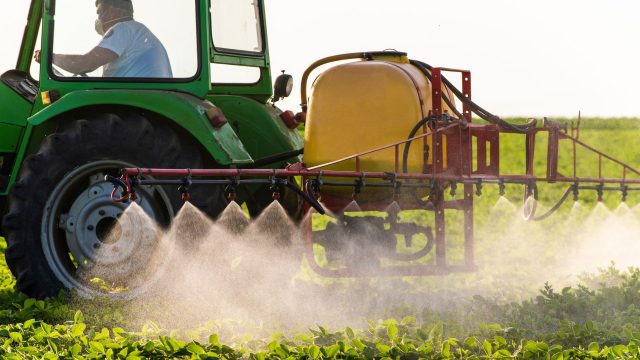
(Beyond Pesticides, March 2, 2026) In advance of deliberations on the Farm Bill tomorrow, March 3, in the Agriculture Committee of the U.S. House of Representatives, opposition to the GOP-proposed legislation has been widely expressed by farm, environmental, consumer, and social justice organizations. The bill, the Farm, Food, and National Security Act of 2026, H.R. 7567, is a dramatic departure from previous Farm Bills going back to the first one in 1933, which began a process of integrated policy to address family farmers’ sustainability, land conservation, energy, climate, and food security. Discarding the traditional bipartisan process used to draft the Farm Bill, the Republican leadership has instead proposed a measure that has garnered across-the-board disapproval, except from those representing the vested interests of chemical companies and agribusiness.
Central to the GOP Farm Bill, released by the chair of the U.S. House Agriculture Committee on February 13, is the overturning of critical protections for the health of farmers, consumers and the environment. Three core safeguards are threatened:
- Judicial review of chemical manufacturers‘ failure to warn about pesticide hazards,
- Democratic right of local governments in coordination with states to protect residents from pesticide use, and
- Local site-specific action to ensure protection—the safety of air, water, and land from pesticides.
Importantly, there are other elements in the proposed legislation that are being highlighted as undermining agricultural policies’ contribution to solving critical health, food security, biodiversity, and climate concerns, such as the following:
- Petrochemical fertilizer dependency. Petrochemical fertilizer production and use have been directly tied to the release of greenhouse gases, a reduction in the drawdown of atmospheric carbon through soil sequestration, nitrate contamination (converted to nitrous oxide, a potent greenhouse gas) of air and water, and the harm to soil microbial life that escalates pesticide dependency. The proposed legislation—throughout the Conservation Title (Title II), including the Environmental Quality Incentives Program subtitle (Subtitle C), and in the Research Title (Title VII) —will codify continued reliance on petrochemical fertilizers through the promotion of “precision agriculture.” With the use of drones, satellites, and artificial intelligence, precision agriculture is touted by the industry and USDA as a great environmental achievement, focused on soil biology and lower or variable application rates of petrochemical pesticides and fertilizers—but ignores the dramatic damage it causes to soil biology, complex biological communities, and the economic value of healthy ecosystems and ecosystem services that naturally cycle plant nutrients.
- Hunger and social injustice. With one in seven people experiencing food insecurity and Congressional action last year (so-called “One Big Beautiful Bill Act”) adopting a historically large $186 billion cut to the Supplemental Nutrition Assistance Program (SNAP, formerly known as the Food Stamp Program), the GOP-proposed “farm bill ignores hunger,” said the American Friends Service Committee (AFSC). “AFSC believes in the need for a just Farm Bill that works toward ending hunger, invests in sustainable agriculture, supports small family farms rather than corporate monopolies, protects our environment, and makes nutritious food available to all.”
- Unsustainable agriculture. “The bill takes no meaningful steps toward building a fair, responsible, and accessible farm safety net while needlessly siphoning funding away from popular and effective conservation programs, according to the National Sustainable Agriculture Coalition.
- Endangered conservation programs. A letter from a broad range of environmental, farm, and public health groups characterizes the bill as follows: Rolls back or diverts proven conservation investments at a time when demand for soil health and resilience programs continues to outpace available funding; Weakens pesticide oversight and curtails state and local authority to protect farmworkers, children, pollinators, waterways, and endangered species from chemical exposure; Expands categorical exclusions and other mechanisms that limit environmental review, public input, and undermine our bedrock environmental laws, including the Clean Water Act, National Environmental Policy Act, Endangered Species Act, and more; and, Constrains rural energy affordability programs that help farmers and small businesses lower operating costs and achieve energy independence.
There will be an effort by some members of the Committee to remove specific sections of the legislation that shield chemical manufacturers from liability, preempt the authority of states and localities to restrict pesticides, and slash protections from pesticides under all major environmental statutes. Ultimately, however, without a total overhaul, dozens of groups are urging a no vote on the bill.
The GOP 2026 Farm Bill amounts to a wish list for the chemical industry and agribusiness. “With future agriculture policy now under consideration, it is important that the Farm Bill not be used to prop up the chemical industry, but instead supports organic agriculture that will not threaten vulnerable populations and the ecosystems that support life,” said Jay Feldman, executive director of Beyond Pesticides.
There is opposition to the bill in Congress. Rep. Angie Craig (D-MN), the ranking member of the Agriculture Committee, condemned the GOP Farm Bill, saying it would be “’very difficult, if not impossible’ for her to back a GOP-led farm bill because it contains ‘poison pills’ and doesn’t do enough to aid struggling farmers,” according to Politico. Make America Healthy Again advocates are also incensed over the provision that grants chemical companies immunity from lawsuits for injury when they fail to provide complete safety warnings. Representative Chellie Pingree (D-ME) has indicated that she will seek to strike provisions of the bill [see below].
Subtitle C of Title X, Part 1, “Regulatory Reform,” of the GOP Farm Bill is a sweeping set of exemptions, waivers, and revocations undermining 50 years of laws adopted by Congress to protect farmers, consumers, and the environment. The bill language:
- Redefines and exempts plant regulators, biostimulants, “inert” ingredients, and genetically engineered materials from proper oversight. Pesticides and related “plant incorporated protectants” as listed above would be exempted from the Federal Insecticide, Fungicide and Rodenticide Act (FIFRA) registration review requirements, as well as from tolerance setting requirements under the Federal Food, Drug, and Cosmetic Act (FFDCA) (Section 10201);
- Further weakens and delays safety measures and environmental protections with a requirement for “harmonizing” interagency coordination. The U.S. Department of Agriculture (USDA) is charged with considering the economic costs of increased risk mitigation measures when up for public comment, further weakening a science-based approach to risk management that considers alternatives. The USDA Office of Pest Management Policy is mandated to coordinate with other federal agencies to consider pesticide use data, economic data of viable chemical alternatives, and likely to advance chemical-intensive practices (Section 10202);
- Weakens Endangered Species Act protections under new interagency working group regulations. The interagency working group will now require the Office of Pest Management Policy to attend, limit meeting requirements to just once a year rather than twice a year, and increase the influence of chemical companies in pesticide registration review decisions before public meetings are held (Section 10203);
- Diminishes the integrity of the pesticide registration review process. Repeals Section 711 of the Pesticide Registration Improvement Act of 2022, which mandates that EPA complete initial registration reviews of pesticides by October 1, 2026, striking a blow to scientific integrity and the assurance that active ingredients are adequately assessed before being released into the market (Section 10204);
- Immunizes chemical companies from liability and failure to warn. Prohibits lawsuits by farmers and consumers harmed by pesticides for which manufacturers failed to provide complete safety warnings (Section 10205);
- Preempts state and local authority. Takes away the authority of local governments to protect residents and the local environment from pesticide use with local restrictions (Section 10206);
- Exempts pesticides from reviews to protect water, ecosystems, and endangered species. Repeals requirements in numerous federal statutes authorized by Congress over the last 50 years to protect against local pesticide contamination that could adversely affect waterways, drinking water, federal projects, endangered species, migratory birds, and toxic waste cleanup (Section 10207); and,
- Eliminates the USDA Multiple Crop and Pesticide Use survey. Discontinues surveys, which provide baseline information to communities and farmers to inform practices and outcomes (Section 10211).
U.S. Representative Chellie Pingree (D-ME) plans to introduce the Protect Our Health Amendment, which will remove from the bill sections 10205, 10206, and 10207 (numbers 5, 6, and 7 above). In addition, Rep. Thomas Massie (R-KY) and Rep. Pingree have introduced a bill, the No Immunity for Glyphosate Act, to prevent implementation of a February 18 Executive Order that activates the Defense Production Act of 1950, declares the production of glyphosate a national security concern, and provides blanket liability protection for manufacturers of the pesticides. This legislation may be introduced as an amendment to the Farm Bill.
ACTION
In order to uphold fundamental protections from pesticides for farmers, consumers, and the environment, tell your Congressional representative to support Rep. Pingree’s Protect Our Health Amendment (removes Sections 10205-10207), move to strike Sections 10201-10204 and 102011, and support the No Immunity for Glyphosate Act provisions. Without a comprehensive overhaul, urge a vote against the Farm Bill.
If you have already contacted your U.S. Representative on the Farm Bill in the past two weeks, please click HERE to send them a reminder! *If a member is on the U.S. House Agriculture Committee, the letter you submit will automatically adjust the language by recognizing their Committee membership.
Letter to members of the U.S. House Committee on Agriculture:
The GOP Farm Bill, as proposed and before the House Agriculture Committee, threatens policies intended to protect against the diseases and illnesses touching families and communities, including brain and nervous system disorders, birth abnormalities, cancer, developmental and learning disorders, immune and endocrine disruption, reproductive dysfunction, among others. Also threatened are policies intended to protect wildlife, including mammals, bees and other pollinators, fish and other aquatic organisms, birds, and the biota within soil, which are adversely affected with reproductive, neurological, endocrine-disruptive, and developmental anomalies, and cancers.
Dispensing with a tradition of bipartisan consultation in the Agriculture Committees of Congress on the Farm Bill, the GOP Farm Bill is facing resounding criticism from food, farming, environmental, and consumer groups. The bill overturns three core safeguards critical to the health of farmers, consumers, and the environment—judicial review of chemical manufacturers’ failure to warn about pesticide hazards, the democratic right of local governments and states to protect residents from pesticide use, and local site-specific action to ensure the safety of air, water, and land from pesticides. Subtitle C of Title X, entitled Regulatory Reform, is a sweeping set of exemptions, waivers, and revocations undermining 50 years of laws adopted by Congress to protect farmers, consumers, and the environment, including provisions that:
*Redefine and exempt plant regulators, biostimulants, “inert” ingredients, and genetically engineered materials from proper oversight. (Section 10201);
*Further weaken and delay safety measures and environmental protections with a requirement for “harmonizing” interagency coordination. (Section 10202);
*Weaken Endangered Species Act protections under new interagency working group regulations. (Section 10203);
*Diminish the integrity of the pesticide registration review process. (Section 10204);
*Immunize chemical companies from liability and failure to warn. (Section 10205);
*Preempt state and local authority, taking away the authority of local governments to protect residents and the local environment from pesticide use with local restrictions (Section 10206);
*Exempt pesticides from reviews to protect water, ecosystems, and endangered species, repealing requirements in numerous federal statutes authorized by Congress over the last 50 years to protect against local pesticide contamination that could adversely affect waterways, drinking water, federal projects, endangered species, migratory birds, and toxic waste cleanup (Section 10207); and,
*Eliminate the USDA Multiple Crop and Pesticide Use survey. (Section 10211).
Please support U.S. Representative Chellie Pingree’s (D-ME) Protect Our Health Amendment, which will remove from the bill Sections 10205, 10206, and 10207. In addition, support amendments from Rep. Thomas Massie’s (R-KY) and Rep. Pingree’s No Immunity for Glyphosate Act to prevent implementation of a February 18 Executive Order (EO) that activates the Defense Production Act of 1950, declaring the production of glyphosate a national security concern and providing blanket liability protection for manufacturers of the pesticides.
Please do not weaken the protection of our health and the environment. Without a comprehensive overhaul, please vote against the Farm Bill.
Thank you.
Letter to U.S. Representatives who are not members of the U.S. House Committee on Agriculture:
I’m writing to ask you to speak with your colleagues on the Agriculture Committee in advance of the Farm Bill markup on March 3. The GOP Farm Bill, as proposed and before the House Agriculture Committee, threatens policies intended to protect against the diseases and illnesses touching families and communities, including brain and nervous system disorders, birth abnormalities, cancer, developmental and learning disorders, immune and endocrine disruption, reproductive dysfunction, among others. Also threatened are policies intended to protect wildlife, including mammals, bees and other pollinators, fish and other aquatic organisms, birds, and the biota within soil, which are adversely affected with reproductive, neurological, endocrine-disruptive, and developmental anomalies, and cancers.
Dispensing with a tradition of bipartisan consultation in the Agriculture Committees of Congress on the Farm Bill, the GOP Farm Bill is facing resounding criticism from food, farming, environmental, and consumer groups. The bill overturns three core safeguards critical to the health of farmers, consumers, and the environment—judicial review of chemical manufacturers’ failure to warn about pesticide hazards, the democratic right of local governments and states to protect residents from pesticide use, and local site-specific action to ensure the safety of air, water, and land from pesticides. Subtitle C of Title X, entitled Regulatory Reform, is a sweeping set of exemptions, waivers, and revocations undermining 50 years of laws adopted by Congress to protect farmers, consumers, and the environment, including provisions that:
*Redefine and exempt plant regulators, biostimulants, “inert” ingredients, and genetically engineered materials from proper oversight. (Section 10201);
*Further weaken and delay safety measures and environmental protections with a requirement for “harmonizing” interagency coordination. (Section 10202);
*Weaken Endangered Species Act protections under new interagency working group regulations. (Section 10203);
*Diminish the integrity of the pesticide registration review process. (Section 10204);
*Immunize chemical companies from liability and failure to warn. (Section 10205);
*Preempt state and local authority, taking away the authority of local governments to protect residents and the local environment from pesticide use with local restrictions (Section 10206);
*Exempt pesticides from reviews to protect water, ecosystems, and endangered species, repealing requirements in numerous federal statutes authorized by Congress over the last 50 years to protect against local pesticide contamination that could adversely affect waterways, drinking water, federal projects, endangered species, migratory birds, and toxic waste cleanup (Section 10207); and,
*Eliminate the USDA Multiple Crop and Pesticide Use survey. (Section 10211).
Please urge support for Representative Chellie Pingree’s (D-ME) Protect Our Health Amendment, which will remove from the bill Sections 10205, 10206, and 10207. In addition, please urge support for amendments from Representative Thomas Massie’s (R-KY) and Rep. Pingree’s No Immunity for Glyphosate Act to prevent implementation of a February 18 Executive Order (EO) that activates the Defense Production Act of 1950, declaring the production of glyphosate a national security concern and providing blanket liability protection for manufacturers of the pesticides.
Please ask your colleagues on the Agriculture Committee not to weaken the protection of our health and the environment. Without a comprehensive overhaul, please urge a vote against the Farm Bill in the Agriculture Committee.
Thank you.





We need to take better care of what is left of our environment, for wildlife, marine life, plant life, and people.
March 5th, 2026 at 12:22 am