





19
Feb
Study Shows Soil Carbon Sequestration and Crop Yields Increase Substantially in Organic Farming Systems
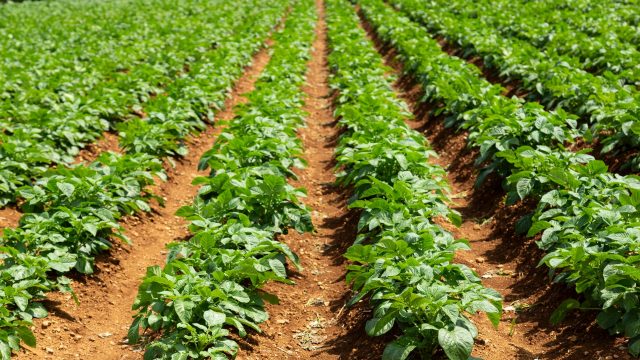
(Beyond Pesticides, February 19, 2026) A study published in Scientific Reports highlights the benefits of organic agriculture in comparison to different farming systems over five years on four crops (maize, tomato, faba bean, and potato). “Soil carbon sequestration is a long-time storage of carbon in soil which represents 70% of the carbon in land,” the authors note. “Therefore, the main aim of this study is to investigate the effect of the agricultural practice systems on the soil carbon sequestration and properties, productivity, water consumption, soil carbon sequestration, CO2 emission and cost of some agricultural crops.” As a result, the experiment reveals that, compared to chemical-intensive farming, organic methods enhance soil properties, reduce water consumption, provide higher yields and higher soil carbon sequestration, reduce CO2 emissions, and achieve the highest total net profit for all four crops after five years.
Study Importance
The topic of food security and sustainable agricultural systems is a crucial one, particularly as environmental degradation escalates. “Recently, organic agricultural systems have drawn much attention as alternative ways to produce food and ensure security in terms of environmental sustainability,” the researchers say, while Beyond Pesticides and organic advocates have been discussing the viability of organic agriculture for decades. The most important factor for crop production is soil quality, as healthy soils provide vital ecosystem services for nutrient and water cycles, as well as offering habitat for soil biodiversity. Soil processes and the soil microbiome are very complex in nature, relying on many soil quality indicators such as soil organic carbon (SOC), pH, and available phosphorus.
“The SOC content has a direct and indirect impact on biological, chemical, and physical soil properties,” the authors share. They continue: “Nowadays, SOC contents decrease in the intensified agricultural system… Consequently, there is an urgent need for agricultural practices to counteract SOC losses and build additional SOC.”
Previous research shows that organic farming systems improve soil quality indicators such as SOC contents, microbial biomass, and soil respiration. These alternative management practices, as defined by the Organic Foods Production Act (OFPA) and implemented by the U.S. Department of Agriculture (USDA), provide a holistic solution to the escalating public health, biodiversity, and climate crises. As the only agricultural system with a requirement for a farm systems plan, inspections, and certification for compliance with organic standards, an enforcement mechanism, and rigorous public oversight, organic farming promotes sustainable, cost-competitive, and profitable practices that enhance soil health and biodiversity.
Under OFPA, organic producers are prohibited from using synthetic inputs unless found by the National Organic Standards Board (NOSB) that their use: “(i) would not be harmful to human health or the environment; (ii) is necessary to the production or handling of the agricultural product because of the unavailability of wholly natural substitute products; and (iii) is consistent with organic farming and handling.” Under this USDA organic standard, nearly all petrochemical pesticides and all synthetic fertilizers, as well as sewage sludge (biosolids), are prohibited, and the organic sector continues to grow exponentially.
“Organic farming is one of the best ways not only to reduce the deterioration of water quality but also to decrease food toxicity,” the researchers write. “Fields that have been continuously managed organically for years have lower numbers of pests, which has been attributed to increased biodiversity and abundance of multiple trophic interactions as well as changes in plant metabolites.”
Methodology and Results
The current study was conducted on 27 plots at a farm in Belbeis, Al-Sharqia Governorate, Egypt. All plots had a five-year crop rotation of maize and tomato in the summer season and faba bean and potato in the winter season, with three replicates per farming system (conventional, organic, and biodynamic).
Regarding effects on the physical and chemical properties of soil, the results “indicate that the bulk density of the soil changed with the type of farming practice,” with organic having lower bulk density (less compacted and more microbial activity) than conventional. The use of chemical fertilizers in the conventional system also shows an increase in soil pH. “These results agreed with those obtained by Lori et al. who found that the organic farming system gave the best soil quality compared to the conventional farming system,” the authors note.
The water consumption for the four different crops “increased during the experimental period for conventional farming system more than the other farming systems (organic and biodynamic), because the use of biofertilizers increases the water holding capacity, which shows how organic farming systems can save water compared to conventional ones. Water use efficiency values for organic plots were also higher than conventional plots. The experiment highlights how soil carbon sequestration is lowest in conventional systems, which is supported by previous research. The amount of CO2 emission reduction is higher in organic systems when compared to conventional systems, also supported by previous scientific literature.
Regarding crop yield, and due to the improvement of soil properties with organic methods, the highest yield after the fifth season was with organic systems. “The maize yield increased by 6.97, 30.92 and 21.79% for conventional, organic and biodynamic, respectively, after five year,” the researchers report. They continue: “The tomato yield increased by 21.37, 65.89 and 54.48% for conventional, organic and biodynamic, respectively, while, the faba bean yield increased by 30.47, 51.69 and 31.96% for conventional, organic and biodynamic, respectively, and the potato yield increased by 27.19, 38.50 and 44.85% for conventional, organic and biodynamic, respectively.” These results agree with previous findings as well. (See studies here, here, and here.)
In summary, the authors state: “The experiment was carried out successively to investigate the effect of the agricultural practice systems on the soil properties, yield, water consumption, CO2 emission and cost of some agricultural crops. It is concluded that the agricultural practices for different farming systems enhanced the soil properties,” with undeniable benefits of organic agriculture.
Previous Research
Scientific literature, as highlighted in the Daily News coverage below from the last two years, continues to support the viability, productivity, and profitability of widespread organic agriculture. In establishing healthy soils through organic practices, the use of petrochemical pesticides and synthetic fertilizers becomes obsolete.
Through the following roundup of articles, the environmental and health benefits of organic systems that are crucial for sustainable food production continue to be documented:
- USDA Study Reports Pollution Control and Productivity in Organic Ag Outpaces Chemical-Intensive Ag (December 2025)
- Organic Farming Competes with Chemical-Intensive Practices on Resilience, Input Costs, and Profitability (September 2025)
- Study Shows Organic Practices Increase Crop and Nutritional Quality with Weather Uncertainty (August 2025)
- Literature Review Compares Increased Soil Benefits of Regenerative Organic to Chemical-Intensive Practices (April 2025)
- Study Affirms that Organic Farming Improves Soil Health, Microbial Life, and Pathogen Resistance (December 2024)
- Study Adds to Understanding of Importance of Soil Health to Ecosystem Stability and Biodiversity (November 2024)
- Study Shows Value of Soil Microbiome, Nurtured in Organic Farming, Harmed by Chemical-Intensive Ag (August 2024)
- Study Shows Value of Organic Practices in Lowering Environmental Impact of Agriculture (May 2024)
The Organic Solution
To learn more about what organic is and how organic farming can feed the world, see the Organic Q&A with the Rodale Institute and Supporting Life in the Soil—The Foundation of an Organic System from our Pesticides and You journal. Additional health and environmental benefits of organic practices can be seen here and here.
Add your voice to the organic movement by taking action. >> Tell members of the U.S. House of Representatives to stop provisions in the Farm Bill that shield chemical companies from liability for the harm caused by their products, intrude on local communities’ democratic right to restrict pesticides, and eliminate pesticide restrictions governing clean water, environmental impacts, and endangered species. Ask them to support the transition to organic agricultural practices.
All unattributed positions and opinions in this piece are those of Beyond Pesticides.
Source:
Khater, E.-S. et al. (2026) Effect of type of farming practices on the soil carbon sequestration and yield of some crops, Scientific Reports. Available at: https://www.nature.com/articles/s41598-026-35230-0.




