





16
Dec
Adding to Wide Body of Science, Study Finds Pesticides Impact Bacteria and Overall Soil Microbiome Health
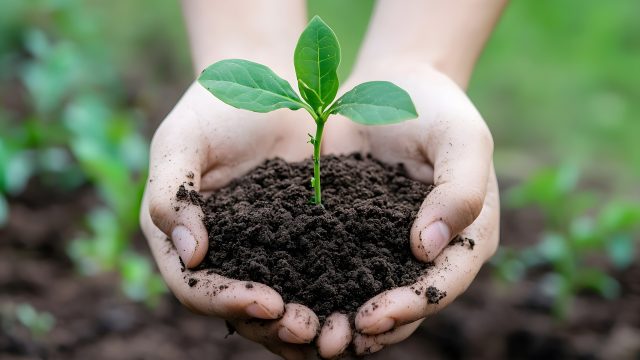
(Beyond Pesticides, December 16, 2025) Through a literature review and data analysis of almost 2,000 soil samples, the authors of a recent study find negative effects on the presence of plant-beneficial bacteria (PBB) in soil with pesticide exposure, particularly bacteria with plant growth-promoting traits that are essential for crop productivity. The study, published in Nature Communications, by researchers at China’s Shaoxing University and Zhejiang University of Technology, adds to scientific literature documenting the effects of pesticides on soil health.
“Pesticides not only reduce PBB diversity as individual factors, but they also exert synergistic negative effects with other anthropogenic factors… further accelerating the decline in PBB diversity,” the researchers state. They continue, “Increased pesticide risk also leads to a loss of functional gene diversity in PBB about carbon and nitrogen cycling within essential nutrient cycles, and a reduction in specific amino acid and vitamin synthesis.” In elucidating these impacts, this study reinforces previous research that connects pesticide use with deteriorating soil health, further stressing the urgent need for adopting a systems-wide transition to organic agricultural and land management practices.
Soil Microbiome Health
As the authors discuss, plant–soil–microbe interactions play a critical role in the growth, development, and overall health of plants, which can be disrupted with environmental contaminants like petrochemical pesticides and synthetic fertilizers. When mixtures of pesticides are used, this “drives the microbial community toward a composition dominated by pesticide-degrading or resistant ‘opportunists’ and ‘specialists,’” the researchers report, which can lead to even higher applications of pesticides and accelerated soil nutrient loss. They continue, explaining: “The functional loss of nutrient-cycling genes can disrupt key ecosystem services by reducing soil fertility, plant nutrient availability, and microbial resilience. Over time, these changes may affect carbon sequestration, greenhouse gas emissions, and overall ecosystem stability.”
In a previous Daily News post, titled Study Shows Value of Soil Microbiome, Nurtured in Organic Farming, Harmed by Chemical-Intensive Ag, Beyond Pesticides reiterates the importance of soil health after a study in the journal of Biology and Fertility of Soils confirmed once again that organic agriculture contributes significantly to soil health, improving ecological functions that are harmed by conventional, chemical-intensive farming practices. The research finds that organic soil amendments (fertilizers) that feed soil organisms increase beneficial protistan predators (among the most abundant and important single-celled eukaryotes in the soil) and support sustainable predator-prey relationships within the soil microbiome.
Organic farming creates a healthy ecosystem able to support a balance of life forms in the soil, while the use of chemical fertilizers for agricultural management disrupts the stable biological relationship between protistan predators and their bacterial prey in soils, adding to the argument for transitioning away from conventional systems that lean on toxic inputs.
Another study published this year in Environmental Pollution finds that “more than ten pesticides were detected in 98.62% of the soil samples, which changed the soil environment” and threatens the health of the soil microbiome. Since the soil microbiome requires balance, contamination from toxic chemicals, particularly in mixtures, can affect the stability of the soil ecosystem with cascading impacts, ultimately, to human health. (See Daily News here.)
Study Methodology and Results
The current study in Nature Communications adds to these findings in analyzing 1,919 soil sample data points from 88 independent experiments. After dividing the samples into agricultural (1191) and non-agricultural (728) categories, the researchers calculated and compared the diversity of plant-beneficial bacteria (PBB) to pesticide risks. The results show that the diversity of the PBB is highest when pesticide risk is lower, and vice versa. “[P]esticide risk remained a significant driver of PBB community composition… highlighting its important role in shaping PBB microbial diversity,” the authors write.
They continue: “[The results] indicated that increased pesticide risk decreased beneficial bacterial functions essential for plant health, predicting a negative effect on soil health due to the overuse of pesticides. These findings suggest that pesticide risk decreased PBB diversity and that varying levels of pesticide risk distinctly shaped soil PBB community structures. As the risk of pesticide use increased, the PBB in soils decreased, highlighting the detrimental effects of pesticide overuse on soil microbial ecosystems.”
The genes within the PBB are also impacted by pesticide exposure. The data shows PBB functional gene richness is significantly lower with higher pesticide risks, revealing a “more pronounced loss in the evenness and diversity of functions across microbial communities.” The reduction in functional genes within the soil microbiome can in turn “severely affect soil ecosystem services, such as nutrient cycling and plant‒microbe interactions, affecting the establishment of soil multifunctionality and overall soil health.”
Genes associated with carbon, nitrogen, phosphorus, and sulfur are also impacted in soil microbial communities with increased pesticide risk. The researchers note an observed decline in key carbon cycle genes, which can impact the capacity of the soil to act as a carbon sink. “This reduction in carbon fixation impairs the ability of the soil to store carbon, leading to accelerated carbon release, increased atmospheric CO2 levels, and the exacerbation of climate change,” the authors share.
Additional analysis of other anthropogenic factors, relating to climate and other human activities, reveals that when combined with pesticides, the interactions have a greater effect than just pesticides alone. These combined negative effects on bacterial diversity are most pronounced with precipitation and pesticides. “This indicates that the combined impact of precipitation and pesticide risk on PBB diversity loss was greater than the sum of their individual effects, potentially because of mechanisms such as increased pesticide leaching or bioavailability,” the researchers explain.
They continue: “Pesticide contamination not only diminishes the diversity and functionality of PBB but also increases their sensitivity to other anthropogenic factors, resulting in synergistic effects that further threaten soil health. This synergistic effect suggests that microbial community resilience is influenced by a complex interplay of environmental variables that can exacerbate pesticide-induced diversity loss in agricultural soils.”
Previous Research
As covered by Beyond Pesticides earlier this year, there is a growing interest in the soil microbiome, as environmental harm, including groundwater contamination, becomes increasingly apparent. Synthetic fertilizers cause a myriad of deleterious effects, including negative climate impacts, decreased soil carbon sequestration, and devastating harm to farmers. A wide body of science connects pesticide exposure to impacts on certain soil organisms, such as bacteria in the current study, as well as nematodes. (See Daily News Soil Nematodes Vital to Plant Health Threatened by Nontarget Pesticide Exposure, Study Finds.)
Last year, an international team of researchers reported that organic farming increases the quantity and diversity of crop plant microbiota, further safeguarding crops with enhanced pathogen resistance. Their research shows that the most significant richness of all bacteria and fungi is identified in organically managed farmland relative to conventional fields, as published in Plants, People, Planet. This study builds on the legacy of decades of peer-reviewed research and centuries of agricultural systems that do not rely on toxic, petrochemical-based products (e.g., fertilizers, pesticides, etc.) as the driving force for agricultural productivity. (See Daily News here.)
Also shared in previous coverage by Beyond Pesticides, an analysis in the International Journal of Research Publication and Reviews emphasizes the role of biodiversity in agriculture and calls attention to the foundation of sustainable agriculture, beginning with healthy soil. The soil microbes underfoot, including bacteria and fungi, provide essential functions in nutrient cycling, organic matter decomposition, and disease suppression, among others, which are promoted in organic practices.
The Organic Solution
To improve and sustain microbial communities, and in turn protect the health of humans, wildlife, and the environment, the use of toxic pesticides and fertilizers must stop. In transitioning away from this chemical dependence, the adoption of organic agriculture and land management offers a holistic solution. Diversity in soil microorganisms helps maintain soil structure and fertility, which promotes healthy and resilient crops. “Feed the Soil, Not the Plant” is the mantra of organic land management.
By focusing on soil health, other issues, such as pests and climate change, are also mitigated through organic methods. Additional information is available in the Pesticides and You article, Thinking Holistically When Making Land Management Decisions. To learn more about the benefits of organic land management, see here and here.
Become a Parks Advocate for organic parks by engaging with your community leaders through the Parks for a Sustainable Future program and advertising your commitment to pesticide-free spaces with “Pesticide Free Zone” signs. Help support Beyond Pesticides’ mission by becoming a member or making a gift contribution today.
All unattributed positions and opinions in this piece are those of Beyond Pesticides.
Source:
Qiu, D. et al. (2025) Global variation in plant-beneficial bacteria in soil under pesticide stress, Nature Communications. Available at: https://www.nature.com/articles/s41467-025-65719-7.





I have been making my living for 8 years growing produce with no man made chemical imputs. I have been telling people these same things. I did no scientific studies, but have learned from Elaine Ingham.
If we do not change the way we interact with our world there will come a point when we will not be a part of it. I truly hope that humanity wakes up before it is too late to counteract the damage that has been done to humanity and the rest of Earth and her creatures.
December 17th, 2025 at 3:51 pm