





08
Dec
Group Calls for Opposition to Administration’s Narrowing of Critical Habitats for Endangered Species Protection
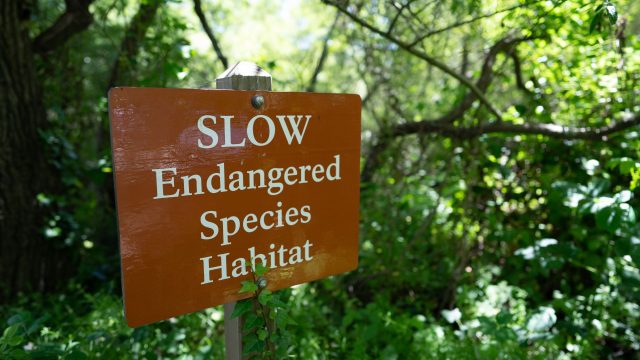
(Beyond Pesticides, December 8, 2025) In response to the Trump administration’s proposed new rules to limit protections for critical habitats under the Endangered Species Act (ESA), Beyond Pesticides is calling for public action to “Tell the U.S. Fish and Wildlife Service (FWS) and National Marine Fisheries Service (NMFS) not to adopt regulations that weaken protection of threatened and endangered species.” According to environmentalists, four new rules will allow an expansion of oil drilling, logging, and mining in critical habitats.
A week before Thanksgiving, which honors habitats supporting life, FWS, part of the Department of Interior (DOI), and NMFS, part of the Department of Commerce, announced proposed revisions to the rules implementing ESA that raises serious questions about the future restrictions of the nation’s foundational environmental law. Passed with bipartisan support in 1973, the ESA establishes “a prohibition on ‘take’ of a species, the requirement that all federal agencies ensure that the actions they carry out will not jeopardize the continued existence of a threatened or endangered species, and the drafting and implementation of recovery plans for at risk species,” according to the National Agricultural Law Center. See ESA current regulations.
Secretary of DOI Doug Burgum describes the action: “This administration is restoring the Endangered Species Act to its original intent, protecting species through clear, consistent and lawful standards that also respect the livelihoods of Americans who depend on our land and resources.” However, the purposes of the ESA, as laid out in the statute, appears to be inconsistent with the proposed rules: “The purposes of this Act are to provide a means whereby the ecosystems upon which endangered species and threatened species depend may be conserved, to provide a program for the conservation of such endangered species and threatened species, and to take such steps as may be appropriate to achieve the purposes of the treaties and conventions set forth in subsection (a) of this section.”
Among the findings stated by Congress in passing the ESA are the following:
(1) various species of fish, wildlife, and plants in the United States have been rendered extinct as a consequence of economic growth and development untempered by adequate concern and conservation;
(2) other species of fish, wildlife, and plants have been so depleted in numbers that they are in danger of or threatened with extinction; and
(3) these species of fish, wildlife, and plants are of esthetic, ecological, educational, historical, recreational, and scientific value to the Nation and its people; . . .
Thus, the original intent was not to relieve burdens on industries whose actions threaten biodiversity, but to ensure that such actions are tempered by “adequate concern and conservation.” Thus, the proposals weaken the basic protections provided threatened and endangered species and narrow the definition of critical habitats. As summarized by Earthjustice, the proposed rules would:
- Deprive newly listed threatened animal and plant species from automatically receiving protections from killing, trapping, and other forms of prohibited “take.” Species now proposed for listing, like the Florida manatee, California spotted owl, Greater sage grouse, and Monarch butterfly, could be left unprotected for years even after the U.S. Fish and Wildlife Service finalizes the listings.
- Narrow the definition of “critical habitat” to exclude currently unoccupied but historic habitat. Historic habitat is vital for recovery of imperiled species, especially as the areas where they currently live shrink due to the rapidly changing climate and the chain effects of ongoing biodiversity loss.
- Loosen compliance measures for federal agencies to make it easier to greenlight destructive actions, like logging or drilling, that put a protected species in harm’s way.
- Violate the letter of the law by allowing “economic considerations” in decisions about whether to protect species that are scientifically shown to be at risk of extinction. With this rule, the federal government could decide against protecting an endangered species after considering lost revenue from prohibiting a golf course or hotel development to be built where the species lives.
For Beyond Pesticides’ action, the organization proposed the following comments on the four proposals:
#1—FWS-HQ-ES-2025-0029-0001 eliminates newly listed threatened animal and plant species from automatically receiving protections from killing, trapping, and other forms of prohibited “take.”
Last month, the Trump administration proposed revisions to four rules implementing the Endangered Species Act (ESA) that will severely weaken endangered species. Passed with bipartisan support in 1973, the ESA establishes “a prohibition on ‘take’ of a species, the requirement that all federal agencies ensure that the actions they carry out will not jeopardize the continued existence of a threatened or endangered species, and the drafting and implementation of recovery plans for at risk species,” according to the National Agricultural Law Center.
Secretary of DOI Doug Burgum describes the action: “This administration is restoring the Endangered Species Act to its original intent, protecting species through clear, consistent and lawful standards that also respect the livelihoods of Americans who depend on our land and resources.” However, the purposes of the ESA, as laid out in the statute, are inconsistent with the proposed rules: “The purposes of this Act are to provide a means whereby the ecosystems upon which endangered species and threatened species depend may be conserved, to provide a program for the conservation of such endangered species and threatened species, and to take such steps as may be appropriate to achieve the purposes of the treaties and conventions set forth in subsection (a) of this section.”
Among the findings stated by Congress in passing ESA are the following:
(1) various species of fish, wildlife, and plants in the United States have been rendered extinct as a consequence of economic growth and development untempered by adequate concern and conservation;
(2) other species of fish, wildlife, and plants have been so depleted in numbers that they are in danger of or threatened with extinction; AND
(3) these species of fish, wildlife, and plants are of esthetic, ecological, educational, historical, recreational, and scientific value to the Nation and its people; . . .
Thus, the original intent was not to relieve burdens on industries whose actions threaten biodiversity, but to ensure that such actions are tempered by “adequate concern and conservation.” Thus, the proposals undermine the basic protections provided threatened and endangered species and narrow the definition of critical habitats.
I oppose the rule changes in this docket, which would deprive newly listed threatened animal and plant species from automatically receiving protections from killing, trapping, and other forms of prohibited “take.” Species now proposed for listing, like the Florida manatee, California spotted owl, Greater sage grouse, and Monarch butterfly could be left unprotected for years even after the U.S. Fish and Wildlife Service finalizes the listings—some even before they have been named, such as some of the 80% of insect species not yet identified.
The Earth is facing an extinction crisis, which must be addressed by strong ESA regulations.
Thank you.
#2—FWS-HQ-ES-2025-0039-0001 narrows the definition of “critical habitat” to exclude currently unoccupied but historic habitat.
Last month, the Trump administration proposed revisions to four rules implementing the Endangered Species Act (ESA) that will severely weaken endangered species. Passed with bipartisan support in 1973, the ESA establishes “a prohibition on ‘take’ of a species, the requirement that all federal agencies ensure that the actions they carry out will not jeopardize the continued existence of a threatened or endangered species, and the drafting and implementation of recovery plans for at risk species,” according to the National Agricultural Law Center.
Secretary of DOI Doug Burgum describes the action: “This administration is restoring the Endangered Species Act to its original intent, protecting species through clear, consistent and lawful standards that also respect the livelihoods of Americans who depend on our land and resources.” However, the purposes of the ESA, as laid out in the statute, are inconsistent with the proposed rules: “The purposes of this Act are to provide a means whereby the ecosystems upon which endangered species and threatened species depend may be conserved, to provide a program for the conservation of such endangered species and threatened species, and to take such steps as may be appropriate to achieve the purposes of the treaties and conventions set forth in subsection (a) of this section.”
Among the findings stated by Congress in passing ESA are the following:
(1) various species of fish, wildlife, and plants in the United States have been rendered extinct as a consequence of economic growth and development untempered by adequate concern and conservation;
(2) other species of fish, wildlife, and plants have been so depleted in numbers that they are in danger of or threatened with extinction; AND
(3) these species of fish, wildlife, and plants are of esthetic, ecological, educational, historical, recreational, and scientific value to the Nation and its people; . . .
Thus, the original intent was not to relieve burdens on industries whose actions threaten biodiversity, but to ensure that such actions are tempered by “adequate concern and conservation.” Thus, the proposals undermine the basic protections provided threatened and endangered species and narrow the definition of critical habitats.
I oppose the rule changes in this docket, which would narrow the definition of “critical habitat” to exclude currently unoccupied but historic habitat. Historic habitat is vital for recovery of imperiled species, especially as the areas where they currently live shrink due to the rapidly changing climate and the chain effects of ongoing biodiversity loss.
The Earth is facing an extinction crisis, which must be addressed by strong ESA regulations.
Thank you.
#3—FWS-HQ-ES-2025-0044-0001 makes it easier for federal agencies to greenlight destructive actions.
Last month, the Trump administration proposed revisions to four rules implementing the Endangered Species Act (ESA) that will severely weaken endangered species. Passed with bipartisan support in 1973, the ESA establishes “a prohibition on ‘take’ of a species, the requirement that all federal agencies ensure that the actions they carry out will not jeopardize the continued existence of a threatened or endangered species, and the drafting and implementation of recovery plans for at risk species,” according to the National Agricultural Law Center.
Secretary of DOI Doug Burgum describes the action: “This administration is restoring the Endangered Species Act to its original intent, protecting species through clear, consistent and lawful standards that also respect the livelihoods of Americans who depend on our land and resources.” However, the purposes of the ESA, as laid out in the statute, are inconsistent with the proposed rules: “The purposes of this Act are to provide a means whereby the ecosystems upon which endangered species and threatened species depend may be conserved, to provide a program for the conservation of such endangered species and threatened species, and to take such steps as may be appropriate to achieve the purposes of the treaties and conventions set forth in subsection (a) of this section.”
Among the findings stated by Congress in passing ESA are the following:
(1) various species of fish, wildlife, and plants in the United States have been rendered extinct as a consequence of economic growth and development untempered by adequate concern and conservation;
(2) other species of fish, wildlife, and plants have been so depleted in numbers that they are in danger of or threatened with extinction; AND
(3) these species of fish, wildlife, and plants are of esthetic, ecological, educational, historical, recreational, and scientific value to the Nation and its people; . . .
Thus, the original intent was not to relieve burdens on industries whose actions threaten biodiversity, but to ensure that such actions are tempered by “adequate concern and conservation.” Thus, the proposals undermine the basic protections provided threatened and endangered species and narrow the definition of critical habitats.
I oppose the rule changes in this docket, which would loosen compliance measures for federal agencies to make it easier to greenlight destructive actions, like logging or drilling, that put a protected species in harm’s way.
The Earth is facing an extinction crisis, which must be addressed by strong ESA regulations.
Thank you.
#4—FWS-HQ-ES-2025-0048-0001 allows “economic considerations” in decisions about whether to protect species that are scientifically shown to be at risk of extinction.
Last month, the Trump administration proposed revisions to four rules implementing the Endangered Species Act (ESA) that will severely weaken endangered species. Passed with bipartisan support in 1973, the ESA establishes “a prohibition on ‘take’ of a species, the requirement that all federal agencies ensure that the actions they carry out will not jeopardize the continued existence of a threatened or endangered species, and the drafting and implementation of recovery plans for at risk species,” according to the National Agricultural Law Center.
Secretary of DOI Doug Burgum describes the action: “This administration is restoring the Endangered Species Act to its original intent, protecting species through clear, consistent and lawful standards that also respect the livelihoods of Americans who depend on our land and resources.” However, the purposes of the ESA, as laid out in the statute, are inconsistent with the proposed rules: “The purposes of this Act are to provide a means whereby the ecosystems upon which endangered species and threatened species depend may be conserved, to provide a program for the conservation of such endangered species and threatened species, and to take such steps as may be appropriate to achieve the purposes of the treaties and conventions set forth in subsection (a) of this section.”
Among the findings stated by Congress in passing ESA are the following:
(1) various species of fish, wildlife, and plants in the United States have been rendered extinct as a consequence of economic growth and development untempered by adequate concern and conservation;
(2) other species of fish, wildlife, and plants have been so depleted in numbers that they are in danger of or threatened with extinction; AND
(3) these species of fish, wildlife, and plants are of esthetic, ecological, educational, historical, recreational, and scientific value to the Nation and its people; . . .
Thus, the original intent was not to relieve burdens on industries whose actions threaten biodiversity, but to ensure that such actions are tempered by “adequate concern and conservation.” Thus, the proposals undermine the basic protections provided threatened and endangered species and narrow the definition of critical habitats.
I oppose the rule changes in this docket, which would violate the letter of the law by allowing “economic considerations” in decisions about whether to protect species that are scientifically shown to be at risk of extinction. With this rule, the federal government could decide against protecting an endangered species after considering lost revenue from prohibiting a golf course or hotel development to be built where the species lives.
The Earth is facing an extinction crisis, which must be addressed by strong ESA regulations.
Thank you.
All unattributed positions and opinions in this piece are those of Beyond Pesticides.




