





09
Dec
USDA Study Reports Pollution Control and Productivity in Organic Ag Outpaces Chemical-Intensive Ag
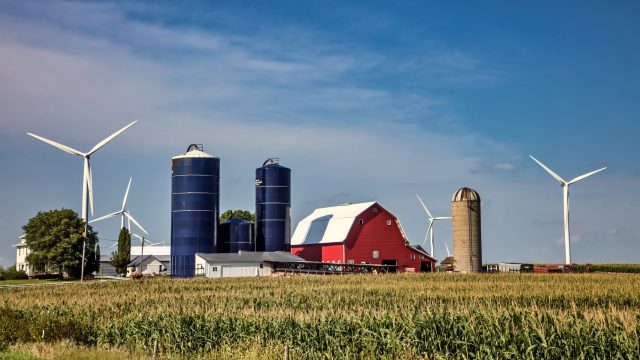
(Beyond Pesticides, December 9, 2025) In the Journal of Environmental Quality, researchers at the U.S. Department of Agriculture (USDA) report that a 4-year organically managed corn-soybean-oat system reduces nitrogen (N) loads by 50 percent with corn and soybean yields “equivalent to or higher than conventional [chemical-intensive] in most years.” The findings from a 7-year study comparing nitrate loss in organic and chemical-intensive management found that organically managed perennial pasture reduced nitrogen loads significantly. The study, which focused on nitrate pollution in agriculture that harms biodiversity, threatens waterways, drinking water, and public health, and releases nitrous oxide (an extremely potent greenhouse gas), was conducted at USDA’s National Laboratory for Agriculture and the Environment.
Organic and regenerative organic farmers and businesses posit that if commodity crops can be grown in organically managed systems with competitive yields, then this supports their argument for alternative systems not only feasible but economically sustainable and responsible.
Background and Methodology
The researchers note that, in the eastern and U.S. Midwest, “subsurface tile drainage” (the practice of manually draining fields below the surface soil to assist fields that are otherwise challenging to drain due to wet areas/highly compacted soils) has exacerbated nitrogen and nutrient runoff, ultimately leading to diminished soil health. The authors state: “Thus, developing strategies to mitigate nitrate () losses to surface waters while maintaining crop yields is crucial to long-term agroecosystem sustainability,” says the authors. They continue: “Practices inherent to organic farming, such as diversified crops (cover crops or perennial crops) and use of alternative N-sources (e.g., legumes, green manures, composts, and animal manure), have potential to manage losses.”
The authors highlight, based on USDA data, that the Midwest “accounts for about 25% of the total U.S. acres under organic production.” Despite this, “little research on losses via leaching exists for the region.” This study aims to fill the research gap, as well as address the fact that nitrate leaching losses in the Midwest have not been extensively studied in organic systems. Europe-based studies on nitrate leaching and crop yields have not fully evaluated the benefits of organic.
The study is an extension of the USDA organic water quality experiment, which was launched in 2011. The site was previously managed as conventional corn-soybean fields until 2006. The experimental design of the fields was randomized “with five replications” and “each phase of the crop rotation was present each year for a total of 30 plots, each 30.5 meters x 30.5 meters in size.” For further information on the measurement criteria of agronomic management and crop yields, tile water sampling and analysis, and soil sampling and analysis, refer to Sections 2.2, 2.3, and 2.4, respectively. The parameters of the statistical analysis can be found in Section 2.5.
The researchers are based at the National Laboratory for Agriculture and the Environment in Ames, Iowa–a research lab under USDA-ARS (Agricultural Research Service)–and the Department of Agronomy and Department of Horticulture at Iowa State University. “The authors declare no conflicts of interest” in terms of conducting this study.
Results
The researchers highlight the four main conclusions of their 7-year study:
- “Four-year organic rotation reduced N loads by 50% compared to conventional corn–soybean.
- Diversified rotation and annual precipitation accounted for 55% of variability in N drainage losses.
- Organic corn yields were similar to or higher than conventional in 4 of 7 years.
- Organic soybean yields were similar to or higher than conventional in 6 of 7 years.”
In the conclusion section, the authors highlight additional significant findings:
- “It is noteworthy that on average 44% more N was lost during the soybean phase of organic rotation than during the corn phase, reflecting greater N uptake by corn plants coupled with mineralization-immobilization of manure and alfalfa N affecting multiple growing seasons.
- Differences in annual precipitation were a driving factor for annual variability in N leaching losses; however, losses were different for different crops, with the highest N loss observed under conventional corn–soybean rotation.
- Overall, under a highly fertile, artificially drained Mollisol [type of soil based in temperate grassland environments], organic farming practices that combine use of animal manure and inclusion of small grains, forage legumes, and green manure can reduce N losses while maintaining crop yield.”
The authors believe that these findings support “the adoption of organic systems in tile-drained regions to enhance water quality without compromising productivity,” which presents significant implications for the future of American agriculture if not heeded by farmers looking to preserve and maintain their farmland as the climate crisis worsens.
Previous Coverage
Researchers for decades have engaged in interdisciplinary, evidence-based field studies on the competitiveness of organically managed cropping systems, reinforcing public and environmental health advocates’ calls for a wholesale transition to organic land management.
The Rodale Institute, Ohio State University, and Tennessee State University determined in a study (2025) based on field trials that organic grain cropping systems contain higher concentrations of total nitrogen and soil organic carbon, exceeding those found in conventional, chemical-intensive systems. (See Daily News here.) This study is an extension of the Rodale Institute’s Farming System Trial (FST), an ongoing 40+-year field study published in 2020 with the overarching goal of “[a]ddress[ing] the barriers to the adoption of organic farming by farmers across the country.” The FST finds:
- Organic systems achieve 3–6 times the profit of conventional production;
- Yields for the organic approach are competitive with those of conventional systems (after a five-year transition period);
- Organic yields during stressful drought periods are 40% higher than conventional yields;
- Organic systems leach no toxic compounds into nearby waterways (unlike pesticide-intensive conventional farming;
- Organic systems use 45% less energy than conventional systems; and
- Organic systems emit 40% less carbon into the atmosphere.
The findings of this most recent study are reinforced by another recent study based in Kenya. In a sixteen-year field trial based in Central Kenya, researchers have found higher crop yield stability in low-input organic systems with previously degraded soil than in high-input organic and nonorganic agricultural systems. The experimental design was a randomized complete block design in agricultural plots, with the fields split up into four farming systems: organic high input (Org-High), conventional high input (Conv-High), organic low input (Org-Low), and conventional low input (Conv-Low). High versus low inputs refer to the quantity and types of soil inputs, mulch, irrigation, and pest management tools (pesticides). The authors report:
“Based on the findings of our study, organic farming systems have the potential to achieve yields that match or exceed those of conventional farming systems, particularly in the long term when given adequate time for soil adaptation and improvement in soil fertility.” (See Daily News here.)
Organically managed corn and soybean fields are not the only crops that have a competitive edge over chemical-intensive counterparts—researchers have identified organic cotton, coffee, and bananas through peer-reviewed field studies as also holding advantages.
A study published in European Journal of Agronomy, based on a 16-year, long-term experiment (LTE) in Madhya Pradesh, India, finds that organic crops (cotton production with wheat and soybean rotations) in tropical climates are competitive with chemical-intensive (conventional) systems when evaluating systems’ resilience (to weather and insect resistance), input costs, and profitability. The study followed a 16-year rotational crop cycle between 2007 and 2022. The experimental design of the plots was randomized with four systems: BIOORG (organic according to European Union and U.S. standards), BIODYN (biodynamic standards that run stricter than organic certification), CON (conventional without the use of genetically engineered Bt Cotton, using local practices alongside synthetic inputs), and CONBtC (conventional with the Bt cotton and synthetic inputs). Each treatment was replicated four times for posterity and data gathering reassurances. In terms of crop yields:
- Organic cotton was more stable during pink bollworm outbreaks relative to the other three farming models in terms of conventional options. Additionally, organic cotton was not as competitive relative to conventional yields (although yields were sometimes comparable in non-Bt conventional plots).
- Organic soybeans yielded on average 102% of chemical-intensive yields, which researchers note as an intrinsic benefit of biological nitrogen fixation, permitting organic soybeans to thrive without synthetic fertilizer in this system.
- Organic wheat generally underperformed compared to chemical-intensive alternatives (77-80% of conventional yields), with the critical limiting factor being the slow release of nutrients and nitrogen deficiency post-cotton harvest. A follow-up experiment could intercrop leguminous plants, grasses, and/or other natural nitrogen fixers for one season before planting the wheat crops to see if there is a positive difference in yields.
- The diversification of chickpeas as the second rotation instead of wheat reduced potential risk and strengthened the profitability of the organic system as a whole. (See Daily News here.)
Researchers found in a new coffee production study published in Cleaner and Circular Bioeconomy that certified organic coffee producers in Peru have a lower carbon footprint than transitional organic coffee farmers. “The results indicate that the average emissions for the production units classified as ‘in transition’ are equivalent to 1.11 kg CO2e [carbon dioxide equivalent] per kilogram of green coffee, while for the organic production units, the average emissions associated with 1 kg of green coffee are equivalent to 0.68 kg CO2e,” the authors write. (See Daily News here.) Organic banana production, meanwhile, is significantly more conducive to microbial decomposition than its chemical-intensive counterparts in the Caribbean nation of Martinique, according to a study published in Applied Soil Ecology (2024). “Macrofaunal decomposition was increased more (55%) than microbial decomposition (20%), indicating that organic farming removes a constraint of conventional farming especially affecting macrofauna,” according to the authors. (See Daily News here.)
Organically managed food systems serve as both a social good and a multifaceted climate solution. A life-cycle analysis study published in Nature compared the impact of organic and conventional food production using eight environmental health indicators and found that organic food has a significantly lower environmental impact than conventional food production for six of the eight indicators, including a lower potential for contributing to acidification of the environment, energy use, and biodiversity loss. (See Daily News here.) Additionally, a comprehensive study in the Journal of Cleaner Production (2023) identifies the potential for organic agriculture to mitigate the impacts of agricultural greenhouse gas (GHG) emissions in the fight to address the climate crisis. The authors determine that “a one percent increase in total farmland results in a 0.13 percent increase in GHG emissions, while a one percent increase in organic cropland and pasture leads to a decrease in emissions by about 0.06 percent and 0.007 percent, respectively.” (See Daily News here.)
Call to Action
Groundbreaking studies, like the one covered in this Daily News, have the potential to transform policy and regulations in the long term and demand time, money, and political will.
You can support the continuation of this critical research by calling on your elected officials in the U.S. House of Representatives and Senate to endorse and sponsor the newly reintroduced Organic Science and Research Investment (OSRI) Act. (See Action of the Week here.) Learn more about your potential exposure to toxic pesticides and chemicals in over 90 non-organic crops, vegetables, fruits, nuts, and related items in the Eating With a Conscience database; you can also engage in the protection and expansion of organic standards through Keeping Organic Strong—while the Fall 2025 National Organic Standards Board (NOSB) meeting was canceled due to the federal government shutdown, we will continue to update issues before the NOSB, USDA’s National Organic Program, and opportunities public engagement.
All unattributed positions and opinions in this piece are those of Beyond Pesticides.
Source: Journal of Environmental Quality




