05
Dec
Weak Recovery of Bird Species after Neonic Ban with Exceptions in France, Persistence Cited
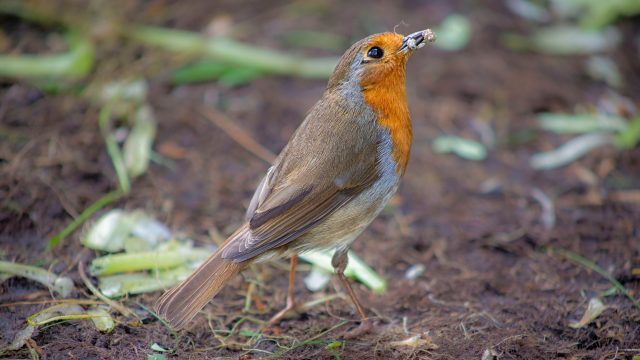
(Beyond Pesticides, December 5, 2025) A study published this month in Environmental Pollution analyzes the role of neonicotinoid insecticide exposure on bird populations, finding a significant negative effect of imidacloprid use on insectivorous bird abundance. In comparing the effects of the insecticide imidacloprid on bird abundance in France before and after the 2018 ban, the researchers show a weak recovery of bird populations after 2018. The persistent nature of imidacloprid, however, as well as the continued use of other petrochemical pesticides that have adverse effects on bird species, continues to impact populations of all types of birds and other wildlife, leading to cascading impacts on biodiversity.
“Our study shows that imidacloprid is a major covariate of the abundance of birds, in addition to other pesticides that are also negatively related to bird populations, and that these effects are not uniform across species,” the authors report. They continue in saying that the relationship between neonicotinoids and bird abundance varied across bird diets, as “the abundance of insectivorous birds was consistently lower under increasing pesticide use, in particular imidacloprid.”
Background
As shared in the study and on Beyond Pesticides’ Birds page, bird species can be exposed to pesticides directly through ingestion of seeds that have been treated with pesticides, or indirectly through consumption of small insects and other animals that have ingested the pesticides themselves, leading to secondary poisoning of the bird. They can also be indirectly affected through the overall decline in insect populations from pesticide exposure. When the insect population is reduced, which is currently occurring in an ‘insect apocalypse’ according to scientists, this natural food source for birds is also reduced. See Daily News Indiscriminate Poisoning of Neonicotinoid Insecticides Contributes to Insect Apocalypse, Study Finds and Continued Decline in Insect Species Biodiversity with Agricultural Pesticide Use Documented for more information. Some birds also forage for nectar, which has been contaminated in plants grown from pesticide treated seeds or drenched in production, a common problem with systemic pesticides like imidacloprid.
“Direct contamination, with lethal or sublethal effects, affects demographic parameters as well as bird behavior, such as predator avoidance or migration timing, with negative consequences on individual fitness and population dynamics,” the researchers say. They continue: “Pesticides also impact birds indirectly by decreasing the amount and diversity of food sources namely insects for most bird species, but also seeds. Major losses have been documented both in insects and seed plants and some of them were linked to high pesticides use.” (See additional research here.)
Of the many pesticide classes, neonicotinoid insecticides are particularly linked to population declines in birds. Neonicotinoids (neonics) are a class of insecticides that share a common mode of action that affects the central nervous system of insects, resulting in paralysis and death. Studies show that neonicotinoid residues accumulate in the pollen and nectar of treated plants and are a threat to the health of pollinators. Neonicotinoids are also persistent in the environment and are so toxic that as little as one neonic-treated seed is enough to kill a songbird. This class of pesticides is also known to contaminate waterways, posing additional risks as these compounds are highly toxic to aquatic organisms.
“Imidacloprid, in particular, has widely contaminated the environment worldwide and is commonly found in both aquatic and terrestrial eco-systems, as well as in birds,” the authors share. (See studies here, here, here, and here.) They continue: “In France, imidacloprid was the primary neonicotinoid used, as well as the most frequently detected in surface waters and arable soils… Despite the ban of neonicotinoids for flowering crops in 2013 and for all crops in 2018, annual exemptions were granted in France for sugar beet in 2021 and 2022. Imidacloprid continues to be detected in the environment and others neonicotinoids have been found in birds, suggesting the persistence of these active substances in the environment and their potential adverse effects on birds.”
Study Methodology and Results
While previous research links neonicotinoid use to population impacts, the “potential for population recovery after ban has not been investigated,” the researchers state. “Here, we investigated this relationship in France over the 2013–2022 period, focusing on 57 bird species from insectivorous, granivorous [animals feeding on grain] and generalist guilds, surveyed across a large number of plots (n = 1983).”
In analyzing publicly available data on pesticide sales and bird monitoring, the authors are able to calculate the Total Applied Toxicity (TAT) from toxicity to specific taxonomic groups (e.g. birds, nontarget arthropods) to indicate not only the direct effects of pesticides on birds but also on bird food sources (insects). “We also assessed whether the 2018 neonicotinoid ban was sufficient to trigger recovery in bird populations,” the researchers add.
For estimating bird abundance, data from the French Breeding Bird Survey from 2013 to 2022 was utilized, with the bird species separated into trophic guilds, which are defined by similar diets. Pesticide pressures were assessed through data on pesticide sales from the French National Database of Sales of Plant Protection Products by Authorized Distributors.
As a result, the authors find:
- “Both bird abundances and pesticide use exhibited strong spatial patterns. The spatial distribution of common birds differed across diets, with higher abundance of insectivorous birds in central, north-western and eastern France, while granivorous birds were more abundant in southern France, and generalists were more abundant in northern France.”
- “Pressure from other pesticides, estimated by TAT indices, showed spatial patterns similar to those for imidacloprid use.”
- “The relationship between imidacloprid, or other pesticide use, and bird abundance varied depending on bird diet and time period. For insectivorous birds, abundance during the 2013–2022 period was best explained by imidacloprid amounts… Across the entire period, insectivorous bird abundance was, on average, 9.0% lower in areas with high imidacloprid use vs. areas with no imidacloprid use.”
- “When analyzing the effect of imidacloprid use before and after the ban on insectivorous bird abundance, we found a significant negative effect of imidacloprid use before the ban (2013–2018 period) on bird abundance, which persisted into the time period after the ban. As expected, insectivorous bird abundance before the ban (2013–2018) was 12.7% lower at sites with high vs. no imidacloprid during the same period and the imprint of this imidacloprid use before the ban was still detectable on insectivorous bird abundance after the ban (2019–2022), with 9.1% lower abundance in sites with high pre-ban imidacloprid use.”
- “Additional analysis to investigate population recovery shows that the difference in abundance of insectivorous birds between pre- and post-ban periods is negatively correlated with the difference in imidacloprid use between these two same periods, indicating a greater recovery in insectivorous bird abundance in areas with sharper reduction in imidacloprid use. However, this difference is marginally significant, indicating a still fragile recovery of insectivorous birds with the ban on neonicotinoids.”
- “Interestingly, we found a persistent effect of imidacloprid use on insectivorous birds for at least four years after its ban, as pre-ban use remained the best predictor of post-ban abundance. However, the effect was weaker (-9%) than the effect on insectivorous bird abundance before the ban (-12.7%), suggesting the beginning of potential recovery.”
These results confirm the detrimental impact of neonicotinoids, imidacloprid in particular, on insectivorous birds. While bird population metrics since the ban of imidacloprid in France show slight improvement, this study highlights that pesticide bans of single active ingredients or pesticide classes is not enough to ensure full biodiversity recovery to protect all species.
“To conclude, our findings reinforce evidence of the strong and long-lasting cascading impacts of neonicotinoids in food webs, with primary impacts on insects propagating to insectivorous birds,” the researchers note. They continue: “Additionally, our study exemplifies that banning neonicotinoid does not guarantee immediate biodiversity recovery. Such lag effects highlight the need to maintain current ban and to reinforce large-scale, long-term monitoring—particularly of insect populations—if we are to witness recovery.”
Coverage of this study, published in The Guardian, includes quotes from the lead researcher, Thomas Perrot, PhD, at the Fondation pour la recherche sur la biodiversité (FRB) in Paris, in which he also says: “Even a few percentage [points’] increase is meaningful–it shows the ban made a difference. Our results clearly point to neonicotinoid bans as an effective conservation measure for insectivorous birds.” Dr. Perrot continues in saying, “The weak recovery after the ban makes sense… Neonicotinoids persist in soils for years and can keep affecting insects.”
Previous Research
Cited within this study, additional scientific literature finds alarming declines in bird populations. “Pesticides have been identified numerous times as one of the potential causes of these declines, along with changes in land use or climate.” (See research here, here, here, here, here, and here.) For more information on how the changing climate exacerbates the impacts of pesticides, see here.
As seen in earlier studies, the significant effects of neonicotinoids on insectivorous birds in the current study are consistent, indicating “that neonicotinoids contribute to declines in insectivorous bird abundance by approximately 3.5%–5% per year.” (See here and here.) The weak recovery of bird abundance after the 2018 ban is also “consistent with expectations for bird populations exposed to long-term use of persistent pesticides,” the authors share. “For example, more than a decade was required for bird populations to recover from DDT, and similar delays have been observed in insects.” Additional studies, covered in Daily News, can be seen here.
A Holistic Solution
These slow, partial recoveries, however, are not enough, given the dramatic decline of insect and bird populations. Banning single active ingredients or pesticide classes fails to address the larger issue of dependence on chemical-intensive practices, where the elimination of one toxic chemical leads to replacing it with another, potentially more toxic, chemical. In this case, the pesticide treadmill continues to be perpetuated, and full-scale recovery of any wildlife species requires a systems-wide transition to organic land management to be implemented.
In The Guardian article, Frans van Alebeek, policy officer for rural areas at BirdLife Netherlands, is quoted as saying: “Neonicotinoids are part of a trend in which industry is getting better and better at finding chemicals that are extremely effective at low concentrations–you use less but the toxicity is not going down… To me, it shows that our system of testing pesticides before they are allowed on the market is not good enough. We have done it for 50 years for all kinds of pesticides–we go through the same process every 10 years and learn very little from history.” This adds to the long history of regulatory deficiencies, which Beyond Pesticides has covered for decades.
Also shared in The Guardian, James Pearce-Higgins, PhD, director of science at the British Trust for Ornithology, says when commenting on the current research: “It’s a study that shows there may be early signs of weak population recovery but the results are uncertain and could be down to other correlated factors… This study highlights the value of long-term monitoring so we can better understand these trends in the future.”
This begs the question: Is there time to wait and study the potential long-term impacts of banning single pesticides or pesticide classes? There is an urgent need to protect health and the environment, so the time is now to make the transition to organic land management, in which science has proven is more productive and cost-effective than conventional agriculture. More importantly, organic practices prevent pesticide risks and protect and enhance biodiversity, safeguard public health, and mitigate climate change.
Visit the Eating with a Conscience database to learn more about why food labeled “organic” is the right choice. For more on the threats to health of pesticides and the organic solution, stay tuned for the recording of Beyond Pesticides’ second session of the 42nd National Forum Series, The Pesticide Threat to Environmental Health: Advancing Holistic Solutions Aligned with Nature, from December 4.
All unattributed positions and opinions in this piece are those of Beyond Pesticides.
Sources:
Perrot, T. et al. (2025) Weak recovery of insectivorous bird populations after ban of neonicotinoids in France, hinting at lasting impacts, Environmental Pollution. Available at: https://www.sciencedirect.com/science/article/abs/pii/S0269749125015064.
Weston, P. (2025) France’s birds start to show signs of recovery after bee-harming pesticide ban, The Guardian. Available at: https://www.theguardian.com/environment/2025/nov/17/france-wildlife-insect-bird-numbers-rise-neonicotinoid-pesticide-ban-aoe.