





21
Jan
USDA Monitoring Report Declares Pesticide Residues in Food Supply Safe, Despite Science to the Contrary
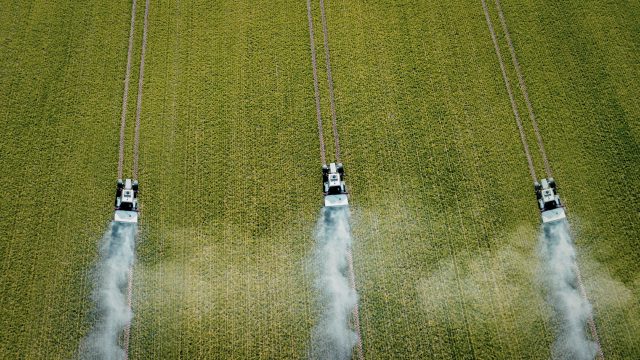
(Beyond Pesticides, January 21, 2026) The data in the annual U.S. Department of Agriculture (USDA) pesticide residue report, released earlier this month, continues to show a pattern of pesticide residues in the majority of food tested by the U.S. Department of Agriculture (USDA). Health advocates say low-level pesticide residues in the food supply within legal limits raise serious hazard concerns, while USDA, in its Pesticide Data Program–Annual Summary, Calendar Year 2024, points to controversial residue standards as a measure of safety. The USDA report finds that over 57 percent of tested commodities contain at least one pesticide and that less than one percent of detected residues violate the legal limit set as a tolerance by the U.S. Environmental Protection Agency (EPA). Residues allowed under tolerances establish allowable pesticide use patterns in agriculture that, beyond dietary risks, result in exposure to farmworkers, farmers, waterways, wildlife, and the broad ecosystem in which they are used. (See Eating with a Conscience for a list of pesticides allowed in food production by commodity.)
With respect to the preponderance of evidence on adverse health and ecological effects of cumulative exposure to toxic agrichemicals, including pesticides, Beyond Pesticides has called for the transition to organic agriculture. The organization wants to see a moratorium on all new pesticide active ingredient registrations by EPA until the agency adequately addresses issues pertaining to scientific integrity in its registration review process. (See the Pesticide-Induced Diseases Database for the range of adverse effects associated with pesticides and the deficiencies in the regulation of pesticides.)
Latest Data
Some of the top-level findings from the Pesticide Data Program (PDP) report include:
- “A total of 379 samples with 463 pesticides were reported to FDA as Presumptive Tolerance Violations (PTVs) because they exceeded the established tolerance and/or no tolerance was established”;
- Pesticides exceeding their set tolerances were detected in 0.77 percent (76 samples) of the total tested samples (9,872 samples); and
- “There were 337 samples that contained 1 pesticide for which no tolerance was established, 23 samples with 2 pesticides for which no tolerance was established, and 1 sample that contained 3 pesticides for which no tolerance was established. Fifty-eight of the 361 samples also contained 1 or more pesticides that exceeded an established tolerance.”
According to the 2024 data, 620 samples (6.3 percent) were organic certified. There is very little discussion about pesticide residues found in organic products in 2024. Historically, however, organic food products have been found to have zero contact with pesticides, unless due to herbicidal drift from other farming operations. (See Daily News here.)
Fresh fruit and vegetables, as well as their processed counterparts, account for over 92.8 percent of all 9,872 samples collected; these products include apples, avocados, blackberries (fresh and frozen), cherry tomatoes, cucumbers, head lettuce, leaf lettuce, onions, oranges, pineapples (fresh and frozen), potatoes, canned pumpkin, sweet corn (fresh and frozen), and tomatillos. The remaining products largely consist of almonds (5.4 percent) and salmon (1.8 percent), among other miscellaneous products. Just over 60 percent of samples were from domestic sources, with the remaining percent largely consisting of imports (just under 40 percent).
In terms of the 76 samples that exceeded tolerances, those samples include 1 sample of avocados, 22 samples of fresh blackberries, 8 samples of cherry tomatoes, 5 samples of cucumbers, 3 samples of fresh sweet corn, and 37 samples of tomatillos. For the avocado sample it was deltamethrin; for the fresh blackberries it was 9 samples with acephate, 6 samples with Cyhalothrin, and 8 samples with cypermethrin; for cherry tomatoes it was 2 samples with acephate, 1 sample with captan, 2 samples with Flonicamid, and 4 samples with Tetrahydrophthalimide (THPI); for the cucumbers it was 1 sample with Cyazofamid, 2 samples with Etoxazole, 1 sample with Methomyl, and 1 sample with Myclobutanil; for sweet corn it was 2 samples with Deltamethrin and 1 sample with permethrin; for tomatillos it was 36 samples of acephate that exceed tolerance thresholds.
Out of 679 samples, tomatillos are found to contain the following pesticide residues (some of which do not have EPA tolerances): acephate (58 samples), Acetamiprid (2 samples), Ametoctradin (1 sample), Azoxystrobin (130 samples), Benzovindiflupyr (1 sample), Bifenthrin (17 samples), Boscalid (35 samples), Buprofezin (1 sample), Carbendazim (55 samples), Chlorantraniliprole (33 samples), Chlorpropham (6 samples), Chlorpyrifos (12 samples), Clothianidin (125 samples), Cyantraniliprole (25 samples), Cyhalothrin (9 samples), Cypermethrin (1 sample), Cyproconazole (4 samples), Cyprodinil (6 samples), Cyromazine (89 samples), Deltamethrin (1 sample), Diazinon (1 sample), Difenoconazole (27 samples), Diflubenzuron (1 sample), Dimethoate (3 samples), Dimethomorph (3 samples), Dinotefuran (22 samples), Epoxiconazole (1 sample), Famoxadone (1 sample), Fenbuconazole (1 sample), Fenpropathrin (4 samples), Fenpyroximate (3 samples), Fipronil (1 sample), Flonicamid (1 sample), Flubendiamide (14 samples), Fludioxonil (2 samples), Fluopicolide (1 sample), Fluopyram (51 samples), Fluoxastrobin (17 samples), Flupyradifurone (16 samples), Flutriafol (25 samples), Fluxapyroxad (17 samples), Foramsulfuron (1 sample), Imidacloprid (3 samples), metabolite Imidacloprid olefin (29 samples), Indoxacarb (1 sample), Iprodione (1 sample), Malathion (4 samples), Metalaxyl/Mefenoxam (62 samples), acephate metabolite Methamidophos (76 samples), Methoxyfenozide (7 samples), Monocrotophos (9 samples), Myclobutanil (48 samples), Novaluron (8 samples), dimethoate metabolite Omethoate (14 samples), Oxamyl (1 sample), Oxamyl metabolite Oxamyl oxime (7 samples), Penthiopyrad (3 samples), Permethrin (8 samples), Picoxystrobin (1 sample), Profenofos (3 samples), Propamocarb (127 samples), Propiconazole (67 samples), Prothioconazole metabolite Prothioconazole desthio (1 sample), Pydiflumetofen (15 samples), Pyraclostrobin (27 samples), Pyridalyl (16 samples), Pyrimethanil (1 sample), Quinoxyfen (1 sample), Spiromesifen (1 sample), Sulfoxaflor (4 samples), Tebuconazole (152 samples), Tetraconazole (4 samples), Captafol and Captan metabolite Tetrahydrophthalimide – THPI (8 samples), Thiabendazole (2 samples), Thiamethoxam (4 samples), and Trifloxystrobin (9 samples).
The overwhelming majority of produce and vegetable samples with exceeded tolerances are imported goods. “Consumer, farmer, farmworker, and public health advocates continue to point to this data as a rationale for expanding organic domestic production and labor protections to ensure holistic justice to our food system,” says Max Sano, senior policy and coalitions associate at Beyond Pesticides.
Background
USDA spins its report findings as a positive safety finding because, as the Department says, “More than 99 percent of the products sampled through PDP had residues below the established EPA tolerances.” USDA continues, “Ultimately, if EPA determines a pesticide use is not safe for human consumption, EPA will mitigate exposure to the pesticide through actions such as amending the pesticide label instructions, changing or revoking a pesticide residue tolerance, or not registering a new use.”
In response to USDA’s characterization of the safety of pesticide residues, Beyond Pesticides points out that the tolerance setting process is highly deficient because of a lack of adequate risk assessments for; vulnerable subpopulations, such as farmworkers, people with compromised health or preexisting health conditions, children, and cultural/ethnic and regional subgroups of the general population; and a failure to fully assess serious health outcomes such as disruption of the endocrine system (which contributes to numerous serious diseases), and exposure to chemical mixtures resulting in synergistic effects.
In USDA’s 2025 data release (based on 2023 residue data), the agency found that over 72 percent of tested commodities contain pesticide residues (27.6 percent have no detectable residues), mostly below EPA tolerances.
Beyond Pesticides has reported on the misleading nature of the PDP annual summary in previous years (see here and here) and how certain mainstream organizations, such as Blue Book Services/Produce, cover the annual update that depicts pesticide exposure in produce as safe.
Pesticide Residues and Mixtures
According to a 2024 analysis by Consumer Reports, the U.S. Department of Agriculture (USDA) Pesticide Data Program (PDP) Annual Summary has continuously failed to accurately portray the safety of some of the most commonly sold fruits and vegetables in the United States. A review of seven years of PDP data show that 20% of the foods tested pose a “high risk” to the public, and 12 specific commodities are so dangerous that children or pregnant people should not eat more than one serving per day, according to Consumer Reports analysis. Consumer Reports contends that EPA pesticide residue tolerances are too lenient. To better evaluate potential health risks associated with various foods, Consumer Reports applied stricter residue limits than the EPA tolerances (see here for CR’s analytical methodology). Notably, USDA certified organic food products are not permitted to be produced with the pesticides identified by the report. Pesticide residues found in organic, with rare exception, are a function of the off-target chemical-intensive agriculture pollution through pesticide drift, water contamination, or background soil residues.
Scientists at Consumer Reports note that EPA’s calculations of “tolerable” levels of pesticides in food are at least 10 times higher than they should be to adequately ensure the health and safety of the public and the country’s ecosystems. According to Consumer Reports, EPA has never applied the tenfold safety factor to certain pesticides required as by the Food Quality Protection Act of 1996 to protect vulnerable populations Agencies typically point to acceptable or legal residues as protective of health and the environment, despite potential adverse effects associated with inadequate assessment of health outcomes, such as endocrine disruption, vulnerable population groups, exposure to mixtures and synergistic interactions, and more. (See Daily News here.)
Pesticide mixtures are key to the evaluation of adverse health effects, as documented in the scientific literature. A team of Argentinian researchers conducted a study published in Environmental Toxicology and Pharmacology of the combined effects of the herbicide glyphosate and the pyrethroid insecticide cypermethrin. The researchers observe significantly higher apoptosis in cells exposed to the mixtures than to the individual pesticides—a synergistic response. Apoptosis, also known as programmed cell death, is a standard way that tissues handle damaged cells to remove threats to their function. (See Daily News here.) There are solutions underway to address multiple pesticide residue exposure and associations with combined adverse effects. A 2024 study from Chinese and British researchers provides the first combined assessment of multiple classes of pesticides in human blood. The authors believe they are the first to develop a way to quantify multiple types of pesticides in human serum (clear liquid part of blood) as opposed to urine or from other sample collection methods. This is a tool that the researchers say is a more accurate way of assessing real-world exposure and ultimately the adverse impact of pesticide use on human health. (See Daily News here.)
Pesticide mixtures are also a threat to ecosystem stability and wildlife conservation efforts. A study, Pesticides detected in two urban areas have implications for local butterfly conservation, published in partnership with researchers at Xerces Society for Invertebrate Conservation, University of Binghamton (New York), and University of Nevada, reports widespread pesticide residues in the host plants of butterflies located in green spaces in the cities of Sacramento, California, and Albuquerque, New Mexico. Just 22 of the hundreds of collected samples had no detectable residues, with all other samples containing some combination of 47 compounds of the 94 tested pesticides in the plant tissue. Of the 47 compounds, four are neonicotinoid insecticides linked to adverse effects for bee and pollinator populations based on previous peer-reviewed research. The fungicide azoxystrobin and the insecticide chlorantraniliprole were detected at lethal/sublethal concentrations, according to the report authors. (See Daily News here.)
Call to Action
Beyond Pesticides recommends choosing organic produce whenever possible—the vast majority of which does not contain synthetic pesticide residues. Through the Eating with a Conscience database, you can select from over 90 different common produce and veggies you regularly consume and learn about the organic difference from their conventional, chemical-intensive counterparts.
Additionally, you can sign up for Action of the Week and Weekly News Update to stay notified on ways you can take action to expand public investments and programs that expand organic land management, in agricultural contexts and on public green spaces, parks, and playing fields, to move beyond a reliance on synthetic materials. See ManageSafeTM for addressing pest prevention and management for land and buildings.
All unattributed positions and opinions in this piece are those of Beyond Pesticides.
Source: Pesticide Data Program – Annual Summary, Calendar Year 2024




