





02
Feb
As Trump Steps Back from Global Health and Environmental Crises, Congress and States Asked To Step Up
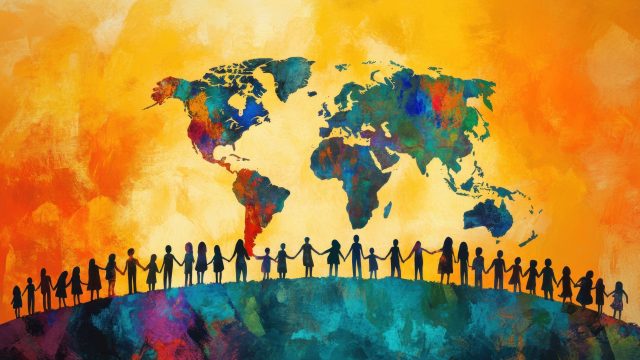
(Beyond Pesticides, February 2 2025) With the Trump administration withdrawing from international organizations that historically advance a shared world view of global sustainability (from health and the environment, to peace and justice), people are calling on the U.S. Congress and state governors to support critical health and environmental programs that link humanity across the globe. Beyond Pesticides is collaborating on an action to: Tell Congress to support and fund international organizations critical to the global health of humans and the biosphere, AND Tell Governors/Lieutenant Governors to join (as well as thank them for joining) the Governors Public Health Alliance and to expand their support for international agencies that protect biodiversity and mitigate the climate crisis (IUCN, IPBES, and IPCC). Will the U.S. Congress and state government step up to link across national borders when the Trump administration steps back from worldwide existential health and environmental crises?
Among the 66 organizations affected by this action are the World Health Organization (WHO), the International Union for Conservation of Nature (IUCN), the Intergovernmental Science Policy Platform on Biodiversity and Ecosystem Services (IPBES), and the Intergovernmental Panel on Climate Change (IPCC). These organizations all support global health, and withdrawing from them is “contrary to the interests of the United States,” especially given the dismantling of U.S. environmental and health protections.
The January 7 Trump memorandum—“Withdrawing the United States from International Organizations, Conventions, and Treaties that Are Contrary to the Interests of the United States,” referring to an apparent internal report (not disclosed to the public) from Secretary of State Marco Rubio, finds that, “[I]t is contrary to the interests of the United States to remain a member of, participate in, or otherwise provide support to the [66] organizations. . .” On the same day, Mr. Rubio said in a statement that, “The Trump Administration has found these institutions to be redundant in their scope, mismanaged, unnecessary, wasteful, poorly run, captured by the interests of actors advancing their own agendas contrary to our own, or a threat to our nation’s sovereignty, freedoms, and general prosperity.” The memorandum points to an earlier Executive Order 14199 (February 4, 2025), “Withdrawing the United States from and Ending Funding to Certain United Nations Organizations and Reviewing United States Support to All International Organizations,” which incorporates President Trump’s longstanding attack on the United Nations and many of its programs—discussed in a 2025 opinion piece in the Brazilian Center for International Relations Journal by Richard Gowan, program director for global issues and institutions at the International Crisis Group.
Fourteen U.S states (and Guam) recognized that dramatic harm to public health will occur with the U.S. withdrawal from WHO and joined together to form the Governors Public Health Alliance, “a new coalition of governors designed to protect the health of people across the U.S.” Beyond Pesticides’ action is calling on the alliance to expand its focus to address biodiversity and climate, since a failure to ensure protection in these areas will certainly undermine public health protection. To this end, the action encourages governors to join with the global community in supporting critical efforts to ensure a united U.S. and worldwide commitment to protecting ecosystems and mitigating climate threats, both essential to life.
- WHO was established in 1948 as a United Nations agency that connects nations, partners and people to prepare for, detect, respond to, and recover from health emergencies, including pandemics, disease outbreaks, natural disasters and humanitarian crises. WHO helps to build global systems that predict, prevent and contain emerging risks; support countries and communities in responding to disease outbreaks, disasters and humanitarian crises; rapidly assess the availability, safety, and efficacy of emergency health products; organize resources and health services for fair global access to vaccines, therapeutics, diagnostics and supplies; and support on-the-ground care in fragile settings to protect the most vulnerable. It is financed primarily through contributions from UN member nations. The International Agency for Research on Cancer (IARC) is an agency of WHO. WHO also houses the Global Outbreak Alert & Response Network (GOARN), which informs departments of public health in states across the U.S. and worldwide of pending health threats.
- Since 1948, IUCN has brought together leaders who set the agenda for global conservation. It possesses an unparalleled network spanning the conservation field. IUCN originates and activates some of the most influential conservation science in the field through commissions–networks of more than 17,000 scientists, analysts, researchers, experts, advocates, policymakers, and project leaders. In 1972, IUCN became the official advisor on nature under the World Heritage Convention. IUCN motions have resulted in more than 1,450 Resolutions and Recommendations, which serve as the basis for influencing conservation policy at the species, site, national, and global levels. The IUCN Red List is the world’s comprehensive source on the extinction risk status of 169,000 species of animals, plants, and fungi.
- IPBES was established in 2012 as an independent intergovernmental body to strengthen the science-policy interface for biodiversity and ecosystem services for the conservation and sustainable use of biodiversity, long-term human well-being, and sustainable development. It is not a United Nations body. However, it is an independent intergovernmental body that is open to all member countries of the UN. An important part of the work of IPBES is performing regular and timely assessments of knowledge on biodiversity and ecosystem services and their interlinkages, which include comprehensive thematic, global, and regional assessments. To date, 13 IPBES assessments have been completed.
- IPCC is the United Nations body for assessing the science related to climate change. It was created in 1988 by the World Meteorological Organization (WMO) and the United Nations Environment Programme (UNEP) to provide governments at all levels with scientific information that they can use to develop climate policies and provide input into international climate change negotiations. Thousands of people from all over the world contribute to the work of the IPCC. For the assessment reports, experts volunteer their time as IPCC authors in reviewing the thousands of scientific papers published each year to provide an open and transparent comprehensive summary of the state of knowledge concerning the drivers of climate change, its impacts, and future risks, and how adaptation and mitigation can reduce those risks. Through its assessments, the IPCC identifies the strength of scientific agreement in different areas and indicates where further research is needed.
Organizations such as these offer opportunities for assessing and addressing international problems. As was learned from the COVID-19 pandemic, disease outbreaks know no boundaries. Factors leading to species extinction likewise cross international borders. Biodiversity is critical to human survival and is affected by environmental conditions worldwide. Climate change, which has synergistic effects when combined with toxic chemicals and other anthropogenic factors, can only be addressed globally. Beyond Pesticides notes that, “International cooperation is crucial to assessing, preventing, and mitigating global crises. The U.S., which has historically supported these efforts, must not withdraw support now.”
The 2-part action now circulating includes: Tell Congress to support and fund international organizations critical to the global health of humans and the biosphere, AND Tell Governors/Lieutenant Governors to join (as well as thank them for joining) the Governors Public Health Alliance and to expand their support for international agencies that protect biodiversity and mitigate the climate crisis (IUCN, IPBES, and IPCC).
Letter to Congressional Representative and Senators:
On January 7, President Trump announced in a memorandum titled “Withdrawing the United States from International Organizations, Conventions, and Treaties that Are Contrary to the Interests of the United States” that the U.S. would be withdrawing from 66 international organizations. Among the organizations affected by this action are the World Health Organization (WHO), the International Union for Conservation of Nature (IUCN), the Intergovernmental Science Policy Platform on Biodiversity and Ecosystem Services (IPBES), and the Intergovernmental Panel on Climate Change (IPCC). These organizations all support global health, and withdrawing from them is “contrary to the interests of the United States,” especially given the dismantling of U.S. environmental and health protections.
WHO, established in 1948 as a United Nations (UN) agency, is critical in helping our nation to prepare for, detect, respond to, and recover from health emergencies, including pandemics, disease outbreaks, natural disasters, and predicts, prevents, and contains emerging risks. WHO conducts critical research on cancer through the International Agency for Research on Cancer (IARC).
Since 1948, IUCN has brought together leaders who set the agenda for global conservation. It has an unparalleled network spanning the conservation field. IUCN creates some of the most influential conservation science through commissions and in 1972, became the official advisor on nature under the World Heritage Convention. IUCN motions influence conservation policy at the species, site, national, and global levels. The IUCN Red List is the world’s comprehensive source on the extinction risk status of 169,000 species of animals, plants, and fungi.
IPBES was established in 2012 as an independent intergovernmental body to strengthen the science-policy interface for biodiversity and ecosystem services for the conservation and sustainable use of biodiversity, long-term human well-being, and sustainable development. IPBES performs regular and timely assessments of knowledge on biodiversity and ecosystem services and their interlinkages, which include comprehensive thematic, global, and regional assessments.
IPCC was created in 1988 by the World Meteorological Organization (WMO) and the United Nations Environment Programme (UNEP) to provide governments at all levels with scientific information that they can use to develop climate policies and provide input into international climate change negotiations by summarizing thousands of scientific papers published each year to give the state of knowledge concerning the drivers of climate change, its impacts, and future risks, and mitigation. Through its assessments, the IPCC identifies the strength of scientific agreement in different areas and indicates where further research is needed.
Organizations such as these offer opportunities for assessing and addressing global problems. As was learned from the COVID-19 pandemic, disease outbreaks know no boundaries. Factors leading to species extinction likewise cross international borders. Biodiversity is critical to human survival and is affected by environmental conditions worldwide. Climate change, which has synergistic effects when combined with toxic chemicals and other anthropogenic factors, can only be addressed globally. International cooperation is crucial to assessing, preventing, and mitigating global crises. The U.S., which has historically supported these efforts, must not withdraw support now.
Please demand that the U.S. renew our support for these global organizations.
Thank you.
Letter to 14 Governors, in support of the Governors Public Health Alliance, with expansion to biodiversity and climate issues:
Thank you for joining with 13 other U.S. states [and Guam] in forming the Governors Public Health Alliance “to protect the health of people across the U.S.,” recognizing the dramatic harm to public health that will occur with the U.S. withdrawal from the World Health Organization (WHO). We urge you to expand its scope to address biodiversity and climate, since a failure to ensure protection in these areas will undermine public health protection. Our state must join with the global community in supporting critical efforts to ensure a united worldwide commitment to protecting ecosystems on which life depends.
In addition to withdrawal from WHO, President Trump’s memorandum titled “Withdrawing the United States from International Organizations, Conventions, and Treaties that Are Contrary to the Interests of the United States” pulls the U.S. from 66 international organizations, including the International Union for Conservation of Nature (IUCN), the Intergovernmental Science Policy Platform on Biodiversity and Ecosystem Services (IPBES), and the Intergovernmental Panel on Climate Change (IPCC). These organizations all support global health, and withdrawing from them is “contrary to the interests of the United States,” especially given the dismantling of U.S. environmental and health protections.
You understand the importance of WHO in helping our state to prepare for, detect, respond to, and recover from health emergencies, including pandemics, disease outbreaks, and natural disasters. WHO also conducts critical research on cancer under one of its agencies, the International Agency for Research on Cancer (IARC).
Since 1948, IUCN has brought together leaders who set the agenda for global conservation. It has an unparalleled network spanning the conservation field. IUCN creates some of the most influential conservation science through commissions and in 1972, became the official advisor on nature under the World Heritage Convention. IUCN motions influence conservation policy at the species, site, national, and global levels. The IUCN Red List is the world’s comprehensive source on the extinction risk status of 169,000 species of animals, plants, and fungi.
IPBES was established in 2012 as an independent intergovernmental body to strengthen the science-policy interface for biodiversity and ecosystem services for the conservation and sustainable use of biodiversity, long-term human well-being, and sustainable development. IPBES performs regular and timely assessments of knowledge on biodiversity and ecosystem services and their interlinkages, which include comprehensive thematic, global, and regional assessments.
IPCC was created in 1988 by the World Meteorological Organization (WMO) and the United Nations Environment Programme (UNEP) to provide governments at all levels with scientific information that they can use to develop climate policies and provide input into international climate change negotiations by summarizing thousands of scientific papers published each year to give the state of knowledge concerning the drivers of climate change, its impacts, and future risks, and mitigation. Through its assessments, the IPCC identifies the strength of scientific agreement in different areas and indicates where further research is needed.
Organizations such as these offer opportunities for assessing and addressing global problems. As we learned from the COVID-19 pandemic, disease outbreaks know no boundaries. Factors leading to biodiversity decline across state and international borders are critical to human survival. Climate change, which has synergistic effects when combined with toxic chemicals and other anthropogenic factors, can only be addressed with international collaboration to assess, prevent, and mitigate global crises. Without U.S. support, states must step up.
Thank you for your leadership in protecting public health. Please expand the scope of the Alliance to ensure a sustainable future.
Letter to 36 Governors to join Governors Public Health Alliance and expand scope to biodiversity and climate protection:
On January 7, President Trump announced in a memorandum titled “Withdrawing the United States from International Organizations, Conventions, and Treaties that Are Contrary to the Interests of the United States” that the U.S. would be withdrawing from 66 international organizations, including the World Health Organization (WHO), International Union for Conservation of Nature (IUCN), Intergovernmental Science Policy Platform on Biodiversity and Ecosystem Services (IPBES), and Intergovernmental Panel on Climate Change (IPCC). These organizations all support global health, and withdrawing from them is “contrary to the interests of the United States,” especially given the dismantling of U.S. environmental and health protections.
With the U.S. withdrawal from these vital international bodies, I urge you to join 14 other U.S. states [and Guam] as a member of the Governors Public Health Alliance, a new coalition of governors designed “to protect the health of people across the U.S.” and expand the scope of its work to address biodiversity and climate, since a failure to ensure protection in these areas will undermine public health protection. Our state must join the global community in supporting critical health and environmental efforts to ensure a united global commitment to protecting the health of our residents and the ecosystems on which life depends.
WHO, established in 1948 as a United Nations (UN) agency, is critical in helping our state to prepare for, detect, respond to, and recover from health emergencies, including pandemics, disease outbreaks, natural disasters, and predicts, prevents, and contains emerging risks. WHO conducts critical research on cancer through the International Agency for Research on Cancer (IARC).
Since 1948, IUCN has brought together leaders who set the agenda for global conservation. It has an unparalleled network spanning the conservation field. IUCN creates some of the most influential conservation science through commissions and in 1972, became the official advisor on nature under the World Heritage Convention. IUCN motions influence conservation policy at the species, site, national, and global levels. The IUCN Red List is the world’s comprehensive source on the extinction risk status of 169,000 species of animals, plants, and fungi.
IPBES was established in 2012 as an independent intergovernmental body to strengthen the science-policy interface for biodiversity and ecosystem services for the conservation and sustainable use of biodiversity, long-term human well-being, and sustainable development. An important part of the work of the IPBES is performing regular and timely assessments of knowledge on biodiversity and ecosystem services and their interlinkages, which include comprehensive thematic, global, and regional assessments.
IPCC was created in 1988 by the World Meteorological Organization (WMO) and the United Nations Environment Programme (UNEP) to provide governments at all levels with scientific information that they can use to develop climate policies and provide input into international climate change negotiations by providing an open and transparent comprehensive summary of thousands of scientific papers published each year to give the state of knowledge concerning the drivers of climate change, its impacts, and future risks, and mitigation. Through its assessments, the IPCC identifies the strength of scientific agreement in different areas and indicates where further research is needed.
As we learned from the COVID-19 pandemic, disease outbreaks know no boundaries. Factors leading to biodiversity decline across state and international borders are critical to human survival. Climate change, which has synergistic effects when combined with toxic chemicals and other anthropogenic factors, can only be addressed with international collaboration to assess, prevent, and mitigate global crises. Without U.S. support, states must step up.
I appreciate your consideration of this request. Thank you.





I respectfully remind you that the WHO is very dangerous. They are trying to gain control of the world through their freedom destroying ‘Pandemic Treaty’, and its fallout efforts, that would give them unprecedented powers over all nations that are a part of WHO. Please research what the WHO is secretly doing behind closed doors to steal YOUR freedom and YOUR health and safety. Trump happens to be very correct that these global organisations are not being run with the good of global citizens in mind- only the good of the ones who control these organisations. Getting free of WHO and other corrupt organisations is a desperately urgent need for any person who values their health, freedom of choice and their loved ones.
February 2nd, 2026 at 8:05 pmOn Public and Environmental Health and Worldwide Collaboration
We have gotten a very few critical responses to our action calling for the Congressional support of international agencies established to protect public and environmental health, both intricately tied to the sustainability of life in the United States and worldwide. In the interest of open dialogue and a joining together for the protection of loved ones, our communities, and the shared biosphere (air, land, water), some history is important to reminding us of the importance of open communication, independent science, and objective governmental and quasi-governmental bodies in the interest of public health. It is because we share the globe with interlocking ecosystems that we must share in designing the solutions. Finding those solutions requires the sharing of science and experience in our communities and worldwide.
A bit of history. Beyond Pesticides was founded 45 years ago with a strong embrace of the principles of public health protection. A series of field hearings led to the formation of the organization. In central Florida, the Rio Grande Valley in Texas, and the Salinas Valley in California, the founders visited with farmworkers and family farmers who described their health problems associated with pesticide exposure and the community-wide adverse effects tied to toxic chemical use. We were told about the sickness from rashes, headaches, respiratory illness, birth defects, to cancer by those exposed and the medical staff of local clinics. What we saw defined a community health problem suppressed with inadequate societal and governmental attention and response. We saw an occupational health problem and an even larger public health problem that crosses economic strata. The American Public Health Association defines public health as follows: ”Public health promotes and protects the health of all people and their communities. This science-based, evidence-backed field strives to give everyone a safe place to live, learn, work and play.”
The Alabama Department of Public Health says it like this: “The term “public health” is a broad one. It can be used to describe the literal health of your community or society, or it can refer to the system used to protect, maintain, and improve that health. It encompasses the sometimes controversial idea that everyone has a responsibility in preserving and protecting not only their own health, but the health of those around them. . . Because of the way pathogens evolve, environments change, and public sentiment shifts, maintaining an effective public health system is a never-ending process of study, adaptation, adjustment, and refinement. This has been true of the public health system in the United States as a whole, and here in Alabama as well.”
Why international communication. No country, including the U.S., can protect the health of its residents without communication and the sharing of information and research across borders. Beyond Pesticides has historically focused on policy and practices in the U.S. with focused advocacy and work to transition to organic land management. However, we have always been in communication with the incredible talent of scientists and advocates around the world. Our most recent 42nd National Forum, “The Pesticide Threat to Environmental Health: Advancing Holistic Solutions Aligned with Nature,” brought together scientists in the U.S. with those from Italy, Brazil, Belgium, Rwanda, and Canada. Our databases and Daily News share the knowledge and experience from around the world.
International Agency for Research on Cancer (IARC). In March, 2015, IARC announced its finding that the weed killer glyphosate (Roundup) is probably carcinogenic in humans. Prior to classifying this chemical carcer causing, 17 experts from 11 countries (including the U.S.) analyzed scientific studies and data for approximately one year before meeting together in a Working Group, which led to a consensus evaluation. Consideration is given to exposure data, studies of cancer in humans, studies of cancer in experimental animals, and mechanistic and other relevant data. In 1985 the U.S. Environmental Protection Agency (EPA) classified glyphosate as “possibly carcinogenic to humans” based on tumors in laboratory animals, but changed its classification to evidence of non-carcinogenicity in human years later after the chemical industry challenged the EPA’s classification.
IARC is an agency of the World Health Organization (WHO). In addition to glyphosate, IARC has classified atrazine, alachlor, diazinon, malathion, 2-bromopropane, and captafol as probably carcinogenic to humans and many more in the possibly carcinogenic category. These findings have helped to guide the protection of people worldwide and contributed to successful litigation against chemical manufacturers who are governed by a pesticide law in the U.S. that allows much discretion to an EPA that continues to allow widespread exposure to these chemicals through use and in the food supply and waterways. Similarly, the Stockholm Convention’s list of persistent organic pollutants has provided an international framework for classifying and eliminating pesticides such as the extremely hazardous wood preservatives used on utility poles, pentachlorophenol and copper chromated arsenate (CCA). No such plan exists in the U.S., despite the fact that wood preservative use in the U.S. constitutes the largest pesticide use after disinfectants. The Stockholm Convention is administered by the United Nations Environment Program.
Working with governmental and quasi-governmental agencies when there are disagreements on findings, the undue influence of the chemical (or other) industry, elements of corruption, disputed standards, and more. Our goal as an organization is collaboration to find solutions that are viable, cost-effective, and in sync with nature. We work to try to bring independent science to EPA’s decision making, strengthen the underlying standards that govern the agency’s work, call out corruption and collusion with the pesticide industry, elevate independent peer-reviewed science in its decisions, and more. Yes, there are some serious structural problems with EPA’s interpretation of law that allows exposure to hazardous chemicals or those that have not been comprehensively tested for specific health outcomes like endocrine disruption, for impacts on vulnerable population groups or those with preexisting medical conditions that elevate their risk factors, for mixtures that result in synergistic effects ignored by EPA, and more. However, we do not call for the dismantling of the agency or deregulation that allows broader chemical industry threat to the health of our loved ones and community. We work to incorporate improvements.
The communication that is needed to protect health in the U.S. and worldwide is facilitated by the World Health Organization. Sharing information on the latest science, health trends and threats, scientific reports, advocacy for vulnerable populations, and more. If there are aspects and findings for which there is disagreement, we urge an engaged debate with a sharing of scientific findings. These conversations are important. But destruction of the United Nations’ World Health Organization and the bringing together of the world community to try to solve problems that cannot be solved by individual nations alone is something we cannot support.
We welcome open debate and sharing of scientific information and experiential data. We recognize that science is always emerging and there are many in our community who have advanced and continue to advance issues and concerns well before they are widely accepted. The existential threats to health, biodiversity, and climate are worldwide problems and will only be solved as we work in our communities, in our states, and in our country, while we link hands, share science, and fight for solutions in collaboration with those around the world.
Those wishing to take action in support of United Nation’s programs to protect health and the environment, including World Health Organization (WHO), the International Union for Conservation of Nature (IUCN), the Intergovernmental Science Policy Platform on Biodiversity and Ecosystem Services (IPBES), and the Intergovernmental Panel on Climate Change (IPCC), please go to Beyond Pesticides’ action. Thank you!
>> Tell Congress to support and fund international organizations critical to the global health of humans and the biosphere, AND Tell Governors/Lieutenant Governors to join (as well as thank them for joining) the Governors Public Health Alliance and to expand their support for international agencies that protect biodiversity and mitigate the climate crisis (IUCN, IPBES, and IPCC).
February 4th, 2026 at 1:24 pm