





03
Feb
Pesticide Contamination in Small Water Bodies Threatens Biodiversity and Ecosystem Functioning, Study Finds
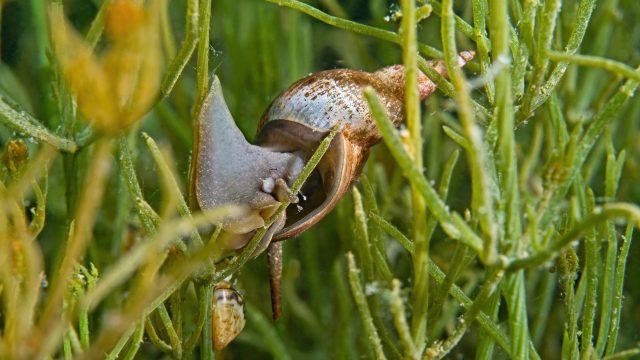
(Beyond Pesticides, February 3, 2026) In analyzing the direct and indirect effects of pesticides that act simultaneously upon macrozoobenthos communities (invertebrates living in or on sediment) in standing small water bodies (SWBs) in Germany, researchers find high risks to biodiversity and ecosystem functioning. Published in Hydrobiologia, the experiment finds high risks to invertebrates and highlights how both direct and indirect effects are vital to comprehensive assessments of pesticides. While typically overlooked in regulatory reviews, SWBs are defined as shallow standing or running freshwaters “with a surface area of less than 50 hectares (ha),” such as lakes or ponds, including farm ponds, as well as headwater streams, springs and flushes, and ditches.
SWBs are biodiversity hotspots that contribute to numerous ecosystem services and are adversely affected by agricultural land use effects such as pesticide contamination. “Holistic assessments of pesticide effects on invertebrate communities in standing small water bodies have, however, not yet been successful,” the authors note. To address this, the researchers developed an indicator for evaluating pesticide impacts on macrozoobenthos communities, populated with aquatic invertebrates, such as snails, worms, crayfish, and clams, through indirect toxic effects on aquatic plants called INPOND: INdirect Pesticide impacts ON Diversity in standing small water bodies.
As the researchers state: “The indicator development process included structural and functional biodiversity indices, tested for correlations with toxic units for invertebrates, algae, and aquatic plants. Our results indicate low direct pesticide toxicity risks for macrozoobenthos in most of the investigated water bodies. However, INPOND reveals a high risk to invertebrates through pesticide-induced changes in aquatic plant communities, an essential habitat component shaping invertebrate assemblages.”
Background
Standing small water bodies (SWBs) are “highly abundant, with over 277 million SWBs worldwide, making up to 90% of the total water body count and about 16% of the water surface of all inland freshwater bodies,” the authors note. They continue: “In Germany, there are around 292,000 SWBs, of which 58,000 are located in agriculturally dominated areas. The most common SWB type in northeastern Germany is kettle holes. Kettle holes are depressions in the landscape that were formed by melting of dead ice, i.e., old glacial boulders, at the end of the Last Ice Age. Overlying sediment settled in these depressions and formed sinkholes filled with water.”
SWBs, as compared to other water bodies such as rivers, have higher biodiversity of macrophyte (aquatic plant) and invertebrate communities, as well as higher numbers of rare and endangered species. These small bodies of water are also “stepping stones for the dispersal of organisms and could support shifts in species distribution due to changes in climate and seasons,” the researchers state. “Thus, kettle holes are essential for biodiversity on a landscape level, especially given the current global decline in insect diversity, abundance, and biomass.” Kettle holes, and other SWBs, also contribute further ecosystem services such as water retention and carbon sequestration, both of which are increasingly important with climate change.
“Despite their global abundance and importance in regard to species conservation and the climate crisis, there is only little research on SWBs and impacts on community compositions and their ecological functions under anthropogenic influence,” the authors note. In analyzing macrozoobenthos in SWBs, this provides insight into these data gaps, as macrozoobenthos are bioindicators of ecosystem health. As these organisms have species-specific needs, habitat diversity is linked directly to the diversity of macrozoobenthos and overall community composition. Impacts on habitat diversity, and thus macrozoobethos, from pesticides are identified in previous research. (See here, here, here, here, and here.)
Pesticides and other environmental contaminants can enter surface water, and subsequently SWBs, during and after application via several input pathways, including drift, run-off, erosion, exchange with groundwater, and inflow from drainages, and adversely impact the diversity of macrozoobethos. “It has also been found that macrozoobenthos communities in SWBs are at greater risk from the input of pesticides than those in larger water bodies,” the researchers explain. “In a similar way, nutrients from agricultural fertilization can enter surface water and can have an effect on macrozoobenthos communities, potentially decreasing their biodiversity.” (See studies here and here.)
Study Methodology and Results
To assess the ecological status of standing SWBs in agricultural areas of northeastern Germany, the authors compare pesticide contamination in kettle holes to the diversity of macrozoobenthos within the water bodies. “In order to obtain pesticide and macrozoobenthos diversity data, 84 agriculturally influenced standing SWBs in the federal states of Brandenburg (n = 60) and Mecklenburg-Western Pomerania (n = 24) were sampled,” the researchers say. They continue, “Each water body was surrounded by at least 90% agricultural land within a radius of 500 m, in order to ensure a primary influence by agricultural methods via water quality and habitat structure.”
Water sampling at multiple locations for each of the water bodies were collected and analyzed for 91 pesticide substances commonly used in agriculture, including fungicides, herbicides, and insecticides. Biodiversity data was also collected at each site, as well as reference sites to offer a comparison. This includes data on habitat types within the SWBs and sampling of “all invertebrate organisms living on bottom substrates with grain sizes larger than 0.5 mm, for example, aquatic insects, snails, mussels, and crustaceans.”
Both direct and indirect pesticide effects were calculated, using calculations for acute pesticide load, toxicity, and biodiversity indexes, as well as the INPOND (INdirect Pesticide impacts ON Diversity) indicator. As a result, the authors find that:
- Based on indirect effects and the INPOND indicator, 35 of the 84 SWBs in Brandenburg and Mecklenburg-Western Pomerania are classified as either poor or bad condition. 11 SWBs are classified as poor or bad based on the direct pesticide effects for invertebrate toxicity.
- The pesticides responsible for toxicity to aquatic plants that led to the water body classifications of poor or bad include the insecticide chlorpyrifos, the herbicides chloroluron, dimethanamid-P, flufenacet, foramsulfuron, nicosulfuron, prosulfuron, tebuconazole, and the fungicides epoxiconazole and terbuthylazin.
- Six of the eight SWBs in the bad category are characterized primarily by chlorpyrifos contamination, while the other two are characterized by tefluthrin. Of note, pyraclostrobin is the main substance in the “poor” water bodies.
- The number of organisms within the Gastropoda genus is lower with higher toxic effects on aquatic plants within SWBs.
- Pesticides toxicity toward aquatic plant species also reduces the occurrence of pelal-dwelling species (those living in the muddy substrate found at the bottom of aquatic ecosystems) in SWBs. The researchers note: “Thus, the absence of such aquatic plants due to herbicide or other pesticide exposure could result in a cascading effect of decreasing soil oxygen levels, increasing the risk of predation of burrowing pelal-dwelling species, and thus decreasing their occurrence. Additionally, their influence on nutrient conditions could shape microhabitats elevating habitat diversity within the water bodies.” This highlights the importance of aquatic plants as habitat providing structures, even for species appearing non-dependent on plants at first glance.
- “The proportion of r-strategic individuals [colonizers with rapid growth] correlates negatively with increasing toxicities toward aquatic plants, and inversely, more K-strategic individuals [longer lived in stable environments] are found with higher disturbance of aquatic plants,” which the authors state is not consistent with how r-strategist species (known as colonizers that usually increase in population with higher pollution) typically behave. “K-strategists are considered to be more efficient in using limited resources and thus constitute strong competitors in stable ecosystems,” the researchers share. They continue: “Therefore, our results demonstrate that pesticide contamination with regard to toxicity for aquatic plants does not constitute acute disturbances in the investigated SWBs… The absence of aquatic plants, especially emergent plant species, could hinder r-strategists from (re-)colonizing affected water bodies, resulting in lower r-/K-proportions.”
In summarizing their study and the results, the authors say: “In this study, we assessed the ecological condition of 84 SWBs in northeastern Germany in terms of pesticide contamination and its impacts on macrozoobenthos communities using the newly developed indicator INPOND. Compared to other commonly used functional and structural biodiversity metrics, this indicator is able to describe indirect pesticide effects on macrozoobenthos in an efficient and reliable manner… Our findings verified previously hypothesized negative indirect impacts of pesticides on macrozoobenthos communities in standing SWBs via toxic effects on aquatic vegetation, an essential habitat component for invertebrates in SWBs.”
As part of their conclusion, the researchers also postulate that in comparing the direct and indirect pesticide effects in SWBs, assessments “have a tendency toward an underestimation of the real risk of pesticides toward macrozoobenthos communities.” In the majority of the water bodies, the INPOND indicator reveals much higher risks by taking indirect pesticide effects into account, finding a deficiency in current risk assessment analyses.
Previous Research
There is extensive Daily News coverage on the contamination of pesticides in waterways, as well as the adverse impacts to aquatic organisms, terrestrial wildlife, and humans as a subsequent result. From groundwater to river-lake systems, or even in seaweed, this contamination is widespread. An additional study finds ubiquitous pesticide contamination in The Rhine Valley in southwestern Germany and highlights that current regulation of pesticides, even in the relatively progressive European Union, is inadequate to protect humans and all the other organisms that produce the environment necessary for human life and civilization. (See Daily News Sampling Finds Pesticides Throughout Environment with Toxic Mixtures from Agricultural Use for more information.)
As the current study authors point out, there is a wide body of research connecting pesticide toxicity to deleterious effects on aquatic biodiversity. One study shows that in stream invertebrates, the number of families is lower with higher direct toxicity from pesticides. Another study shows how herbicides have long-term effects on algae and aquatic plant communities in SWBs, which alters the food availabilty and habit structures for macrozoobethos and other organisms and leads to cascading impacts throughout aquatic communities. To learn more, visit Beyond Pesticides’ Threatened Waters: Turning the Tide on Pesticide Contamination resource page, as well as the Poisoned Waterways Pesticides and You article.
Moving Forward
While studies continue to mount on the adverse effects of pesticide contamination in the air, water, soil, and food that all life depends on, there is a holistic solution available. By eliminating the use of petrochemical pesticides and synthetic fertilizers and transitioning to organic agricultural and land management practices across the board, these adverse effects are mitigated. Removing the threats to biodiversity on a case-by-case basis, such as by targeting just chlorpyrifos as it was the pesticide responsible for the most contamination within this study, does not resolve the problem on its own. A single ban of a pesticide active ingredient allows the perpetuation of the pesticide treadmill, as another potentially more toxic chemical will take its place.
The holistic solution that lies in organic addresses this issue and offers an alternative that prioritizes soil health, eliminates the need for chemical inputs, and protects the health of all. Join Beyond Pesticides’ mission and take action to support organic both locally and globally. Start by telling your U.S. Representative and Senators to become a cosponsor of the Opportunities in Organic Act, which is expected to be reintroduced in early 2026 by U.S. Senator Peter Welch and U.S. Representative Jimmy Panetta and visit Beyond Pesticides’ Resources hub for more information and ways to get involved.
All unattributed positions and opinions in this piece are those of Beyond Pesticides.
Source:
Ruf, L., Lorenz, S., and Trau, F. (2026) The unseen threat: indirect pesticide effects are key to realistic ecological assessments of standing small water bodies, Hydrobiologia. Available at: https://link.springer.com/article/10.1007/s10750-025-06099-3.




