





26
Jun
Elevated Toxicity of Naturally Occurring Cyanobacteria Provoked by Pesticide Threatens Aquatic Organisms
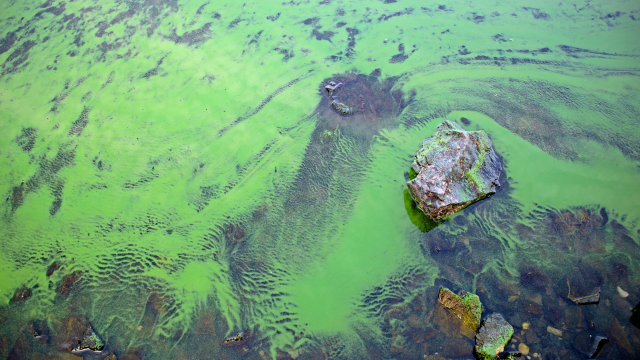
(Beyond Pesticides, June 26, 2026) In a study published in Aquatic Toxicology, researchers in Brazil determined that the cumulative toxicity of acetamiprid (a neonicotinoid insecticide) and cyanobacteria (photosynthetic microbes that can produce toxins) has a synergistic effect on the health of aquatic water fleas, or Daphnia. The implications of these findings paint a troubling picture for broader aquatic food webs, as they serve as a bridge species across trophic levels, serving as a primary consumer of plants and algae while also providing energy to secondary and tertiary consumers up the chain. In this context, public health and environmental advocates argue that the combined toxicity of synthetic agrichemicals and naturally occurring toxins is often considered an externality (external cost) borne by the public rather than a direct cost of agricultural production or nonagricultural pest management.
“When ecosystems are undermined, so are the economic systems that are relied upon to grow food,” says Max Sano, senior policy and coalitions associate at Beyond Pesticides. “The need for a wholesale transition to organic land management acknowledges this fundamental mismatch and seeks to account for these discrepancies, although policy must ensure that organic farmers have the resources they need to thrive.”
Methodology and Main Findings
The goal of this study is to examine the chronic impacts of singular and cumulative toxicity of acetamiprid and the cyanobacterium (Raphidiopsis raciborskii strain LETC-CY-05). This strain is known to produce saxitoxin, a toxin that can contribute to “red tide” algal blooms, disrupting entire aquatic ecosystems if not properly managed. In the study, researchers test two species of Daphnia, one kept in lab culture for approximately 30 years (D. similis) and one found in Lake Jacaré in Minas Gerais, Brazil (D. laevis). The test organisms were exposed for a 15-day period with sublethal exposure concentrations set below the observed lethal range. The combined toxicity of cyanobacterium and acetamiprid is analyzed using the MIXTOX model (Jonker et al., 2005) to consider synergistic interactions based on differences between estimated and observed values.
The study yields the following main findings:
- Reproductive Health Implications. For one of the test species of aquatic organisms (D. similis), the combined exposure delays the first reproduction cycle and cuts total offspring by 60 to 90 percent. For D.laevis, it is only acetamiprid as an isolated compound that impacts reproductive health and population growth.
- Combined Exposure Shows Non-Linear Interactions. A 1:1 mixture of cyanobacteria and acetempairid is synergistic and kills all D. similis organisms, whereas for D.laevis, “this occurred at 1:1 and 2:1 proportions.” As the abstract points out, “These results demonstrate that the interaction between acetamiprid and cyanobacteria can lead to enhanced toxicity in zooplankton, underscoring the importance of assessing multiple stressors and their interactive effects in aquatic ecosystems, as single-exposure assessments may fail to capture the full scope of ecological risks.”
- Complementary Modes of Actions. Acetamiprid is shown to disrupt nicotinic acetylcholine receptors (nAChRs) while saxitoxins, as produced by certain cyanobacteria, can block voltage-gated sodium channels. The combined impacts of this exposure can potentially compound both membrane disruption and oxidative stress in aquatic organisms. For previous studies cited by the authors on chemical interaction-enhancing cyanobacteria toxicity, see here and here.
Previous Coverage
There is a large body of peer-reviewed research documenting the synergistic effects and enhanced toxicity of chemical mixtures, including those with naturally occurring toxins, that requires assessment when allowing the application of synthetic agrichemicals into the environment.
A review published in Toxics finds that per- and polyfluoroalkyl substances (PFAS) can heighten the risks of environmental contaminants to exposed organisms. Mixtures of these compounds can negatively impact the nervous, cardiovascular, immune, and reproductive systems, particularly in aquatic organisms, and threaten overall biodiversity. “The objectives were to evaluate the toxicological effects of mixtures of the selected contaminants with PFAS on aquatic organisms to understand biological responses in animals better,” the study authors explain. “Based on our review, data suggest that PFAS can modify the toxicity of co-occurring pollutants.” (See Daily News here.) Research also finds that widespread agricultural pesticide use increases chronic dietary exposure in poultry and leads to adverse reproductive effects, despite meeting legal residue limits. As published in Poultry Science by researchers at Wrocław University of Environmental and Life Sciences (Wrocław, Poland), low-dose pesticide exposure of harmed the reproductive system of roosters (Gallus gallus domesticus) exposed to the fungicide tebuconazole (TEB), the insecticide imidacloprid (IMI), and the weed killer glyphosate (GLP) individually and in mixtures, with all concentrations at or below the maximum residue limits (MRLs) established by the European Union (EU). “Sub-MRL pesticide exposure impaired male reproductive function, with the most pronounced effects observed following combined treatments,” the authors report. They continue: “[E]xposure resulted in reduced semen quality, decreased fertility and hatchability, and increased embryo mortality, particularly in groups receiving IMI alone or in combination. These functional impairments were accompanied by detectable pesticide residues in reproductive tissues and body fluids, as well as modulation [modification/alteration] of local and systemic immune parameters.” (See Daily News here.)
These synergistic risks are not reflected in regulatory systems in the United States, according to recent scientific reports. In Chemical Research in Toxicology, for example, researchers from the Universitat Rovira i Virgili (Catalonia, Spain) highlight the threats to human and environmental health with “combined exposures to multiple chemical toxicants, including industrial chemicals, heavy metals, pesticides, endocrine-disrupting chemicals (EDCs), and per- and polyfluoroalkyl substances (PFAS).” As the authors point out, “This leads to a systematic underestimation of health risks, particularly for vulnerable populations. Despite robust evidence on mixture toxicity, major regulatory frameworks such as the U.S. Toxic Substances Control Act (TSCA) and the EU’s [European Union] REACH [Registration, Evaluation, Authorisation and Restriction of Chemicals] program continue to assess chemicals in isolation.” (See Daily News here.)
On the topic of the failures of the current U.S. regulatory system, researchers studied the effect of multiple climate stressors and pesticides in the environment and published their disturbing findings of elevated harm in “Double trouble: The synergistic threat of environmental stressors and pesticide mixtures,” Journal of Hazardous Materials (December, 2025). The researchers document synergism that is 70 times stronger than for the single chemical. The work is a follow-up to a previous study covered in Beyond Pesticides’ October 25, 2024, news brief. Researchers at the Helmholtz Centre for Environmental Research in Leipzig and the Department of Evolutionary Ecology and Environmental Toxicology at Goethe University in Frankfurt identify the interactions between two types of environmental stress—food deprivation and heat stress—and pesticides, both individually and in mixtures. In their laboratory study, the researchers exposed the water flea Daphnia magna, a tiny crustacean, to both types of stress in combination with exposure to the pyrethroid insecticide esfenvalerate and a mixture of 13 other pyrethroids. The degree to which the combination of pesticides and climate stresses exacerbates damage to the Daphnia adds to the real-world hazards that are not captured in required regulatory reviews for pesticide registration by the U.S. Environmental Protection Agency. (See Daily News here.)
Cumulative pesticide exposure is linked to numerous adverse health effects, including cancer. A novel study mapping pesticide mixtures and cancer risk, published earlier this year in Nature Health, “reveals a robust spatial association between environmental pesticide exposure risk and cancer incidence.” The team of international researchers incorporates pesticide risk modeling with Peruvian National Cancer Institute (INEN) registry data to map pesticide-induced cancer clusters in Peru, finding significant associations between pesticide mixtures and cases of carcinogenicity. The study analyzes 31 active pesticide ingredients to identify pesticide-associated cancer hotspots, none of which are classified as carcinogenic on their own by international standards. “Collectively, these findings strongly support a mechanistic [causal] link between pesticide exposure and cancer, challenging assumptions of human non-carcinogenicity derived from reductionist experimental models,” the authors state. “This study redefines the exposome [measure of all environmental, dietary, lifestyle, and social exposures of an individual] as a lineage-conditioned, mechanistically tractable framework and shows how complex pesticide mixtures can contribute to carcinogenic trajectories, with profound and far-reaching implications for global health policy and socio-ecological equity.” (See Daily News here.)
There are also neurotoxic implications for the continuous use of synthetic pesticides. A study in Discover Toxicology highlights neurotoxic pollutants as significant environmental threats, showcasing the adverse impacts on vertebrates’ neurological health from pesticides, including organophosphates, carbamates, and organochlorines. “These substances disrupt normal neurophysiological functions by impairing neurotransmission, generating oxidative stress, provoking neuroinflammation, and initiating neuronal cell death,” the authors say. They continue, “Such disturbances are linked to cognitive deficits, motor impairments, and abnormal neural development.” (See Daily News here.)
Call to Action
You can all subscribe to receive the Action of the Week and Weekly News Update in your inbox so that you can take strategic actions calling for change from the local to international.
For example, you can tell EPA, FDA, and Congress that regulations must consider the effects of pesticides in the context in which they are used and with reference to the organic alternative.
All unattributed positions and opinions in this piece are those of Beyond Pesticides.
Source: Aquatic Toxicology




