

25
Jun
Supreme Court Gives Pesticide Makers Immunity from Litigation for Omitting Cancer Warning on Products
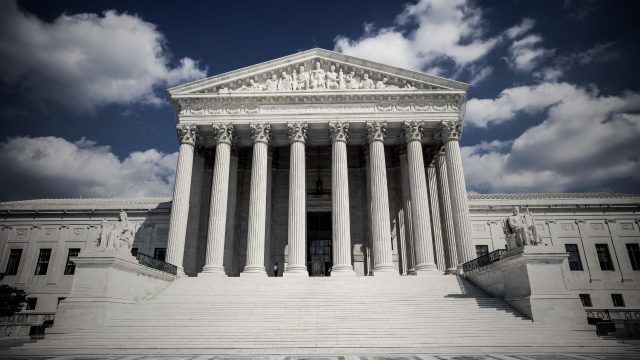
(Beyond Pesticides, June 25, 2026) The Supreme Court today, in a 7-2 decision, issued a ruling that prohibits, under current federal law, the right of those harmed by pesticides to sue manufacturers for their failure to warn consumers of potential hazards on their product labels. The decision effectively shields manufacturers from failure to warn lawsuits. See opinion here.
“The Court’s decision today is a tragic setback for public and environmental health, allowing companies that produce toxic pesticides to evade the most basic of responsibilities, warning consumers that their products may cause cancer and other deadly diseases,” said Jay Feldman, executive director of Beyond Pesticides, a national health and environmental group. “In an age of deregulation, the ability of farmers, farmworkers, and consumers to hold chemical manufacturers accountable for hazard warnings is the keystone to minimum protection of public health, as demand in the market for the safest possible products grows daily,” Mr. Feldman continued.
The Supreme Court case, Monsanto v. Durnell [24-1068], pits the manufacturer of the weed killer glyphosate, sold as RoundupTM, against a cancer patient with non-Hodgkin Lymphoma who was awarded $1.25 million in 2023 because the product label information provided no warning. The decision will vacate, or undo, billions of dollars in jury verdicts against Monsanto.
Before the Supreme Court heard the case on April 1, a statement decrying chemical company secrecy was released by over 200 grassroots, health, farm, farmworker, environmental, and consumer groups, socially responsible corporations, over 385 citizens from 47 states and the District of Columbia, and international partners. With support of the Trump administration, Bayer/Monsanto argues it should not be required to disclose on its product labels the potential cancer hazards of its pesticide products. Decades of jurisprudence have upheld the legal argument that chemical companies are liable for their failure to warn users of their pesticides about the harm that they could cause. Bayer/Monsanto wants to stop litigation and reverse years of case law and billions of dollars in jury verdicts in which the company has been held liable for causing cancer but not warning product users. [See statement, Stop Chemical Company Secrecy of Pesticide Product Hazards.]
The U.S. Supreme Court’s decision shields manufacturers from liability associated with those who are harmed but not warned about pesticides’ adverse effects like cancer, neurological or immunological conditions, reproductive dysfunction, and other chronic illnesses. The court establishes liability immunity under federal pesticide law, finding that the Federal Insecticide, Fungicide, and Rodenticide Act “preempts a state-law failure-to-warn claim concerning a pesticide registered by [the U.S. Environmental Protection Agency] EPA, where the agency has determined that a particular warning is not required and the warning cannot be added to a product label without EPA approval.”
The Supreme Court’s decision is preceded by thousands of successful lawsuits and settlements against Bayer/Monsanto for the company’s failure to warn about long-term hazards on their RoundupTM product label. While EPA does not recognize glyphosate to be cancer-causing, the International Agency for Research on Cancer, a branch of the World Health Organization, finds it to be “probably carcinogenic to humans.” Lawyers for plaintiffs against Monsanto argued that the company sought to hide behind a weak regulatory review process, while juries issued verdicts that held the company responsible for failing to warn of the chemical product’s potential adverse effects. The total number of jury verdicts amounts to billions of dollars in compensatory and punitive damages that the Supreme Court is wiping away with its decision, while putting end to pending cases of over a hundred thousand additional plaintiffs.
The Court is overturning (reversing) its 2005 decision in Bates v. Dow Agrosciences, 544 U.S. 431 (see analysis), which affirmed EPA’s approved pesticide product label as minimum protection, without releasing manufacturers of the responsibility to seek approval for a label that exceeds EPA’s minimum requirements. Pesticide manufacturers propose the text for their product labels and EPA ensures compliance with its minimum requirements, which does not preclude them from disclosing potential adverse effects they know or should have known about. EPA does not require a cancer warning (or other chronic effects) typically on pesticide product labels, even when the agency and the chemical manufacturer have identified a harm, including cancer, under EPA’s risk assessment review that it deems “acceptable.”
The Court in the Bates case made the important point that the notion of liability “emphasizes the importance of providing an incentive to manufacturers to use the utmost care in the business of distributing inherently dangerous items.”
Beyond Pesticides joined an amicus brief filed in the Supreme Court in April and led by Center for Food Safety (CFS), which challenged Bayer/Monsanto’s position that it should not be held liable for failing to warn consumers that the use of their pesticide products could cause cancer or other diseases.
All unattributed positions and opinions in this piece are those of Beyond Pesticides.
For more information, please visit the Failure to Warn Resource Hub; the latest version of this release is available at https://bp-dc.org/supreme-court-monsanto-v-durnell-pr-6-2026.