





06
Mar
Farm Bill Strips Protections from Pesticides for Farmers, Consumers, and the Environment
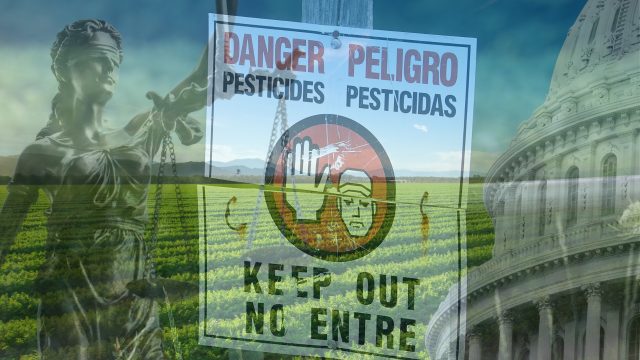
(Beyond Pesticides, March 6, 2026) The Farm Bill—the Farm, Food, and National Security Act of 2026, H.R. 7567—reported out of the Agriculture Committee in the U.S. House of Representatives yesterday strips environmental and public health protections from pesticides, reversing over 90 years of environmental laws adopted by Congress to protect farmers, consumers, and the environment that stretch back to the first Farm Bill in 1933. The Committee rejected the Protect Our Health Amendment, sponsored by Rep. Chellie Pingree (D-ME), which would have ensured that the final bill maintain three core safeguards in current law: (i) Judicial review of chemical manufacturers‘ failure to warn about pesticide hazards; (ii) Democratic right of local governments in coordination with states to protect residents from pesticide use; and, (iii) Local site-specific action to ensure protection—the safety of air, water, and land from pesticides under numerous environmental statutes. All Republicans and one Democrat (Rep. Adam Gray, D-CA) on the Committee blocked the Pingree amendment.
The Agriculture Committee bill adversely affects a wide range of social and conservation issues, including the protection of family farms, food security, environmental and public health, local and state authority, and judicial review, according to a cross-section of groups representing these interests. Overall, critics say, the Committee bill increases dependency of petrochemical fertilizers (which contribute to escalating toxic pesticide use), ignores hunger (despite a historically large $186 billion cut to the Supplemental Nutrition Assistance Program/SNAP), dismisses the notion of a fair, responsible, and accessible family farm safety net, and rolls back successful conservation investments.
“Discarding the traditional bipartisan process used to draft the Farm Bill in the Agriculture Committees of Congress, the Republican majority has instead passed a measure that has garnered across-the-board disapproval, except from those representing the vested interests of chemical companies and agribusiness,” said Jay Feldman, executive director.
The Pingree amendment would have removed text from the bill provisions that: (i) prohibit lawsuits by farmers and consumers harmed by pesticides for which manufacturers failed to provide complete safety warnings (Section 10205); (ii) take away the authority of local governments to protect residents and the local environment from pesticide use (Section 10206), and; (iii) repeal requirements in numerous federal statutes to protect against local pesticide contamination that could affect waterways, drinking water, federal projects, endangered species, migratory birds, and toxic waste (Section 10207).
The bill moves to the House floor amid growing opposition. The final bill was reported out with 27 Republicans and 7 Democrats voting for the measure and 17 Democrats voting against.
Background
Subtitle C of Title X, Part 1, “Regulatory Reform,” of the GOP Farm Bill is a sweeping set of exemptions, waivers, and revocations undermining 50 years of environmental laws adopted by Congress to protect farmers, consumers, and the environment. The bill language:
- Redefines and exempts plant regulators, biostimulants, “inert” ingredients, and genetically engineered materials from proper oversight. Pesticides and related “plant incorporated protectants” as listed above would be exempted from the Federal Insecticide, Fungicide and Rodenticide Act (FIFRA) registration review requirements, as well as from tolerance setting requirements under the Federal Food, Drug, and Cosmetic Act (FFDCA) (Section 10201);
- Further weakens and delays safety measures and environmental protections with a requirement for “harmonizing” interagency coordination. The U.S. Department of Agriculture (USDA) is charged with considering the economic costs of increased risk mitigation measures when up for public comment, further weakening a science-based approach to risk management that considers alternatives. The USDA Office of Pest Management Policy is mandated to coordinate with other federal agencies to consider pesticide use data, economic data of viable chemical alternatives, and likely to advance chemical-intensive practices (Section 10202);
- Weakens Endangered Species Act protections under new interagency working group regulations. The interagency working group will now require the Office of Pest Management Policy to attend, limit meeting requirements to just once a year rather than twice a year, and increase the influence of chemical companies in pesticide registration review decisions before public meetings are held (Section 10203);
- Diminishes the integrity of the pesticide registration review process. Repeals Section 711 of the Pesticide Registration Improvement Act of 2022, which mandates that EPA complete initial registration reviews of pesticides by October 1, 2026, striking a blow to scientific integrity and the assurance that active ingredients are adequately assessed before being released into the market (Section 10204);
- Immunizes chemical companies from liability and failure to warn. Prohibits lawsuits by farmers and consumers harmed by pesticides for which manufacturers failed to provide complete safety warnings (Section 10205);
- Preempts state and local authority. Takes away the authority of local governments to protect residents and the local environment from pesticide use with local restrictions (Section 10206);
- Exempts pesticides from reviews to protect water, ecosystems, and endangered species. Repeals requirements in numerous federal statutes authorized by Congress over the last 50 years to protect against local pesticide contamination that could adversely affect waterways, drinking water, federal projects, endangered species, migratory birds, and toxic waste cleanup (Section 10207); and,
- Eliminates the USDA Multiple Crop and Pesticide Use survey. Discontinues surveys, which provide baseline information to communities and farmers to inform practices and outcomes (Section 10211).
Highlighted in the critique of the Farm Bill passed out of committee is the undermining of agricultural policies’ contribution to solving critical health, food security, biodiversity, and climate concerns, such as the following:
- Petrochemical fertilizer dependency. Petrochemical fertilizer production and use have been directly tied to the release of greenhouse gases, a reduction in the drawdown of atmospheric carbon through soil sequestration, nitrate contamination (converted to nitrous oxide, a potent greenhouse gas) of air and water, and the harm to soil microbial life that escalates pesticide dependency. The proposed legislation—throughout the Conservation Title (Title II), including the Environmental Quality Incentives Program subtitle (Subtitle C), and in the Research Title (Title VII) —will codify continued reliance on petrochemical fertilizers through the promotion of “precision agriculture.” With the use of drones, satellites, and artificial intelligence, precision agriculture is touted by the industry and USDA as a great environmental achievement, focused on soil biology and lower or variable application rates of petrochemical pesticides and fertilizers—but ignores the dramatic damage it causes to soil biology, complex biological communities, and the economic value of healthy ecosystems and ecosystem services that naturally cycle plant nutrients.
- Hunger and social injustice. With one in seven people experiencing food insecurity and Congressional action last year (so-called “One Big Beautiful Bill Act”) adopting a historically large $186 billion cut to the Supplemental Nutrition Assistance Program (SNAP, formerly known as the Food Stamp Program), the GOP-proposed “farm bill ignores hunger,” said the American Friends Service Committee (AFSC). “AFSC believes in the need for a just Farm Bill that works toward ending hunger, invests in sustainable agriculture, supports small family farms rather than corporate monopolies, protects our environment, and makes nutritious food available to all.”
- Unsustainable agriculture. “The bill takes no meaningful steps toward building a fair, responsible, and accessible farm safety net while needlessly siphoning funding away from popular and effective conservation programs, according to the National Sustainable Agriculture Coalition.
- Endangered conservation programs. A letter from a broad range of environmental, farm, and public health groups characterizes the bill as follows: Rolls back or diverts proven conservation investments at a time when demand for soil health and resilience programs continues to outpace available funding; Weakens pesticide oversight and curtails state and local authority to protect farmworkers, children, pollinators, waterways, and endangered species from chemical exposure; Expands categorical exclusions and other mechanisms that limit environmental review, public input, and undermine our bedrock environmental laws, including the Clean Water Act, National Environmental Policy Act, Endangered Species Act, and more; and, Constrains rural energy affordability programs that help farmers and small businesses lower operating costs and achieve energy independence.
Agriculture Committee Vote Breakdown
- Members voting to report H.R. 7567 out of committee: [34] Rep. Glenn G.T. Thompson (R-PA-15), Chair; Rep. Austin Scott (R-GA-08), Vice chair; Rep. Don Bacon (R-NE-02); Rep. Mike Bost (R-IL-12); Rep. Rob Bresnahan (RPA-08); Rep. Kat Cammack (R-FL-03); Rep. Jim Costa (D-CA-21); Rep. Rick Crawford (R-AR-01); Rep. Sharice Davids (D-KS-03); Rep. Don Davis (D-NC-01); Rep. Monica De La Cruz (R-TX-15); Rep. Scott DesJarlais (R-TN-04); Rep. Randy Feenstra (R-IA-04); Rep. Brad Finstad (R-MN-01); Rep. Adam Gray (D-CA-13); Rep. Mark Harris (R-NC08); Rep. Ronny Jackson (R-TX-13); Rep. Dusty Johnson (R-SD-AL); Rep. Trent Kelly (R-MS-01); Rep. Frank Lucas (R-OK-03); Rep. Tracey Mann (R-KS-01); Rep. Kristen McDonald Rivet (D-MI-08); Rep. Mark Messmer (R-IN-08); Rep. Mary Miller (R-IL-15); Rep. Barry Moore (R-AL-01); Rep. Dan Newhouse (R-WA-04); Rep. Zach Nunn (R-IA03); Rep. Josh Riley (D-NY-19); Rep. John Rose (R-TN-06); Rep. David Rouzer (R-NC-07); Rep. Dave Taylor (R-OH02); Rep. Derrick Van Orden (R-WI-03); Rep. Gabe Vasquez (D-NM-02); and Rep. Tony Wied (R-WI-08).
- Members voting to take no action on H.R. 7567 in committee: [17] Rep. Angie Craig (D-MN-02), Ranking member; Rep. Shontel Brown (D-OH-11), Vice ranking member; Rep. Alma Adams (D-NC-12); Rep. Nikki Budzinski (D-IL-13); Rep. Salud Carbajal (D-CA-24); Rep. Shomari Figures (D-AL-02); Rep. Jahana Hayes (D-CT-05); Rep. John Mannion (D-NY-22); Rep. April McClain Delaney (D-MD-06); Rep. Jim McGovern (D-MA-02); Rep. Chellie Pingree (D-ME-01); Rep. Andrea Salinas (D-OR-06); Rep. David Scott (D-GA-13); Rep. Eric Sorensen (D-IL-17); Rep. Shri Thanedar (D-MI-13); Rep. Jill Tokuda (D-HI-02); and Rep. Eugene Vindman (D-VA-07).
- Members not present [bereavement]: [2] Rep. Jim Baird (R-IN-04) and Rep. Jonathan Jackson (D-IL-01).
All unattributed positions and opinions in this piece are those of Beyond Pesticides.




