

06
Mar
North American Birds’ Decline Associated with Agriculture
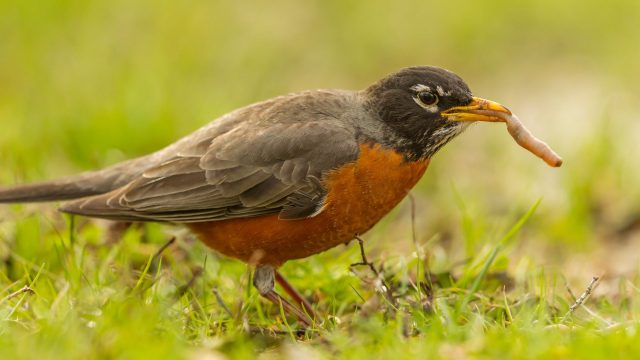
(Beyond Pesticides, March 6, 2026) Does humanity want to live in a world without birds? This may seem like an extreme question, but a new study in Science concludes that, without changes in human behavior, just such a world may be on the horizon. This would be a tragedy of colossal proportions, not only for the ecosystem services birds provide, but for the meaning of human life and a healthy biosphere. The oldest human-made image of a bird is 40,000 years old.
The new study, by Czech environmental scientist François Leroy, PhD, and two colleagues from The Ohio State University, measured local population abundances of 261 North American bird species between 1987 and 2021. They also measured the speeds at which the species’ populations rose or fell. The study was based on data from the North American Breeding Bird Survey, a program of the U.S. Geological Survey in coordination with the Canadian Wildlife Service. This survey involves direct observations of bird populations along roadsides during breeding season. The program was created in the mid-20th century in response to the severe mortalities associated with the use of DDT, highlighted by Rachel Carson in her seminal 1962 work, Silent Spring.
In the current study, the researchers use data from 1,033 of the thousands of road segments where observers counted birds over the 35-year period. There is a significant increase in bird abundance in only 17% of the roadside routes, whereas 70% of the routes see a significant decline. The sharpest declines are seen along routes in Florida, Texas, Louisiana, and Arizona. Over all of North America, “[O]n average, routes experienced a significant acceleration of bird abundance decline,” the authors write. In the Mid-Atlantic, Midwest, and California, the rate of bird decline clearly accelerates. Other areas, including parts of New England and the Pacific Northwest, see the rate of decline slow.
The researchers note that agricultural intensification and land use changes have been linked to changes in bird populations, and they integrate a set of related indicators, including climate, habitat, and human impacts, with the observational data from the North American Breeding Bird Survey. The results suggest that rapid climate warming is an important factor in bird declines. Not all species can adapt quickly, and others are leaving their traditional landscapes and moving northward.
The second major factor is what the authors call “high-intensity agriculture”—areas with high pesticide and fertilizer use and very large farm sizes. Pesticides are known bird killers. Pesticides’ effects on birds are varied, ranging from outright mortality to developmental damage to gut microbiota changes to derangement of breeding behavior and flight orientation. As has been documented extensively, some of the worst actors include neonicotinoids (e.g., imidacloprid), pyrethroids (permethrin), and phenylpyrazoles (fipronil). See our bird archive for more information.
As Beyond Pesticides has noted here and here, climate and synthetic chemical use work together to the detriment of whole ecosystems. The study authors make an important connection in this regard: While climate is likely responsible for the magnitude of bird losses, it is agriculture that is probably driving the acceleration of those losses. Astonishingly, the authors also observe that, “To our knowledge, this is the first large-scale study that has linked the acceleration of abundance change to the environment.” In a rational world, that link would have been suspected and analyzed decades ago. That it has taken until 2026 to produce a study making the connection is, according to advocates, an indication of the distortions produced by corporate and industrial interests—currently accelerating themselves—in the scientific and regulatory structures that are supposed to maintain balance in human life and the environment.
One finding in the Science study that points out the need for humans and wildlife to find ways to overlap is that in most of North America, birds and humans tend to occupy the same climatic zones: “[T]he strongest acceleration of decline occurs around intermediate mean temperatures” —50°F—“where bird populations are densest and human activities are most pronounced.” Unless human activity can accommodate the needs of non-human life, we will be living in a very species-poor world—so poor, in fact, that humans may not be able to sustain themselves. One ray of hope is that even small accommodations to wildlife and natural landscape systems can make a difference. A 2025 Italian study found that “Even a small increase in the naturalness of agricultural land,” such as preserving patches of steppe grassland, riparian forest, and wetlands can produce “significant biodiversity benefits.” Eliminating pesticides would make an even bigger difference.
The current study adds to the strong evidence that industrial agriculture using synthetic chemicals is destroying the biological structures vital to the maintenance of biodiversity and ecological health. The lessons of Silent Spring—a work that put birds at the forefront of a dawning awareness that pesticides are a Faustian bargain—apparently must be re-learned. Advancing organic, sustainable, and regenerative practices and policies is an urgent priority. See our Action of the Week Archive for steps you can take right now.
All unattributed positions and opinions in this piece are those of Beyond Pesticides.
Sources:
Acceleration hotspots of North American birds’ decline are associated with agriculture
Leroy et al.
Science 2026
https://www.science.org/doi/epdf/10.1126/science.ads0871
Latest State of the Birds Report Highlights Population Declines Indicative of Deteriorating Ecosystem Health
Beyond Pesticides, March 20, 2025
https://beyondpesticides.org/dailynewsblog/2025/03/latest-state-of-the-birds-report-highlights-population-declines-indicative-of-deteriorating-ecosystem-health/
Garden Pesticide Use Harms Local Bird Populations, Study Authors Say “We Should Simply Ban These Poisons”
Beyond Pesticides, February 8, 2023
https://beyondpesticides.org/dailynewsblog/2023/02/garden-pesticide-use-harms-local-bird-populations-study-authors-say-we-should-simply-ban-these-poisons/
Impacts of Intensive Agriculture on Birds: A Review Structural Biodiversity Analysis in a Case Study of Wild Bird Communities in Southern Europe
Gioiosa et al
Agrociencia
https://www.mdpi.com/2076-3298/12/4/129