





04
May
U.S. Senate Ag Committee Chair To Take Up Republican Farm Bill Passed in U.S. House of Representatives
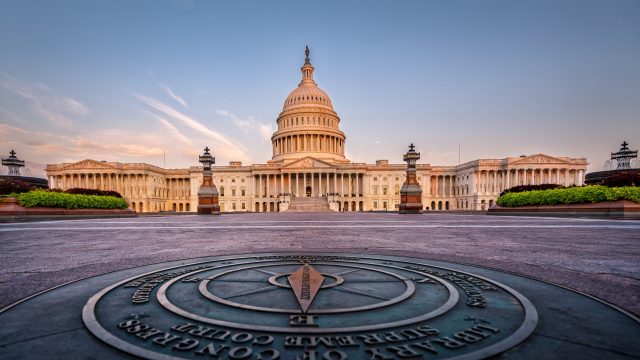
(Beyond Pesticides, May 4, 2026) Attention shifts to the U.S. Senate after the U.S. House of Representatives last week (April 30) passed a Farm Bill. In a bipartisan vote thought unthinkable just over a month ago when the House Agriculture Committee passed its Farm Bill, Democratic members of Congress, joined by 73 Republicans, stripped from the bill three chemical-industry authored provisions that would have severely weakened pesticide law on a vote of 280 to 142. The final bill, H.R. 7567—Farm, Food, and National Security Act of 2026, which is unacceptable to farm, farmworker, food, and environmental advocates, passed the House on a vote of 224 to 200. (See here for the vote tally.)
The Chair of the Senate Agriculture, Nutrition, and Forestry Committee, Senator John Boozman (R-AR) pointed to the House bill as “bipartisan” and a “significant achievement.” Fourteen Democrats voted for the House bill and three Republicans voted against the legislation, which has been widely referred to as a Republican bill since it was written by Republican lawmakers without input from Democrats. It is not clear whether Sen. Boozman will move ahead with bipartisan negotiations on Senate Farm Bill language.
Beyond Pesticides, along with environmental, farm, farmworker, and consumer groups, is calling on the U.S. Senate to hold the line and reject the House Farm Bill, pass a clean bill that extends the current law, and regroup to build a sustainable agricultural sector that respects farmers, farmworkers, consumers, and the environment.
The House bill, according to advocates, is so fundamentally flawed that they are asking the Senate to reject it and extend the current law with a “clean bill,” free of all controversial amendments that have been characterized as poison pills. Overall, critics say, the House Farm Bill increases dependency on petrochemical fertilizers (which contribute to escalating toxic pesticide use), ignores hunger (despite a historically large $186 billion cut to the Supplemental Nutrition Assistance Program/SNAP), dismisses the notion of a fair, responsible, and accessible family farm safety net, and rolls back successful conservation investments.
The bipartisan group of House members rejected the following pesticide industry provisions that were reported out of the House Agriculture Committee on March 5:
- Immunity for chemical companies from liability and failure to warn. Prohibits lawsuits by farmers and consumers harmed by pesticides for which manufacturers failed to provide complete safety warnings (Section 10205);
- Preemption of state and local authority. Takes away the authority of local governments to protect residents and the local environment from pesticide use with local restrictions (Section 10206); and,
- Exemption of pesticides from reviews to protect water, ecosystems, and endangered species. Repeals requirements in numerous federal statutes authorized by Congress over the last 50 years to protect against local pesticide contamination that could adversely affect waterways, drinking water, federal projects, endangered species, migratory birds, and toxic waste cleanup (Section 10207).
The effort in Congress to remove these provisions was led by Reps. Chellie Pingree (D-ME) and Thomas Massie (R-KY). Rep. Anna Paulina Luna (R-FL) sponsored the successful amendment on the House floor. However, it left in the bill provisions that:
- Redefine and exempt plant regulators, biostimulants, “inert” ingredients, and genetically engineered materials from proper oversight. Pesticides and related “plant incorporated protectants” as listed above would be exempted from the Federal Insecticide, Fungicide and Rodenticide Act (FIFRA) registration review requirements, as well as from tolerance setting requirements under the Federal Food, Drug, and Cosmetic Act (FFDCA) (Section 10201);
- Further weaken and delay safety measures and environmental protections with a requirement for “harmonizing” interagency coordination. The U.S. Department of Agriculture (USDA) is charged with considering the economic costs of increased risk mitigation measures when up for public comment, further weakening a science-based approach to risk management that considers alternatives. The USDA Office of Pest Management Policy is mandated to coordinate with other federal agencies to consider pesticide use data, economic data of viable chemical alternatives, and likely to advance chemical-intensive practices (Section 10202);
- Weaken Endangered Species Act protections under new interagency working group regulations. The interagency working group will now require the Office of Pest Management Policy to attend, limit meeting requirements to just once a year rather than twice a year, and increase the influence of chemical companies in pesticide registration review decisions before public meetings are held (Section 10203); and,
- Diminish the integrity of the pesticide registration review process. Repeals Section 711 of the Pesticide Registration Improvement Act of 2022, which mandates that EPA complete initial registration reviews of pesticides by October 1, 2026, striking a blow to scientific integrity and the assurance that active ingredients are adequately assessed before being released into the market (Section 10204).
People wanting to voice concern can: Ask the U.S. Senate to hold the line and reject the House Farm Bill, pass a clean bill that extends the current law, and regroup to build a sustainable agricultural sector that respects farmers, farmworkers, consumers, and the environment.
Letter to U.S. Senators:
The House-passed Farm Bill threatens the sustainability of the agricultural sector, family farms, food security, and environmental protection. It is fundamentally flawed and its provisions should be rejected. Instead, I urge you to advance a clean Farm Bill that extends the current law to allow time to negotiate truly bipartisan legislation.
Overall, the House Farm Bill increases dependency on petrochemical fertilizers (which contribute to escalating toxic pesticide use), ignores hunger (despite a historically large $187 billion cut to the Supplemental Nutrition Assistance Program/SNAP), dismisses the notion of a fair, responsible, and accessible family farm safety net, and rolls back successful conservation investments.
The House, with bipartisan support, did remove several provisions on the House floor that would have eliminated: judicial review of chemical manufacturers‘ failure to warn about pesticide hazards; the democratic right of local governments in coordination with states to protect residents from pesticide use; and, local site-specific action to ensure protection—the safety of air, water, and land from pesticides under numerous environmental statutes.
However, the House Farm Bill includes numerous egregious provisions that: Redefine and exempt plant regulators, biostimulants, “inert” ingredients, and genetically engineered materials from proper oversight. [Pesticides and related “plant incorporated protectants” as listed above would be exempted from the Federal Insecticide, Fungicide and Rodenticide Act (FIFRA) registration review requirements, as well as from tolerance setting requirements under the Federal Food, Drug, and Cosmetic Act (FFDCA) (Section 10201).]; Further weaken and delay safety measures and environmental protections with a requirement for “harmonizing” interagency coordination. [The U.S. Department of Agriculture (USDA) is charged with considering the economic costs of increased risk mitigation measures when up for public comment, further weakening a science-based approach to risk management that considers alternatives. The USDA Office of Pest Management Policy is mandated to coordinate with other federal agencies to consider pesticide use data, economic data of viable chemical alternatives, and likely to advance chemical-intensive practices (Section 10202).]; Weaken Endangered Species Act protections under new interagency working group regulations. [The interagency working group will now require the Office of Pest Management Policy to attend, limit meeting requirements to just once a year rather than twice a year, and increase the influence of chemical companies in pesticide registration review decisions before public meetings are held (Section 10203).]; and, Diminish the integrity of the pesticide registration review process. [Repeals Section 711 of the Pesticide Registration Improvement Act of 2022, which mandates that EPA complete initial registration reviews of pesticides by October 1, 2026, striking a blow to scientific integrity and the assurance that active ingredients are adequately assessed before being released into the market (Section 10204).]
With the current challenges to the farm economy, food security, health, and the environment, please reject the House Farm Bill provisions, adopt a clean extension, and develop a meaningful bipartisan proposal that honors the value of family farms and sustainable agriculture.
Thank you.
All unattributed positions and opinions in this piece are those of Beyond Pesticides.





Please reject the House Farm Bill and instead enact it extend the current law.
May 7th, 2026 at 11:47 am