





20
Jul
Trump Rule Undercuts Protection of Endangered Species as Biodiversity Decline Escalates at Historic Rate
(Beyond Pesticides, July 20, 2026) Despite the threat of biodiversity collapse on the horizon, the Trump administration last week dramatically weakened the Endangered Species Act (ESA) by redefining the word “harm”—one of the key mitigation measures in slowing the spiraling decline of species diversity, necessary to sustain life. On July 14, the U.S. Fish and Wildlife Service (FWS) and the National Marine Fisheries Service (NMFS) (collectively “the Services”) changed their regulations with the express intention of eliminating protection from actions that impair habitat of wildlife. A nationwide action is asking Congress to restore Endangered Species Act protections.
Scientific warning of biodiversity decline has been led by the Intergovernmental Science-Policy Platform on Biodiversity and Ecosystem Services (IPBES). In The global assessment report on Biodiversity and Ecosystem Services, published in 2019, IPBES wrote:
- “Human actions threaten more species with global extinction now than ever before.
An average of around 25 per cent of species in assessed animal and plant groups are threatened, suggesting that around 1 million species already face extinction, many within decades, unless action is taken to reduce the intensity of drivers of biodiversity loss. Without such action, there will be a further acceleration in the global rate of species extinction, which is already at least tens to hundreds of times higher than it has averaged over the past 10 million years.”
The Services’ action is directly opposed to the purposes of ESA, “to provide a means whereby the ecosystems upon which endangered species and threatened species depend may be conserved, to provide a program for the conservation of such endangered species and threatened species, and to take such steps as may be appropriate to achieve the purposes of the treaties and conventions set forth in subsection (a) of this section.”
ESA prohibits taking any threatened or endangered species within the United States or the territorial sea of the United States. ESA defines taking: “The term “take” means to harass, harm, pursue, hunt, shoot, wound, kill, trap, capture, or collect, or to attempt to engage in any such conduct.” “Harm” is not defined in the statute but had been defined in the regulations as: ‘Harm in the definition of ‘take’ in the Act means an act which actually kills or injures wildlife. Such act may include significant habitat modification or degradation where it actually kills or injures wildlife by significantly impairing essential behavioral patterns, including breeding, feeding or sheltering.”
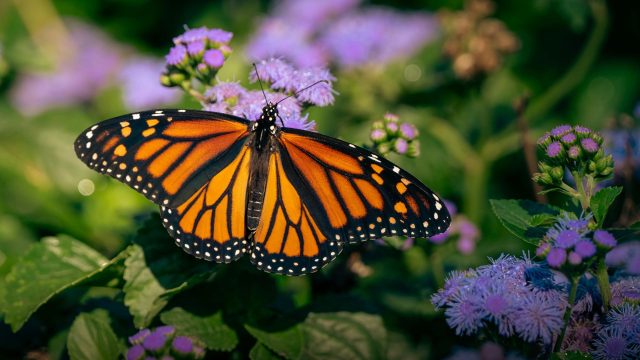
By removing the definition of “harm” in the regulations, the Trump administration allows actions to go forward that will degrade habitat to the extent that some species may have nowhere to live. Such habitat degradation may take many forms. Development, agriculture, and dredging have resulted in listing of the Streaked Horned Lark (Eremophila alpestris strigata) as a threatened species. Loss of mature and old growth forests to logging reduces nesting opportunities and provides for invasion of predatory species that could result in the Marbled Murrelet (Brachyramphus marmoratus), now listed as threatened, becoming endangered. Pesticide use harms the threatened Monarch butterflies (Danaus Plexippus) directly through pest control—reactive insect control (sprayed insecticides) and prophylactic insect control (neonicotinoid-treated and Bt-genetically modified seeds), but also by eliminating the sole source of food for developing Monarch caterpillars, milkweed.
But the implications of the rescission go beyond habitat. As stated by Sandra Snodgrass and Amelia Yowell, commenting for the law firm Holland and Hart, “By limiting ‘take’ to affirmative acts directed immediately and intentionally against an animal or animals, the Services appear to be eliminating the need for incidental take coverage for virtually all proposed actions that will directly kill or injure ESA-listed species. Because, for instance, pipelines, transmission lines, mines, housing developments, highways, and timber sales, do not involve affirmative acts directed immediately and intentionally against animals, any death or injury caused by these projects—such as through collision, crushing, or exposure to hazardous materials—may not be deemed to be ‘take’ under the final rule.”
As soon as the final rule was published, nine environmental organizations represented by Earthjustice sued the Trump administration asking for declaratory and injunctive relief, asking that the court declare that the Services violated ESA, NEPA (National Environmental Policy Act), and the APA (Administrative Procedure Act) when they issued the rescission; vacate the rescission; reinstate the harm rules previously set forth at 50 C.F.R. §§17.3 and 222.102; enjoin FWS and NMFS from applying the rescission and require them to apply, utilize, and follow the harm rules previously in force; and grant restraining orders and/or preliminary and permanent injunctive relief to ensure that threatened and endangered species and their habitat do not suffer irreparable harm pending resolution of the suit. “Preventing harm to wildlife by protecting where they live, eat, and sleep is the foundation of the Endangered Species Act,” said Earthjustice attorney Kristen Boyles. “The Trump administration repeal violates the core purpose of the statute and decades of legal precedent, including from the U.S. Supreme Court. Now more than ever, imperiled species from salmon to marbled murrelets to grizzly bears need habitat protection to survive and recover.”
While the courts consider this case, Congress must weigh in and make it clear that the Trump administration is violating the clear purpose of ESA.
Those interested in taking action can Tell Congress to restore Endangered Species Act protections.
Letter to U.S. Congress
On July 14, the U.S. Fish and Wildlife Service (FWS) and the National Marine Fisheries Service (NMFS) (“the Services”) changed their regulations to rescind the definition of “harm” under the Endangered Species Act (ESA). They did so with the express intention of eliminating protection from actions that impair the habitat of wildlife. This action is directly opposed to the purposes of ESA, “to provide a means whereby the ecosystems upon which endangered species and threatened species depend may be conserved, to provide a program for the conservation of such endangered species and threatened species, and to take such steps as may be appropriate to achieve the purposes of the treaties and conventions set forth in subsection (a) of this section.”
ESA prohibits taking any threatened or endangered species within the United States or the territorial sea of the United States. ESA defines taking: “The term “take” means to harass, harm, pursue, hunt, shoot, wound, kill, trap, capture, or collect, or to attempt to engage in any such conduct.” “Harm” is not defined in the statute but had been defined in the regulations as: ‘Harm in the definition of ‘take’ in the Act means an act which actually kills or injures wildlife. Such act may include significant habitat modification or degradation where it actually kills or injures wildlife by significantly impairing essential behavioral patterns, including breeding, feeding or sheltering.”
By removing the definition of “harm” in the regulations, the Trump administration allows actions to go forward that will degrade habitat to the extent that some species may have nowhere to live. Such habitat degradation may take many forms. Development, agriculture, and dredging have resulted in listing of the Streaked Horned Lark (as a threatened species). Loss of mature and old growth forests to logging reduces nesting opportunities and provides for invasion of predatory species that could result in the Marbled Murrelet, now listed as threatened, becoming endangered. Pesticide use harms the threatened Monarch butterflies directly through pest control– reactive insect control (sprayed insecticides), and prophylactic insect control (neonicotinoid-treated and Bt-genetically modified seeds), but also by eliminating the sole source of food for developing Monarch caterpillars, milkweed.
The implications of the rescission go beyond habitat. As stated by Sandra Snodgrass and Amelia Yowell of the law firm Holland and Hart, “By limiting ‘take’ to affirmative acts directed immediately and intentionally against an animal or animals, the Services appear to be eliminating the need for incidental take coverage for virtually all proposed actions that will directly kill or injure ESA-listed species. Because, for instance, pipelines, transmission lines, mines, housing developments, highways, and timber sales, do not involve affirmative acts directed immediately and intentionally against animals, any death or injury caused by these projects—such as through collision, crushing, or exposure to hazardous materials—may not be deemed to be ‘take’ under the final rule.”
As soon as the final rule was published, nine environmental organizations represented by Earthjustice sued the Trump administration asking for declaratory and injunctive relief, asking that the court undo the damage caused by the rescission. “Preventing harm to wildlife by protecting where they live, eat, and sleep is the foundation of the Endangered Species Act,” said Earthjustice attorney Kristen Boyles. “The Trump administration repeal violates the core purpose of the statute and decades of legal precedent, including from the U.S. Supreme Court. Now more than ever, imperiled species from salmon to marbled murrelets to grizzly bears need habitat protection to survive and recover.”
While the courts consider this case, I ask you to act to reinstate the definition of harm by including it in ESA.
Thank you.
All unattributed positions and opinions in this piece are those of Beyond Pesticides.




