





22
Jul
Aquatic Ecosystems at Risk; Study Finds Declines in Macroinvertebrate Diversity with Pesticide Exposure
(Beyond Pesticides, July 22, 2026) A study of aquatic macroinvertebrates, including insects in their nymph and larval stages, snails, worms, crayfish, and clams, finds that pesticide exposure leads to biodiversity declines. Published in Environment International, this research also finds that multiple stressors and chemical mixtures increase ecosystem effects. “The individual and interactive impacts of pesticide contamination and other environmental stressors on freshwater macroinvertebrates remain insufficiently quantified under real-world, multi-stressor conditions,” the authors note. This research addresses that gap, identifying pesticide pollution as a threat to aquatic organisms and ecosystem functioning.
In studying the Wei River Basin, one of the most intensively managed agricultural and urban regions in China, the data reveals that “pesticides contributed more than 40% to both [Alpha] α-diversity loss (species richness) and [Beta] β-diversity nestedness [hierarchical interconnectedness], exceeding the combined effect of the other factors that were considered.” Additional results, such as interactive effects between pesticides and land use, show that during the dry season there is “a 2.1-fold increase in functional sensitivity and a 56% rise in interaction contributions.” Ecological harm thresholds are also highest for the neonicotinoid insecticide imidacloprid, followed by the herbicides hexazinone, atrazine, and simazine.
Study Importance
Freshwater ecosystems, such as lakes, rivers, streams, reservoirs, and wetlands, are crucial habitats for numerous species. These areas also provide nutrient cycling and supply additional essential ecosystem services for food, water, and energy resources. “Global freshwater ecosystems are subject to multiple, often synergistic, pressures from anthropogenic activities and climate change, potentially causing biodiversity losses and impaired ecological functioning,” the researchers state. They continue, “Among these pressures, chemical pollution—particularly pesticide contamination—in certain landscapes is likely to be one of the more important stressors.”
Research shows that in agriculture-dominated landscapes, pesticides are a widely recognized anthropogenic stressor, disrupting aquatic ecosystem structure and functioning with cascading impacts. Additional scientific literature (see here, here, and here) finds adverse effects on macroinvertebrates from insecticide exposure. Natural ecosystems are exposed to multiple environmental drivers, including but not limited to climate change, human land use intensity, hydrology alterations, and chemical pollution. The combined effects of multiple stressors can be additive or synergistic, causing greater damage to organisms and the environment when encountered simultaneously.
“Traditional ecological risk assessments typically rely upon single-pollutant, single-species laboratory tests, which may underrepresent the ecological consequences of stressor interactions under field conditions,” the authors state. Understanding the effects of pesticide mixtures, as well as pesticides and other stressors, is crucial to protecting all organisms. Macroinvertebrates, in particular, are valuable bioindicators as they are sensitive to habitat and water quality changes.
Methodology and Results
The aim of the study is to:
“(1) quantitatively assess the relative contributions of pesticide contamination and co-occurring environmental stressors (including water quality, hydrology, and land use) to patterns of macroinvertebrate taxonomic and functional diversity;
(2) examine whether interactive or modulatory relationships exist between pesticide stress and other environmental stressors, with particular attention to how hydrological seasonality influences the strength and pathways of these effects;
(3) identify community-level ecological thresholds along pesticide toxicity gradients, in order to improve the ecological relevance of pesticide risk assessment under realistic, multi-stressor conditions.”
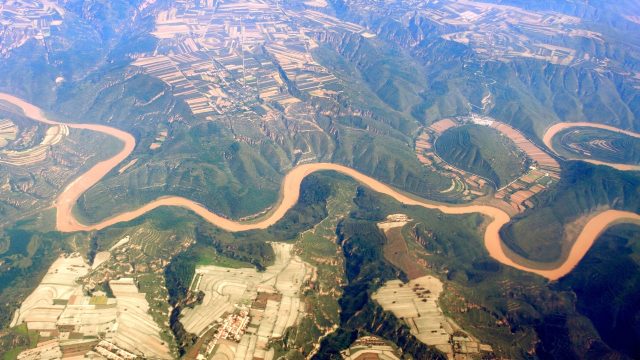
The Wei River is the largest tributary of the Yellow River, where the basin “provides an ideal model system for examining the interactive effects of pesticide pollution and land use on stream macroinvertebrate communities across contrasting hydrological seasons” due to intensive agricultural activities and strong anthropogenic pressures in the area. Thirty-nine sites were chosen across the Wei River Basin and were sampled in both September 2023 (normal season) and April 2024 (dry season). This includes 25 riverine sites (along the banks of rivers or streams) and 14 tributary confluence sites. Samples of both water and macroinvertebrates were collected.
Water samples were then analyzed for 49 commonly used and representative pesticides, including carbamates (CAs), neonicotinoids (NEOs), triazines (TRIs), and organophosphates (OPPs), and macroinvertebrates were identified. The results show that all “49 pesticides were detected, including 11 CAs, 9 NEOs, 14 OPPs, and 15 TRIs.” The authors continue, saying: “At least one pesticide was detected at each sampling site, while 10 pesticides showed detection frequencies exceeding 90% (92.5-100.0%) on average across both sampling periods, comprising 5 NEOs, 4 TRIs, and 1 CAs. Imidacloprid, thiamethoxam, and atrazine achieved 100% detection rates at all sampling sites during both sampling periods.”
Additional noteworthy results include:
- Overall pesticide contamination levels are higher during the dry season than the normal season.
- The dry season displays more complex and extensive interactions, “particularly the combinations of ‘Pesticides × Landuse’ and ‘Pesticides × WQ (water quality).’”
- “A total of 257 macroinvertebrate species were identified across the two sampling, belonging to 7 classes, 20 orders, 65 families, and 150 genera, with 127 species recorded during the normal season and 182 species during the dry season.”
- Imidacloprid has the highest ecological risk level across both hydrological seasons. Hexazinone, atrazine, and simazine also exhibit high risks, as they share a common mode of action by inhibiting “primary producers and thereby indirectly affecting food resources and oxygen supply for higher trophic levels, including macroinvertebrates.”
- Simazine “may exert disproportionately strong ecological pressure relative to its measured concentrations.”
These results highlight how different pesticide types influence macroinvertebrate communities, threatening overall biodiversity and ecosystem functioning. The adverse ecological impacts of pesticide pollution on community structure can also be greater when experienced with other environmental stressors. In summary, the researchers state: “The research found that pesticide pollution plays a dominant role among the multiple stressors reviewed in the study for this water basin in 2023-2024, with ecological effects exhibiting significant seasonal dependency. This suggests that beyond traditional risk assessments, ecological functional indicators and sensitive response critical points should be further incorporated to enhance the precision of risk identification and the ecological relevance of management.”
Previous Coverage
A wide body of science exists, and continues to mount, connecting pesticide contamination to adverse effects on water bodies and aquatic organisms. In a study published in Aquatic Toxicology, researchers in Brazil determined that the cumulative toxicity of acetamiprid (a neonicotinoid insecticide) and cyanobacteria (photosynthetic microbes that can produce toxins) has a synergistic effect on the health of aquatic water fleas, or Daphnia. The implications of these findings paint a troubling picture for broader aquatic food webs, as they serve as a bridge species across trophic levels, serving as a primary consumer of plants and algae while also providing energy to secondary and tertiary consumers up the chain. In this context, public health and environmental advocates maintain that the combined toxicity of synthetic agrichemicals and naturally occurring toxins is often considered an externality (external cost) borne by the public rather than a direct cost of agricultural production or nonagricultural pest management. (See Daily News here.)
In a literature review published in Caspian Journal of Environmental Sciences, researchers assessed 27 peer-reviewed studies conducted between 2011 and 2025 on the adverse impacts of insecticides, including neonicotinoids, pyrethroids, organophosphates, chlorpyrifos, and fipronil. Across agricultural and suburban environments, pesticides are detected in the majority (88 percent) of samples. This review builds on the continuous flow of science that highlights the adverse impacts of synthetic pesticide dependency on ecosystems and wildlife that are essential to global biodiversity. (See Literature Review Unpacks Synergistic and Cumulative Pesticide Impacts on Aquatic Life.) Another literature review, published in Toxics and covered in Daily News Literature Review Documents Enhanced Toxicity of Chemical Mixtures in Aquatic Organisms with PFAS Exposure, finds that per- and polyfluoroalkyl substances (PFAS) can heighten the risks to exposed organisms from environmental contaminants. Mixtures of these compounds can negatively impact the nervous, cardiovascular, immune, and reproductive systems, particularly in aquatic organisms, and threaten overall biodiversity.
The impacts of pesticide contamination are not isolated to aquatic ecosystems. As water bodies continue to be contaminated by pesticides and fertilizers used in chemical-intensive agriculture, international researchers find increasing threats to both aquatic and terrestrial food webs with insect transmission of pesticide residues from water to land. Published in Environmental Pollution, the study authors analyze insect species with complex life cycles “with an aquatic phase as larvae and a terrestrial phase as winged adults when they serve as prey for many aerial insectivores, such as bats and birds.” As the researchers explain, these insects act as vectors, transferring pesticides from water bodies into terrestrial food webs. As a result of studying feces from birds and bats that prey on these insects, the authors find residues of 16 current-use pesticides, two legacy compounds, and six metabolites (breakdown products). (See Daily News here.)
Another study of the effects of flooding on aquatic-terrestrial pesticide transfer, published in Archives of Environmental Contamination and Toxicology, finds heightened risks to riparian zone ecosystems as flooding frequency continues to increase with climate change. Riparian zones, recognized as biodiversity hotspots, “are increasingly subjected to various stressors, including chemical contaminants such as pesticides,” the authors state. As transportation of these compounds can occur not only through surface runoff but through flooding events, the frequency and duration of floods can greatly impact the cumulative effects of pesticides on soil health and organisms within ecosystems.
The Organic Solution
Now is the time to act to protect all species—from aquatic organisms and pollinators to wildlife and humans. In order to safeguard the environment and public health, a wide-scale transition to organic practices is needed. To avoid the use of harmful chemicals, Beyond Pesticides recommends choosing certified organic products whenever possible. Through the Eating with a Conscience database, you can select from over 90 different common crops you regularly consume and learn about the organic difference from their conventional, chemical-intensive counterparts. See Buying Organic Products (on a budget!) and Grow Your Own Organic Food for more information.
The holistic, systems-based organic solution for land management and agriculture offers numerous health and environmental benefits. Learn more about how to take action and have your voice heard on governmental efforts that are harmful to the environment and public and worker health, increase overall pesticide use, and undermine the advancement of organic, sustainable, and regenerative practices and policies with Action of the Week.
All unattributed positions and opinions in this piece are those of Beyond Pesticides.
Source:
Fang, J. et al. (2026) Pesticides override other stressors to drive stream macroinvertebrate diversity loss: unraveling interactive effects and ecological thresholds, Environment International. Available at: https://www.sciencedirect.com/science/article/pii/S0160412026003685.




