





23
Jul
Popular Mosquito Insecticide Undermines Aquatic Organism Health, According to Study
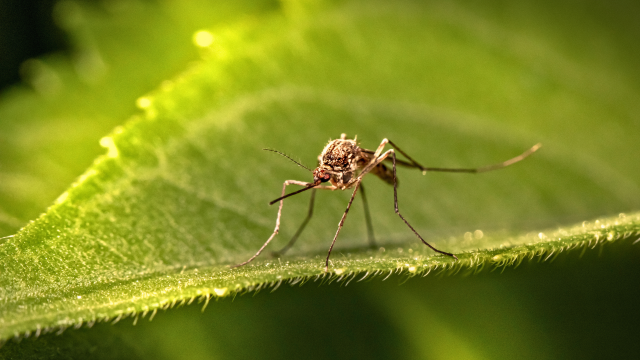
(Beyond Pesticides, July 23, 2026) The unintended consequences of pesticide dependency once again emerge as new research out of University of California, Davis finds sublethal adverse effects to sturgeon fish exposed to the widely used insecticide bifenthrin in their natural habitats. A study published in Environmental Research concludes that “sublethal bifenthrin exposure impairs locomotion and motor coordination” in Green and White Sturgeon populations. These findings are important given that bifenthrin, a synthetic pyrethroid, is one of the most popular mosquito control pesticides, and it is broadly used for insects in homes, gardens, and agriculture. The preponderance of scientific evidence—in addition to lax chemical company accountability for hazard warnings resulting from the Monsanto v. Durnell Supreme Court ruling in June—continues to galvanize concerned individuals, including decisionmakers, researchers, and organizations nationwide who are advocating for alternatives to the chemical-intensive practices.
Because of acute toxicity to fish and aquatic organisms, the bifenthrin label contains a strict warning: “This pesticide is extremely toxic to fish and aquatic invertebrates. To protect the environment, do not allow pesticide to enter or run off into storm drains, drainage ditches, gutters or surface waters.” Because pesticides applied for mosquito control and others are used to move off of the target site, these findings raise significant policy issues associated with their use. Regarding mosquito control, Penn State University writes, “Despite careful application, sometimes pesticides move from the target and contaminate adjacent areas, including creeks, streams, and other water bodies. Unfortunately, pyrethroids break down more slowly in water, especially where there is less sunlight, and persist for much longer in aquatic sediments. This increases harmful impacts on non-target organisms when residue enters waterways.”
Methodology and Main Findings
The researchers of this study build on a previous study published in 2025 (see here) by including temperature as a variable. The goal was to determine whether two closely related sturgeon species interact similarly under cumulative environmental stressors (heat and pesticides) or whether their physiology drives differentiated vulnerability. Three days after hatching, larvae were exposed to four increasing degrees of bifenthrin (0/control, 10 nanograms/liter, 100 ng/L, and 500 ng/L) as well as three temperatures (12, 15, and 18 degrees centigrade), followed by a 28 percent recovery period. The study includes two replicate tanks per treatment, with 65 Green or 100 White Sturgeon larvae per tank to assess survival, growth, and mortality; separately, there were individual exposures on 12 dishes per treatment (one larva per plate) to assess potential neurobehavioral impacts. To assess neurobehavioral health, the researchers tested for the enzyme acetylcholinesterase (AChE) activity.
The two additional main findings include:
- Bifenthrin Impacts Post-Exposure Survival. Bifenthrin significantly affects survival mainly at the colder end for both species; however, the researchers note that these two species are adapting differently in the same shared ecosystem.
- Bifenthrin Impacts on Neurobehavioral Health. Across both species, bifenthrin exposure is attributable to decreased locomotor activity, motor coordination, and neural processing.
Previous Coverage
Bifenthrin and similar synthetic pyrethroid insecticides have been associated with a wide array of adverse health effects on various species and habitats, as documented in the peer-reviewed literature. For example, a study published in Environmental Toxicology and Chemistry following a mass mortality event of approximately 200 monarch butterflies (Danaus plexippus plexippus) in Pacific Grove, California, “three pyrethroid insecticides—bifenthrin, cypermethrin, and permethrin—were consistently detected at or near each chemical’s lethal dose (LD50).” LC50, or Lethal Concentration 50%, values represent the concentrations of chemicals lethal to 50% of a test population. (See Daily News here.)
In a study comparing pesticide active ingredients (isolated single chemicals) with full pesticide product formulations containing added ingredients (the packaged products that can contain carriers, sticking agents, emulsifiers, etc.), researchers find the full formulation to be generally more toxic. The research evaluates acute and chronic exposures of four mosquito adulticide active ingredients (AIs), three product formulations, and one biological larvicide pesticide formulation containing Bacillus thuringiensis israelensis (Bti) on honey bee larvae in vitro and finds that three of the four exceed levels of concern (LOCs) set by the U.S. Environmental Protection Agency (EPA). EPA publishes Guidance for Assessing Pesticide Risks to Bees in which it identifies levels of harm. The scientists who conducted the study, published in Environmental Challenges, are based at the University of Florida and Auburn University. (See Daily News here.)
The issue of pesticide resistance has also been a recurring theme. A study published in PLOS One documents Aedes aegypti mosquito resistance to synthetic pyrethroids permethrin, lambda-cyhalothrin, and deltamethrin in study sites in Córdoba, Colombia. Aedes aegypti is a common mosquito species that can carry the EEE virus and others. (See Daily News here.) A study published in Pest Management Science finds that resistance to insecticides like pyrethroids is challenging attempts to control the mosquito Aedes aegypti (Ae. aegypti), the primary transmitter (vector) of dengue fever. While this study takes place in Bangladesh, resistance to biocides—whether to antibiotics, antimicrobials, or pesticides—is growing globally. Prevention of disease outbreaks is threatened by reliance on chemical biocides to which pathogens and their vectors develop resistance. In fact, resistance is predicted by elementary population genetics, and the speed of its evolution is directly related to the toxicity—that is, the strength of selection pressure—and inversely related to the generation length of the organism. (See PAY articles here and here, a PBS article here.) (See Daily News here.)
The issue of pesticide drift on aquatic ecosystems and organisms continues to emerge in scientific literature. In a study published in Aquatic Toxicology, researchers in Brazil determined that the cumulative toxicity of acetamiprid (a neonicotinoid insecticide) and cyanobacteria (photosynthetic microbes that can produce toxins) has a synergistic effect on the health of aquatic water fleas, or Daphnia. 1:1 mixture of cyanobacteria and acetamiprid is synergistic and kills all D. similis organisms, whereas for D.laevis, “this occurred at 1:1 and 2:1 proportions.” As the abstract points out, “These results demonstrate that the interaction between acetamiprid and cyanobacteria can lead to enhanced toxicity in zooplankton, underscoring the importance of assessing multiple stressors and their interactive effects in aquatic ecosystems, as single-exposure assessments may fail to capture the full scope of ecological risks.” (See Daily News here.) In a literature review published in Caspian Journal of Environmental Sciences, researchers assessed 27 peer-reviewed studies conducted between 2011 and 2025 on the adverse impacts of insecticides, including neonicotinoids, pyrethroids, organophosphates, chlorpyrifos, and fipronil. Across agricultural and suburban environments, pesticides were detected in the majority (88 percent) of samples. (See Daily News here.) Published in Environmental Pollution, the study authors analyze insect species with complex life cycles “with an aquatic phase as larvae and a terrestrial phase as winged adults when they serve as prey for many aerial insectivores, such as bats and birds.” As the researchers explain, these insects act as vectors, transferring pesticides from water bodies into terrestrial food webs. As a result of studying feces from birds and bats that prey on these insects, the authors find residues of 16 current-use pesticides, two legacy compounds, and six metabolites (breakdown products). (See Daily News here.)
Call to Action
Subscribe to receive the Action of the Week and Weekly News Update in your inbox so that you can take strategic actions calling for change from the local to international.
Beyond Pesticides engages with communities and local governments across the nation through the Parks for a Sustainable Future Program to transition public parks and playing fields to organic land management. You can become a Parks Advocate today and bring about the organic transition to your community!
One way you can take action is by telling your Governor and Mayor to ensure ecological management of mosquitoes by eliminating the use of pesticides that threaten mosquito predators.
All unattributed positions and opinions in this piece are those of Beyond Pesticides.
Source: Environmental Research




