


06
Apr
Habitat Biodiversity Protection, Not Harmed by Pesticides, Key to Mosquito Management
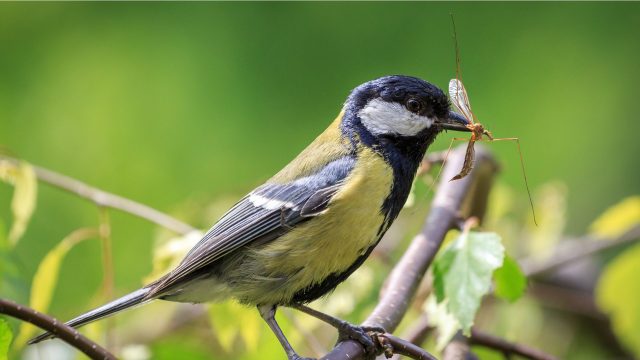
(Beyond Pesticides, April 6, 2026) While mosquito season is not yet here, Beyond Pesticides has launched an action to remind people and policy makers that mosquito management requires the enhancing of natural ecosystems, including bird populations, in communities and residential areas to reduce the population of these biting insects. The campaign draws on the science showing that an unbalanced ecosystem eliminates some of the most attractive and helpful allies in mosquito management—birds. Incorporating the awareness of healthy ecosystems in communities and yards into local and state policies and practices is a critical pest management tool.
The action calls on Governors and Mayors to ensure ecological management of mosquitoes by eliminating the use of pesticides that threaten mosquito predators.
An article, “The Ecological Impact of Pesticides on Non-Target Organisms in Agricultural Ecosystems” (2024), captures the importance of land management and habitat to protect a a balance of organisms, including bird populations. The authors, in the context of agroecosystems but generally applicable, write: “Pesticide exposure reduces ecosystem resilience, changes community dynamics, and accelerates population reductions in a variety of organisms, including predatory arthropods, bees, and butterflies. Furthermore, bird populations—which are essential to agroecosystems—face a variety of difficulties as a result of habitat degradation, food chain disruptions, and reproductive impairments brought on by pesticides. Pesticides are harmful in ways that go beyond killing; they affect the physiology and behaviour of creatures that are not intended targets.”
While the appetite of purple martins for mosquitoes is well known, most songbirds eat insects at some stage of their life. Many birds who eat seeds or nectar feed insects to their young, including flying insects that may be bothersome–like mosquitoes or flies. Altogether, birds consume as many as 20 quadrillion individual insects, totaling 400-500 million metric tons, per year.
Mosquito-eating birds include many well-known residents of our communities. They include, for example, wood ducks, phoebes and other flycatchers, bluebirds, cardinals, downy woodpeckers, swallows, swifts, robins, orioles, wrens, great tits, warblers, nuthatches, hummingbirds, red-winged blackbirds, grackles, chickadees, sparrows, nighthawks, and even the much-maligned starlings. Attract these birds to keep mosquitoes from feasting on you.
On the other hand, insectivorous birds are threatened directly by pesticide use and indirectly by the loss of their prey. In 1962, Rachel Carson drew attention to the poisoning of songbirds in her book Silent Spring. Despite restrictions on the organochlorines used in 1962, over three billion birds, or 29% of 1970s numbers, have been lost in North America over the last 50 years. Research shows that 57% of bird species are in decline, and mosquito-eating birds lead the list. Ninety percent of all declines were within 12 bird families that include sparrows, warblers, blackbirds, larks, swallows, nightjars, swifts, finches, flycatchers, starlings, and thrushes. Only waterfowl and wetland bird species show any increase.
Meanwhile, the world is experiencing an insect apocalypse. Recent research has found dramatic drops in overall insect abundance, with leading entomologists identifying steep declines in insect populations. Various studies have found reductions of up to a factor of 60 over the past 40 years—there were 60 times as many insects in some locations in the 1970s. Insect abundance has declined more than 75% over the last 29 years, according to research published by European scientists.
Insectivorous birds are an essential part of global food webs that bring balance to ecological communities, but birds are not the only insectivores to feed on mosquitoes. Animals who contribute to maintaining ecological balance by consuming mosquito larvae and adults include insects, spiders, fish, amphibians, and bats. All are threatened by pesticides.
On a personal level, you can nurture a safe haven for birds and other mosquito predators. And remember, there are safer personal repellents. See How To Repel Mosquitoes Safely. Spread the word to your neighbors on safer mosquito management with Beyond Pesticides’ doorknob hanger, Manage Mosquitoes This Season without Toxic Chemicals.
Urge your state and community to adopt biodiversity conservation principles that include ecological mosquito management practices.
Beyond Pesticides suggests that people Tell their Governor and Mayor to ensure ecological management of mosquitoes by eliminating the use of pesticides that threaten mosquito predators.
Letter to the Governor:
It is time to prepare for mosquito season, which is upon us, and avoid the use of pesticides to kill them. Not only is spraying flying mosquitoes the most ineffective way to prevent mosquito problems, but it is also counterproductive because it eliminates some of our most attractive and helpful allies—birds. Most songbirds eat insects at some stage of their life. Many birds who eat seeds or nectar feed insects to their young, including flying insects that may be bothersome—like mosquitoes or flies. Altogether, birds consume as many as 20 quadrillion individual insects, totaling 400-500 million metric tons, per year.
Mosquito-eating birds include many well-known residents of our communities—for example, wood ducks, phoebes and other flycatchers, bluebirds, cardinals, downy woodpeckers, swallows, swifts, robins, orioles, wrens, great tits, warblers, nuthatches, hummingbirds, red-winged blackbirds, grackles, chickadees, sparrows, nighthawks, and even the much-maligned starlings.
On the other hand, insectivorous birds are threatened directly and indirectly by pesticide use. In 1962, Rachel Carson drew attention to the poisoning of songbirds in her book Silent Spring. Despite restrictions on the organochlorines used in 1962, North America has lost 29%—over three billion birds—in the last 50 years. Research shows that 57% of bird species are in decline, and mosquito-eating birds lead the list. Ninety percent of all declines were within 12 bird families that include sparrows, warblers, blackbirds, larks, swallows, nightjars, swifts, finches, flycatchers, starlings, and thrushes. Please note the overlap with mosquito-eating birds. Only waterfowl and wetland bird species show any increase.
Meanwhile, the world is experiencing an insect apocalypse. Leading entomologists find steep declines in insect populations. Various studies have found reductions of up to a factor of 60 over the past 40 years—there were 60 times as many insects in some locations in the 1970s. Insect abundance has declined more than 75% over the last 29 years, according to research published by European scientists.
Insectivorous birds are an essential part of global food webs that bring balance to ecological communities, but birds are not the only ones to feed on mosquitoes. Animals that contribute to maintaining ecological balance by consuming mosquito larvae and adults include insects, spiders, fish, amphibians, and bats. All are threatened by pesticides.
The use of pesticides that threaten birds and others who consume mosquitoes is not consistent with ecological management of mosquitoes.
Please eliminate the use of pesticides that imperil birds, other mosquito predators, and their insect food supply. Please adopt biodiversity conservation goals that include: (1) ecological mosquito management including measures that recognize the benefit of preventive strategies, which establish source reduction programs that manage breeding sites on public lands and educate on the management of private lands, employ programs for larval management with biological controls, and eliminate the use of toxic pesticides; (2) prohibition of systemic insecticides and treated seeds, including neonicotinoids; and (3) land management on public lands–including hospitals, higher education institutions, schools, and parks—using regenerative organic principles and organic certified practices and products, to transition to a viable organic system that prioritizes long-term health of the public, ecology, and economy.
Thank you.
Letter to the Mayor:
It is time to prepare for mosquito season, which is upon us, and avoid the use of pesticides to kill them. Not only is spraying flying mosquitoes the most ineffective way to prevent mosquito problems, but it is also counterproductive because it eliminates some of our most attractive and helpful allies—birds. Most songbirds eat insects at some stage of their life. Many birds who eat seeds or nectar feed insects to their young, including flying insects that may be bothersome—like mosquitoes or flies. Altogether, birds consume as many as 20 quadrillion individual insects, totaling 400-500 million metric tons, per year.
Mosquito-eating birds include many well-known residents of our communities—for example, wood ducks, phoebes and other flycatchers, bluebirds, cardinals, downy woodpeckers, swallows, swifts, robins, orioles, wrens, great tits, warblers, nuthatches, hummingbirds, red-winged blackbirds, grackles, chickadees, sparrows, nighthawks, and even the much-maligned starlings.
On the other hand, insectivorous birds are threatened directly and indirectly by pesticide use. In 1962, Rachel Carson drew attention to the poisoning of songbirds in her book Silent Spring. Despite restrictions on the organochlorines used in 1962, North America has lost 29%—over three billion birds—in the last 50 years. Research shows that 57% of bird species are in decline, and mosquito-eating birds lead the list. Ninety percent of all declines were within 12 bird families that include sparrows, warblers, blackbirds, larks, swallows, nightjars, swifts, finches, flycatchers, starlings, and thrushes. Please note the overlap with mosquito-eating birds. Only waterfowl and wetland bird species show any increase.
Meanwhile, the world is experiencing an insect apocalypse. Leading entomologists find steep declines in insect populations. Various studies have found reductions of up to a factor of 60 over the past 40 years—there were 60 times as many insects in some locations in the 1970s. Insect abundance has declined more than 75% over the last 29 years, according to research published by European scientists.
Insectivorous birds are an essential part of global food webs that bring balance to ecological communities, but birds are not the only ones to feed on mosquitoes. Animals that contribute to maintaining ecological balance by consuming mosquito larvae and adults include insects, spiders, fish, amphibians, and bats. All are threatened by pesticides.
The use of pesticides that threaten birds and others who consume mosquitoes is not consistent with ecological management of mosquitoes.
Please eliminate the use in our city of pesticides that imperil birds, other mosquito predators, and their insect food supply. Please adopt biodiversity conservation goals that include: (1) ecological mosquito management including measures that recognize the benefit of preventive strategies, which establish source reduction programs that manage breeding sites on public lands and educate on the management of private lands, employ programs for larval management with biological controls, and eliminate the use of toxic pesticides; (2) prohibition of systemic insecticides and treated seeds, including neonicotinoids; and (3) land management on public lands–including hospitals, higher education institutions, schools, and parks–using regenerative organic principles and organic certified practices and products, to transition to a viable organic system that prioritizes long-term health of the public, ecology, and economy.
Thank you.