





29
Apr
Organic Farms Outcompete Conventional Operations with Improved Soil Health Markers
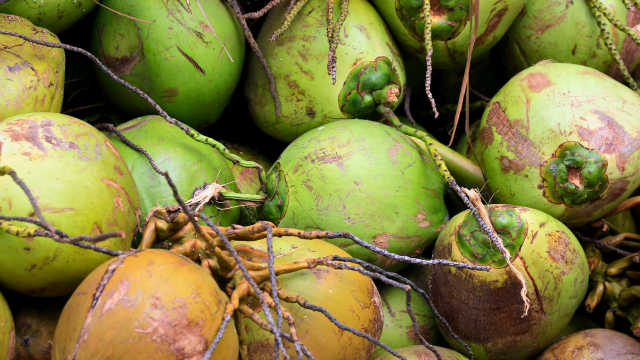
(Beyond Pesticides, April 29, 2026) A study published in Environmental Technology & Innovation finds that organically managed coconut farms significantly improve soil health across numerous markers when compared with conventional (chemical-intensive) plantations. This comes as no surprise to public health and environmental advocates, including farmers, who have seen firsthand the importance of transitioning to land management systems that are in sync with nature.
Methodology and Results
The research took place in Ben Tre Province of Vietnam across 12 organically managed farms in Mo Cay Nam and 12 chemical-intensive farms in Mo Cay Bac. The organic farms were managed under organic criteria for at least three years, while the conventional farms had been under chemical-intensive farming practices for over 20 years, including synthetic fertilizers and the use of various herbicides, insecticides, and fungicides.
Ten soil samples were collected and combined into composite soil samples across all 4 farms. Soil analyses were conducted for microbial life as well as physical and chemical properties. Physical properties include bulk density and soil porosity to assess soil compaction, aeration, and water retention. Chemical properties include pH levels, nutrients (ammonium, nitrate, phosphorus, potassium), as well as soil organic matter (SOM). In terms of the microbial analysis, data was gathered on total bacteria, fungi, actinomycetes, as well as various “functional groups” including nitrogen-fixing, phosphorus-solubilizing bacteria, potassium-solubilizing bacteria, silicate-solubilizing bacteria, and cellulose-decomposing bacteria. For further information on the methodology utilized to assess soil enzyme activity, molecular analysis of microbial communities, microbial diversity analysis, and statistical analysis, see pages 4 and 5 of the study.
The main findings of this study find that, across numerous soil health properties, the organic farms significantly outcompete chemical-intensive coconut plantations:
- Organic plots have better porosity and bulk density, meaning lower compaction and better aeration to support air and water movement through the soil system;
- Organic coconut plots have higher nutrient availability and fertility across the board, including for SOM, total nitrogen, phosphorus, and potassium;
- The total bacteria and nutrient-cycling bacteria (cellulose-decomposing bacteria) are higher in organic plots;
- Organically managed coconut soil systems have higher biological activity and metabolic intensity, as denoted by dehydrogenase activity;
- In terms of microbial bacteria community composition, it is higher in organically managed plots;
- Organic plots show higher abundance of plant-growth-promoting and nutrient-cycling microbes, including Acidobacteriota, Proteobacteria, Firmicutes, and Chloroflexi, among a handful of others; and,
- At a system-level, organic plots show stronger correlations between organic matter, nutrients, microbes, and enzyme activity relative to chemical-intensive coconut plots.
Previous Coverage
Over the past decade, there has been a significant increase in peer-reviewed literature and field trials, conducted both in the U.S. and abroad, on the competitiveness and ecological benefits/tradeoffs of organically managed farmland for a variety of crops.
Researchers at Prairie View A&M University in Texas published in the journal Sustainability a study of organic agricultural systems from 1960 to 2021, concluding that “the outlook for U.S. organic fruit and vegetables is encouraging, supported by expanding consumer demand, government support, and improved conditions for international trade.” While delivering upbeat findings, including health benefits, the study identifies tremendous obstacles to entry into organic farming, including the limited support for alternative pest management and pest control systems in the United States in recent modern history, compared to the assistance provided for highly subsidized, petrochemical-dependent agricultural practices. (See Daily News here.)
For example, a study published in Horticultural Plant Journal provides additional evidence on the viability of organically managed farmland based on tomatoes cultivated through traditional plant breeding and regional varieties. The authors of the research find that, “Despite the positive trend of the organic sector’s development in Europe, the number of tomato varieties bred for organic farming is still limited since efforts have been mainly focused on high input conditions.” They continue: “As a result, the existing cultivars may not suit to organic production [ ] as cultivars chosen for conventional [chemical-intensive] systems often respond well to chemical fertilizers to improve crop output, but they might not maximize nutrient uptake in organic systems where minor external inputs are provided.” In this context, the marketplace is not maximizing the potential productivity of organic systems due to the limited availability of seeds and plant material best suited to conditions in sync with local ecosystems. (See Daily News here.)
A study published in Agriculture, Ecosystems & Environment finds organic rice paddies in the Mediterranean region have greater ecosystem biodiversity, including increased presence of aquatic microorganisms and insects, than their chemical-intensive counterparts. Typically, compost builds biological life in the soil and contributes to a drawing down (or sequestering) of atmospheric carbon. As EPA notes, “[C]omposting lowers greenhouse gases by improving carbon sequestration in the soil and by preventing methane emissions through aerobic decomposition, as methane-producing microbes are not active in the presence of oxygen.” (See Daily News here.) Additionally, a study published in European Journal of Agronomy, based on a 16-year, long-term experiment (LTE), finds that organic crops (cotton production with wheat and soybean rotations) in tropical climates are competitive with chemical-intensive (conventional) systems when evaluating systems’ resilience (to weather and insect resistance), input costs, and profitability. (See Daily News here.)
Coffee is a staple of morning routines for millions around the nation—and as the demand for coffee remains high, so goes the surge in certified organic coffee, offering space for coffee lovers to enjoy the drink and lower their carbon footprint, according a study in Cleaner and Circular Bioeconomy. “The results indicate that the average emissions for the production units classified as in transition are equivalent to 1.11 kg CO2e per kilogram of green coffee, while for the organic production units, the average emissions associated with 1 kg of green coffee are equivalent to 0.68 kg CO2e.” The data for this study was based on ten farms (a.k.a “production units/PUs” in the study) that are members of an organic coffee cooperative located in Cajamarca, Peru. Five of the farms are “organic” and the other five farms were “in transition,” meaning that some practices and principles are applied but are not subject to inspection and certification. The researchers conducted a life cycle assessment, analyzing the carbon footprint of each farm through an iterative process in alignment with the International Organisation for Standardization principles and framework, followed by researchers internationally (see here and here). (See Daily News here.)
Researchers at the U.S. Department of Agriculture (USDA) report, in a study published in that a 4-year organically managed corn-soybean-oat system reduces nitrogen (N) loads by 50 percent with corn and soybean yields “equivalent to or higher than conventional [chemical-intensive] in most years.” The findings from a 7-year study comparing nitrate loss in organic and chemical-intensive management found that organically managed perennial pasture reduced nitrogen loads significantly. The study, which focused on nitrate pollution in agriculture that harms biodiversity, threatens waterways, drinking water, and public health, and releases nitrous oxide (an extremely potent greenhouse gas), was conducted at USDA’s National Laboratory for Agriculture and the Environment. (See Daily News here.) In a sixteen-year field trial based in Central Kenya, researchers have found higher crop yield stability in low-input organic systems with previously degraded soil than in high-input organic and nonorganic agricultural systems. This long-term field trial, published this year in European Journal of Agronomy, was conducted at two sites in Central Kenya—Chuka (lower soil fertility) and Kandara (higher soil fertility)—between 2007 and 2022. Both Chuka and Kandara share bimodal rainfall (two wet seasons split up with distinct dry seasons) and consist of two growing seasons in a given calendar year. There were six crop rotation cycles for the maize, which included various legumes, vegetables, and root crops depending on the input level and farming system. (See Daily News here.)
There is also the consideration of the intersecting climate crisis and food insecurity. A study published in European Journal of Agronomy finds that “organic farming equals conventional yield under irrigation and enhances seed quality in drought, aiding food security. The researchers tested twelve common bean genotypes of Phaselous vulgaris L., with eight local [Basque Country] landraces (defined by Oxford Language as “a local cultivar [plant] or animal breed that has been improved by traditional agricultural methods”), which are “generally grown under rainfed conditions.” The other four landraces are commercial varieties commonly cultivated in Spain and the European Union. “Under rainfed conditions, the common bean seeds received only minimal water at the beginning of the season to ensure the seedlings’ survival (Table 1),” say the authors in describing the distinction between the two watering protocols. (See Daily News here.)
Call to Action
The Spring 2026 National Organic Standards Board meeting will be held in Omaha, NE, and virtually, May 12-14, 2026. As part of this process, the public is invited to submit written comments and/or provide oral comments on the Spring 2026 meeting issues. Please see the Action of the Week, Organic Must Lead the Way, with suggested comments on priority issues to copy/paste into Regulations.gov; also featured in the Daily News from April 27, 2026, “Organic Standards Open to Comment; USDA Defies Congressional Mandate to Fill Organic Board Vacancies.” The deadline to submit written comments is 11:59 pm ET on Monday, May 4, 2026. Please get them in as early as possible! More information is also available in the Keeping Organic Strong resource hub.
You can also contact your members of Congress to ask them to become a cosponsor of the Opportunities in Organic Act, which provides a significant opportunity to reduce barriers to organic farming, strengthen organic supply chains, and ensure that farmers have the support they need to transition to and remain in organic production to meet the growing demand for organic food and grow the sector. Importantly, the bill will provide an opportunity for partners to continue the transition support and technical assistance models that are proving effective through USDA’s Transition to Organic Partnership Program, which ends in 2026.
When making decisions on which produce to buy at your local grocery store, you can learn more about your potential exposure to toxic pesticides and chemicals in over 90 non-organic crops, vegetables, fruits, nuts, and related items in the Eating With a Conscience database.
All unattributed positions and opinions in this piece are those of Beyond Pesticides.




