





22
Apr
Study Finds Flooding, Exacerbated by Climate Change, Elevates Pesticide Contamination in Critical Ecosystems
Editor’s Note: The board and staff at Beyond Pesticides wish you a Happy Earth Day 2026! Click here or the banner below to honor today, a day of education and action that embodies the power of people in their communities engaging to advance changes in policies and practices that meet the environmental and public health challenges of the day!
(Beyond Pesticides, April 22, 2026) A study of the effects of flooding on aquatic-terrestrial pesticide transfer, published in Archives of Environmental Contamination and Toxicology, finds heightened risks to riparian zone ecosystems as flooding frequency continues to increase with climate change. Riparian zones, recognized as biodiversity hotspots, “are increasingly subjected to various stressors, including chemical contaminants such as pesticides,” the authors state. As transportation of these compounds can occur not only through surface runoff but through flooding events, the frequency and duration of floods can greatly impact the cumulative effects of pesticides on soil health and organisms within ecosystems.
In analyzing pesticide residues following simulated flooding within a controlled experiment, the researchers find: “[S]ix pesticides were detected exclusively in riparian root-zone soil following four repeated flooding events. Our findings indicate that both longer flood durations and repeated flooding events tend to increase the total concentration of pesticides in the riparian root-zone soil. These results demonstrate that flooding promotes the movement of pesticides from streams into adjacent riparian areas. As flood frequency and intensity are expected to increase due to climate change, the significance of this transport pathway is likely to increase, with potential consequences for riparian biodiversity and habitat quality.”
Importance and Background
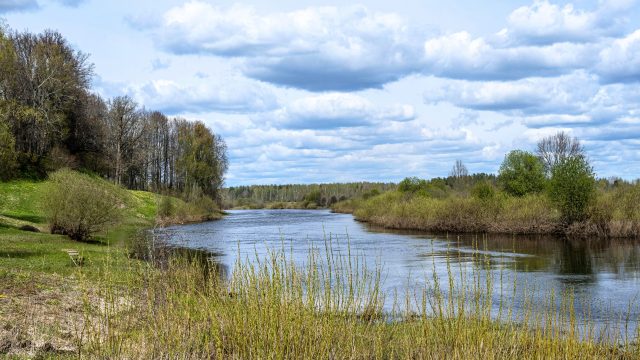
Riparian zones are transitional areas between aquatic and terrestrial environments, making them important ecosystems for a wide range of species. Many water-loving plants, mammals, birds, amphibians, and insects rely on these habitats for food, shelter, and water. Pesticides, however, are introduced into surface waters through runoff and drift from adjacent agricultural fields, parks, and residential lands, threatening vital riparian zone ecosystems.
Previous research shows that pesticide concentrations in flooded soils can fluctuate in the days following individual flooding events but that they increase cumulatively with repeated flooding. As the authors point out, “This is especially relevant in the context of climate change, as flooding events in general are predicted to becoming more frequent in certain areas.” They continue, saying: “Studies on riverine flood trends show that there is an increase in flood risk with modelled climate change scenarios of up to 220% within this century in river basins with upstream areas larger than 500 km2. Especially summer floods seem to be particularly affected as precipitation events in summer are projected to increase in magnitude and frequency in the near future due to climate change.”
While decades of peer-reviewed, independent scientific literature provide evidence for climate change, and the connection to increased flooding, a recent event held by the Heartland Institute featured Lee Zeldin, administrator of the Environmental Protection Agency (EPA), as keynote speaker and echoed President Trump’s routine mocking of climate change as a “hoax.” (See The New York Times (NYT) coverage of this event here, here, and here.) The Heartland Institute, as NYT writes, “argues there is ‘no such thing’ as climate-driven floods, hurricanes and extreme heat.” The article continues, “The speech, critics said, risks bestowing the credibility of the federal government on the fringe theories that the group espouses.”
Despite the current administration’s undermining of environmental protection, science continues to mount regarding the existential crises of climate change, public health, and biodiversity and the urgent need to act. Research, such as the current study, raises additional concerns about chronic exposure to environmental contaminants, specifically in this case for riparian ecosystems. “Moreover, riparian soil might act as a long-term sink for persistent pesticides, which might pose risk to essential soil functions and further might act as a source of contamination for the wider riparian area,” the authors write. “Therefore, flooding as an exposure pathway should be considered as a potentially ecologically relevant pathway.”
Study Methodology and Results
To assess the effects of flood frequency and duration on the presence of pesticide residues in riparian root-zone soil, the researchers conducted an experiment with simulated flood events at the Riparian Stream Mesocosm facility in Landau, Germany. This facility contains “16 spatially independent replicated aquatic-terrestrial mesocosm units” in which a flow-through system can supply water from the “nearby, agriculturally impacted, fourth order, River Queich.”
The experiment, which occurred between May and September 2023 with a total of four flooding events, incorporates the main pesticide application season in the surrounding agricultural areas. The authors explain: “We sampled riparian root-zone soil 24 h following the end of each respective flooding event. For each sampling, we uprooted a separate individual of common grass species (Elymus spp.) located at the sampling site.” This allowed for pesticide measurements within the soil, which led to the detection of six pesticides following the four flooding events. Also of note, the total pesticide concentration of the six flood-mediated pesticides in riparian root-zone soil after the four flooding events show over a three-fold increase as compared to after just one flooding event.
Within the river water, “Fluopyram was detected in 92% of the water samples, followed by Isoproturon (69%), S-metolachlor (65%), Metalaxyl (62%), Metrafenone (54%) and Acetamiprid (54%),” the researchers note. This mix includes an insecticide, herbicides, and fungicides. The pesticide mixture within the soil is further described by the authors: “The six pesticides reported as potentially flood-mediated in the present study display low (Azoxystrobin, Metrafenone, Boscalid), moderate (Spiroxamine, Isoproturon) and high solubility in water (Acetamiprid). This variability in solubility suggests that water solubility alone may not be a reliable indicator of a pesticide’s susceptibility to flood-mediated transfer.”
Previous Research
As reported in earlier Daily News coverage, flooding can threaten biodiversity and ecosystem functioning as it transports pesticides into riparian zones. Similar research to the current study and with many of the same authors, published in 2024 through the American Chemical Society, also analyzes pesticide contamination in riparian soil and plants as a result of flooding from streams in Germany. The authors hypothesize, and then prove, that frequently flooded sites have higher levels of pesticides present due to the pesticides in surface waters contaminating the soil. Results show that the plant vegetation in the contaminated soil then takes up the pesticides, which bioaccumulate and lead to higher contamination that can further cascade throughout the ecosystem and affect terrestrial food webs.
Additional studies, cited in the current study, show how soil communities are negatively impacted by pesticides. (See here and here.) The results highlight how pesticide mixtures exert stronger negative effects on soil communities than with exposure to single substances. “Therefore, the ability of flooding events to transport pesticide mixtures at low concentrations into riparian root-zone soils as shown in the present study, might be relevant for soil fauna communities in frequently flooded and agriculturally impacted areas, as our results suggest that the implications for the communities will vary as a function of flooding,” the researchers say.
A Holistic Solution
The myriad of threats to ecosystem functioning and public health continue to be exacerbated by extreme weather events and environmental contaminants. As Beyond Pesticides has written, climate change is one of multiple crises that are compounding one another. Environmental disasters, including fires, floods, and severe weather events, are brought on or exacerbated by widespread reliance on disruptive chemicals. All of these factors, in turn, threaten the health and well-being of all organisms.
Organic agriculture and land management can mitigate climate change, conserve natural lands, preserve and enhance biodiversity, and protect human health, among other benefits. In adopting organic standards, which are continuously improved upon through the National Organic Standards Board (NOSB), less harmful chemicals will pollute waterways and be able to impact not only human health but the health of all organisms and the environment. Stay tuned for additional information on the Spring 2026 NOSB meeting, which will be held in Omaha, NE and available virtually, May 12-14, through the Keeping Organic Strong resource page.
Play a part in the organic solution and join Beyond Pesticides as a member today. Learn more about transitioning your community to organic land management, as well as how to make The Safer Choice within your home. Take action to support biodiversity conservation and eliminate the use of pesticides that threaten natural predators, and sign up now to get Action of the Week and Weekly News Updates delivered right to your inbox!

All unattributed positions and opinions in this piece are those of Beyond Pesticides.
Source:
Fiolka, F. et al. (2026) Flood Frequency and Duration Drive the Aquatic-Terrestrial Pesticide Transfer to Riparian Root-Zone Soil: A Mesocosm Study, Archives of Environmental Contamination and Toxicology. Available at: https://link.springer.com/article/10.1007/s00244-026-01190-9.




