





10
Jul
Studies and Actions Advance Safer Management and Alternatives to Toxic Mosquito and Insect Control
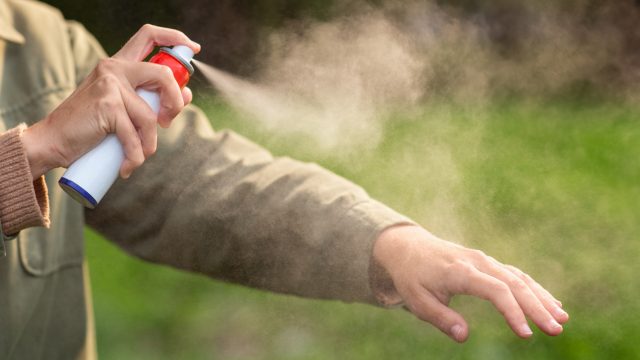
(Beyond Pesticides, July 10, 2026) An article titled “The science of staying bite-free: Balancing natural essential oils, DEET safety and permethrin,” calls attention to insect management options and the subsequent consequences for health and the environment. “While DEET has long been the go-to standard for warding off bugs, concerns over its strong chemical scent, greasy feel, and ability to dissolve plastic gear and synthetic fabrics have driven a massive surge in alternative options,” the article says. The use of DEET (N,N-diethyl-meta-toluamide) dates back to 1946 when it was developed by the U.S. military and is the most common and widely used active ingredient in commercial insect repellents applied to the skin with a warning to wash off when indoors and take special precautions with use on children. Despite widespread use, long-standing and mounting scientific evidence finds adverse effects with exposure to DEET and other insect repellents like the synthetic pyrethroid permethrin.
Health Risks
While regulatory bodies like the U.S. Environmental Protection Agency (EPA) claim insect repellents are safe for the general public, research connects DEET and permethrin to a wide array of adverse health effects. Cases of severe reactions, such as neurological symptoms or seizures, have also occurred.
Beyond Pesticides’ Gateway on Pesticide Hazards and Safe Pest Management documents the science on DEET, finding effects including, but not limited, to neurotoxicity, kidney/liver damage, birth/developmental effects, and water contamination. Cited in the current article, additional health risks of DEET include:
- “High skin absorption. Unlike newer alternatives, DEET penetrates human skin easily. Studies show that between 9 percent and 56 percent of a dose passes into the outer skin layers, with roughly 17 percent entering the bloodstream. It also pools in the skin, absorbing long after application. This absorption speeds up dramatically if DEET is mixed with alcohol or commercial sunscreens.
- Nervous system sensitivity: A 2009 study found that DEET is more than just a simple scent deterrent; it can actively interfere with a vital nervous system enzyme responsible for nerve signal regulation in both insects and mammals. This cell-level impact explains the localized numbness or tingling you feel if the spray accidentally touches your lips.
- Vulnerable groups: Health data has tracked rare instances of brain swelling, tremors and seizures in small children following repeated overapplication, which is worsened by their small body mass relative to their skin surface area. Furthermore, individuals with rare, undiagnosed metabolic conditions (specifically urea cycle disorders) are highly susceptible to severe chemical stress from DEET.
- Daily overexposure: Long-term data gathered from park rangers and outdoor employees who used high-concentration DEET daily over entire summer seasons documented higher rates of chronic headaches, dizziness, sleep disturbances and cognitive disorientation compared to unexposed workers.”
EPA requires the following statements on all DEET product labels:
- Read and follow all directions and precautions on this product label.
- Do not apply over cuts, wounds, or irritated skin.
- Do not apply near eyes and mouth. Apply sparingly around ears.
- Do not apply to children’s hands.
- Do not allow children to handle this product.
- When using on children, apply to your own hands and then put it on the child.
- Use just enough repellent to cover exposed skin and/or clothing.
- Do not use under clothing.
- Avoid over-application of this product.
- After returning indoors, wash treated skin with soap and water.
- Wash treated clothing before wearing it again.
- Use of this product may cause skin reactions in rare cases.
- If you suspect a reaction to this product, discontinue use, wash treated skin, and call your local poison control center.
- If you go to a doctor, take this product with you.
- ACTIVE INGREDIENTS: DEET…….XX.XX%
- A toll-free telephone number for consumers to call for additional product information and to report incidents. (See Toxicological Profile for DEET (N,N-DIETHYL-METQA-TOLUAMIDE.)
Permethrin is an insect-killing compound often used for camping and hiking. This chemical is not meant to be applied to skin but for use on clothing, tents, boots, and other outdoor gear. Skin repellents, like DEET, are meant to deter insects via scent while permethrin is used to kill insects on contact. Permethrin is a synthetic pyrethroid, which is a class of highly toxic chemicals with acute and chronic health impacts. Permethrin is linked to cancer, endocrine disruption, reproductive effects, neurotoxicity, kidney/liver damage, toxicity to fish/aquatic organisms and bees, and more. (See the Gateway on Pesticide Hazards and Safe Pest Management.)
As referenced in the current article, permethrin can threaten not only public health but also aquatic organisms, wildlife, and pets. For example, “Acute exposure to wet, liquid permethrin is highly toxic to cats because they lack the specific liver enzymes required to break down the compound safely.” (See DEET and Permethrin: A Dangerous Combination for additional research.)
Safer Alternatives and Effectiveness
To eliminate exposure to insecticides that have elevated health and environmental risks, organic products and management strategies serve as viable, effective alternatives. ManageSafe™ explains how to use pest prevention practices, nonchemical and mechanical controls, and least-toxic chemical options as a last resort. Least-toxic chemicals have low human and environmental health hazards, as many are botanicals, essential oils, or derived from other plant or natural mineral sources. Beyond Pesticides maintains a list of products it considers to be least-toxic pesticides through its list of Products Compatible with Organic Landscape Management.
For mosquito management in yards and public spaces, prevention is key. Remove any standing water where mosquitoes can breed (such as plant pots, leaky hoses, clogged gutters, empty buckets, toys, and old tires), trim back overgrown vegetation, and encourage natural predators like bats, birds, dragonflies, and frogs. When outside, wear long-sleeved, loose, light colored clothing, which is the preferred method for protecting against mosquito bites but not always a realistic solution. Use an oscillating fan or burn citronella candles to also help repel mosquitoes. As a last line of defense, employ least-toxic mosquito repellents such as essential oils, including oil of lemon eucalyptus, soybean oil, citronella oil, lemongrass oil, castor oil, catnip oil, geraniol oil, cedarwood oil, peppermint oil, or clove oil. (See How to Repel Mosquitoes Safely and Mosquito Management and Insect-Borne Diseases for more information.)
The effectiveness of alternative repellents is widely debated. As a rule, the essential oil products require more frequent reapplication than the more toxic chemical products. A study, Comparative Repellency of 38 Essential Oils against Mosquito Bites, provides some insight into the efficacy times of various substances. For example, different formulations of citronella have a range of efficacy from two to 12 hours. Picaridin is also considered a least-toxic alternative to DEET for managing mosquitoes but is a synthetic chemical that should only be used as a last resort.
When hiking or camping and concerned about mosquitoes, ticks, or other insects, proper clothing and the use of essential oils can also be beneficials. As The River Reporter article adds: “Research indicates that citronella, peppermint, lemongrass and catnip essential oils are highly effective at repelling flying insects. Studies have shown that blends containing lemongrass or peppermint oil can offer localized protection for up to two to three hours. Cinnamon bark oil, clove oil and thyme oil have demonstrated strong success in laboratory settings for repelling ticks. Furthermore, commercial formulations featuring oil of lemon eucalyptus (OLE) or concentrated geraniol offer documented, long-lasting deterrence against deer ticks, which are notorious vectors for Lyme disease.”
Virginia cedarwood oil (Juniperus virginiana) is also an essential oil that is highly effective against ticks. Rigorous testing from the U.S. Department of Agriculture (USDA) “demonstrated exceptional performance against the aggressive nymph stages of blacklegged ticks (deer ticks), matching the effectiveness of DEET.” The research finds that 80-94 percent of ticks encountering surfaces with this oil are immediately repelled. (See Least-Toxic Control of Ticks.)
As covered in previous Daily News Coconut-Derived Insect Repellent More Effective than the Hazardous DEET, scientists working for USDA’s Agricultural Research Service in Lincoln, Nebraska discovered natural compounds derived from coconut oil that are more effective than DEET at repelling mosquitoes, ticks, biting flies, bed bugs and other insects. Given the long-lasting efficacy of the compounds researchers tested, commercialization could make the regular use of toxic insect repellents, like DEET, obsolete. Advocates are praising USDA researchers for the results, indicating that this is exactly the type of research government agencies should be funding and promoting.
Take Action
This summer, take action to management mosquitoes and other insects through safe, effective organic methods. Help spread the word with Beyond Pesticides’ mosquito doorknob hanger to start the discussion about alternative methods for controlling mosquito populations in your community. The simple, basic information that the mosquito doorknob hanger provides can go a long way toward eliminating mosquitoes at the source, and controlling those that persist with least-toxic means. The hanger also refers back to Beyond Pesticides’ least-toxic mosquito management website, where hazard information and more detailed steps on individual and community mosquito management techniques can be found.
You can also urge your state and community to adopt biodiversity conservation principles that include ecological mosquito management practices. >> Tell your Governor and Mayor to ensure ecological management of mosquitoes by eliminating the use of pesticides that threaten mosquito predators.
All unattributed positions and opinions in this piece are those of Beyond Pesticides.
Source:
Schneller, H. (2026) The science of staying bite-free: Balancing natural essential oils, DEET safety and permethrin, The River Reporter. Available at: https://www.riverreporter.com/stories/the-science-of-staying-bite-free,265744.




