





18
May
Call to Ban Organophosphate Insecticides Escalates Amid Inadequate Regulatory Action
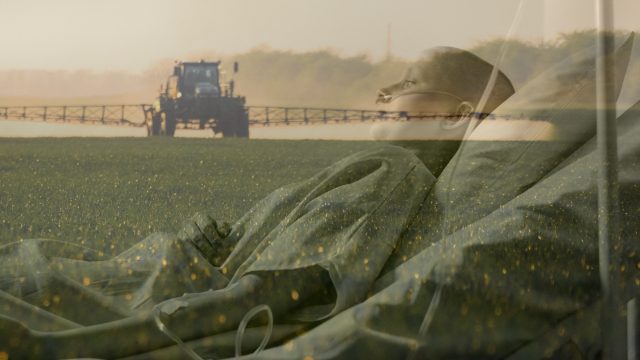
(Beyond Pesticides, May 18, 2026) As the studies continue to mount on the adverse effects of exposure to low levels of organophosphate insecticides, the calls for banning the chemicals are growing. Beyond Pesticides announced an action to “Tell Congress, FDA, and EPA that it is past time to stop the manufacture and use of all organophosphate pesticides, which damage the nervous system and brain at low levels.” There are alternatives to these chemicals that support productive and profitable farming operations.
Defying the often-repeated claim that organophosphate pesticide effects occur only at high doses, a recent study by researchers at University of California, San Diego, and the Fundación Cimas del Ecuador in Quito, Ecuador, establishes for the first time the pattern of adverse developmental effects that low-level exposure has on healthy neurological and brain development in children. It is firmly established that widely used organophosphate pesticides in food production and other sites are severely toxic to a broad range of organisms. In what is known as their “classic” mechanism of action, they inhibit acetylcholinesterase (AChE), an enzyme that breaks down the neurotransmitter acetylcholine (ACh), particularly in neuromuscular junctions in the brain.
Organophosphates are nerve agents, originally developed by the German company IG Farben (a conglomerate that included Bayer), which was “inseparably linked with the Nazi regime” and the Auschwitz concentration camp, as described by BASF, also a part of IG Farben. The 1996 federal law, the Food Quality Protection Act, did not ban organophosphates, however, EPA negotiated many new restrictions that reduced the number of uses but still allowed widespread use and exposure. These restrictions established new risk assessment protocols that replaced the 1958 Delaney Clause’s ban on cancer-causing pesticides in processed food under the Federal Food, Drug, and Cosmetic Act, which authorizes the Secretary of Health and Human Services to set pesticide tolerances (acceptable residues) for food commodities. Meanwhile, in the absence of a comprehensive ban on organophosphates, states in 2018-2021 began to weigh in on an individual organophosphate pesticide, chlorpyrifos, that was making national headlines because of its neurotoxic properties, adverse effects on the brain, and widespread use in food production. For example, five states used their authority to adopt more stringent standards than the federal government by banning the chemical in California, Hawai’i, Maine, Maryland, and New York.
Prior to state action, in 2000, EPA had negotiated chlorpyrifos’s voluntary withdrawal from the residential market with its manufacturer, Dow AgroSciences. (See more background at Pesticide Gateway on Pesticide Hazards and Safe Pest Management and here.) Internationally, the 12th meeting of the Conference of the Parties (COPs) to the Stockholm Convention on Persistent Organic Pollutants (Stockholm Convention) added chlorpyrifos to Annex A, which commits the 186 signatory countries to eliminate production and use. The United States is not a party to the Stockholm Convention because the treaty has never been ratified by Congress.
The new study showing adverse developmental effects to children’s brains builds on earlier scientific work, a call from medical practitioners in 2018, and Congressional legislation to ban organophosphates. A group of leading toxics experts, who have called for a ban on organophosphate pesticides, published a paper in the journal PLOS Medicine on their research on organophosphate exposure during pregnancy and its impacts on child development. “There is compelling evidence that exposure of pregnant women to very low levels of organophosphate pesticides is associated with lower IQs and difficulties with learning, memory or attention in their children,” said lead author Irva Hertz-Picciotto, PhD, professor of public health sciences, director of the University of California Davis Environmental Health Sciences Center and researcher with the UC Davis MIND Institute, according to Science Daily.
The study in PLOS Medicine evaluates current science on the risks of this class of compounds, produced by Corteva Agriscience (formerly Dow AgroSciences); its conclusions warn of the multitude of dangers of organophosphates for children, and makes recommendations for addressing these risks. The experts conclude that: (1) widespread use of organophosphate (OP) pesticides to control insects has resulted in ubiquitous human exposures; (2) acute exposures to OPs is responsible for poisonings and deaths, particularly in developing countries; and (3) evidence demonstrates that prenatal exposures, even at low levels, put children at risk for cognitive and behavioral deficits, and for neurodevelopmental disorders.
Then there is the matter of disproportionate risk to farmworkers and farmworker children, who suffer elevated rates of harm from organophosphate pesticides, a classic example of environmental injustice or institutionalized racist public health and environmental policy. According to a 2024 study published by French and American authors in the journal Exposure and Health, not only do farmworker children test positive for organophosphate pesticides more frequently than non-farmworker children, but farmworker children also experience an increased frequency of DNA damage associated with the presence of organophosphate exposure. These results highlight the disparities in exposures and outcomes for children from vulnerable immigrant communities. Advocates note that as long as pesticides remain in use, farmworkers and their families will continue to shoulder a disproportionate share of the toxic effects of these chemicals.
A California-based population study published in BMC Public Health finds that “7.5 [percent] of all pregnant people in California who gave birth in 2021 lived within 1 km [kilometer] of agricultural fields where OP pesticides [organophosphates] had been used during their pregnancy. . .” As reported in Daily News, significant disparities are found for elevated exposure to pesticides, “with Hispanic/Latinx, young people, and residents of the predominantly fruit and vegetable growing Central Coast region being most likely to live near OP pesticide applications during pregnancy.”
U.S. Representative Nydia Velázquez (D-NY), who is retiring from Congress at the end of the current Congress, reintroduced the “Ban All Neurotoxic Organophosphate Pesticides from Our Food Act” or ”BAN OPs From Our Food Act,” H.R. 5554, in 2023. “We’ve known for decades that organophosphate pesticides are a dangerous neurological threat to farmworkers and our children,” said Congresswoman Velázquez. “These pesticides during early life have been linked to irreversible harm to the developing brain, which can result in long-term effects like attention disorders, autism, and reduced IQ. We can no longer wait to act. I’m proud to have introduced this legislation which will finally ban the use of these hazardous pesticides.” The bill is very straightforward, free of exemptions, waivers, and special circumstances, and allowed formulations:
“SEC. 2. PROHIBITION ON USE OF ORGANOPHOSPHATES ON FOOD. Section 402 of the Federal Food, Drug, and Cosmetic Act (21 U.S.C. 342) is amended by adding at the end the following: ”(j) If it bears or contains any organophosphate pesticide, including any residue of an organophosphate pesticide, or any other added substance the presence of which is primarily as a result of the metabolism or other degradation of an organophosphate pesticide, regardless of whether any tolerance or exemption with respect to organophosphate is in effect under section 408.”.
The bill has been supported by Beyond Pesticides and groups including Earthjustice and United Farm Workers, UFW Foundation, California Rural Legal Assistance (CRLA) Foundation, Alianza Nacional de Campesinas, Farmworker Association of Florida, Farmworker Justice, GreenLatinos, Labor Council for Latin American Advancement, League of United Latin American Citizens, Learning Disabilities Association of America, Natural Resources Defense Council, Pesticide Action Network North America, and Pineros y Campesinos Unidos del Noroeste.
The Beyond Pesticides action: Tell Congress, FDA, and EPA that it is past time to stop the manufacture and use of all organophosphate pesticides, which damage the nervous system and brain at low levels.
Letter to the U.S. Congress
Defying the often-repeated claim that organophosphate pesticide effects occur only at high doses, a new study, “Acetylcholinesterase activity from childhood to young adulthood,” by researchers at University of California, San Diego, and the Fundación Cimas del Ecuador in Quito, Ecuador, establishes for the first time the pattern of adverse developmental effects that low-level exposure has on healthy neurological and brain development in children. It is firmly established that widely used organophosphate pesticides in food production and other sites are severely toxic to a broad range of organisms. In what is known as their “classic” mechanism of action, they inhibit acetylcholinesterase (AChE), an enzyme that breaks down the neurotransmitter acetylcholine (ACh), particularly in neuromuscular junctions in the brain. There are alternatives to these chemicals that support productive and profitable farming operations.
Please reintroduce the “Ban All Neurotoxic Organophosphate Pesticides from Our Food Act” or ‘‘BAN OPs From Our Food Act,” H.R. 5554, last introduced by Rep. Nydia Velázquez in 2023.
Organophosphates are nerve agents, originally developed by the German company IG Farben (a conglomerate that included Bayer), which was “inseparably linked with the Nazi regime” and the Auschwitz concentration camp, as described by BASF, also a part of IG Farben. The 1996 federal law, the Food Quality Protection Act, did not ban organophosphates, however, EPA negotiated many new restrictions that reduced the number of uses but still allowed widespread use and exposure.
The new study showing adverse developmental effects to children’s brains builds on earlier scientific work, a call from medical practitioners in 2018, and Congressional legislation to ban organophosphates. A group of leading toxics experts, who have called for a ban on organophosphate pesticides, published a paper in the journal PLOS Medicine on their research on organophosphate exposure during pregnancy and its impacts on child development. “There is compelling evidence that exposure of pregnant women to very low levels of organophosphate pesticides is associated with lower IQs and difficulties with learning, memory or attention in their children,” said lead author Irva Hertz-Picciotto, PhD, professor of public health sciences, director of the University of California Davis Environmental Health Sciences Center and researcher with the University of California Davis MIND Institute, according to Science Daily.
Meanwhile, in the absence of a comprehensive ban on organophosphates, states in 2018-2021 began to weigh in on an individual organophosphate pesticide, chlorpyrifos, that was making national headlines because of its neurotoxic properties, adverse effects to the brain, and widespread use in food production. For example, five states used their authority to adopt more stringent standards than the federal government by banning the insecticide in California, Hawai’i, Maine, Maryland, and New York. In 2000, EPA negotiated chlorpyrifos’s voluntary withdrawal from the residential market with its manufacturer, Dow AgroSciences. (See more background at Pesticide Gateway on Pesticide Hazards and Safe Pest Management.)
Farmworkers and farmworker children suffer elevated rates of harm from organophosphate pesticides, a classic example of environmental injustice. According to a 2024 study published by French and American authors in the journal Exposure and Health, not only do farmworker children test positive for organophosphate pesticides more frequently than non-farmworker children, but farmworker children also experience an increased frequency of DNA damage associated with the presence of organophosphate exposure.
It is past time to stop the manufacture and use of all organophosphate pesticides, which damage the nervous system and brain at low levels. Please step up and protect our families’ and children’s health.
Thank you.
Letter to the U.S. Environmental Protection Agency Administrator
Defying the often-repeated claim that organophosphate pesticide effects occur only at high doses, a new study, “Acetylcholinesterase activity from childhood to young adulthood,” by researchers at University of California, San Diego, and the Fundación Cimas del Ecuador in Quito, Ecuador, establishes for the first time the pattern of adverse developmental effects that low-level exposure has on healthy neurological and brain development in children. It is firmly established that widely used organophosphate pesticides in food production and other sites are severely toxic to a broad range of organisms. In what is known as their “classic” mechanism of action, they inhibit acetylcholinesterase (AChE), an enzyme that breaks down the neurotransmitter acetylcholine (ACh), particularly in neuromuscular junctions in the brain. There are alternatives to these chemicals that support productive and profitable farming operations.
Please recognize the preponderance of science that calls for the banning of organophosphate pesticides by cancelling the registrations of all these chemicals. It is past time to stop the manufacture and use of all organophosphate pesticides, which damage the nervous system and brain at low levels.
Organophosphates are nerve agents, originally developed by the German company IG Farben (a conglomerate that included Bayer), which was “inseparably linked with the Nazi regime” and the Auschwitz concentration camp, as described by BASF, also a part of IG Farben. The 1996 federal law, the Food Quality Protection Act, did not ban organophosphates, however, EPA negotiated many new restrictions that reduced the number of uses but still allowed widespread use and exposure.
The new study showing adverse developmental effects to children’s brains builds on earlier scientific work, a call from medical practitioners in 2018, and Congressional legislation to ban organophosphates. A group of leading toxics experts, who have called for a ban on organophosphate pesticides, published a paper in the journal PLOS Medicine on their research on organophosphate exposure during pregnancy and its impacts on child development. “There is compelling evidence that exposure of pregnant women to very low levels of organophosphate pesticides is associated with lower IQs and difficulties with learning, memory or attention in their children,” said lead author Irva Hertz-Picciotto, PhD, professor of public health sciences, director of the University of California Davis Environmental Health Sciences Center and researcher with the University of California Davis MIND Institute, according to Science Daily.
Meanwhile, in the absence of a comprehensive ban on organophosphates, states in 2018-2021 began to weigh in on an individual organophosphate pesticide, chlorpyrifos, that was making national headlines because of its neurotoxic properties, adverse effects to the brain, and widespread use in food production. For example, five states used their authority to adopt more stringent standards than the federal government by banning the insecticide in California, Hawai’i, Maine, Maryland, and New York. In 2000, EPA negotiated chlorpyrifos’s voluntary withdrawal from the residential market with its manufacturer, Dow AgroSciences. (See more background at Pesticide Gateway on Pesticide Hazards and Safe Pest Management.)
Farmworkers and farmworker children suffer elevated rates of harm from organophosphate pesticides, a classic example of environmental injustice. According to a 2024 study published by French and American authors in the journal Exposure and Health, not only do farmworker children test positive for organophosphate pesticides more frequently than non-farmworker children, but farmworker children also experience an increased frequency of DNA damage associated with the presence of organophosphate exposure.
Please step up and protect our families’ and children’s health.
Thank you.
Letter to the Secretary of the Department of Health and Human Services and the Commisioner of the Food and Drug Administration.
Defying the often-repeated claim that organophosphate pesticide effects occur only at high doses, a new study, “Acetylcholinesterase activity from childhood to young adulthood,” by researchers at University of California, San Diego, and the Fundación Cimas del Ecuador in Quito Ecuador, establishes for the first time the pattern of adverse developmental effects that low-level exposure has on healthy neurological and brain development in children. It is firmly established that widely used organophosphate pesticides in food production and other sites are severely toxic to a broad range of organisms. In what is known as their “classic” mechanism of action, they inhibit acetylcholinesterase (AChE), an enzyme that breaks down the neurotransmitter acetylcholine (ACh), particularly in neuromuscular junctions in the brain. There are alternatives to these chemicals that support productive and profitable farming operations.
Please recognize the preponderance of science that calls for the banning of organophosphate pesticides by revoking the tolerances for all these chemicals. It is past time to stop the manufacture and use of all organophosphate pesticides, which damage the nervous system and brain at low levels.
Organophosphates are nerve agents, originally developed by the German company IG Farben (a conglomerate that included Bayer), which was “inseparably linked with the Nazi regime” and the Auschwitz concentration camp, as described by BASF, also a part of IG Farben. The 1996 federal law, the Food Quality Protection Act, did not ban organophosphates, however EPA negotiated many new restrictions that reduced the number of uses but still allowed widespread use and exposure.
The new study showing adverse developmental effects to children’s brains builds on earlier scientific work, , a call from medical practitioners in 2018, and Congressional legislation to ban organophosphates. A group of leading toxics experts, who have called for a ban on organophosphate pesticides, published a paper in the journal PLOS Medicine on their research on organophosphate exposure during pregnancy and impacts on child development. “There is compelling evidence that exposure of pregnant women to very low levels of organophosphate pesticides is associated with lower IQs and difficulties with learning, memory or attention in their children,” said lead author Irva Hertz-Picciotto, PhD, professor of public health sciences, director of the University of California Davis Environmental Health Sciences Center and researcher with the University of California Davis MIND Institute, according to Science Daily.
Meanwhile, in the absence of a comprehensive ban on organophosphates, states in 2018-2021 began to weigh in on an individual organophosphate pesticide, chlorpyrifos, that was making national headlines because of its neurotoxic properties, adverse effects to the brain, and widespread use in food production. For example, five states used their authority to adopt more stringent standards than the federal government by banning the insecticide in California, Hawai’i, Maine, Maryland, and New York. In 2000, EPA negotiated chlorpyrifos’s voluntary withdrawal from the residential market with its manufacturer, Dow AgroSciences. (See more background at Pesticide Gateway on Pesticide Hazards and Safe Pest Management.)
Farmworkers and farmworker children suffer elevated rates of harm from organophosphate pesticides, a classic example of environmental injustice. According to a 2024 study published by French and American authors in the journal Exposure and Health, not only do farmworker children test positive for organophosphate pesticides more frequently than non-farmworker children, but farmworker children also experience an increased frequency of DNA damage associated with the presence of organophosphate exposure.
Please step up and protect our families’ and children’s health.
Thank you.




