





28
May
Population Declines in Insectivorous Birds Linked to Insecticide Exposure and Declines in Insects, Study Finds
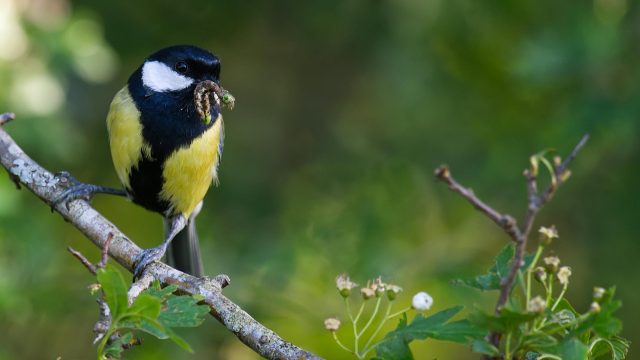
(Beyond Pesticides, May 28, 2026) Researchers from France and Germany, as published in Agriculture, Ecosystems & Environment, find that declines in bird populations are strongly linked to their diets, with insectivorous birds experiencing the greatest impacts. “Overall, our results emphasize the strong association between insecticide use and insectivorous bird declines,” the authors state. They continue: “We found a consistent negative association between insecticide use and population trends of insectivorous birds, the most abundant group, regardless of migration strategy. This pattern suggests indirect effects linked to the depletion of insects as a food source.”
In analyzing bird population trends in France over 15 years and comparing bird responses across diets and pesticide types, this study highlights the negative association between insect population declines and insectivorous bird population declines that are linked to agricultural intensification.
Study Background
The impacts of pesticides on birds, as described on Beyond Pesticides’ resource page, can occur through various routes of exposure. Birds can be exposed to pesticides directly through ingestion of seeds that have been treated with pesticides, or indirectly through consumption of small insects and other animals that have ingested the pesticides themselves, leading to secondary poisonings of the birds. They can also be indirectly affected through declines in insect populations, as shown in the current study. When insect populations are reduced, this natural food source for birds is also reduced, creating cascading trophic effects.
The adverse effects of pesticide use on bird populations cannot be understated. The latest State of the Birds 2025 report finds concerning news for bird species across the country. As the article reports: “Whether they hop around the prairie, dabble in wetlands, flit through forests, or forage along the shore, birds are suffering rapid population declines across the United States… If these habitats are struggling to support bird species, it’s a sign that they’re not healthy for other wildlife, or even humans—but working to restore them will have benefits across ecosystems.” (See more here.) Additionally, a 2025 study in Science of The Total Environment shows pesticide residues in birds’ nests correlate with higher numbers of dead offspring and unhatched eggs. The data reveals higher insecticide levels are linked to increased offspring mortality and threaten biodiversity. (See here.)
In recent Daily News, Pesticide Contamination Moves Through the Food Web, From Aquatic Insects to Terrestrial Birds and Bats, international researchers find increasing threats to both aquatic and terrestrial food webs with insect transmission of pesticide residues from water to land. As the researchers explain, insects with aquatic and terrestrial phases act as vectors, transferring pesticides from water bodies into terrestrial food webs. The study results illustrate that pesticide contamination occurs through the ingestion of contaminated prey from aquatic systems, as all of the substances recovered in the fecal samples are detected in the water bodies within the study region, and highlight how the transfer of pesticides from emerging insects to other species in the food web further threatens biodiversity and ecosystem functioning.
Methodology and Results
In the current study, the researchers examine trends in common bird populations as they relate to pesticide toxicity. Bird data obtained from the French Breeding Bird Survey, conducted between 2008 and 2022, shows the annual abundance of common bird species. “Using long-term monitoring of 81 breeding bird species encompassing four contrasting diets across 2783 plots in France over a 15-year period, together with a national database of pesticide sales, we assessed the negative effects of pesticide exposure with several novel features,” the authors report. The results show pesticides as a key driver in bird population dynamics, impacting birds directly and indirectly through insect declines.
Notably, an increase in insecticide use by only one gram per hectare, per year correlates with decreased insectivorous bird abundance by 0.16–0.28% per year. As the researchers summarize: “Our study reveals a clear negative association between pesticide use and the trends in total abundance of birds, which depends both on bird diet and pesticide type. Consistent negative associations were observed between the trend in total abundance of hawking and gleaning insectivorous birds and the trends in insecticide use, regardless of their migration strategies.” [Hawking is a feeding strategy of catching flying insects in mid-air, while gleaning incorporates plucking invertebrates, such as spiders, caterpillars, or beetles, directly from a surface.] These results are supported by previous research that shows negative associations between insecticides and the decline of insectivorous birds. (See here, here, and here.) Research shows that the depletion of insect prey is also linked to reduced reproductive success in birds. (See here, here, here, and here.)
Previous Coverage
The adverse effects on birds, insects, and other wildlife from pesticide exposure have been widely documented by peer-reviewed, independent scientific literature. The delicate balance of biodiversity required for ecosystem functioning is severely disrupted with environmental contaminant exposure, particularly with impacts on insects and other pollinators that cause cascading impacts throughout the food web.
Research in 2019, published in Science, estimated a net loss of nearly 3 billion birds since 1970. The authors “report widespread population declines of birds over the past half-century, resulting in the cumulative loss of billions of breeding individuals across a wide range of species and habitats.” The study shows that “declines are not restricted to rare and threatened species—those once considered common and widespread are also diminished. These results have major implications for ecosystem integrity, the conservation of wildlife more broadly, and policies associated with the protection of birds and native ecosystems on which they depend.” Despite these staggering results that had advocates calling for action, over five years later, bird populations are still declining. As mentioned in Daily News, the decline in bird populations reflects overall ecosystem health that is directly impacted by harmful agricultural practices. These issues have been of concern for decades, back to when Rachel Carson warned the world how insidious pesticide use can be. She wrote in Silent Spring:
“For each of us, as for the robin in Michigan or the Salmon in the Miramichi, this is a problem of ecology, of interrelationships, of interdependence. We poison the caddis flies in a stream and the salmon runs dwindle and die. We poison the gnats in a lake and the poison travels from link to link of the food chain and soon the birds of the lake margins become its victims. We spray our elms and the following springs are silent of robin song, not because we sprayed the robins directly but because the poison traveled, step by step, through the now familiar elm leaf-earthworm-robin cycle. These are matters of record, observable, part of the visible world around us. They reflect the web of life — or death — that scientists know as ecology.”
An additional study in Science measured local population abundances of 261 North American bird species between 1987 and 2021 and the speeds at which the species’ populations rose or fell. (See Daily News here.) The study was based on data from the North American Breeding Bird Survey, a program of the U.S. Geological Survey in coordination with the Canadian Wildlife Service. The researchers note that agricultural intensification and land use changes have been linked to changes in bird populations, and they integrate a set of related indicators, including climate, habitat, and human impacts, with the observational data from the North American Breeding Bird Survey. (See more on coverage of birds here and insects here.)
The Organic Solution
Birds, insects, and all other organisms, including humans, can be protected with the full elimination of petrochemical pesticides and synthetic fertilizers. A study published in Environmental Pollution, in analyzing the role of neonicotinoid insecticide exposure on bird populations in France before and after the 2018 ban of neonicotinoids, highlights not only the significant negative effects of imidacloprid use on insectivorous bird abundance but the weak recovery of bird populations. The research shows that despite the ban, the persistent nature of imidacloprid, as well as the continued use of other petrochemical pesticides that have adverse effects on bird species, continues to impact populations of all types of birds and other wildlife, leading to cascading impacts on biodiversity. These results confirm that pesticide bans of single active ingredients or pesticide classes are not enough to ensure full biodiversity recovery to protect all species. (See Daily News here.)
Banning single active ingredients or pesticide classes fails to address the larger issue of dependence on chemical-intensive practices, where the elimination of one toxic chemical leads to replacing it with another, potentially more toxic, chemical. In this case, the pesticide treadmill continues to be perpetuated, and full-scale recovery of any wildlife species requires a systems-wide transition to organic land management to be implemented.
Given the urgent need to protect health and the environment, now is the time to adopt the organic solution, which science has proven is more productive and cost-effective than chemical-intensive methods. More importantly, organic practices prevent pesticide risks and protect and enhance biodiversity, safeguard public health, and mitigate climate change. Visit the Eating with a Conscience database to learn more about why food labeled “organic” is the right choice.
All unattributed positions and opinions in this piece are those of Beyond Pesticides.
Source:
Perrot, T. et al. (2026) Declines in insectivorous bird abundance are related to increasing agricultural insecticide use, Agriculture, Ecosystems & Environment. Available at: https://www.sciencedirect.com/science/article/abs/pii/S0167880926002343.




