(Beyond Pesticides, September 5, 2019)
USDA Failures Necessitate Independent Corporate and Governmental Oversight
WASHINGTON, DC, Beyond Pesticides, a Washington, DC-based public interest organization founded in 1981 to advocate for healthy air, water, land, and food by eliminating the use of toxic pesticides and advancing organic practices, has announced the formation of its new investigative arm, OrganicEye. The watchdog agency will focus on defending the time-honored philosophy and legal definition of organic farming and food production.
“Trusted certified organic production must continue to offer a healthier marketplace alternative and critical environmental protection,” stated Jay Feldman, Executive Director of Beyond Pesticides and former National Organic Standards Board member.
As organic agriculture and food marketing has grown into an over $50 billion industry, corporate agribusiness has influenced USDA to shift primary organic production from family-scale farms to large livestock factories, and allow massive hydroponic/soilless greenhouses and fraudulent imports – all devastating to ethical farmers, businesses, and consumers.
“We are happy to announce the hiring of Mark Kastel to serve as the Director of OrganicEye,” Mr. Feldman said. Mr. Kastel, one of the founders of The Cornucopia Institute, a venerable organic farm-policy research group, brings over 30 years of diverse involvement in the organic industry. He has worked as a certified agricultural producer, business development consultant, and registered lobbyist, and is one of the most experienced independent fraud investigators in the organic industry. He has advanced major enforcement actions leading to decertification, fines, modifications to ongoing operations, cessation of organic fraud by international crime syndicates, and millions of dollars in settlements of consumer fraud class action lawsuits.
With Mr. Kastel’s deep roots in the farming community and high degree of respect among key organic business leaders, we will amplify the voices of committed organic stakeholders who share our strong belief that continued growth of trusted organic
practices is essential to solving escalating environmental and health problems, from the climate crisis to the insect apocalypse,” said Mr. Feldman.
Mr. Kastel stated,” We launch this project with the backdrop of thousands of cases of fraud submitted to the USDA’s National Organic Program (NOP), a number of independent audits by the agency’s Office of Inspector General (OIG) criticizing their weak oversight of certifiers and poor record of bringing fraudulent operations to justice.” A recent legally mandated peer review also sharply criticized USDA oversight of documented cases of illegal organic certificates, domestic fraud, and imports laundering conventional commodities as organic.
In their first official action, OrganicEye has sent formal letters urging the OIG and Government Accountability Office (GAO) to investigate NOP’s recent enforcement failures.
With 113 years of organic industry-related experience, the OrganicEye team is also joined by Terry Shistar, PhD, an ecologist and one of the nation’s top experts in analyzing synthetic substances used or proposed for use in organic production.
OrganicEye has established a toll-free hotline, 1-844-EYE-TIPS (844-393-8477), to gather confidential tips from the public on threats to organic integrity.
For more information, visit www.organiceye.org.
Contact:
Mark A. Kastel, 608-625-2042 / [email protected]
Jay Feldman, 202-255-4296 / [email protected]
[Long Version of Press Release (with more details)]
Veteran Policy Experts Form Organic Industry Watchdog Agency
USDA Failures Necessitate Independent Corporate and Governmental Oversight
WASHINGTON, DC — Beyond Pesticides, a public interest organization founded to advocate for healthy air, water, land, and food by eliminating the use of toxic pesticides, and advance healthy practices, has announced the formation of an investigative arm, OrganicEye. The new watchdog agency will focus on defending the “time-honored philosophy and legal definition of organic farming and food production” from USDA’s systemic failure to protect the interests of organic farmers, ethical businesses, and consumers.
 As organic agriculture and food marketing has grown into an over $50 billion industry, corporate agribusiness has used its influence within USDA—and many independent certification agencies it oversees—to shift primary organic production from family-scale farms to large livestock factories, massive hydroponic/soilless greenhouses, and imports that have proven less than trustworthy.
“Certified organic production must continue to offer a viable alternative for shoppers, who want to protect the environment and provide healthier food for their family—with industry stakeholders stepping up to rein in the wholesale abuse that is an attack on the working definition and integrity of organics,” stated Jay Feldman, Executive Director of Beyond Pesticides, a Washington-based public interest group.
“We are happy to announce that Beyond Pesticides has hired Mark Kastel to direct the new project,” Mr. Feldman continued. Mr. Kastel, one of the founders of The Cornucopia Institute, a venerable organic farm-policy research group, brings over 30 years of diverse involvement in the industry. His background includes work as a certified agricultural producer, business development consultant, and registered lobbyist, making Mr. Kastel one of the most experienced independent fraud investigators in the organics industry.
Research and public pressure spearheaded by Mr. Kastel has compelled USDA to take a number of major enforcement actions resulting in decertification, fines, modifications to ongoing operations, and millions of dollars in settlements of class action lawsuits related to consumer fraud. His efforts have also been instrumental in helping bust large international crime syndicates laundering conventional commodities as “organic.”
“Mark is highly respected in the organic farming community, and by key business leaders who walk their talk, while at the same time feared and reviled by powerful interests profiting from the weakening of organic standards,” Mr. Feldman added. “With Mark on board, we will amplify the voices of committed organic stakeholders who share our sense of urgency to stop the degradation of the environment and health, with organic as a critical piece of the solution,” said Mr. Feldman.
Mr. Kastel, the new Director of OrganicEye, stated, ”You don’t have to take my word for the inadequacy of enforcement actions by the USDA’s National Organic Program. With the backdrop of thousands of cases of fraud submitted to the NOP, there is a legacy of independent audits by the agency’s Office of Inspector General (OIG) criticizing their oversight of certifiers and poor record of bringing fraudulent operations to justice.”
In addition to the OIG audits, a recent legally mandated peer review sharply criticized the USDA organic program for grossly inadequate staffing and management overseeing the burgeoning number of documented cases of illegal organic certificates, domestic fraud, and imports laundering conventional commodities as organic.
In their first official action OrganicEye has sent formal letters to the OIG and the Government Accountability Office (GAO) requesting an investigation of a recent incident where a large shipment of imported grain from Turkey was identified as fraudulent and the USDA National Organic Program failed, when they had the opportunity, to collaborate with other federal and state agencies in quarantining the shipment and testing the cargo prior to unloading.
The tip on the allegedly fraudulent shipment came from an authoritative industry source and was relayed by the Organic Farmers Association. Instead of collaborating with agricultural regulators in North Carolina, and federal Customs and Border Protection agents, NOP chose to rely exclusively on paperwork from the certifier.
“Turkey is a country with past documented, wholesale fraud in the organic arena, and the certifier was currently under investigation by USDA, and shortly thereafter lost its accreditation,” said Mr. Kastel, “It’s unconscionable that, at a time when the credibility of the organic seal is in jeopardy, NOP would not choose to take decisive action in this matter.”
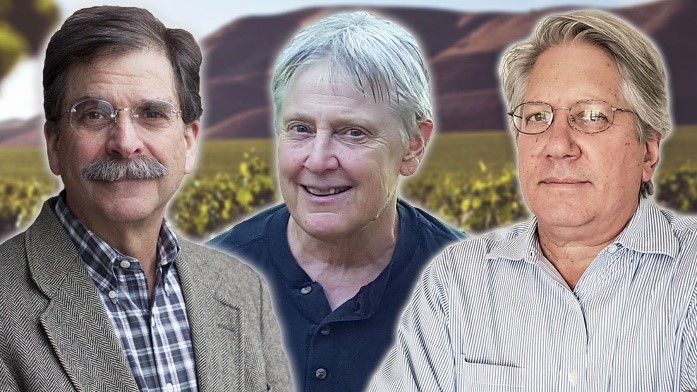 Along with Mr. Kastel and Mr. Feldman, a 40-year veteran of organic policy work and former member of USDA’s National Organic Standards Board, the team is joined by Terry Shistar, PhD, one of the nation’s top experts in analyzing synthetic and non-organic materials proposed for use in organic production. The depth and breadth of the leadership at OrganicEye, with cumulatively over 110 years of organic industry-related experience, could very well be unparalleled in the public interest sector.
In addition to its organic gumshoe work, OrganicEye will continue the tradition that Beyond Pesticides has established in commonly being the only public interest group thoroughly analyzing every single synthetic and non-organic material petition for use in organic farming or food production before the National Organic Standards Board.
“Examining materials petitions will be a continuing, in-depth commitment. Our board members and staff have been deep in the organic weeds since the beginning—from helping to write the Organic Foods Production Act, to examining the USDA’s draft regulations, word-by-word, to supporting organic farmer Arthur Harvey in his successful court challenge of USDA’s misinterpretations of the law,” Dr. Shistar stated. “Investigative scrutiny by OrganicEye will give the organic community one more tool for ensuring that consumers and growers derive the benefit of the law.”
In addition to the scores of industry “intelligence agents” with whom Mr. Kastel has worked over the past fifteen years as the organic industry’s best-known watchdog, OrganicEye has established a new toll-free hotline, 1-844-EYE-TIPS (844-393-8477), to help facilitate tips from the public.
“We are not in the rumor business. Intel has to be verified with additional witnesses, documentation, photographs, or other evidence,” Mr. Kastel added. “We encourage stakeholders to come forward if they have firsthand knowledge concerning fraud, which damages the value of the organic label for all those producing food in an honest and ethical manner.”
The organization emphatically stated that the identity of all whistleblowers and tipsters will be held in strict confidence.
For more information, visit www.organiceye.org.
-30-
OrganicEye endeavors to leverage the extensive experience of our management and staff in farm policy, scientific research, and political and marketplace education/advocacy, acting as corporate and governmental watchdogs, educating the public and preventing the erosion of the foundational precepts of the organic movement.
Founded in 1981, Beyond Pesticides (formerly National Coalition Against the Misuse of Pesticides) is a 501(c)3 nonprofit organization headquartered in Washington, D.C., which works with allies in protecting public health and the environment to lead the transition to a world free of toxic pesticides. Organic is Beyond Pesticides.






 (Beyond Pesticides, September 23, 2019) Your voice is making a difference! Last month, thousands of individuals took action through Beyond Pesticides and other environmental groups to express concern to their federal lawmakers about the Trump Administration’s assault on the Endangered Species Act (ESA). In response, U.S. Representatives Grijalva, Beyer, and Dingell in the House, and Senator Udall in the Senate have introduced the PAW and FIN Conservation Act of 2019. This law will roll back Interior Department regulations that would weaken this landmark law protecting species from extinction.

 (Beyond Pesticides, September 17, 2019) The poisonous farm fields migratory birds forage on during their journey reduce their weight, delay their travel, and ultimately jeopardize their survival, according to new research published in the journal
 (Beyond Pesticides, September 13, 2019)
  (Beyond Pesticides, September 12, 2019) This September, adults will join in
  (Beyond Pesticides, September 11, 2019) Germany is the latest entity to take action on getting
  (Beyond Pesticides, September 10, 2019) Monarch populations on both coasts of North America are in
  (Beyond Pesticides, September 9, 2019) New rules proposed by the Department of Labor (DOL) will weaken protections for both foreign and domestic farmworkers who grow and harvest the nation’s food. The changes would affect the H-2A guestworker program, which permits U.S. farms to temporarily hire foreign workers. Despite rapid increases in foreign agricultural workers over the past several years, the new rules would expand the program and make it easier for agrichemical companies to exploit foreign labor, driving down working conditions and pay for all farmworkers.
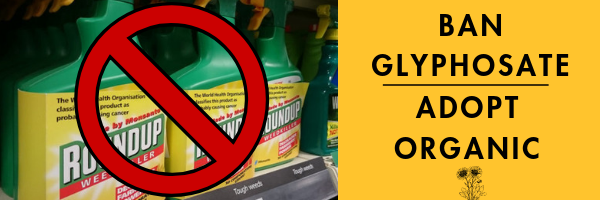 (Beyond Pesticides, September 4, 2019) Sixteen organizations representing health, environmental, farmer, and farmworker communities joined together yesterday to call on EPA to remove glyphosate from the marketplace. The groups cite a combination of high-profile lawsuits, environmental impacts, increasing reports of weed resistance, and growing public concern over the health effects of glyphosate in their comments on EPA’s interim reregistration review decision for the chemical.
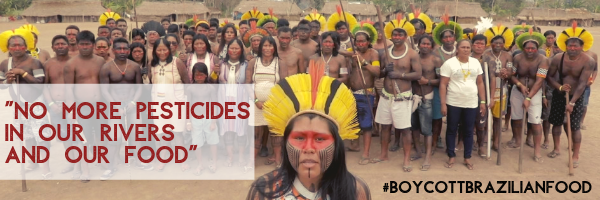 (Beyond Pesticides, September 3, 2019) Brazil’s environment is under siege, as President Jair Bolsonaro has approved hundreds of new toxic pesticides this year and gutted watchdog environment agencies. Among the many dreadful results, news reports indicate that between December 2018 and March 2019, Brazilian beekeepers found more than
 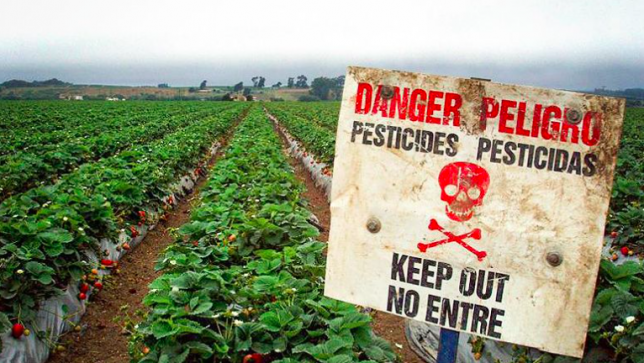 (Beyond Pesticides, August 30, 2019) The indictment of organophosphate pesticides gained more traction with the publication, in the
 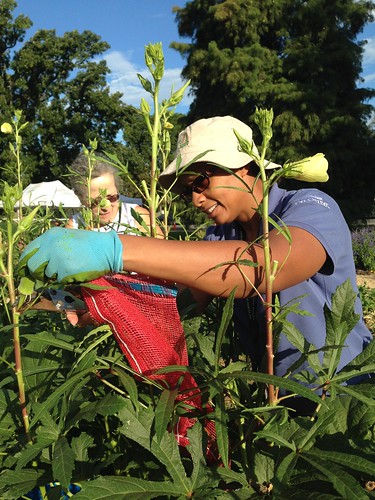 (Beyond Pesticides, August 29, 2019) The Peoples Garden, located on the grounds on the U.S. Department of Agriculture (USDA) on the national mall, has been renamed and remodeled to highlight genetically engineered (GE) crops and farming techniques that directly counter the organic movement. The new exhibit, entitled “Voice of the Farmer,” is part of the “Trust in Food” initiative of Farm Journal magazine. This marks a continuation of trends in the Trump administration:
 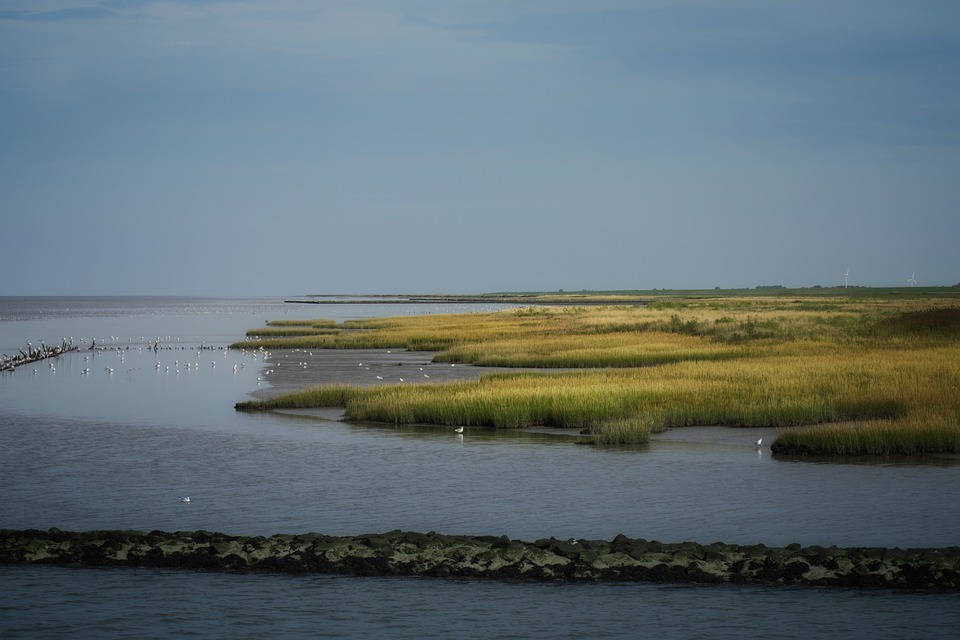 (Beyond Pesticides, August 28, 2019) Salt marshes, areas of coastal grassland regularly flooded by saltwater, provide a major global service by sequestering and storing carbon in the form of organic matter. However, research finds that nitrate from synthetic fertilizers found in agricultural runoff could change the microbial composition of the salt marshes to encourage organic matter decomposition and, therefore, carbon release versus capture. The study, “
 (Beyond Pesticides, August 26, 2019) U.S. Senator Cory Booker (D-NJ) recently released
  (Beyond Pesticides, August 23, 2019) The Office of the Inspector General (OIG) for the U.S. Environmental Protection Agency (EPA)