16
Aug
Millions of Eggs in Europe Found Contaminated with Insecticide Fipronil
EU(Beyond Pesticides, August 16, 2017) Millions of eggs and egg products have been pulled from supermarket shelves in 15 countries in Europe after it was discovered that the eggs were  contaminated with the insecticide fipronil. Now, the European Commissioner in charge of food safety has called for a meeting of ministers and national regulatory agencies to discuss the widespread European contamination. However, fipronil is not allowed for use in food production in Europe, raising concerns over food safety and regulatory oversight.
This incident reminds U.S. consumers about the disarray of the U.S. food safety system, as reported by the U.S. Government Accountability Office (GAO) in 2014. According to the GAO report, Food Safety: FDA and USDA Should Strengthen Pesticide Residue Monitoring Programs and Further Disclose Monitoring Limitations, there is a lack of government coordination on food safety and the U.S. Food and Drug Administration (FDA) does not test food for several commonly used pesticides with established tolerance levels. The report sounds an alarm that GAO began sounding in the 1980’s in several reports that identify shocking limitations of FDA’s approach to monitoring for pesticide residue violations in food. (See Beyond Pesticides’ coverage.) Since that report, FDA announced, then withdrew its announcement, then re-announced that it would begin testing for glyphosate, the most widely used herbicide that is showing up in numerous food groups in the U.S. and worldwide.
One hundred and eighty Dutch farms have been temporarily closed after the Dutch food safety authority announced that it discovered tens of thousands of eggs contaminated with fipronil. The eggs mostly originated from the Netherlands, where, like the rest of the European Union (EU), the insecticide fipronil is used to kill lice and ticks on animals, but banned for use in food production. However, preliminary investigations find the insecticide was used on chicken farms. According to reports, both Dutch and Belgian authorities may have known about the egg contamination two months ago, but news of the contamination only broke last week. Dutch authorities have since arrested two directors of the company at the center of the safety scare, with prosecutors saying they are being held on suspicion of threatening public health and possession of a prohibited pesticide. Countries that have received the fipronil-laced eggs include Britain, Sweden, Austria, Ireland, Italy, Luxembourg, Poland, Romania, Slovenia, Slovakia and Denmark —along with non-EU Switzerland and Hong Kong.
Major German retailers, including Lidl and Aldi, have pulled the eggs off their shelves, and authorities are testing other products made with eggs –such as pasta, mayonnaise, and cakes. In the UK, Sainsbury’s, Morrisons, Waitrose and ASDA are also recalling egg products. Now the EU is convening a meeting before the end of September of the ministers concerned, along with various national food safety agency representatives.
Most of the eggs have already been eaten, and health authorities are downplaying potential health risks from ingesting fipronil. Fipronil is a broad spectrum insecticide used to control common insects (ants, roaches, termites, etc). This insecticide is neurotoxic, and symptoms of exposure include headache, nausea, dizziness, and weakness –typically associated with neurological interference in the brain. Fipronil is also an endocrine disruptor and can disrupt thyroid function. It is classified by the U.S. Environmental Protection Agency (EPA) as a Group C (Possible Human) carcinogen. The World Health Organization (WHO) regards fipronil as “moderately toxic” to humans, and can, in large quantities, damage kidney, liver or thyroid gland. The Dutch advisory warns consumers to avoid eating eggs with the code 2-NL-4015502, as the fipronil levels are so high it poses a health hazard. Standard preparations such as washing, cooking, or baking do not remove fipronil from the egg.
The widespread egg contamination in Europe raises questions about lax regulatory oversight in food production, particularly livestock. Poultry farming is rife with meat and egg contamination of a host of substances, including antibiotics, growth hormones, and pesticides, all used to stem outbreaks of disease and ill health among animals kept under deplorable conditions. Even though certain substances are given government approval for use, many cut corners and skirt regulations, as evidenced by the fipronil contamination in Europe. Food contamination is a serious threat to public health and more oversight is needed to ensure that the food supply is safe and free from toxic agents that can potentially harm not only livestock, but humans as well.
A good way to avoid toxic contaminants in eggs is to buy organic eggs. Organic production does not allow the use of toxic insecticides like fipronil. All inputs into organic egg production must be an approved part of the producer’s organic system plan, and organic chickens are required to have access to the outdoors, although Beyond Pesticides is pushing for stronger standards that require pasturing of chickens.
All unattributed positions and opinions in this piece are those of Beyond Pesticides.
Source: Reuters

 inue its food uses. [The bill is currently co-sponsored by Senators Cory Booker (D-NJ), Ben Cardin (D-MD), Richard Durbin (D-IL), Kirsten Gillibrand (D-NY), Kamala Harris (D-CA), Ed Markey (D-MA), and Jeff Merkley (D-OR).]
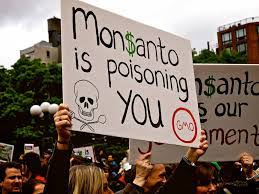 its efforts to hide information about impacts of its popular glyphosate-based herbicide, Roundup. This follows on the heels of the March 2017 unsealing, by federal judge Vince Chhabria, of internal Monsanto documents — the “
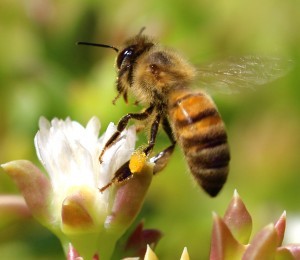 these numbers may seem to be a positive sign after over a decade of consistent pollinator declines, they are more indicative of a beekeeping industry that is using every available tactic possible to stay viable. With the continued use of highly toxic neonicotinoid insecticides in farms, gardens, and public spaces throughout the country, the long-term health honey bees and other pollinators continue to be in jeopardy.
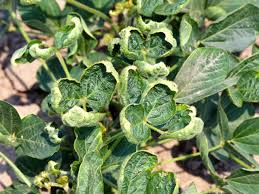 chemical used in genetically engineered (GE) fields. Dicamba, a toxic pesticide prone to drift off the target site, has been used in agriculture for decades. However, new GE crops developed by Monsanto must be paired with specific formulations of dicamba, and until now many believed these drift incidents were the result of illegal formulations of dicamba being applied to fields. But the extent of damage now being observed, covering over 2.5 million acres, is casting doubt on this theory, and raising more questions as to whether the new dicamba formulation is actually the cause of the widespread drift damage.
 during the cabbage planting cycle
 Grassroots advocates who supported passage of the Healthy Lawns Act to protect children, families and the environment are dismayed by the court’s ruling, but nevertheless vow to keep up the fight for protections from hazardous pesticides used in their community. “The court should have recognized that, in restricting lawn pesticides throughout its jurisdiction, Montgomery County is exercising a local democratic principle under Maryland and federal law to ensure the safety of the community, including children, pets, and the environment, from a known hazard not adequately regulated by the U.S. Environmental Protection Agency or the state,” said Jay Feldman, executive director of Beyond Pesticides. “After extensive hearings and study, the county council understands that toxic chemicals are dangerous and not needed to have beautiful lawns and landscapes,” Mr. Feldman said.
 (Beyond Pesticides, August 3, 2017) Working in close contact with pesticides over the course of one’s lifetime increases the risk of Chronic Obstructive Pulmonary Disease (COPD) and other breathing disorders, according to a
 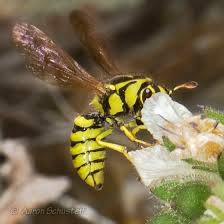 Masarinae are the only “vegetarian” wasp in the family Vespidae., They feed solely on nectar and pollen, unlike their more aggressive Vespid wasp cousins. There are 300 species of pollen wasp from 14 genera spread across the globe, however, in the U.S., all 14 species of pollen wasps originate from the genus Pseudomasaris.
 industry and the federal government to conceal from the public the real dangers associated with the use and manufacture of chemical products. The Bioscience Resource Project and the Center for Media and Democracy released more than 200,000 pages of these documents now accessible on the “
 growers, those same growers are threatened by the flooding of the market with cheaper fraudulent grains. The resulting impacts of eliminating market opportunities while at the same time threatening the value of the organic label hurt organic farmers in this country.
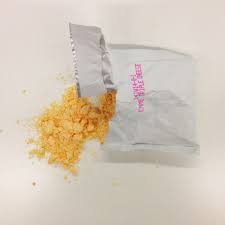 disrupting, industrial chemicals have been found in 10 varieties of macaroni and cheese products. The coalition is calling on food companies, especially the Kraft Heinz Company, maker of the iconic boxed mac and cheese, to eliminate sources of these chemicals from their cheese products.
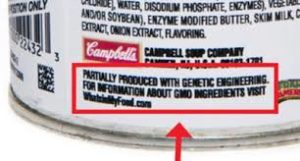 concerning labeling of genetically engineered (GE) food. Campbell’s President and CEO Denise Morrison said that while the company does not question the safety of GE food, it recognizes that most consumers want to see GE ingredients on the label. Meanwhile, Campbell’s has supported the GMA digital disclosure and lists ingredients that “may be derived from crops grown from genetically engineered seeds” on its
 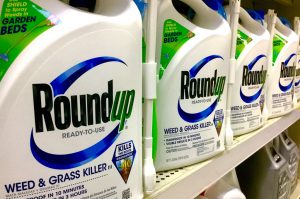 term, intensive glyphosate use, and myriad resulting concerns about impacts on soil and environmental health. The review, by Robert J. Kremer, PhD, of the University of Missouri School of Natural Resources, cites
  South Florida scientist Jason Rohr, PhD and colleagues