





07
Jul
Documented Contamination of Pesticides in Infant Formula Poses Short-Term and Long-Term Health Risks
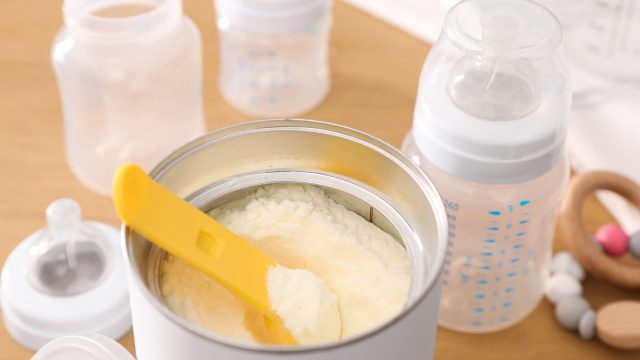
(Beyond Pesticides, July 7, 2026) An analysis of scientific literature on pesticide contamination in infant formula reveals a public health issue of food safety for young children with potential lifelong impacts, as published in Environmental Toxicology and Pharmacology. Through a systematic review of research from 1975 to 2025, the authors, from the Department of Public Health and Infectious Diseases at the Sapienza University of Rome (Italy), find residues of pesticides that are linked to deleterious health impacts in infant formula, including insecticides such as organochlorines, organophosphates, pyrethroids, and neonicotinoids, and many herbicides.
As the researchers share, the results highlight that: “[T]he contamination of infant formula does not concern a single class of substances, but manifests itself as a heterogeneous and simultaneous set of risks: pesticide residues, heavy metals, persistent environmental contaminants, mycotoxins and compounds released from packaging materials can coexist within the same product. This co-presence of contaminants of different origins confirms that the problem cannot be traced back to a single critical point, but reflects a complex supply chain context, in which each stage—from raw material production to industrial processes, storage and packaging—can contribute to the infant’s final exposure.” In confirming the presence of multiple pesticides within infant formula, this research shows how pesticides are not encountered in isolation and can lead to additive or synergistic effects with greater health risks for children that already experience disproportionate risks from pesticides.
Study Importance
As documented on the Beyond Pesticides’ Hazards of Pesticides for Children’s Health page, infants and children face much higher hazards than adults from pesticide exposure. Their small size and developing organ systems, propensity to crawl and play near the ground, tendency for frequent hand-to-mouth motion, and greater intake of air and food relative to body weight make them particularly susceptible. The hazards borne by children in the “windows of vulnerability” at a young age have critical implications for long-term health. For additional information, see Children and Pesticides Don’t Mix and Daily News coverage related to infants and children here.
Infant formula is widely used as a partial or total substitute for breast milk, serving as a critical food source with formulations for different stages of growth. “Special formulas, intended for specific nutritional needs, such as formulas for preterm infants, protein hydrolysate-based formulas for infants with cow’s milk protein allergy, hypoallergenic formulas, soy-based formulas, lactose-free formulas, and formulas enriched with additional functional components (e.g., prebiotic/probiotic additives),” the authors note.
Throughout the entire production chain for these formulas, contamination can occur. For example, pesticide residues can contaminate food products used in formulas. The researchers state: “Food contamination by chemicals, and in particular pesticides, is an extremely important public health issue, as it can also affect essential nutritional sources in the first months of life, such as breast milk and infant formula, with infants being particularly vulnerable to the toxic and endocrine-disrupting effects of these substances due to their immaturity. In infant formula, pesticide contamination is mainly caused by the raw materials used, such as cow’s milk, soy, or cereals, which may contain agricultural residues, as well as possible contamination during processing and storage.”
Methodology and Results
The present systematic review analyzes relevant articles published up to August 7, 2025, regarding contamination of infant formula. Of the 26 studies included, 22 reveal pesticide contamination. The scientific literature captures a wide geographical distribution, highlighting the global issue of infant health risks. Ten studies were conducted in Europe, specifically in Spain, Italy, Romania, and Turkey. The remaining studies were conducted in the U.S., India, Brazil, China, New Zealand, Venezuela, Kenya, and Iran. The majority of the studies use samples of powdered formula, while liquid preparations and specialized formulas were also incorporated.
“The data collected show contamination by a variety of active ingredients belonging to different classes of pesticides, with a prevalence of organochlorine, organophosphate, pyrethroid and neonicotinoid compounds and other less frequently found contaminants,” the authors write. They continue, saying the analysis: “…reveals a clear prevalence of organochlorine compounds (present in 16 articles), confirming their historical use and environmental persistence. These are followed by organophosphate pesticides, detected in 7 studies, pyrethroids (in 4 studies) and triazine herbicides (in 3 studies), all representative of chemical classes widely used in agriculture and potentially detectable in food products intended for young children.”
Additional studies (see here, here, here, here, here, and here) utilize a multi-class approach, including compounds belonging to classes of insecticides including neonicotinoids and pyrethroids, herbicides including triazines, and fungicides including triazoles. This reflects cumulative exposure and the heightened synergistic effects that can occur when encountering pesticide mixtures.
The results also highlight the role of endocrine-disrupting chemicals (EDCs) in infant formula. In one study, “[T]he authors identified pesticides among the substances potentially capable of interfering with hormonal balance, detected in both infant formula and baby bottles.” The researchers continue: “This evidence reinforces the idea that newborns may be subject to combined exposure to multiple contaminants of different types, with the possibility of synergistic effects on the endocrine system… The inclusion of pesticides in the group of endocrine disruptors identified by the study suggests that the production and packaging chain of infant foods may constitute a significant route of exposure.” These EDCs can cause hormonal and reproductive disorders, including early puberty, longer menstrual cycles, and early menopause. Exposure to EDCs early in life can also interfere with organ formation and the development of the immune, respiratory, nervous, and reproductive systems. (See here and here.)
Previous Research
As documented in Daily News coverage in 2016, entitled Organic Consumers Association Sues to Keep Synthetics Out of Organic Infant Formula, there is a history of concern about food safety for infants and children, particularly when labeled as certified organic but containing contaminants. When companies like The Honest Co. and Hain Celestial undermine the integrity of the organic label by including chemicals that do not meet the organic standards set out by the National Organic Program in their products, public trust in the system is compromised, creating devastating damage to the program as a whole. The Organic Consumers Association and Beyond Pesticides are doing their part to keep the organic label strong, and we encourage consumers to do the same. (See more on national organic standards and labeling here, as well as previous comments to the National Organic Standards Board regarding organic infant formula here.)
A study published in Pediatrics by the American Academy of Pediatrics raises serious concerns about children’s dietary exposure to pesticides, particularly the weed killer glyphosate, that are heavily used in the production of genetically engineered crops. This calls attention to the widespread use of genetic engineering and genetically modified organisms (GMOs) in the U.S. food supply and the potential associated health risks for children and consumers. Residues of not only the weed killer glyphosate, but also other herbicides, are detected in corn silage and animal feeds that are made from herbicide-tolerant crops, increasing the risk of contamination of meat and dairy products. Infant formula is a concern, as “most contain some amount of corn syrup, soy, or other products that may be made from GMO components.” As the authors say, “The presence of glyphosate and other toxic herbicides in food products is the main hazard to children’s health associated with the consumption of GMO-based foods.” (See Daily News Genetically Engineered Food Products Increase Risks to Children’s Health, Medical Doctors Say for more information.)
The Organic Solution
As infants and children are particularly vulnerable to pesticides and other contaminants, it is imperative to ensure food safety to protect their short-term and long-term health. Current maximum residue limits (MRLs) in food products are “not sufficient to guarantee an adequate margin of safety,” as the current review authors say. To ensure that infant formula, as well as baby food and all other crop-based products, are free from pollutants, a widescale transition to organic is necessary.
Learn more about the health benefits of organic, as well as how to Grow Your Own Organic Food, Buying Organic Products (on a budget!), and Eating with a Conscience. To further support the organic movement, see Keeping Organic Strong. Beyond Pesticides is working for holistic change in food production and land management—from farms to homes, gardens, parks, playing fields, and schools. Consider becoming a member or supporting this mission today!
All unattributed positions and opinions in this piece are those of Beyond Pesticides.
Source:
Antonucci, A. et al. (2026) Pesticide contamination in infant formula: a systematic review, Environmental Toxicology and Pharmacology. Available at: https://www.sciencedirect.com/science/article/abs/pii/S1382668926001559.




