





15
May
Pruitt’s EPA Delays New Rules to Protect Pesticide Applicators
(Beyond Pesticides, May 15, 2017) Last week the U.S. Environmental Protection Agency (EPA), under the direction of new Administrator Scott Pruitt, announced that it will delay for one year the implementation of a final rule that revised and updated protections for certified pesticide applicators –the workers who apply the most hazardous pesticides, restricted used pesticides. The new rules require increased training for certified applicators and increase the minimum age of a worker to 18 years, updates to which industry has objected. Against the backdrop of recent high-profile poisonings, the delay requested by industry interests places these workers and the public at continued risk.
The Certification of Pesticide Applicators Rule was made final on January 4, 2017, revising regulations regarding the certification of applicators of restricted use pesticides (RUPs). The rule was scheduled to go into effect March 6, 2017, but was delayed to March 21, 2017 by the new Trump Administration, which placed a mandatory freeze on all new regulations coming out of federal agencies. Now the Pruitt-led EPA states in the notice that it has “determined that the effective date of the revised Certification of Pesticide Applicators rule should be extended until May 22, 2018. EPA is taking this action to give recently arrived Agency officials the opportunity to conduct a substantive review of the revised Certification of Pesticide Applicators rule.”
The rule ensures that applicators of restricted use pesticides –the most hazardous pesticides –get adequate training and establishes a minimum age of 18 for pesticide applicators. It also requires that applicators be able to read and write; increases the frequency of applicator safety training to every year; and improves the quality of information that workers receive about the pesticides that they apply in agricultural, commercial, and residential settings. EPA states that the one-year extension would relieve state certifying authorities and certified commercial and private applicators of restrictions and burdens that would otherwise be imposed by the revisions to the Certification of Pesticide Applicators rule. However, a delay of one year means that these vulnerable workers will continue to receive inadequate training, and minors (under 18 years) will still be able to handle highly toxic pesticides.
Beyond Pesticides submitted comments on this rule in 2015 when it was proposed by EPA. Our comments noted that all pesticide applicators must be certified and properly trained before applying RUPs. Applications of RUPs should require the highest level of knowledge and training for an applicator. Applicators should be able to fully understand pesticide toxicology and potential health and environmental risks involved at the time of application, and must be able to respond immediately to impromptu concerns or mishaps that may occur on site at the time of application. Raising the minimum age requirement to 18 ensures that children are not given the responsibility to work with toxic substances. Research shows that adolescents are still more vulnerable to pesticide exposures and should not be exposed to hazardous substances earlier than 18 years. Additionally, at younger ages they do not have adequate judgement, capacity to assess risks, or the ability to address an emergency situation should it arise.
Astonishingly, EPA is only allowing a mere five days for public comment on their decision, less than the typical 30-day comment period, saying “EPA is reducing the duration of the comment period . . . to five days. EPA believes that five days is adequate time for interested parties to express their views on the whether the effective date of the revised Certification of Pesticide Applicators rule should be extended to allow substantive review.” (The comment period will begin May 15, 2017)
Industry critics believe the new rules are too burdensome on pesticide applicators, citing increased time to meet training requirements and increased costs. However, with recent high profile and tragic pesticide poisonings –including the 2015 poisoning incidents in U.S. Virgin Islands and Palm City, Florida, where evidence revealed that pesticide applicators made gross errors in judgement and were possibly negligent, it is more important than ever for applicators to raise their standards of knowledge and competency in making applications of hazardous pesticides.
Without proper enforcement and oversight, applicators, their clients, and the environment will be at risk. While striving to minimize adverse impact from pesticide use, stricter applicator standards are only one part of the solution. Instead of delaying important applicator standards, EPA must reduce the overall approval, sale, and use of pesticides that are proven to be hazardous to human and environmental health and for which there are safer alternatives, keeping with its mandate that these products pose no unreasonable adverse effects on people and the environment.
The widespread adoption of organic management is necessary to protect consumers and the environment in the long-term. Beyond Pesticides has long sought a broad-scale marketplace transition to organic practices that, as a default, prohibits the use of synthetic pesticides by law (unless subject to rigorous health and environmental standards and recommended by the National Organic Standards Board) and requires a systems-based approach that is protective of health and the environment. This approach never allows the use of highly toxic synthetic pesticides, such as the toxic organophosphates, and advances a viable, scalable path forward for growing food. Find out more about why organic is the right path forward for the future of farming by going to Beyond Pesticides’ organic agriculture webpage.
Source: Earthjustice press release
All unattributed positions and opinions in this piece are those of Beyond Pesticides.

 The study, published in
 ucts. Those industry groups that are leading the charge to preempt local government action have a vested economic interest in selling toxic products and services and stifling the market from moving toward greener alternatives. Passage of the bill in Maine would serve as a huge blow to many local communities that currently regulate pesticides more stringently than the state, as the bill also includes language voiding any local regulations that predate the bill.
 The Mexican long-tongued bat’s range extends from the southwest of the United States through Mexico and into Central America, according to the International
 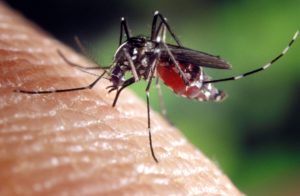 The trial is the second U.S. test conducted with the naturally occurring Wolbachia bacteria in Aedes aegypti mosquitoes, developed by the Kentucky-based company MosquitoMate. The first test occurred in Clovis, California, last year. In September 2016, the U.S. Environmental Protection Agency (EPA), which registers mosquito control products, approved and expanded an
  Nine organizations filed an

 The new law, introduced by Assembly chair Elvi Gray-Jackson and vice chair Dick Traini, was the product of months of community stakeholder meetings and input. “That’s the way I like to do business in this community,” Ms. Gray-Jackson said to KTUU on the night the bill was passed. “Bring all the stakeholders together and have them work it out so we don’t waste a lot of time at this level.”
 According to the
  (Beyond Pesticides, April 19, 2017) Local activists in Illinois were handed an exciting victory on Monday when a judge granted a temporary restraining order to shut down a construction project due to the presence of the rusty patch bumblebee, a recently listed endangered species. The group Stop Longmeadow, in reference to the Longmeadow Parkway Bridge Corridor project, filed the lawsuit,


