





13
Apr
Study Shows Women and Education Reduce Pesticide Use
(Beyond Pesticides, April 13, 2017) With pesticide use rising in Southeast Asia, a new study is highlighting the importance of education and social dynamics in driving farmers’ decisions to spray. When women oversee agricultural pesticide use, according to the study, these farms use approximately 42% less pesticide than other farms. The research, published in Science of the Total Environment this month, aims to provide insight on methods that may be used to intervene and reduce pesticide dependence. The investigation comes at a critical time, as international bodies like the United Nations indicate that rampant pesticide use has the potential to negatively impact human rights, especially in developing countries.

In Cambodia, Laos, and Vietnam, pesticide imports are growing at an annual rate of 61%, 55%, and 10%, respectively. These trends have international implications, as food imported from these countries is subsequently found contaminated with pesticides, with for example, 33% of crops imported to the European Union from Vietnam containing pesticide residue above maximum acceptable limits.
To uncover the factors driving increased pesticide use in the region, researchers queried 900 vegetable farming households on their knowledge, attitude, and practices. Knowledge included understanding about best practices in agriculture, such as the difference between pest and beneficial insects. Attitudes were related to views regarding the effectiveness of pesticides and their potential health impacts. Practices are related to farmers’ agricultural use of pesticides, including how much product was purchased, the type of pesticide, and how much and how often products were sprayed.
When shown pictures of common insects, farmers were better able to identify pests, at a rate of 69%, than beneficial bugs, which were only identified correctly 23% of the time, on average. Under 50% of farmers were aware that honey bees, earthworms, and spiders were beneficial for their crops. Less than 5% of farmers on average knew that lacewings and ladybird larvae were beneficial. Analysis showed that farmers with a good ability to identify insects sprayed 48% less pesticides.
While 59% of farmers were aware that pesticides could have a dangerous impact on health, researchers found a number of prevalent mistaken beliefs. Though on average 86% of farmers worried about getting cancer from applying pesticides, 68% thought a pesticides’ toxicity could be determined through smell, 31% believed herbicides are not risky for humans, and 17% believed drinking alcohol after applying pesticides eliminated any side effects.
An average of 79% of farmers also thought that mixing multiple pesticides together would increase their effectiveness, and 66% thought that “good pesticides” were those that killed all insects immediately. Interestingly, researchers did not find a strong association between knowledge of pesticide health hazards and a decrease in their use. However, farmers that believed pesticides were necessary and effective used 66% more than their peers.
Social factors also provided insightful results. Despite a general belief that pesticide spraying was a man’s job, 49% of women in Vietnam oversaw pesticide use, as well as 38% in Laos and Cambodia. When this was the case, these farmers sprayed roughly 42% less pesticide than other farms. Furthermore, when farmers pursued advice from neighbors they used 48% less pesticides. Researchers determined that pesticide retailers had one of the more significant impacts on pesticide use. When farmers looked mainly to pesticide shopkeepers for advice on controlling pests, their use was 251% higher than the average farm surveyed.
This research provides a number of routes through which government and civil society can make an impact and slow pesticide use. By building awareness and the ability to identify insect pests, more farmers will be likely to take advantage of natural pest control, rather than work to indiscriminately kill all the insects in their fields. By further empowering women to engage in pest management decisions, farms will likely apply less chemicals. And by building local knowledge-sharing capacity, farmers will be more likely to turn to their neighbors than to pesticide applicators.
Despite a general belief by farmers than pesticides were necessary, an average of 82% reported that organic agriculture is a good alternative to conventional agriculture. As researchers explain, slow adoption of non-toxic alternative pest management practices, biopesticides, and ecological management was likely a result of availability of products and government support for these programs. By encouraging broader adoption of ecological and organic pest management practices, there is the potential for significant progress in reducing hazardous pesticide use.
It is important to note that these trends are not confined to developing countries. A major point of concern among authors in a recent French study which found that pesticides do not increase farmer profits, indicated that much of the advice farmers received regarding pest control came from pesticide companies. Farmers had little access to alternative information, the researchers noted.
Despite the structural barriers, organic agriculture continues to represent a viable, scalable path forward for both the developing and developed world. Consumers can play an important role in facilitating this needed change by voting with their wallet. Purchase organic products whenever possible to support a system that restricts toxic pesticide use, and encourages alternative pest management practices that aim to foster rather than eliminate ecological and natural pest services.
All unattributed positions and opinions in this piece are those of Beyond Pesticides
Sources: ScienceDirect, PhnomPenhPost

 Last spring, in a historic move, the Maryland legislature voted to become the first state in the nation to
  Researchers tested and tracked 69 expectant mothers and found that the presence of glyphosate levels in their bodily fluids correlated with unfavorable birth outcomes. The research is still in preliminary stages and is a project of the
 For the study, Jing Liu, PhD, and colleagues from Zhejuang University in China, analyzed the urine in 463 Chinese boys aged 9 to 16 for the presence of metabolites from the pyrethroid insecticide
  The Dow Chemical-DuPont deal is one in a series of mergers in the agriculture-chemicals sector being considered in the EU and also the U.S. The Dow-DuPont merger is happening alongside proposed mergers of Bayer and Monsanto, and Syngenta and ChemChina. On March 27th, a
  Chlorpyrifos is part of the organophosphate (OPs) class of pesticides, which were used in World War II as nerve agents. As potent neurotoxicants, organophosphates are extremely harmful to the
  Neonicotinoid pesticides are found in many home and garden products, and have been determined by the U.S. Environmental Protection Agency to be highly toxic to bees. According to the letter, “independent scientific literature associates the use of bee-toxic pesticides, particularly neonicotinoids, with impaired pollinator health and decline, including reduced populations of native bees, butterflies and other beneficial organisms.”
 Proposed reductions in EPA staff speak to the idiosyncrasies inherent in the Trump administration’s promise to reduce regulatory burdens while simultaneously making sweeping cuts to agency staff.
  According to Pesticide Action Network (PAN) Europe, the European Commission has presented to Member States its draft regulations to ban the neonicotinoids: imidacloprid, clothianidin and thiamethoxam. Three draft regulations to ban the three bee-toxic neonicotinoids across the entire EU were submitted to the Standing Committee on Plant, Animal, Food and Feed. These will be open to comments from Member States and a first vote on the Commission’s proposal could take place in May 2017. The new proposals are for a complete ban on the three neonicotinoid uses in fields, with the only exception being for plants grown in greenhouses. There would need to be a positive vote from 55% of the Member States representing 65% of EU citizens (qualified majority) to implement the proposal.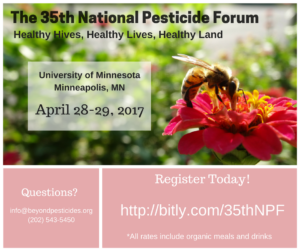
 f toxic pesticides, harming farmers, neighboring crops, and wildlife.” Specifically farmers’ health and financial positions stand to be heavily impacted by the approval of Enlist Duo, as increased use will result in increased pesticide drift, an alarming concern especially for organic farmers. The U.S. Department of Agriculture (USDA) projects that the approval of Enlist Duo will lead to as much as a seven-fold increase in its use in agriculture, significantly increasing exposure to farmers.
 Public health, farmworker, and community groups had urged CDPR to strengthen, not weaken common-sense protections for children’s health. As the rules currently stand, applications of toxic, drift-prone pesticides will only be restricted within ¼ mile of a school site, and only during the hours of 6am to 6pm on weekdays. The original proposal required 48 hour prior notification for other agricultural pesticide applications occurring within ¼ mile of school sites during these times. However, CDPR’s revised rules now only require 48 hour notification if the pesticides applied are not on a list provided to school officials at the beginning of the year. Applicators will still be required to submit annual reports detailing pesticide applications over the past year.
 In its review, EPA has determined that the toxicological endpoints of dietary exposure under the allowed tolerances meet the safety standard of the Federal Food, Drug and Cosmetic Act, but does not consider the public health impact of bacterial resistance to consumers, including sensitive populations such as children.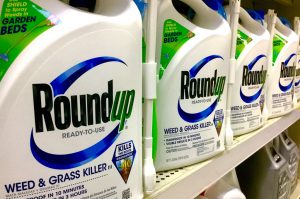
 EPA’s investigation will focus on the state’s activity on the islands of Kauai and Moloka’i. “The External Civil Rights Compliance Office will investigate whether in administering the pesticides program and the leasing and licensing of the state land program the HDOA and/or ADC discriminated on the basis of race and/or national origin against farm workers and residents of West Kauai and Molokai, in violation of Title VI of the Civil Rights Act, and EPA’s implementing regulation,” wrote Lilian Dorka, director of EPA’s External Civil Rights Compliance Office(ERCO), in a


