13
Feb
EPA Fails to Follow Congressional Mandate to Protect Children from Pesticide Exposure
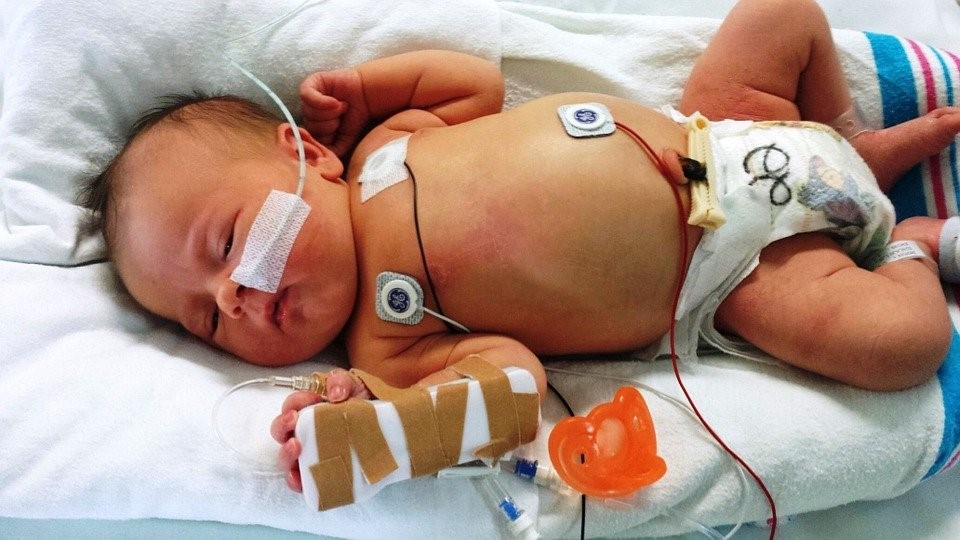
(Beyond Pesticides, February 13, 2020) Congress unanimously passed the Food Quality Protection Act (FQPA) in 1996 to increase protections for children from pesticide exposure. Unfortunately, according to a new study published in Environmental Health, the law is not being employed by the Environmental Protection Agency (EPA) to its full capacity. For most of the 59 pesticides reviewed by the study, EPA did not apply an additional FQPA safety factor and thereby missed an opportunity to protect children’s health. In fact, FQPA solidified EPA’s reliance on risk assessment calculations and mitigation measures that consistently fall short of adequate levels of protection because of serious data gaps, a failure to consider exposure to mixtures and synergistic effects, and a bias against consideration of alternatives (alternatives assessment) that show toxic pesticides to be unnecessary.
FQPA establishes a safety standard applied to all food commodities that considers specific risks for infants and children. The law requires EPA to assess the “aggregate risk” (considering exposure from multiple sources) and “cumulative exposure” to pesticides that have a “common mechanism of toxicity.” FQPA mandates “an additional tenfold margin of safety for the pesticide chemical residue and other sources of exposure shall be applied for infants and children to take into account potential pre- and postnatal toxicity and completeness of the data with respect to exposure and toxicity to infants and children.” The administration can also apply a different level of safety factor given there is a basis of reliable data.
[Note: FQPA explicitly excludes occupational exposure to pesticides as a part of the cumulative risk calculation. Farmworker exposure to pesticides used in agriculture may result in secondary effects to farmworker children, including epigenetic and multi-generational effects.]
Olga V. Naidenko, PhD, vice president for science investigations at Environmental Working Group (EWG), examined the implementation of FQPA-mandated safety margins for 59 pesticides. Dr. Naidenko analyzed risk assessments published by EPA from 2011-2019 for the 12 pesticides used in greatest volume in U.S. agriculture, according to U.S. Geological Survey (USGS), 35 pesticides detected on fruits and vegetables by a study conducted by the U.S. Department of Agriculture from 2016 to 2018), and 12 organophosphate insecticides that have been reviewed by EPA since 2015.
EPA applied a 10x safety factor to 11 of the 12 analyzed organophosphates. In fact, some of FQPA’s past victories include lower levels of organophosphate residues on produce and a 70% decline in the use of organophosphates between 2000 and 2012. However, this class of chemicals is still stealing IQ points from American children and costing trillions to the U.S. economy. Chlorpyrifos, which has gained much scrutiny due to its ubiquitous use and detrimental impact on the developing brains of children, is the only organophosphate missing a safety factor for children. The paper points out that, remarkably, there is a single paragraph in the chlorpyrifos risk assessment that explains its exception. EPA references a sole, industry-provided experiment as evidence for removing the safety factor.
Of the non-organophosphate pesticides, “In acute dietary, chronic dietary, incidental oral, dermal and inhalation scenarios, respectively, 13, 12, 15, 31 and 41 percent of reviewed pesticides have an additional FQPA factor for these exposure pathways.” These numbers are similar to FQPA protections reported in 2006, a decade after passage, despite a wealth of new research on the toxicity of many of these chemicals. Importantly, even as some of these pesticides do have applied safety factors, the classification is usually designated due to existing data gaps, rather than additional margins of safety to specifically address children’s elevated vulnerability to pesticide effects.
“Given the potential health hazards of pesticides in our food, it is disturbing that the EPA has largely ignored the law’s requirement to ensure adequate protection for children,” said Dr. Naidenko, “The added safety factor is essential to protect children from pesticides that can cause harm to the nervous system, hormonal disruption and cancer.”
The problem is only getting worse. The Trump Administration’s EPA recently stripped away safety factor protections from synthetic pyrethroids, a class of chemicals associated with childhood cancer, autism, and other learning disorders. Beyond Pesticides coverage of this change noted, “In reviewing the epidemiological literature on the health impact of this chemical class, EPA looked at hundreds of peer-reviewed studies, but only incorporated two into its determination. The vast majority of studies reviewed by EPA were considered low quality by the agency’s subjective criteria, and effectively ignored.”
Philip Landrigan, M.D., a pediatrician and epidemiologist who is director of the Program in Global Public Health and the Common Good at Boston College, says, “Based on the strong consensus of the pediatric and the public health communities, the FQPA stated unequivocally that regulation of toxic pesticides must focus, first and foremost, on protecting infants and children. When the EPA fails to apply this principle, children may be exposed to levels of chemical pesticides that can profoundly harm their health.”
Beyond Pesticides advocates for a fundamental reassessment of how pesticides are regulated. If EPA led with a precautionary approach where chemical approval required peer-reviewed evidence that the product is not harmful to people and the environment, safety factors for children would be unnecessary. Clearly, members of the public cannot currently rely on EPA to act in the best interests of children, all people, or the environment. But they can work to protect children and rid the world of toxic pesticides in other ways:
- Learn more about impacts of pesticides and related developments with the Beyond Pesticides factsheet, Children and Pesticides Don’t Mix, and through its Daily News Blogand journal, Pesticides and You
- Help support an organic agricultural system that does not rely on toxic chemicals by buying organic whenever possible
- Insist that purveyors provide organic foods
- Advocate for organic with elected officials and advocacy organizations in local communities and at the state level
All unattributed positions and opinions in this piece are those of Beyond Pesticides.

 (Beyond Pesticides, February 12, 2020) Corteva, a company spun-off from DowDupont, will stop producing chlorpyrifos by the end of this year as a result of declining sales. Despite the move being in the interest of public health, the company is earning little praise from health advocates for what amounts to simply a shrewd financial decision. As


 (Beyond Pesticides, February 5, 2020) A new study, published in
  (Beyond Pesticides, February 4, 2020) It was a good day for Bayer/Monsanto. The chemical company’s weed killer glyphosate and its neonicotinoid insecticides are set for reapproval by the U.S. Environmental Protection Agency (EPA), according to
  (Beyond Pesticides, February 3, 2020) In more bad news from the insect world, recent research published in the

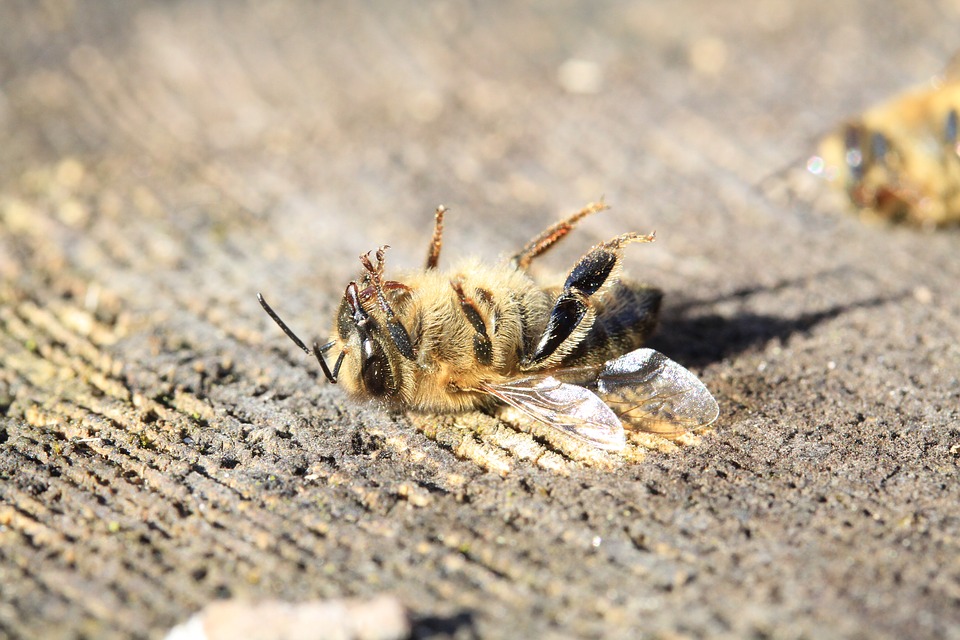 (Beyond Pesticides, January 28, 2020) The practice of coating seeds with insecticides, now widely adopted as a result of the agrichemical industry, has created increasingly toxic conditions for pollinators foraging on US cropland, finds a study published in
 (Beyond Pesticides, January 27, 2020) United States military veterans suffering from bladder cancer, hypothyroidism, hypertension, and Parkinson’s-like symptoms after their exposure to Agent Orange will remain unprotected and uncompensated until at least late 2020, according to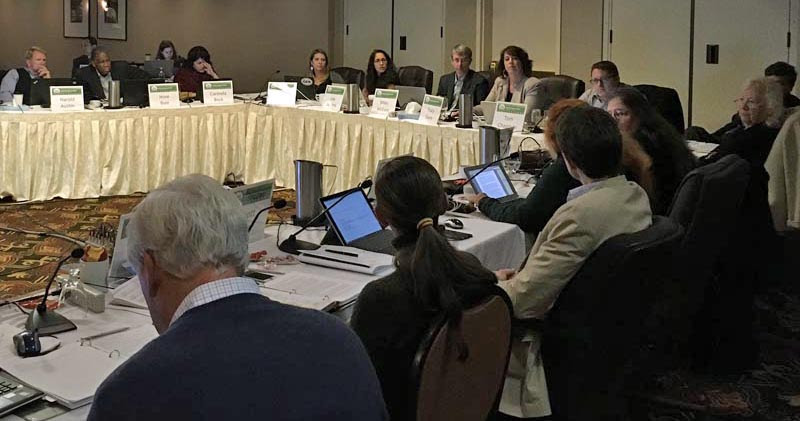

 (Beyond Pesticides, January 22, 2020) About half a million Minnesotans have been subject to drinking water contaminated by nitrate, according to a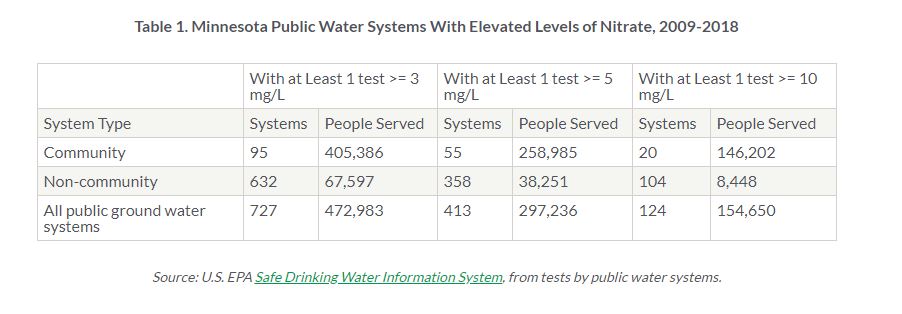
 (Beyond Pesticides, January 17, 2020) In Brussels, the