(Beyond Pesticides, February 14, 2020) The weed killer dicamba has been blamed for killing or damaging millions of acres of non–genetically modified crops and other plants that have no protection against the compound. Litigation, legislation, and manufacturer machination abound as dicamba damage mounts. The trial in a suit filed in 2016 by a Missouri peach farmer against dicamba manufacturers Bayer and BASF has just begun; an Indiana state laboratory struggles to keep up with demand to evaluate dicamba damage; Idaho lawmakers are poised to weaken rules that protect farmworkers who apply dicamba (and other pesticides) aerially; agricultural officials in Missouri are pressuring the state legislature to increase funding to handle the exploding numbers of dicamba complaints; and Indiana’s legislature is considering two bills aimed at curtailing dicamba drift that kills neighboring crops. This Daily News Blog will round up the plethora of recent news on dicamba — the toxic and destructive culprit behind each of these stories.
In the face of the U.S. Environmental Protection Agency’s (EPA) failure to mitigate dicamba hazards, states have been scrambling to enact limits on when and how dicamba can be used, amend buffer zones around application sites, and in some cases, ban its use outright. In 2018, Arkansas banned dicamba use from mid-April through the end of October (and survived a Monsanto challenge to the ban). Later that year, EPA stepped in to rule that the herbicide could be used in the state for two years, superseding the state ban.
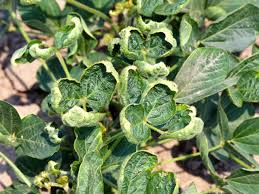
Originally developed in the 1950s, dicamba is a benzoic acid herbicide that, when absorbed by plant tissue, ultimately causes the plant to outgrow its nutrient supply and die. Plants poisoned by dicamba typically exhibit curled, cup-shaped leaves, and often, stunted growth. Dicamba’s health effects on animal organisms can manifest as developmental, reproductive, neurological, hepatic, or renal harms. It also is a particular threat to birds, insects, fish, and aquatic organisms, as well as to non-target plants.
In late 2016, EPA registered (approved) a new dicamba formulation, with supposedly lowered volatility, for use with genetically engineered (GE), dicamba-tolerant seeds. The dicamba volatility issue is real: it simply does not stay put, no matter how it is applied, but becomes airborne and travels. This new dicamba formulation has added yet another chapter in the entropic spiral of plants’ development of resistance to any pesticide to which they are exposed.
Dicamba complaints to state regulators have burgeoned; Illinois, for example, received nearly 600 dicamba damage complaints as of late August 2019, compared to 246 in 2017 and 330 in 2018. Concerns among farmers have spiked especially since 2016, when Monsanto (now owned by Bayer AG) released its dicamba-tolerant cotton and soybean seeds, which led to increased use of a newer generation of dicamba-based herbicides. The marketing of dicamba-dependent seeds was an industry response to the widespread resistance that developed to the earlier glyphosate-based herbicides (Roundup, primarily) and their companion Roundup-tolerant seeds. Dicamba is extremely prone to drifting onto non-target areas, particularly in hot temperatures and/or when applied in an admixture with glyphosate. Mixing dicamba and glyphosate has become increasingly widespread in attempts to manage weeds that are resistant to glyphosate.
As Beyond Pesticides wrote in September 2019, “Complicating the picture of dicamba damage is the increasingly common practice of using both it and glyphosate on GE soy and cotton crops — as glyphosate has become more ineffective, given the development of some weeds’ resistance to the compound. In 2015, Monsanto began selling [with EPA approval] another iteration of its genetically engineered (GE) soybean seed, which is tolerant of both compounds. But this seed-plus-double-herbicide protocol has exacerbated the drift problem and resultant plant damage, whether to crops, or to trees and landscapes on nearby private or public lands. Recent research shows that the addition of glyphosate to dicamba herbicides increased concentrations of dicamba in the air by as much as nine times those of dicamba alone.”
Because of dicamba drift, damage to non-target plants and to nearby fields — often other farmers’ crops — has emerged as a very serious issue. The majority of soybeans planted in the U.S. in 2019 were GE, dicamba-tolerant seeds (for use with dicamba). The drift damage is occurring in a huge scale across the “soybean belt,” from Minnesota southward to Arkansas, and the risk of that damage alone can drive farmers to buy dicamba-resistant soybean seeds. Soybeans are the livelihoods of many Midwest farmers, and the drift of dicamba onto untreated, non–genetically engineered, or organic soybean crops — because soybeans are particularly sensitive to the compound — can cause not only crop damage and failure, and economic losses, but also, real animus and social rifts in rural communities.
To wit: the extreme case of the 2017 fatal shooting, as reported by the Arkansas Times, of Arkansas farmer Mike Wallace by Allan Curtis Jones as the two argued over Wallace’s charge that Jones’s dicamba spraying on a nearby field had damaged his soybean crop. In another example, National Public Radio reports that soybean farmer Lewis Flohr of Frankfort, Indiana, who has endured dicamba damage to his crops, “now sees neighboring farms as a potential threat. ‘I flat-out tell people, “I have a lawyer. You know, watch out.”’ His neighbors, he says, ‘think I’m an a**hole.’”
Missouri peach farmer Bill Bader brought his lawsuit against Bayer and BASF back in 2016 after volatile dicamba, drifting onto his orchards from neighboring agricultural properties, caused the loss of 30,000 peach trees, compromised function of his remaining living trees, and huge financial losses. His suit seeks nearly $3 million in damages, and charges that the companies knew that their sale of genetically modified (GE), dicamba-resistant soybean and cotton seeds in 2015 (before the release of a less-volatile version of dicamba in 2017) would cause damage to neighboring farms and potentially drive impacted neighbors to buy the resistant seeds.
The companies refute the claims. According to Investigate Midwest, one of its expert witnesses, Dr. Ford Baldwin (who has previously testified on behalf of Monsanto and BASF), testified that “air in parts of the Midwest and South has become so contaminated with the weed killer dicamba that it has caused widespread damage to soybeans and other crops. . . . So many farmers are spraying so much of the weed killer at the same time that it builds up in the air to high enough levels that it is unable to dissipate. . . . and that, ‘There’s no way you can tell which field it came from. It didn’t just come from one field.’” Among the amusing defense arguments was this, from Jan Paul Miller, legal counsel for Bayer, in the defense’s opening statement: “Crinkling and curling leaves typically symptomatic of dicamba damage . . are just how peach tree leaves look: ‘They cup. They curl. That’s what peach tree leaves do.’”
The investigative reporter Carey Gillam said of the Bader case, “Among the evidence introduced at the Bader Farms trial are internal Monsanto documents showing that the company predicted thousands of drift complaints would occur after its new seed product launch.” There are hundreds of other such “dicamba damage” cases in queue. Ms. Gillam adds, “Bader is only one of a large and growing group of U.S. farmers who say they are the victims of a clearly foreseen chemical catastrophe many years in the making that has ruined crops covering millions of acres of farmland.”
Missouri and Indiana officials are deluged with complaints about dicamba damage, and are trying to keep up with necessary investigations to confirm the causes of farmers’ losses. Missouri’s Department of Agriculture is seeking funding to hire an additional six staffers to handle the load of cases, some of which are four years old. Sammi Jo Freeman, a spokesperson, said, “We had a team that was the right size for an average year of around 100 complaints, and the number of (dicamba complaints) coming in has been the No. 1 complicating factor.” The state backlog stands at nearly 600 cases.
For the past three years, Indiana’s Office of the State Chemist has fielded a barrage of calls about dicamba damaging farmers’ crops. The agency does not have the bandwidth to vet the number of complaints it is receiving — up 300% from 2017. Ping Wan, the office’s lab supervisor, said, “The first issue was we quickly reached our maximum storage capacity. . . . There is not an inch of wall space left.” The office had to buy additional freezers to store the field evidence that awaits evaluation.
NPR coverage says, “Meanwhile, because they’re fully occupied with dicamba complaints, inspectors don’t have time for all their other work, such as routine inspections of pesticide use at schools, golf courses or businesses. ‘I think that most affected states would all agree that it’s not acceptable to continue with this number of complaints. It’s just not acceptable,’ says Leo Reed, another Indiana official who is also president-elect of the Association of American Pesticide Control Officials. . . . But the EPA actually extended its approval of dicamba just a year ago, before the 2019 growing season. The agency decided the problems could be addressed with a few new restrictions on how and where dicamba can be sprayed, along with more training for people who use it. . . . Those changes did not fix the problem, Reed says. ‘As a matter of fact, the complaint numbers went up’ in Indiana and several other states.”
Also in Indiana, spurred by the surge in dicamba damage complaints from farmers, the legislature is reviewing two bills that would increase penalties for farmers (or anyone) who misuses pesticides, and make fines even steeper for repeat offenders. The hope is that the actions will reduce the incidence of dicamba drift and the havoc it causes on neighboring parcels. Associate Director for Policy Engagement for the Indiana Farm Bureau Jeff Cummins endorses the bills because farmers don’t want more-extreme action, such as a ban, on these products. He notes, “There are too many bad actors that are operating and paying the current level of civil penalties just as a cost of doing business.”
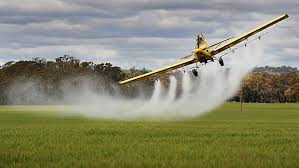
In a late May 2019 incident, more than two dozen farmworkers in a Parma, Idaho hops field were unexpectedly doused with an aerially sprayed fungicide that was targeted for an onion field across the road. A dozen or so went to the hospital because of the effects of the exposure. Four months later, several of them were still sick from their exposures. On the heels of this incident, the state agriculture department wrote a letter to crop dusting company, admonishing that — although they were technically not violating application rules — the pilot should have waited to give the farmworkers a chance to vacate the field before unloading the fungicide. Fast forward a few months, and a crop dusting association complained to lawmakers of “excessive oversight and regulation.” The Idaho legislature responded by considering a bill that would eliminate “faulty and careless” from a provision of the state code that says aerial pesticide applicators should not spray in a faulty and careless manner.
The volume of complaints and losses associated with dicamba use has not moved the current EPA to address the compound’s toxicity in any significant way. In 2017, it announced changes to the labeling of dicamba products to try to minimize drift; the change made dicamba a “restricted use” pesticide, meaning that only certified applicators can apply it legally. Those changes, as noted by Association of American Pesticide Control Official Leo Reed (above), did not remedy the problem. In 2018, EPA re-registered dicamba for “over the top” application to plants.
Beyond Pesticides reported, in March 2019: “A number of states, including Indiana, Minnesota, Missouri, South Dakota, North Dakota, Illinois, and Arkansas, have instituted restrictions on [dicamba] use that surpass those accompanying the federal registration of the compound. Texas, Iowa, Georgia, Kentucky, Alabama, and North Carolina are all eyeing 24(c) requests [for stricter-than-federal controls] for tighter application windows, additional training requirements, better record keeping, new fine structures for violations, and other modifications of the federal label. . . . [But] EPA made a low-key announcement on March 19 suggesting that it may change its handling of requests from states to exert stricter controls on use of pesticides than the federal agency sets out in its registration of the compounds — by disapproving them. This is potentially a big deal because it signals that the agency will be less-kindly disposed to states’ desires to establish either somewhat different parameters of use based on local conditions and needs, or more-stringent regulations on pesticide use than those set out by federal regulators. This issue of preemption of localities’ desires to protect their populations and environment has become an increasingly dynamic frontier at the nexus of pesticide use, health, and environment.”
Beyond Pesticides and other advocates point to organic and regenerative agriculture as the solution that protects farmers’ livelihoods, farmworkers’ and public health, and ecosystem functioning. Ecological pest management strategies, organic practices, and non-chemical solutions are the long-term solution to the current host of threats that pesticides impose. In this moment, advocacy with state and local elected officials, and through non-governmental organizations (such as Beyond Pesticides) may be the most effective ways to secure policies, programs, and incentives to help farmers get off the pesticide treadmill. Learn more about organic agriculture and land management.
All unattributed positions and opinions in this piece are those of Beyond Pesticides.
Sources: https://investigatemidwest.org/ and https://www.npr.org/sections/thesalt/2020/02/06/800397488/pesticide-police-overwhelmed-by-dicamba-complaints-ask-epa-for-help










 (Beyond Pesticides, March 12, 2020) Farmworkers walked out of an orchard in Sunnyside, Washington on Friday, March 6 to demand improved working conditions. Over a dozen individuals cited unacceptable issues, such as toxic pesticide exposure, unfair wages, and lack of paid breaks. Their employer, Evans Fruit, owns and farms over 8,000 acres in the state. These workers represent the ongoing fight against injustice perpetuated by the chemical-intensive agriculture industry.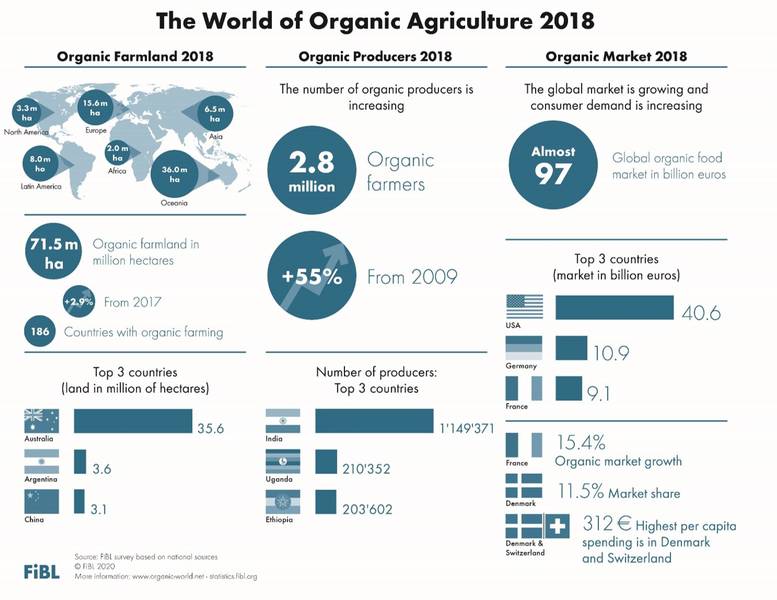
 UPDATE: The same day Beyond Pesticides published this piece, Gulbrandsen Chemicals announced it would drop its effort to produce pentachlorophenol in Orangeburg, SC, according to
 (Beyond Pesticides, March 6, 2020) Scientists from Imperial College London have just published their recent

 (Beyond Pesticides, March 3, 2020) Pregnant mothers living in areas where carcinogenic pesticides have been used are at increased risk of their child developing an acute form of leukemia, according to research published last month in the




 (Beyond Pesticides, February 20, 2020) Missouri’s largest peach farm, Bader Farms, is set to receive $265 million in compensation from two multinational agrichemical companies after the companies’ dicamba-based weed killers caused widespread damage to the farm’s fruit trees. Bayer’s Monsanto and BASF were found to be responsible for negligence in the design of their dicamba herbicides, and failure to warn farmers about the dangers of their products. The jury determined that the joint venture between the two companies amounted to a conspiracy to create an “ecological disaster” in the name of profit.