





28
Aug
Take Action: Back-to-School; Stop the Toxic Pesticide Use
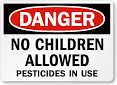 (Beyond Pesticides, August 28, 2017) School policies must protect children from pesticides by adopting organic land and building management policies and serving organic food in cafeterias. At the start of the school year, it is critical for school administrators to make sure that students and teachers are learning and teaching in an environment where no hazardous pesticides are used in the school’s buildings or on playing fields. It is also essential that children have access to organic food in food programs and manage school gardens organically.
In addition, there are other things you can do:
Whether a parent, teacher, student, school administrator, landscaper or community advocate, there are steps that should be taken to make sure the school environment is a safe from toxic chemicals, as the new school year begins.
For Parents and Teachers:
Because children face unique hazards from pesticide exposure due to their smaller size and developing organ systems, using toxic pesticides to get control insects, germs, and weeds can harm students much more than it helps. The good news is that these poisons are unnecessary, given the availability of practices and green materials that do not poison people or the environment.
Studies show children’s developing organs create “early windows of great vulnerability” during which exposure to pesticides can cause great damage. This is supported by the findings of the American Academy of Pediatrics (AAP), which concluded, “Children encounter pesticides daily and have unique susceptibilities to their potential toxicity.” You can help to eliminate children’s exposure to toxic chemicals by urging school administrators to implement organic management practices that use cultural, mechanical, and biological management strategies, and, as a last resort, defined least-toxic pesticides. See Beyond Pesticides ManageSafeTM database for managing all insects and weeds without toxic pesticides.
Find Out About Your School’s Pest Management Program
One way to protect children is to find out whether the school has a pest management policy in place already, and identify key allies to improve it. Since toxic pesticides are not necessary to effective pest management, it is important that schools and school districts have a written organic pest management program. This will ensure that the program is institutionalized and will continue to flourish over time. See here for more details and practical steps on how to get organized and improve a school’s pest management program. For additional information, see Beyond Pesticides’ School Organizing Guide.
Non-Toxic Lice Management
Children going back to school may face challenges with head lice, and research has found that lice in 25 of 30 states in a U.S. study have developed resistance to common over-the-counter treatments like the insecticide permethrin, which therefore are not effective. Utilizing non-toxic approaches and products is critical, especially since lice are not a vector for insect-borne disease, and typical pesticide products used to treat them can be neurotoxic or carcinogenic. Fortunately, this nuisance insect can be managed utilizing a number of alternative lice treatment methods that do not include the use of toxic chemicals. One method for eliminating head lice is the use of hot air, which desiccates the insects and eggs, killing them. Lice and their eggs (or nits) can be combed and handpicked, and then destroyed in soapy water. Beyond Pesticide’s ManageSafe Database has a comprehensive webpage dedicated to safe management of lice, in addition to preventive practices.
Pack Organic Lunches or Start an Organic Garden
Organic foods have been shown to reduce dietary pesticide exposure. Children who eat a conventional diet of food produced with chemical-intensive practices carry residues of neurotoxic organophosphate pesticides that are reduced or eliminated when they switch to an organic diet. The effects of pesticide exposure have been well documented, particularly for vulnerable segments of the population like children and pregnant women. In 2012, AAP weighed in on the organic food debate, recognizing that lower pesticide residues in organic foods may be significant for children. In addition to direct health effects, the Academy also noted that choosing organic is based on broad environmental and public health concerns, including pollution and global climate change —a position that is supported by Beyond Pesticides. Ask the school to adopt an organic lunch program, starting with organic produce, milk or juice. See School Lunches Go Organic for more information.
In addition to serving organic food in the cafeteria, it can be both helpful and a valuable part of the lesson plan to grow food in an organic school garden. For more information, The Organic School Garden (or Grow Your Own Organic Food for technical advice). School gardens teach children where food comes from and establishes healthy relationships with food and the natural world.
Promote Biodiversity with Organic Landscapes and Turf
Biodiversity helps bees and other pollinators; diverse plants produce a supply of nectar throughout the growing season, and biodiversity of soil organisms promotes healthy plants that grow well without the introduction of poisonous pesticides.
Playing fields that are intensively managed with chemicals are at greater risk for disease and weed infestation (leading to a dependence on chemical inputs), compared with practices that build healthy, balanced soil. Similarly, chemically-managed fields are generally harder and more compacted due to a loss of natural soil biology, while organic management focuses on cultural practices, such as aeration, that alleviate compaction, improve moisture retention, and provide a softer, better playing surface. See the factsheet, Pesticides and Playing Fields, for more information.
Protect biodiversity through organic turf, playing fields and landscape policies. Encourage the school to plant pollinator-attractive plants in its garden as part of its biology class. If the school does not have a garden, request one be integrated into the curriculum. Wildflowers, native plant and grass species should be encouraged on school grounds. For more information on attractive flowers, see the BEE Protective Habitat Guide. Also see the Do-It-Yourself Biodiversity factsheet and Managing Landscapes with Pollinators in Mind for resources on building and protecting biodiversity.
For College Students:
On college campuses nationwide, grounds crews and landscapers often maintain the land with toxic pesticides, even though safer alternatives exist. College students across the country want their campuses to be a safe and healthy environment. To assist with college studies, Beyond Pesticides has developed the BEE Protective Ambassador Program.
BEE Protective College Ambassador Program
The widespread use of systemic pesticides in agriculture and landscaping, specifically, a class of insecticides known as neonicotinoids (neonics), has been implicated in causing poor pollinator health and widespread bee deaths. Therefore, a key focus of the program is to eliminate the use of neonics on college campuses. A critical part of being a BEE Protective Ambassador is to engage with college administrators in the creation of a pollinator-friendly campus.
“BEE” prepared: you may get some pushback about phasing out toxic pesticides on campus. But contrary to what some administrators and groundskeepers may tell you, a college campus can be maintained successfully without toxic, systemic pesticides!
With the fall semester rapidly approaching, now is a great time to take the BEE Protective Ambassador Pledge. With assistance from Beyond Pesticides, BEE ambassadors will be given educational information to with college administrators. Students who are interested in joining the movement to protect pollinators and save the bees, can become a Bee Protective Ambassador and sign the pledge!
See Beyond Pesticides Children and Schools webpage.

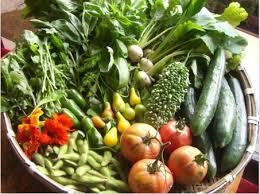 (Beyond Pesticides, August 25, 2017) While organic agriculture still represents only a fraction of the world’s food production, organic food sales have enjoyed remarkable growth over the past couple of decades, which is captured in a recent article,
 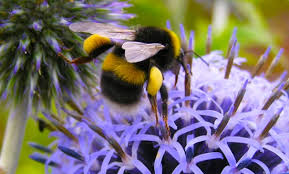 (Beyond Pesticides, August 24, 2017) Common pesticides used on canola crops significantly reduce bumblebee egg laying and may lead to local population extinction, according to new research published in the journal Nature by scientists at the Royal Holloway University of London. This is the latest study to investigate how neonicotinoids, insecticides
 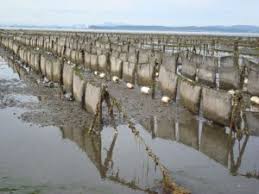 with an expansion of industrial shellfish aquaculture on the Washington state coast without any water quality or marine life protections from pesticide use and habitat loss. This is just the latest in efforts to protect sensitive coastal areas in Washington from shellfish farming that is contributing to increased pesticide use and environmental degradation.
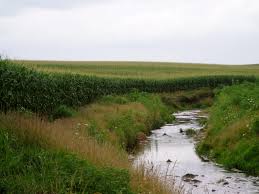 (Beyond Pesticides, August 22, 2017) Streams in the Midwestern U,S. are polluted with complex mixtures averaging over 50 pesticides each, according to a U.S. Geological Survey (USGS) report published earlier this month. This is the latest and also most extensive study on pesticide contamination in U.S. streams to date. The shocking results put many aquatic plants and animals at existential risk, leading health and environmental advocates to ask how the federal government can continue to permit U.S. streams to be used as a mixing bowl for toxic pesticide compounds.
 National Organic Program (NOP) is currently undermining this central organic principle. During a National Organic Standards Board (NOSB) webinar, NOP Deputy Administrator Miles McEvoy extolled the new “flexibility” of his program in allowing organic certification of operations not permitted by regulations. Although the webinar focused on the program’s allowance of hydroponics, Mr. McEvoy’s comments apply to a wide variety of permitted practices for which USDA has yet to approve standards.
 more interested in eating healthfully and knowing more about the sourcing of their food. The bloom may be coming off the rose just a bit, as people respond to a variety of concerns, including pricing; some perception of “preciousness” or elitism about the movement; the occasional “food fraud” — cutting corners and/or “greenwashing” — perpetrated by those looking to cash in on the trend without delivering the real goods; and ethical concerns rooted in a growing recognition of health, safety, and inequality problems in the U.S.
 2015, the
  contaminated with the insecticide
 inue its food uses. [The bill is currently co-sponsored by Senators Cory Booker (D-NJ), Ben Cardin (D-MD), Richard Durbin (D-IL), Kirsten Gillibrand (D-NY), Kamala Harris (D-CA), Ed Markey (D-MA), and Jeff Merkley (D-OR).]
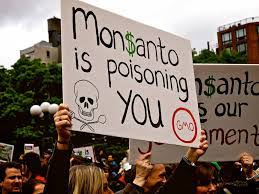 its efforts to hide information about impacts of its popular glyphosate-based herbicide, Roundup. This follows on the heels of the March 2017 unsealing, by federal judge Vince Chhabria, of internal Monsanto documents — the “
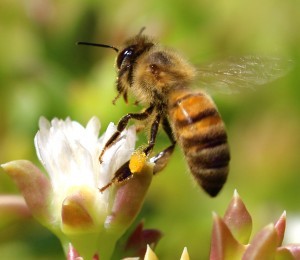 these numbers may seem to be a positive sign after over a decade of consistent pollinator declines, they are more indicative of a beekeeping industry that is using every available tactic possible to stay viable. With the continued use of highly toxic neonicotinoid insecticides in farms, gardens, and public spaces throughout the country, the long-term health honey bees and other pollinators continue to be in jeopardy.
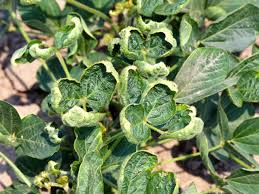 chemical used in genetically engineered (GE) fields. Dicamba, a toxic pesticide prone to drift off the target site, has been used in agriculture for decades. However, new GE crops developed by Monsanto must be paired with specific formulations of dicamba, and until now many believed these drift incidents were the result of illegal formulations of dicamba being applied to fields. But the extent of damage now being observed, covering over 2.5 million acres, is casting doubt on this theory, and raising more questions as to whether the new dicamba formulation is actually the cause of the widespread drift damage.
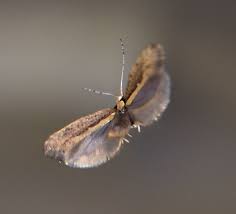 during the cabbage planting cycle
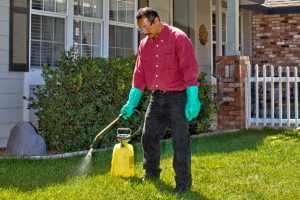 Grassroots advocates who supported passage of the Healthy Lawns Act to protect children, families and the environment are dismayed by the court’s ruling, but nevertheless vow to keep up the fight for protections from hazardous pesticides used in their community. “The court should have recognized that, in restricting lawn pesticides throughout its jurisdiction, Montgomery County is exercising a local democratic principle under Maryland and federal law to ensure the safety of the community, including children, pets, and the environment, from a known hazard not adequately regulated by the U.S. Environmental Protection Agency or the state,” said Jay Feldman, executive director of Beyond Pesticides. “After extensive hearings and study, the county council understands that toxic chemicals are dangerous and not needed to have beautiful lawns and landscapes,” Mr. Feldman said.
 (Beyond Pesticides, August 3, 2017) Working in close contact with pesticides over the course of one’s lifetime increases the risk of Chronic Obstructive Pulmonary Disease (COPD) and other breathing disorders, according to a
 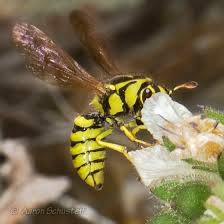 Masarinae are the only “vegetarian” wasp in the family Vespidae., They feed solely on nectar and pollen, unlike their more aggressive Vespid wasp cousins. There are 300 species of pollen wasp from 14 genera spread across the globe, however, in the U.S., all 14 species of pollen wasps originate from the genus Pseudomasaris.
 industry and the federal government to conceal from the public the real dangers associated with the use and manufacture of chemical products. The Bioscience Resource Project and the Center for Media and Democracy released more than 200,000 pages of these documents now accessible on the “
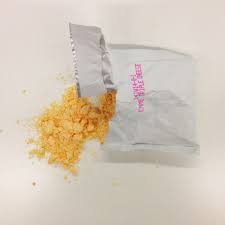 disrupting, industrial chemicals have been found in 10 varieties of macaroni and cheese products. The coalition is calling on food companies, especially the Kraft Heinz Company, maker of the iconic boxed mac and cheese, to eliminate sources of these chemicals from their cheese products.


