





12
May
Organic Orchards Boost Microbial Diversity and Nutrient Cycling Harmed by Pesticides
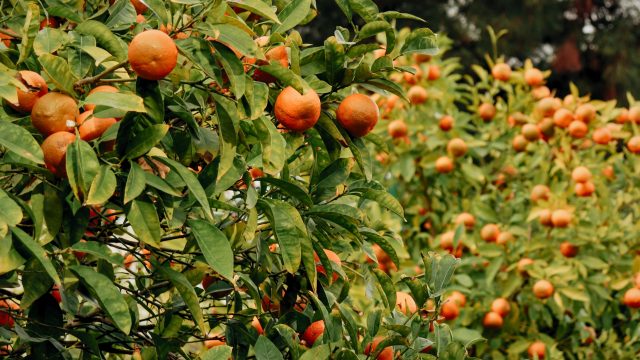
(Beyond Pesticides, May 12, 2026) Research published in Microbiological Research finds that organic farming enhances microbial diversity in citrus orchard soil systems, both in terms of nutrient cycling and aiding in the development of more complex microbial networks pivotal to biodiversity. This comes as no surprise to organic, public health, and biodiversity advocates who have tracked the scientific literature on soil health and human health benefits of organic land management systems.
Methodology and Results
The international research team for the study engaged in a comparative field study of 15 commercial citrus orchards in Sicily, including 7 organic fields and 8 chemical-intensive, conventional fields, with the prime objective of assessing the role of the farming system, as well as environmental and agronomic factors, on soil microbiome structure and function. They collected 75 samples in summer (June-July 2021) and winter (December 2021-January 2022) periods, with 150 soil samples collected in total. In each orchard, 5 trees were randomly selected, with 4 soil “cores” pooled into one composite sample per tree at a depth of roughly 20-30 centimeters to assess interactions with tree roots and at a distance of 40-100 centimeters from the tree trunk.
The researchers assessed water content (pH levels), total carbon, total nitrogen, organic carbon and inorganic carbon, carbon-to-nitrogen ratio (C:N ratio), and soil texture (sand, silt, or clay). In terms of microbiome analysis, researchers targeted bacteria (16S rRNA) and fungi (ITS1) to extract DNA from rhizosphere soil. For more details on the microbial network, functional analysis, and statistical analysis, please see pages 5 and 6 of the study PDF.
The main results/findings from this study include:
- Organic land management does shape microbial communities, with bacterial (~3.9%) and fungal (~2.24%) variance relative to chemical-intensive management.
- Organic systems harbor more complex and diverse microbial communities in their soils, as evidenced by higher fungal alpha diversity in organic soils and higher species richness under organic land care.
- Organic management promotes various nutrient cycling capacities (inorganic nitrogen consumption and organic phosphorus assimilation) and soil fertility functions (carbon content and carbon fixation).
- The microbiomes of organically managed soil systems can be characterized as more structured and ecologically stable, given higher co-exclusion network patterns.
- Fungal communities, regardless of land management system, were influenced by season.
Previous Coverage
The issue of pest management in citrus orchards is also an issue that plagues farmers in the United States. In 2024, scientists moved forward in testing an agroecological method of “push-pull” pest management (reducing the attractiveness of the target organism and luring pest insects towards a trap) to fight the Asian citrus psyllid (ACP) in Florida orange groves, as it spreads a plant disease known as the pathogenic bacteria huanglongbing (HLB), also known as citrus greening, which is deadly to citrus trees. The disease is spread by the pathogenic bacteria Candidatus Liberibacter asiaticus (CLas). The chemical-intensive, or conventional, citrus industry is under intense pressure to find alternatives, as synthetic antibiotic use for this purpose has been successfully challenged in court. (See Daily News here.)
In a novel, continent-wide study of soil biodiversity throughout Europe published in Nature, researchers find 70% of the sampled sites contain pesticide residues, which “emerged as the second strongest driver of soil biodiversity patterns after soil properties,” particularly in croplands. As soil biodiversity is key for ecosystem functioning, agricultural and land management practices that safeguard biodiversity are imperative. This study, however, highlights how pesticides alter microbial functions, including phosphorus and nitrogen cycling, and suppress beneficial taxa, such as arbuscular mycorrhizal fungi and bacterivore nematodes, and adds to a wide body of science that links pesticide residues in soil to adverse effects on biodiversity. In analyzing 373 sites across woodlands, grasslands, and croplands in 26 European countries, and examining the effects of 63 pesticides on soil archaea, bacteria, fungi, protists, nematodes, arthropods, and key functional gene groups [essential to the nutrient cycling], the data reveal “organism- and function-specific patterns, emphasizing complex and widespread non-target effects on soil biodiversity.” As the authors state, “[T]o our knowledge, ours is the first study to demonstrate the relative importance of pesticides in comparison to soil properties, ecosystem type and climate at a continental scale.” (See Daily News here.)
Through a literature review and data analysis of almost 2,000 soil samples, the authors of a 2025 study find pesticide exposure associated with negative effects on the presence of plant-beneficial bacteria (PBB) in soil, particularly bacteria with plant growth-promoting traits that are essential for crop productivity. The study, published in Nature Communications, by researchers at China’s Shaoxing University and Zhejiang University of Technology, adds to scientific literature documenting the effects of pesticides on soil health. “Pesticides not only reduce PBB diversity as individual factors, but they also exert synergistic negative effects with other anthropogenic factors… further accelerating the decline in PBB diversity,” the researchers state. They continue, “Increased pesticide risk also leads to a loss of functional gene diversity in PBB about carbon and nitrogen cycling within essential nutrient cycles, and a reduction in specific amino acid and vitamin synthesis.” (See Daily News here.)
Non-target pesticide and fertilizer drift combine to wreak havoc on our soil systems. A study of earthworms published in Environmental Science & Technology highlights how chemical mixtures can have both synergistic and species-specific effects, threatening the soil microbiome and overall soil health. In exposing two species, Eisenia fetida and Metaphire guillelmi, to the weed killer glyphosate alone and in combination with urea, a synthetic nitrogen fertilizer, the researchers find enhanced toxicity with co-exposure as well as varying health effects between the two species. These results emphasize the need to test a wide variety of nontarget organisms for adverse impacts from environmental contaminants, since species, even within the same genus or family, can exhibit vastly different effects. (See Daily News here.) In a similar vein, published in Environmental Toxicology and Pharmacology, a study of earthworms (Eisenia fetida) evaluates the toxicity of environmentally relevant levels of three fluorinated pesticides (fluxapyroxad, fluopyram, and bixafen) through a 56-day soil exposure experiment. The dose- and time-dependent results reveal that effects on growth and reproduction occur at elevated concentrations, with weight loss and reduced offspring occurring from energy depletion and reproductive organ damage. Other implications escalate with concentration as well, including antioxidant system failure and DNA damage. As the authors summarize, “These findings highlight the mechanisms of fluorine-containing pesticide toxicity in earthworms, emphasizing their potential to disrupt soil ecosystems.” (See Daily News here.) For additional coverage on agrichemical threats to the soil microbiome, please see here.
Meanwhile, organic and regenerative organic agriculture are paving the way forward for what is possible. A literature review published in Ecosystem Services by researchers at Sant’Anna School of Advanced Studies and Rodale Institute European Regenerative Organic Center identifies the ecological and soil health benefits of regenerative organic agriculture (ROAg). In comparison to chemical-intensive farming, ROAg increases soil organic content by 22 percent, soil total nitrogen by 28 percent, and soil microbial biomass carbon by 133 percent, according to the research. While further long-term comparative research is needed to compare regenerative organic with conventional, chemical-intensive systems, as well as more precisely quantifiable benefits of regenerative organic farming on soil health, researchers were able to determine that regenerative organic agriculture “has significant positive impacts on soil health and ecosystem service delivery.” (See Daily News here.) A study published in Environmental Technology & Innovation finds that organically managed coconut farms significantly improve soil health across numerous markers when compared with conventional (chemical-intensive) plantations. The main findings of this study conclude that, across numerous soil health properties, the organic farms significantly outcompete chemical-intensive coconut plantations:
- Organic plots have better porosity and bulk density, meaning lower compaction and better aeration to support air and water movement through the soil system;
- Organic coconut plots have higher nutrient availability and fertility across the board, including for SOM, total nitrogen, phosphorus, and potassium;
- The total bacteria and nutrient-cycling bacteria (cellulose-decomposing bacteria) are higher in organic plots;
- Organically managed coconut soil systems have higher biological activity and metabolic intensity, as denoted by dehydrogenase activity;
- In terms of microbial bacterial community composition, it is higher in organically managed plots;
- Organic plots show higher abundance of plant-growth-promoting and nutrient-cycling microbes, including Acidobacteriota, Proteobacteria, Firmicutes, and Chloroflexi, among a handful of others; and,
- At a system-level, organic plots show stronger correlations between organic matter, nutrients, microbes, and enzyme activity relative to chemical-intensive coconut plots. (See Daily News here.)
Call to Action
The Spring 2026 National Organic Standards Board (NOSB) meeting is being held today through (May 12) through Thursday (May 14) in Omaha, NE, and virtually, May 12-14, 2026. Watch/Listen to the meeting virtually (use the same link for all three days): Join from a PC, Mac, iPad, iPhone, or Android device: Please click this URL to join: https://www.zoomgov.com/s/1617918296
Webinar ID: 161 791 8296.
You can also contact your members of Congress to ask them to become a cosponsor of the Opportunities in Organic Act, which provides a significant opportunity to reduce barriers to organic farming, strengthen organic supply chains, and ensure that farmers have the support they need to transition to and remain in organic production to meet the growing demand for organic food and grow the sector. Importantly, the bill will provide an opportunity for partners to continue the transition support and technical assistance models that are proving effective through USDA’s Transition to Organic Partnership Program, which ends in 2026.
All unattributed positions and opinions in this piece are those of Beyond Pesticides.
Source: Microbiological Research




