





24
Aug
Neonicotinoid Insecticides Stop Queen Bumblebees from Laying Eggs, Raising Extinction Concerns
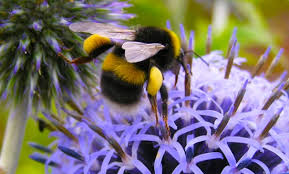 (Beyond Pesticides, August 24, 2017) Common pesticides used on canola crops significantly reduce bumblebee egg laying and may lead to local population extinction, according to new research published in the journal Nature by scientists at the Royal Holloway University of London. This is the latest study to investigate how neonicotinoids, insecticides linked to the global decline of pollinator populations, are changing the landscape that humans rely on for food production and other ecological services. Although this eye-opening study should be a wake-up call for regulators in the U.S., there is little indication that federal agencies tasked with protecting pollinators and the wider environment are willing to make changes that would affect the profits of multinational chemical companies.
Researchers began their study by visiting canola fields in the United Kingdom that had been treated with neonicotinoids, observing the distribution of various bumblebee species. One of the most abundant species found is Bombus terrestris, a key pollinator and the most common bumblebee throughout Europe. Colonies of B. terrestris were then purchased commercially, and roughly 230 queens were successfully mated in the lab.
In addition to pesticide exposure, scientists used length of hibernation as a variable in their experiment. This is because bumblebee queens can lose significant fat reserves during hibernation, and its length of duration can have an impact on its vulnerability to other stressors. Bumblebee queens were separated into several groups, with some exposed to thiamethoxam, others to a control (no treatment). Some queen bees underwent a six week hibernation, while others a longer 12 week period. Bees were exposed to real-world exposure levels of the neonicotinoid in their feed for a period of two weeks after hibernation, to mimic the natural process.
Overall, bumblebee queens exposed to thiamethoxam displayed a 26% reduction in egg laying compared to the control group. Although the authors indicate that the interplay between pesticide exposure and duration of hibernation was not significant, neonicotinoid-treated queens did begin egg laying sooner after waking from hibernation than the control group. This may be a stress-induced response, the study indicates, as fewer pesticide-treated queens laid eggs after pesticide exposure stopped than control queens. Indeed, by the end of the study, more untreated queens laid eggs than pesticide-treated queens.
Scientists extrapolated these data to model how this effect could manifest itself in the wild. With 26% fewer queens laying eggs as a result of pesticide exposure, models indicated a 28% chance that local populations of B. terrestris would eventually go extinct. This estimation was conservative, researchers note, as bumblebees are exposed to a range of additional stressors in real world conditions.
The results of this research align with a study published in May 2017 in the Proceedings of the Royal Society, which may reveal the physiological effects behind infertile, pesticide-exposed queens. In a BBC News article, lead author, Dr. Gemma Barron, Ph.D., stated, “We consistently found that neonicotinoid exposure, at levels mimicking exposure that queens could experience in agricultural landscapes, resulted in reduced ovary development in queens of all four species we tested. These impacts are likely to reduce the success of bumblebee queens in the spring, with knock-on effects for bee populations later in the year.”
Prior research published in 2015 by Scottish researchers has also shown that neonicotinoids impair bumblebees’ brain function, leading to struggles at the colony level. This is backed up by research also published in 2015 in Nature and PeerJ, which finds pollination impairment after exposure to neonicotinoids.
Although the evidence linking these insecticides to declines in pollinator populations, including both wild and manager bees, is robust and continues to strengthen, in the U.S., only states and localities have begun to take action to restrict neonicotinoid use in the environment. Despite strong scientific evidence, the U.S. Environmental Protection Agency recently determined that these chemicals pose no significant risks to pollinators. Many watchdog groups, reporters, and advocates are concerned that the agency’s close ties to the chemical industry (as evidenced by recent reports of coordination over chemical reviews, including the Poison Papers, and reviews of chlorpyrifos and glyphosate), have influenced the agency’s decision making process when it comes to neonicotinoids. In light of this, Beyond Pesticides encourages a grassroots approach to restrict neonicotinoids and a range of chemicals at the local level. If you’re interested in getting active in your community, reach out to Beyond Pesticides at 202-543-5450 or [email protected] for resources and strategies you can use to protect your local pollinator populations.
All unattributed positions and opinions in this piece are those of Beyond Pesticides.
Source: Nature

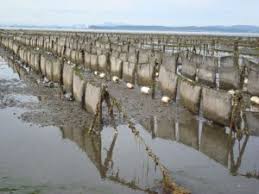 with an expansion of industrial shellfish aquaculture on the Washington state coast without any water quality or marine life protections from pesticide use and habitat loss. This is just the latest in efforts to protect sensitive coastal areas in Washington from shellfish farming that is contributing to increased pesticide use and environmental degradation.
 (Beyond Pesticides, August 22, 2017) Streams in the Midwestern U,S. are polluted with complex mixtures averaging over 50 pesticides each, according to a U.S. Geological Survey (USGS) report published earlier this month. This is the latest and also most extensive study on pesticide contamination in U.S. streams to date. The shocking results put many aquatic plants and animals at existential risk, leading health and environmental advocates to ask how the federal government can continue to permit U.S. streams to be used as a mixing bowl for toxic pesticide compounds.
 National Organic Program (NOP) is currently undermining this central organic principle. During a National Organic Standards Board (NOSB) webinar, NOP Deputy Administrator Miles McEvoy extolled the new “flexibility” of his program in allowing organic certification of operations not permitted by regulations. Although the webinar focused on the program’s allowance of hydroponics, Mr. McEvoy’s comments apply to a wide variety of permitted practices for which USDA has yet to approve standards.
 more interested in eating healthfully and knowing more about the sourcing of their food. The bloom may be coming off the rose just a bit, as people respond to a variety of concerns, including pricing; some perception of “preciousness” or elitism about the movement; the occasional “food fraud” — cutting corners and/or “greenwashing” — perpetrated by those looking to cash in on the trend without delivering the real goods; and ethical concerns rooted in a growing recognition of health, safety, and inequality problems in the U.S.
 2015, the
  contaminated with the insecticide
 inue its food uses. [The bill is currently co-sponsored by Senators Cory Booker (D-NJ), Ben Cardin (D-MD), Richard Durbin (D-IL), Kirsten Gillibrand (D-NY), Kamala Harris (D-CA), Ed Markey (D-MA), and Jeff Merkley (D-OR).]
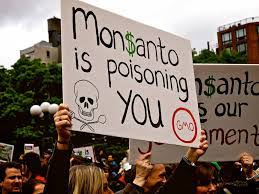 its efforts to hide information about impacts of its popular glyphosate-based herbicide, Roundup. This follows on the heels of the March 2017 unsealing, by federal judge Vince Chhabria, of internal Monsanto documents — the “
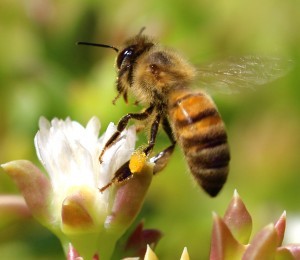 these numbers may seem to be a positive sign after over a decade of consistent pollinator declines, they are more indicative of a beekeeping industry that is using every available tactic possible to stay viable. With the continued use of highly toxic neonicotinoid insecticides in farms, gardens, and public spaces throughout the country, the long-term health honey bees and other pollinators continue to be in jeopardy.
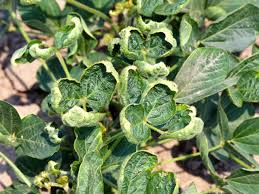 chemical used in genetically engineered (GE) fields. Dicamba, a toxic pesticide prone to drift off the target site, has been used in agriculture for decades. However, new GE crops developed by Monsanto must be paired with specific formulations of dicamba, and until now many believed these drift incidents were the result of illegal formulations of dicamba being applied to fields. But the extent of damage now being observed, covering over 2.5 million acres, is casting doubt on this theory, and raising more questions as to whether the new dicamba formulation is actually the cause of the widespread drift damage.
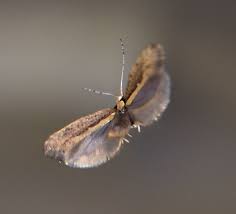 during the cabbage planting cycle
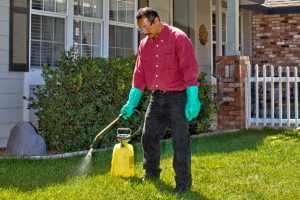 Grassroots advocates who supported passage of the Healthy Lawns Act to protect children, families and the environment are dismayed by the court’s ruling, but nevertheless vow to keep up the fight for protections from hazardous pesticides used in their community. “The court should have recognized that, in restricting lawn pesticides throughout its jurisdiction, Montgomery County is exercising a local democratic principle under Maryland and federal law to ensure the safety of the community, including children, pets, and the environment, from a known hazard not adequately regulated by the U.S. Environmental Protection Agency or the state,” said Jay Feldman, executive director of Beyond Pesticides. “After extensive hearings and study, the county council understands that toxic chemicals are dangerous and not needed to have beautiful lawns and landscapes,” Mr. Feldman said.
 (Beyond Pesticides, August 3, 2017) Working in close contact with pesticides over the course of one’s lifetime increases the risk of Chronic Obstructive Pulmonary Disease (COPD) and other breathing disorders, according to a
 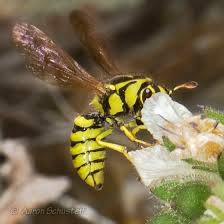 Masarinae are the only “vegetarian” wasp in the family Vespidae., They feed solely on nectar and pollen, unlike their more aggressive Vespid wasp cousins. There are 300 species of pollen wasp from 14 genera spread across the globe, however, in the U.S., all 14 species of pollen wasps originate from the genus Pseudomasaris.
 industry and the federal government to conceal from the public the real dangers associated with the use and manufacture of chemical products. The Bioscience Resource Project and the Center for Media and Democracy released more than 200,000 pages of these documents now accessible on the “
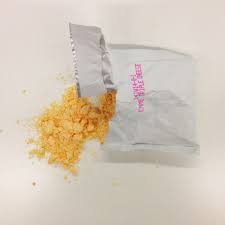 disrupting, industrial chemicals have been found in 10 varieties of macaroni and cheese products. The coalition is calling on food companies, especially the Kraft Heinz Company, maker of the iconic boxed mac and cheese, to eliminate sources of these chemicals from their cheese products.
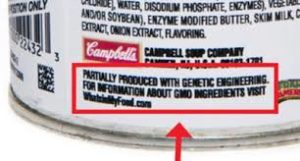 concerning labeling of genetically engineered (GE) food. Campbell’s President and CEO Denise Morrison said that while the company does not question the safety of GE food, it recognizes that most consumers want to see GE ingredients on the label. Meanwhile, Campbell’s has supported the GMA digital disclosure and lists ingredients that “may be derived from crops grown from genetically engineered seeds” on its


