





22
Aug
USGS Report Shows Dozens of Pesticides Consistently Found in Midwestern Streams, Underscoring the Need for Organic Practices
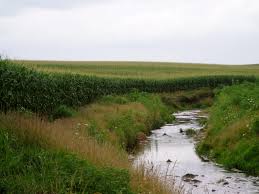 (Beyond Pesticides, August 22, 2017) Streams in the Midwestern U,S. are polluted with complex mixtures averaging over 50 pesticides each, according to a U.S. Geological Survey (USGS) report published earlier this month. This is the latest and also most extensive study on pesticide contamination in U.S. streams to date. The shocking results put many aquatic plants and animals at existential risk, leading health and environmental advocates to ask how the federal government can continue to permit U.S. streams to be used as a mixing bowl for toxic pesticide compounds.
Each week between May and August of 2013, USGS sampled 100 streams located in 11 Midwestern states for 228 pesticides and their breakdown products. Based on site location, 88 of these streams are considered agricultural, while 12 are considered urban. “About 150 million pounds of pesticides are applied annually in the Midwestern U.S.,” said Lisa Nowell, PhD, research chemist and lead scientist on the study. “Understanding which pesticides are occurring at levels potentially toxic to aquatic life, and where they occur, is crucial to informing management decisions.”
Of the 1,200 samples collected over the study’s 12 week period, scientists detected 183 pesticide compounds (98 of the 124 herbicides tested, 71 of the 88 insecticides, and 14 of the 16 fungicides). In general, herbicides were detected more often and at higher concentrations than fungicides or insecticides. The study noted detections of atrazine, metolachlor, and acetochlor herbicides more often in agricultural streams, and glyphosate, 2,4-D and prometon more often in urban areas. That being said, glyphosate was still found to be widespread – in 63% of urban sites, compared to 41% of agricultural sites. Insecticides and fungicides were more prevalent in urban than suburban areas. Notably, the fungicide carbendazim, often incorporated into paints, adhesives, textiles, and other building materials, and also a breakdown product of thiophanate methyl, a chemical used on turfgrass and ornamental shrubs, was detected in roughly 95% of all urban site locations.
Mixtures of multiple pesticides were detected in all but 1 of the 1,200 samples USGS scientists tested. Each sample tested contained a median number of 25 compounds, and overall each site contained 54 pesticide compounds per stream.
Using Environmental Protection Agency (EPA) ecotoxicity reference values for individual compounds, and a screening tool called the pesticide toxicity index for mixtures, researchers estimated harm to aquatic insects and plants. Results show that in over half the streams sampled, at least one pesticide surpassed levels considered toxic for aquatic insects when chronically exposed. In 25% of streams, there were found to be between two and four pesticides compounds that exceeded aquatic invertebrate chronic toxicity thresholds. In general, chronic and acute aquatic toxicity thresholds were exceeded more often in urban sites (75% and 33,% respectively), than sites with medium to high agricultural activity (52% and 10,% respectively). Despite the range of tools available to researchers to determine toxicity, the study ultimately notes that, “The impacts of concurrent exposure to multiple pesticides at chronic effect levels are unknown.”
USGS has consistently been at the forefront of scientific research investigating the presence of pesticide contamination in U.S. waterways. The agency’s Pesticide National Synthesis Project catalogues these data, and presents maps of estimated annual agricultural pesticide use throughout the country. A study published in 2016, for instance, provided a snapshot of the current study, finding neonicotinoid pesticides widespread in U.S. waters. Research published in collaboration with the U.S. Fish and Wildlife Service in 2016 linked the prevalence of pesticides in wildlife refuges in the Northeast to the rise in bass with intersex characteristics.
This current research is the first in a five part series of stream quality assessments that will also include the Southeast, Pacific Northwest, Northeast, and California. The prevalence of tens of different pesticides in the majority of streams in both urban and agricultural areas points to a need to rethink current pest management approaches. By moving to organic practices on farms and in urban and suburban landscapes, toxic pesticide use can be drastically reduced. With little indication that EPA will incorporate this concerning data into their current assessment framework for pesticides, it is up to state and local governments, forward-looking farmers and businesses, and local advocates to enact these needed changes.
Source: USGS Press Release

 National Organic Program (NOP) is currently undermining this central organic principle. During a National Organic Standards Board (NOSB) webinar, NOP Deputy Administrator Miles McEvoy extolled the new “flexibility” of his program in allowing organic certification of operations not permitted by regulations. Although the webinar focused on the program’s allowance of hydroponics, Mr. McEvoy’s comments apply to a wide variety of permitted practices for which USDA has yet to approve standards.
 more interested in eating healthfully and knowing more about the sourcing of their food. The bloom may be coming off the rose just a bit, as people respond to a variety of concerns, including pricing; some perception of “preciousness” or elitism about the movement; the occasional “food fraud” — cutting corners and/or “greenwashing” — perpetrated by those looking to cash in on the trend without delivering the real goods; and ethical concerns rooted in a growing recognition of health, safety, and inequality problems in the U.S.
 2015, the
  contaminated with the insecticide
 inue its food uses. [The bill is currently co-sponsored by Senators Cory Booker (D-NJ), Ben Cardin (D-MD), Richard Durbin (D-IL), Kirsten Gillibrand (D-NY), Kamala Harris (D-CA), Ed Markey (D-MA), and Jeff Merkley (D-OR).]
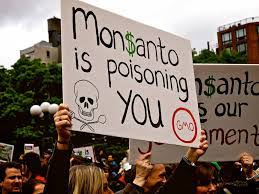 its efforts to hide information about impacts of its popular glyphosate-based herbicide, Roundup. This follows on the heels of the March 2017 unsealing, by federal judge Vince Chhabria, of internal Monsanto documents — the “
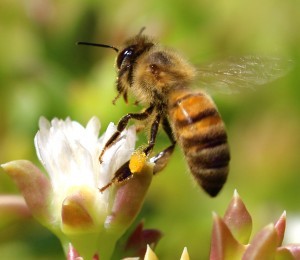 these numbers may seem to be a positive sign after over a decade of consistent pollinator declines, they are more indicative of a beekeeping industry that is using every available tactic possible to stay viable. With the continued use of highly toxic neonicotinoid insecticides in farms, gardens, and public spaces throughout the country, the long-term health honey bees and other pollinators continue to be in jeopardy.
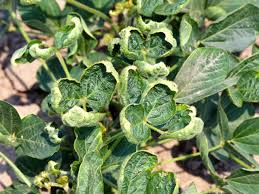 chemical used in genetically engineered (GE) fields. Dicamba, a toxic pesticide prone to drift off the target site, has been used in agriculture for decades. However, new GE crops developed by Monsanto must be paired with specific formulations of dicamba, and until now many believed these drift incidents were the result of illegal formulations of dicamba being applied to fields. But the extent of damage now being observed, covering over 2.5 million acres, is casting doubt on this theory, and raising more questions as to whether the new dicamba formulation is actually the cause of the widespread drift damage.
 during the cabbage planting cycle
 Grassroots advocates who supported passage of the Healthy Lawns Act to protect children, families and the environment are dismayed by the court’s ruling, but nevertheless vow to keep up the fight for protections from hazardous pesticides used in their community. “The court should have recognized that, in restricting lawn pesticides throughout its jurisdiction, Montgomery County is exercising a local democratic principle under Maryland and federal law to ensure the safety of the community, including children, pets, and the environment, from a known hazard not adequately regulated by the U.S. Environmental Protection Agency or the state,” said Jay Feldman, executive director of Beyond Pesticides. “After extensive hearings and study, the county council understands that toxic chemicals are dangerous and not needed to have beautiful lawns and landscapes,” Mr. Feldman said.
 (Beyond Pesticides, August 3, 2017) Working in close contact with pesticides over the course of one’s lifetime increases the risk of Chronic Obstructive Pulmonary Disease (COPD) and other breathing disorders, according to a
 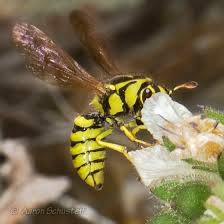 Masarinae are the only “vegetarian” wasp in the family Vespidae., They feed solely on nectar and pollen, unlike their more aggressive Vespid wasp cousins. There are 300 species of pollen wasp from 14 genera spread across the globe, however, in the U.S., all 14 species of pollen wasps originate from the genus Pseudomasaris.
 industry and the federal government to conceal from the public the real dangers associated with the use and manufacture of chemical products. The Bioscience Resource Project and the Center for Media and Democracy released more than 200,000 pages of these documents now accessible on the “
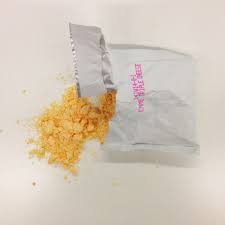 disrupting, industrial chemicals have been found in 10 varieties of macaroni and cheese products. The coalition is calling on food companies, especially the Kraft Heinz Company, maker of the iconic boxed mac and cheese, to eliminate sources of these chemicals from their cheese products.
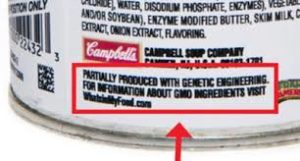 concerning labeling of genetically engineered (GE) food. Campbell’s President and CEO Denise Morrison said that while the company does not question the safety of GE food, it recognizes that most consumers want to see GE ingredients on the label. Meanwhile, Campbell’s has supported the GMA digital disclosure and lists ingredients that “may be derived from crops grown from genetically engineered seeds” on its
 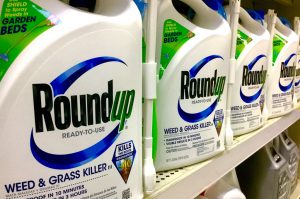 term, intensive glyphosate use, and myriad resulting concerns about impacts on soil and environmental health. The review, by Robert J. Kremer, PhD, of the University of Missouri School of Natural Resources, cites


