





25
Sep
Comment by October 11 to Protect Organic Integrity: Keep the Soil in Organic
(Beyond Pesticides, September 25, 2017) As the comment period officially begins for the Fall 2017 National Organic Standards Board (NOSB) meeting, a major  controversy is coming to a head on allowing hydroponics to be certified organic. Contrary to prior recommendations of the NOSB, the National Organic Program has allowed some hydroponics operations to be certified. The NOSB will consider motions at this meeting that could stop this practice.
Make your voice heard on this and other issues by submitting comments NOW on what materials and practices are allowed in organic production! An easy way to speak out is to go to our website, find our positions, write your comments (using our summary –feel free to cut-and-paste our comments), and submit your comments on the government website. [Unfortunately, for those who are not familiar with commenting on these critical organic integrity issues, this action requires that you post your comments on the government’s ‘regulations.gov’ website. We have simplified this process through our Keeping Organic Strong webpage.]
Beyond Pesticides provides you with our positions, which you can use as the basis for your comments. Please feel free to develop your own comments or cut and paste ours. If you cut and paste our comments into regulations.gov, please first put a personal note of concern in order to reflect the importance of these issues to you as an organic consumer, farmer, or other concerned party.
Some major issues being considered at the Fall meeting are:
Hydroponics
Organic production is soil-based and is defined by principles concerning the grower’s relationship to the soil. The “Law of Return,” the rule “Feed the soil, not the plant,” and the promotion of biodiversity, provide the ecological basis for organic production. The Law of Return says that we must return to the soil what we take from the soil. The dictum to “Feed the soil, not the plant” reminds us that the soil is a living superorganism that supports plant life as part of an ecological community. Finally, biological diversity is important to the health of natural ecosystems and agroecosystems. Biodiversity promotes balance, which protects farms from outbreaks of damaging insects and disease. It supports the health of the soil through the progression of the seasons and stresses associated with weather and farming. It supports our health by offering a diversity of foods. Hydroponics is not consistent with these principles.
The of the 2010 Subcommittee of the Hydroponics Task Force convened by USDA reminds us of these foundations, but also contrasts organic production and “conventional” chemical-intensive agriculture. At the time of the passage of the Organic Foods Production Act (OFPA), the organic community’s characterization of soil as alive was viewed with amusement by the “conventional” agriculture experts, who saw soil as a structure for supporting plants, while farmers poured on synthetic nutrients –and the poisons that had become necessary to protect the plants growing without the protection of their ecological community. Interestingly, organic producers at that time compared conventional agriculture to hydroponics.
The term “container” is very broad, encompassing pots in various sizes and shapes, as well as beds that are not in direct continuous contact with the earth –such as rooftop gardens, or gardens in areas where an impervious layer protects plants from contaminated earth beneath. We support eligibility for organic certification of containers where the soil is managed organically. As discussed above, managing the soil organically involves many things –most could not be done in pots or most other containers, but would be possible in large beds. In particular, the organic regulations must be followed to the letter.
Containerized culture may be eligible for organic certification under limited circumstances in which organic soil-building and other organic practices are used. These are essentially the same practices that would be required for growing in permanent beds in the soil.
We support the proposals of the Crops Subcommittee majority for prohibiting hydroponics and delineating acceptable practices for organic containers.
Marine materials (Seaweeds and products of seaweeds)
Marine biodiversity is important, and the roles played by marine algae (seaweed) are important to marine biodiversity and ecology. Human threats to marine environments include overfishing, global warming, biological introductions, and pollution. The NOSB should continue its efforts to clarify the identities of species of marine algae used in organic production as well as to develop guidance for the application of the wildcrafting standard to marine algae. Application of scientific names to seaweeds needs to be clarified to ensure protection, and any restrictions need to be justified.
The NOSB must investigate mechanisms for protecting marine ecology from the impacts of over-harvesting marine algae for use in organic products and production. It must also look at natural materials in use in crops and livestock as well as those on the National List. Lastly, the NOSB must protect rockweed (Ascophyllum nodosum) to the extent possible and specifically list it as a prohibited natural.
Seaweeds (marine algae) and products made from them should be allowed as ingredients in organic food, feed to organic livestock, and crop inputs only “when harvested from a designated area that has had no prohibited substance applied to it for a period of 3 years immediately preceding harvest and when harvested in a manner that ensures that such harvesting or gathering will not be destructive to the environment and will sustain the growth and production of the population of the species.”
“Inert” Ingredients in Organic Production
“Inert” ingredients frequently compose as much as 99% of pesticide products. So-called “inert” ingredients are typically not biologically and chemically inert, and are not disclosed to users or others who may be exposed. Due to NOSB scrutiny of active ingredients, “inert” ingredients may be the most hazardous ingredients in pesticide products used in organic production. We urge the NOSB to insist that NOP move forward quickly with implementation of the NOSB recommendations on inert ingredients. Allowing the current lack of movement to persist raises serious compliance issues and threatens the integrity of the USDA organic label.
All unattributed positions and opinions in this piece are those of Beyond Pesticides.

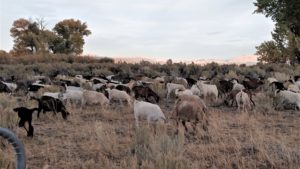 program, led by the Washoe Tribal Environmental Protection Department (WEPD), is being conducted with the Washington, DC-based organization Beyond Pesticides and Goat Green LLC., a goat grazing company based in Wyoming.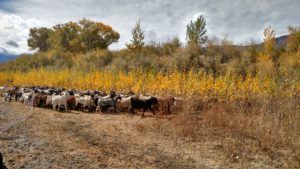
 Department of Pesticide Regulation (DPR) decision to approve additional uses for two bee-killing pesticides without disclosing the impact on honeybees.
 reaching its conclusion that glyphosate (Roundup) is “unlikely to pose a carcinogenic hazard to humans,” according to recent report in
  soil on conventional chemical-intensive farms, according to a study conducted by researchers from Northeastern University and The Organic Center. The continuing effects of climate change necessitate a robust approach to both limiting and reducing carbon in the earth’s atmosphere. As the study shows, a wholesale transition from conventional to organic farming could play an important part in mitigating the effects of a warming planet.
 –since the administrator of EPA refused to take the action agency scientists said is necessary to protect children.
 according to reports from
  autism spectrum disorder (ASD) even when their mothers were exposed to household or agricultural pesticides. Researchers at the University of California, Davis found that taking folic acid during the window around conception, reduced the risk of pesticide-induced autism.
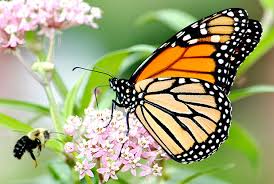 from western North America have declined far more dramatically than was previously known and face a greater risk of extinction – 86 percent in the next 50 years. The researchers do not know the exact cause but identify habitat loss and widespread pesticide use as likely culprits.
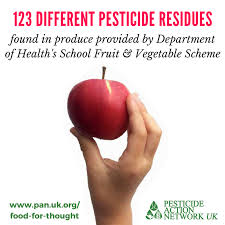 exposed to 123 pesticide residues in their daily lunches. The results call attention to the health and safety implications of pesticide exposure to children, which have developing body systems more sensitive to pesticide exposure. PAN-UK and other health groups are calling for a wholesale changeover to serving onlyorganic fruits and vegetables in schools.
 The ice cream brand says its social mission “seeks to meet human needs and eliminate the injustices in our local, national and international communities,” and that its focus is “on children and families, the environment and sustainable agriculture on family farms.”
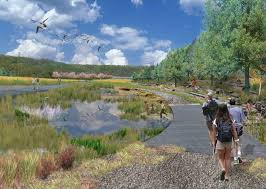 Wetlands improve water quality, sequester carbon, remove or neutralize pollutants, control flooding, protect adjacent areas from erosion, and host a multitude of beneficial plant and animal species — not to mention their recreational and aesthetic value.As recently reported in
 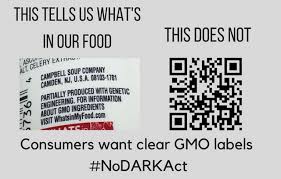 genetically engineered (GE) food,
  demographic groups, including those in farming. People working in the transportation sector registered the highest incidence of diagnosed diabetes at 10.6%. But those working as farmers and fishermen came in second, with 8.5% reporting a diagnosis of the disease.
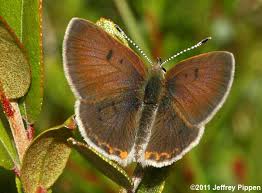 (Beyond Pesticides, September 5, 2017) The bog copper butterfly (Lycaena epixante) is a member of the second largest family of butterflies, Lycaenidae, which includes over 4,700 species worldwide. Also known as the cranberry-bog copper butterfly, the species has strong biological ties to cranberry plants and its associated habitat.
 (Beyond Pesticides, September 1, 2017)
  agricultural areas increases the risk of giving birth to a baby with abnormalities. These results are more significant for those exposed to very high levels of pesticides, underscoring the continued risks faced by farmworkers and farmworker families, especially mothers living near chemically-intensive treated fields.
 pesticides from the market, according to a study recently published by
  Environmental Protection Agency (EPA) for pregnant women. Chlorpyrifos is linked to low IQs, autism and other developmental neurological effects. Earlier this year, EPA Administrator Scott Pruitt refused to ban chlorpyrifos to the dismay of many scientists, medical professionals, and farmworker organizations.
 (Beyond Pesticides, August 28, 2017) School policies must protect children from pesticides by adopting organic land and building management policies and serving organic food in cafeterias. At the start of the school year, it is critical for school administrators to make sure that students and teachers are learning and teaching in an environment where no hazardous pesticides are used in the school’s buildings or on playing fields. It is also essential that children have access to organic food in food programs and manage school gardens organically.
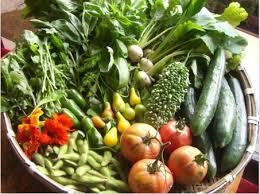 (Beyond Pesticides, August 25, 2017) While organic agriculture still represents only a fraction of the world’s food production, organic food sales have enjoyed remarkable growth over the past couple of decades, which is captured in a recent article,
 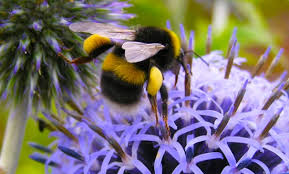 (Beyond Pesticides, August 24, 2017) Common pesticides used on canola crops significantly reduce bumblebee egg laying and may lead to local population extinction, according to new research published in the journal Nature by scientists at the Royal Holloway University of London. This is the latest study to investigate how neonicotinoids, insecticides
 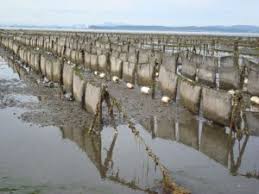 with an expansion of industrial shellfish aquaculture on the Washington state coast without any water quality or marine life protections from pesticide use and habitat loss. This is just the latest in efforts to protect sensitive coastal areas in Washington from shellfish farming that is contributing to increased pesticide use and environmental degradation.


