





04
Jun
Organic Land Management and Conservation Maximizes Wildlife Biodiversity, Adding to Previous Studies
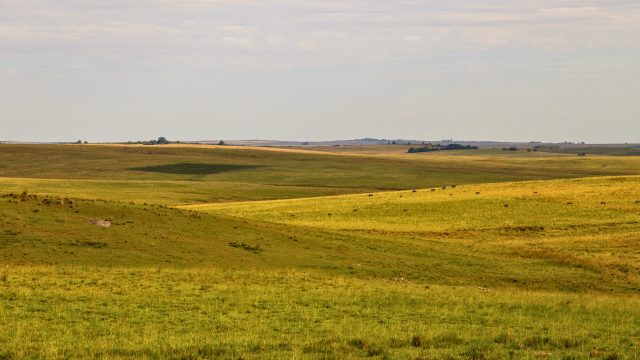
(Beyond Pesticides, June 4, 2026) In a study published in Perspectives in Ecology and Conservation, researchers in Brazil find that organic farming coupled with agroecological conservation practices “promote[s] biodiversity in agricultural landscapes.” The proxy for biodiversity in this study is anurans, a type of frog or toad native to the Brazilian Pampa—a section of the South American Pampas grasslands, a globally underrecognized biodiversity hotspot. According to a scientific report reviewed by Mongabay in 2024, “nearly a third of the Brazilian portion…has been lost since 1985, largely to agricultural expansion and forestry plantations.”
In the U.S. context, public health and environmental advocates continue to call for the transition to organic land management as a solution that validates the ecosystem services that biodiversity-forward agricultural systems can provide under values-aligned stewardship.
Methodology and Main Findings
The authors in this study, researchers at the Universidade Federal do Rio Grande do Sul, surveyed 26 artificial ponds across 16 family farms with different land management systems—9 organic farms and 7 conventional farms—located in the Serra do Sudeste region of the Brazilian portion of the Pampa grasslands. All farms were sampled three times during the 2023 to 2024 breeding seasons (twice in the October to November 2023 period and once in March 2024). The metrics used to assess biodiversity include species richness (number of frogs per pond/farm) and functional diversity (via traits analyzed, including: activity period, use of habitat, body size, larval type, and spawning site). Functional diversity is assessed using a respected methodology known as the Petchey & Gaston (2006) Index. It is important to note that this does not necessarily account for functional evenness (the spread of a given species distributed across functional roles/niches within a given ecosystem) or functional divergence (location within a space where the most abundant species inhabit). For further details on this aspect of the methodology, please see page 4 of the study PDF.
In terms of the landscape analysis, the composition is quantified in two spatial scales, one to assess the structure of the local habitat around individual ponds (200-meter buffer) and the second to assess the broader landscape (500 meters around the center points of any given farm).
On the primary objectives of this study, the authors state, “We aimed to compare taxonomic, functional, and beta diversity, as well as community composition of anurans between organic and conventional agroecosystems in the Brazilian Pampa.” They continue: “Additionally, we evaluated how local habitat characteristics of ponds and landscape composition at different spatial scales influence diversity patterns and community assembly.” In the context of this study, this metric is used to characterize potential differences in species richness on organic farms versus chemical-intensive systems. Researchers defined “conventional” farming as systems that use pesticides and high land-use intensity, whereas “organic” systems rely “on natural alternatives for pest and soil management, lower chemical inputs, and reduced land-use intensity.”
The main findings of this study include:
- Species Recorded around Organic Farms vs. Conventional. A total of 20 native anuran species (plus one exotic species, Aquarana catesbeiana) are recorded across the study; organic farms host 20 species while conventional farms host 17 species, with four species (Boana faber, Leptodactylus mystacinus, Limnomedusa macroglossa, and Rhinella achavali) found exclusively in organic systems.
- Organic Farms Statistically Significant Species Richness at the Pond Scale. Artificial ponds in organic systems support higher species richness than conventional.
- Organic Farms Outcompete Conventional on Functional Diversity. Researchers find a statistically significant relationship between organic systems and functional diversity. Moreover, organic farms adjacent to native forest patches have the highest values in this biodiversity metric, whereas plantation forestry (“silviculture cover”) does not have a statistically significant relationship. In other words, organically managed systems that are grown in sync with nature rather than industrial models demonstrate higher functional diversity.
- Notable Analysis on Functional Diversity from Study Authors. “At broader spatial scales, landscape context emerged as a key driver of functional diversity. While landscape composition within 200 m of ponds was not associated with diversity metrics, functional diversity at the farming level increased with forest cover in organic systems. This scale-dependent response suggests that local breeding habitats alone are insufficient to maintain functional diversity and that access to surrounding natural habitats is critical for sustaining a wider range of ecological strategies (Ribeiro et al., 2017; Moreira et al., 2020). Forest patches likely function as refuges and sources for recolonization, enhancing functional complementarity in organically managed landscapes (Ribeiro et al., 2017).”
Previous Coverage
The research just in the past year alone continues to mount on the relationship between thriving biodiversity and organically managed agroecological systems.
In the context of the Central Arid Zone Research Institute (CAZRI) in Rajasthan province, India, research published in Journal of Soil Science and Plant Nutrition determines that long-term organic management enhances various soil health indicators to a greater degree than conventionally managed systems. The organic soil qualities include greater microbial diversity, increased microbial biomass carbon (MBC), higher dehydrogenase activity (DHA), and higher alkaline phosphatase activity (ALP), among other favorable outcomes. (See Daily News here.) In the Ben Tre Province of Vietnam, researchers published their findings in Environmental Technology & Innovation, finding that organically managed coconut farms significantly improve soil health across numerous markers when compared with conventional (chemical-intensive) plantations. Organic plots are found to have better porosity and bulk density, meaning lower compaction and better aeration, to support air and water movement through the soil system; in addition, at a system-level, organic plots show stronger correlations between organic matter, nutrients, microbes, and enzyme activity than chemical-intensive coconut plots. (See Daily News here.)
Meanwhile, moving to the European continent’s Sicilian citrus orchards, research published in Microbiological Research finds that organic farming enhances microbial diversity in citrus orchard soil systems, both in terms of nutrient cycling and aiding in the development of more complex microbial networks pivotal to biodiversity. One notable result from this study is that organic systems harbor more complex and diverse microbial communities in their soils, as evidenced by higher fungal alpha diversity in organic soils and higher species richness under organic land care. Additionally, organic management promotes various nutrient cycling capacities (inorganic nitrogen consumption and organic phosphorus assimilation) and soil fertility functions (carbon content and carbon fixation). (See Daily News here.)
There are also pollinator benefits associated with organically managed systems. For example, a study of organic tomato agroecosystems with managed and wild bees, published in Apidologie, affirms the importance of protecting natural systems to support organisms that contribute to crop productivity. (See Daily News here.) Researchers in Germany and Brazil investigated the biodiversity of agricultural landscapes in organic and nonorganic areas in “bee hotels,” finding that there is a positive correlation between organically managed fields and numerous indicators of improved pollinator health, including an “increase in bee abundance, species richness, and diversity.” (See Daily News here.)
There are also climate resilience benefits of organic farming and food systems. In a literature review of peer-reviewed research published in the Cambridge University publication Renewable Agriculture and Food Systems, researchers at the Institute for Applied Agriculture Research (Germany) and Swette Center for Sustainable Food Systems (Arizona State University, USA) have determined that organically managed systems have better performance indicators under climate-induced stressors, emit less nitrous oxide emissions, increase overall soil organic carbon, and reduce overall greenhouse gas (GHG) emissions. The researchers also point out the potential socio-ecological benefits of organic management systems, including their potential for building local and regional food systems. In terms of climate mitigation findings, Organically managed systems reduce indirect CO2 emissions largely due to the avoidance of synthetic fertilizers. (See cited studies here and here.) Additionally, organic agriculture increases soil organic matter, offering potential long-term offsets for agricultural emissions more broadly. (See cited studies here and here.) In terms of climate adaptation, organic systems have been found to emphasize local seed breeds and genetic diversity, lending to climate adaptation potential relative to the chemical-intensive status quo. (See cited studies here, here, and here.) (See Daily News here.) An Egypt-based study published in Scientific Reports highlights the benefits of organic agriculture in comparison to different farming systems over five years in four crops (maize, tomato, faba bean, and potato). “Soil carbon sequestration is a long-time storage of carbon in soil which represents 70% of the carbon in land,” the authors note. They conclude, “Therefore, the main aim of this study is to investigate the effect of the agricultural practice systems on the soil carbon sequestration and properties, productivity, water consumption, soil carbon sequestration, CO2 emission and cost of some agricultural crops.” (See Daily News here.)
Call to Action
To review additional research on the relationship between transitioning to organic systems and biodiversity, please visit What the Science Shows on Biodiversity.
You can take action by subscribing to the Weekly News Update and Action of the Week to receive updates each week! If you would like to review previous Actions of the Week that are still live, see the Action of the Week Archive.
All unattributed positions and opinions in this piece are those of Beyond Pesticides.





Thank you for sharing this vital research summary! Highlighting how organic farming actively restores anuran populations in the Pampa grasslands is an incredible service to conservation biology.
June 4th, 2026 at 7:18 am