05
Jun
(Beyond Pesticides, June 5, 2017) Following the recent proposed 10-year extension for the approval of glyphosate use in the European Union (EU), internationally recognized toxicologist Dr. Christopher Portier, Ph.D. has delivered a letter to the European Commission (the Commission), calling the scientific findings of these agencies into question. Dr. Portier is former associate director of the National Institute of Environmental Health Sciences (NIEHS) and director of NIEHS’ Office of Risk Assessment Research. According to the letter, both the European Food Safety Agency (EFSA) and the European Chemicals Agency (EChA) “failed to identify all statistically significant cancer findings in the chronic rodent carcinogenicity studies with glyphosate.” Previously, the Commission, which is in charge of the approval of glyphosate, was forced to issue a limited license extension for the chemical because member states could not reach a consensus. The Commission was holding out for further information on carcinogenicity, which was assessed by the ECHA, and whose report was issued in March 2017. According to ECHA’s most recent assessment, glyphosate is not carcinogenic.

Dr. Portier asks that the evaluations by EFSA and EChA be “repeated for all toxicological endpoints and the data underlying these evaluations be publicly released.” Based on these failures in data analysis, the final assessments conducted by the EU agencies are insufficient to allow for glyphosate’s license extension, he said. In his final request of the European agencies, Dr. Portier states, “In the interest of scientific transparency, EFSA should release all of the raw data in all areas of toxicology for all pesticides so scientists interested in repeating the evaluations by EFSA and EChA can do so.”
In 2015, Dr. Portier presented at a scientific briefing in London and stated, “Glyphosate is definitely genotoxic. There is no doubt in my mind.” Genotoxicity is the ability of a chemical agent to damage the genetic information within a cell, causing mutations that may lead to cancer. According to Dr. Portier’s presentation, there is strong evidence that glyphosate and its formulated products are genotoxic and an oxidative stressor.
Glyphosate is the active ingredient in Monsanto’s Roundup brand of weedkillers, and research by WHO’s International Agency for Research on Cancer (IARC) has found that it is a probable human carcinogen. Since IARC’s findings were released, Monsanto has made several efforts to discredit the research of this highly respected, international body, including attempting to influence government agencies. Glyphosate is also patented as an antibiotic. Because glyphosate disrupts a crucial pathway for manufacturing aromatic amino acids in plants –but not animals— many have assumed that it does not harm humans. However, many bacteria do use the shikimate pathway, and 90% of the cells in a human body are bacteria. The destruction of beneficial microbiota in the human gut (and elsewhere in and on the human body) is, therefore, a cause for concern –and a major contributor to disease.
In April 2016, a European poll reported that the majority of people across the EU’s five biggest countries, including three-quarters of Italians, 70% of Germans, 60% of French, and 56% of Britons, support a ban on glyphosate. The herbicide is the most widely used herbicide in the world, according to Trends in glyphosate herbicide use in the United States and globally, and as a result is being detected in food and human bodies. Tests have detected glyphosate residues in German beer at levels higher than allowed in drinking water. Glyphosate residues have been found in bread being sold in the UK. The results of the bread study also shows that glyphosate use in the UK increased by 400% in the last 20 years and is one of the three pesticides regularly found in routine testing of British bread –appearing in up to 30% of samples tested by the UK government.
Despite the known risks of glyphosate exposure, the U.S. Department of Agriculture (USDA) abandoned its plans to test the U.S. food supply for the presence of glyphosate residues in March 2017. The decision came after heated controversy over the carcinogenicity of glyphosate, which was cleared by a California judge for listing under California’s Prop 65 in January of this year. The federal government’s pesticide monitoring program, which is run jointly by USDA, the Food and Drug Administration (FDA), and the Environmental Protection Agency (EPA), was criticized by the Government Accountability Office (GAO) in 2014 for its failure to test for the widely used herbicide.
Beyond Pesticides has filed several lawsuits against companies that have produced food products containing glyphosate, and then labeling those products “natural.” In August 2016, three non-profit organizations filed a lawsuit against General Mills for misleading the public by labeling their Nature Valley brand granola bars as natural. In November 2016, Beyond Pesticides and the Organic Consumers Association (OCA), represented by Richman Law Group, filed a lawsuit in Superior Court in the District of Columbia against Sioux Honey Association, for the deceptive and misleading labeling of its Sue Bee and Aunt Sue’s honey brands.
Consumers can avoid glyphosate exposure by buying organic food and supporting organic agriculture. Beyond Pesticides has long promoted the importance of organic in a sustainable food system, and works to promote the widespread transition of chemical-intensive farming to organic production. By utilizing ecological pest management strategies, organic practices, and solutions that are not dependent on toxic chemicals are the most appropriate and long-term solution to managing unwanted plants, or weeds. To find out more about the work Beyond Pesticides is doing on organic integrity, check out Keeping Organic Strong, or to see all the reasons to go organic, visit Eating with a Conscience.
Sources: Euractiv.com, Fruitnet
All unattributed positions and opinions in this piece are those of Beyond Pesticides.
Posted in Cancer, Glyphosate, International, Monsanto by: Beyond Pesticides
No Comments
02
Jun
(Beyond Pesticides, June 2, 2017) According to a new study, levels of triclosan spike in the bodies of children after they brush their teeth or wash their hands. Triclosan, a controversial antimicrobial, is frequently added to consumer care products. Last year, the Food and Drug Administration (FDA) banned the use of triclosan in hand soaps, but it is still allowed in toothpaste and numerous plastic and textile products regulated by the U.S. Environmental Protection Agency (EPA). Many companies had previously decided, due to consumer pressure, to remove triclosan from hand soaps years ahead of the FDA decision.
 Researchers collected and tested the urine of 389 mothers and their children –three times during pregnancy, and then took between 1-6 samples from children between the ages of 1 and 8 years old. The researchers found triclosan in over 70% of samples taken. In the group of 8 year olds, they report that levels were 66% higher in the children that used hand soap. For those that wash their hands over five times a day, the levels increase more than four times in comparison to children who wash their hands once or less per day. For toothpaste, researchers find that children who had brushed their teeth and then been tested within 24 hours had concentrations of triclosan that were 167% higher than those who had not brushed their teeth in the last 24 hours.
Assistant Professor in Brown University’s Department of Epidemiology in the School of Public Health Joe Braun, PhD of Brown Univesity, the senior author of the study, discussed with Environmental Health News why the study was done and how exposure to triclosan at a young age can affect development. Dr. Braun stated, “There’s very little data on the exposure in those first years of life. There are a lot of behavioral changes in those years, and environmental chemicals can play a role.” A previous study, which Dr. Braun co-authored, was released in April, and the researchers found that triclosan exposure during pregnancy was linked to lower birth weights, smaller heads, and earlier births.
Triclosan has been used for over 30 years in the U.S., mostly in a medical setting, but more recently in consumer products. Numerous reports have increasingly linked triclosan to a range of adverse health and environmental effects from cancer and endocrine disruption, bacterial and compounded antibiotic resistance, to the contamination of water and its negative impact on fragile aquatic ecosystems. Beyond Pesticides has cataloged extensive documentation of the potential human and environmental health effects of triclosan and its cousin triclocarban.
Meanwhile, EPA, which has jurisdiction over non-cosmetic consumer products containing triclosan (microban), continues to allow the use of this hazardous chemical in numerous plastic and textile products, from toys, cutting boards, hair brushes, sponges, computer keyboards to socks and undergarments. Beyond Pesticides previously petitioned EPA for the cancellation of registered products that contain the antibacterial pesticide. In May 2015, EPA issued its long-awaited response to the petition filed by Beyond Pesticides and Food & Water Watch, denying the request. The agency did, however, grant one request, and will evaluate and conduct a biological assessment of the potential for effects on listed species under the Endangered Species Act (ESA) in the ongoing triclosan registration review.
In the past, public pressure, led by Beyond Pesticides and other groups, has contributed to growing awareness of the dangers of triclosan’s use. As a result, several major manufacturers took steps to exclude the chemical before the FDA decision, including Johnson & Johnson, Procter & Gamble and Colgate-Palmolive, which reformulated its popular line of liquid soaps, but continues to formulate Total® toothpaste with triclosan. Minnesota became the first state to ban the toxic antibacterial, announcing that retailers would no longer be able to sell cleaning products that contain triclosan, effective January 2017. In June 2015, the agency responsible for chemical oversight in the European Union announced that the triclosan is toxic and bioaccumulative, and will be phased-out for hygienic uses and replaced by more suitable alternatives. According to the European Chemicals Agency (ECHA), “[N]o safe use could be demonstrated for the proposed use of triclosan.”
What Can You Do?
The best way to protect yourself and your family is to be conscious of labels when buying products. Be sure to read the ingredients when purchasing toothpaste and hand soap. When purchasing home products, you can research whether or not they contain triclosan (or microban). If you are interested in taking steps to rid triclosan from your community, there are a few things you can do. Encourage your local hospitals, schools, government agencies, and businesses to use their buying power to go triclosan-free, or follow the lead of Minnesota and New York by introducing a ban on triclosan. Additionally, organizations can adopt Beyond Pesticides’ model resolution, which commits them to not procuring or using products containing triclosan. For additional information and resources on the human health and environmental effects of triclosan, join the ban triclosan campaign and sign the pledge to stop using triclosan today.
Source: Environmental Health News, Environmental Science & Technology
All unattributed positions and opinions in this piece are those of Beyond Pesticides.
Posted in Antibacterial, Birth defects, Children/Schools, Endocrine Disruption, Triclosan by: Beyond Pesticides
No Comments
01
Jun
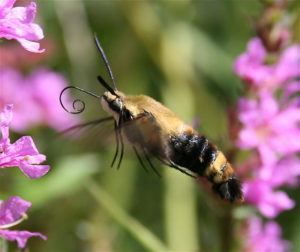
(Beyond Pesticides, June 1, 2017) The hawk moth is the pollinator of the month for June. Hawk moth is the common name for Sphingidae, a family of over 1,400 moth species. They are also commonly referred to as sphinx moths. This family is divided into two subfamilies, five tribes, and 205 genera. The voracious tomato hornworms and tobacco hornworms are larvae of two hawk moth species.
 Range
Range
According to a study by the University of Nebraska, hawk moths can be found in all parts of the world except Greenland. Some areas only host these moths for part of the year because many species make seasonal migrations to find reliable food sources and to breed. The study notes that some hawk moth species can even be found in Antarctica and the North Pole.
Diet and Pollination
The hawk moth drinks nectar from sweet-smelling flowers, many of which bloom at night. Most hawk moth species have a long proboscis. This hollow, tongue-like appendage is used to access nectar deep inside flowers. The family has the longest tongues in the moth and butterfly order. In some species, the proboscis reaches over a foot in length. These impressive tongues allow the moths to feed on and pollinate the deepest flowers.
The adults contribute to pollination in a manner similar to many other pollinators. Pollen sticks to the moth’s face, proboscis, and legs when it feeds. It then transports the pollen to successive flowers. A 1995 study at University of Massachusetts, Boston on the speed of hawk moths noted that the family uses a hovering method, similar to that of hummingbirds, while feeding on flower nectar. Additionally, tobacco, tomato, and other nightshade species play host and food source to the hawk moth larvae.
Physiology
The USDA Forest Service notes that some of the largest moths in the world belong to the sphingidae family. Moth size varies by species, but the largest can have wingspans over ten centimeters. Hawk moths are fast and powerful flyers. The University of Massachusetts, Boston study found one species capable of flying at a speed over twelve miles per hour. They have four long and narrow wings that they use to travel great distances in search of food and in annual migration. The University of Nebraska study reported that off-shore studies have been conducted that attracted moths for study with ship lights as many as sixty miles from land.
The many hawk moth species vary in color and pattern. Their bodies are covered in narrow scales, similar to a mammal fur, which act as insulation to maintain a high temperature. They have been observed “shivering” in a similar manner to mammals in low temperatures.
Science Magazine reports that the hawk moth is among a number of insects that use their antennae as gyroscopes to maintain stability in flight. The antennae allow the moth to sense rotations, which are adjusted for by the four wings.
Ecological Role
The hawk moth plays an important role as both a pollinator and prey. As previously mentioned, the hawk moth pollinates as it feeds on flower nectar. Moth pollination is important for night-blooming plants, which are not readily serviced by daylight pollinators like bees. Additionally, the University of Nebraska study notes that hawk moths and their larvae are prey to birds, bats, small mammals, and even other insects. Their vulnerability to predation has resulted in the evolution of protective mimicry –as in the appearance of the bumblebee hawk moth and the inflatable snake head on the tail of Hemeroplanes triptolemus larvae.
Threats to Existence
The hawk moth, as a large family of moths, is not endangered. Its broad speciation and range indicate the family’s adaptation to different conditions. However, the International Union for Conservation of Nature’s Redlist lists threats to a couple of hawk moth species. The Prairie Sphinx Moth, native to the United States, has been considered critically endangered since 1996. It faces an extremely high risk of extinction in the immediate future. The Fabulous Green Sphinx Moth of Kauai was considered extinct between 1986 and 2002. However, the moth was observed in limited numbers and noted as “data deficient” in 2002 before being reclassified as endangered in 2004. It faces a high very high risk of extinction. The most up-to-date assessments identify as threats to this species and the diversity of plants and insects on the island a number of factors, including agricultural development and the plants and animals it brings to the island. Further disturbance, such as hurricanes, exacerbates the problem. The 2015 study Effects of neonicotinoids and fipronil on non-target invertebrates names moths among other beneficial insects as likely to experience “wide ranging negative biological and ecological impacts.”
How to Protect the Species
The steps you take to protect the hawk moth depend on which species live in your area. Use the Butterflies and Moths of North America Checklist to determine which species of moth are common in your area. The website will also provide you with the information you need to help protect pollinating moths, including their migratory schedule, preferred habitat, caterpillar host plants, and adult food plants. Once you’ve found that information, you can make sure your garden includes flowering plants that are available for nocturnal pollinators.
You can also support the hawk moth family by providing a range of flowers they prefer in your garden. They are particularly fond of petunias, trumpet vine, jimpsonweed, and Queen of the night cactus. These flowers all exhibit strong, sweet fragrance, long floral tubes, and large volumes of nectar. More generally, you can plant white and yellow night-blooming flowers in addition to those previously mentioned.
In addition to providing food and habitat for your local hawk moth species, take measures to ensure your garden is not contaminated with pesticides. Neonicotinoids are a particularly harmful class of pesticides that enter plants, contaminate nectar and pollen, have been documented to decimate non-target insect populations. Avoid introducing plants that have been treated with pesticides, especially neonicotinoids. Read more about the effects of neonicotinoids on our page Chemicals Implicated.
Citations
Buchman, Steve Hawk Moths or Sphinx Moths (Sphingidae) https://www.fs.fed.us/wildflowers/pollinators/pollinator-of-the-month/hawk_moths.shtml
IUCN Red List Euproserpinus wiesti http://www.iucnredlist.org/details/8373/0
IUCN Red List Tinostoma smaragditis http://www.iucnredlist.org/details/21913/0
Messenger, Charlie The Sphinx Moths (Lepidoptera: Sphingidae) of Nebraska http://digitalcommons.unl.edu/cgi/viewcontent.cgi?article=1071&context=tnas
Sane, Sanjay P. Antennal Mechanosensors Mediate Flight Control in Moths http://science.sciencemag.org/content/315/5813/863
Stevenson, R.D. Cage Size and Flight Speed of the Tobacco Hawkmoth Manduca Sexta http://jeb.biologists.org/content/jexbio/198/8/1665.full.pdf
Pisa, L.W. Effects of neonicotinoids and fipronil on non-target invertebrates https://www.ncbi.nlm.nih.gov/pmc/articles/PMC4284392/
Posted in Uncategorized by: Beyond Pesticides
1 Comment
31
May
(Beyond Pesticides, May 31, 2017) Neonicotinoid-treated corn seeds produce lethal and sub-lethal exposure risks to honey bees and do not increase yields for farmers, according to a recent study by researchers at Purdue University. The study, published in the Journal of Applied Ecology, Planting of neonicotinoid-treated maize poses risks for honey bees and other non-target organisms over a wide area without consistent crop yield benefit, examines neonicotinoid (neonic) dust drift during corn planting in Indiana and the likelihood of honey bee exposure during foraging. The study results and subsequent analysis using public data of apiary locations indicate that over 94% of honey bee foragers in Indiana are at risk of exposure to varied levels of neonics, including lethal levels, during corn sowing. Researchers also performed a three-year field assessment of the purported benefits from neonic seed coatings for pest management, finding that there is no evidence of increased corn yields compared to sites with no neonic seed treatments.

According to the lead author of the study, Christian Krupke, Ph.D., in an interview with Purdue Extension, “There was a misconception that any bees not living near corn were likely to be fine. But that’s not true, and it’s clear that these insecticides are reaching into the places bees forage and putting them at risk.” The research team set up neonic dust collection traps at 12 corn fields around Indiana and collected samples over two years to determine the levels of pesticide dust at increasing distances from the corn field edges. The data demonstrate the movement of neonic residues outside the borders of planted fields, and the researchers estimate that residues on non-target lands and waterways will be deposited on over 42% of the state of Indiana during the corn planting season.
The second aspect of the study looked at the role of neonic corn seed coating for pest control and yield increases. The research team tested untreated seeds and seeds treated with clothianidin and a fungicide at a low rate and a high rate at three different sites in Indiana, with measurements taken on root damage, early season plant count, and late season yield estimates. These data fail to demonstrate any significant benefit, measured in crop yields, from planting neonic-treated corn seeds.
Although neonics are marketed as highly beneficial for farmers, this study and other recent evidence contradicts this claim. Arguments in favor of these chemicals assert that they provide continuous protection from insect pests to the plant throughout the majority of the growing season, without the need for repeat applications. However, a 2014 EPA report offers evidence that neonic use in soybeans does not translate to better yields, with the finding that soybean seeds coated with the neonics imidacloprid, thiamethoxam, and clothianidin “provide negligible overall benefits in [yield] in most situations” when compared with no insect control treatment. A 2015 study finds that the use of aldicarb soil insecticide and thiamethoxam-coated seed does not reduce cutworm damage, and that plots treated with these insecticides actually had a higher percentage of defects when compared to untreated plots. Other studies, including a 2014 Center for Food Safety review of the literature on the subject, finds that the benefits of prophylactic neonic use via seed coatings were nearly non-existent, and that any minor benefits were negated due to honey bee colony impacts, reduced crop pollination by honey bees, loss of ecosystem services, and market damage from contamination events.
This study comes at a time when neonic-treated seeds are pervasive and widely used across the agricultural landscape, home gardens, and public spaces. Of the two most widely planted crops in the U.S., between 79 to 100 percent of corn seed and 34 to 44 percent of soybean seed were treated with neonics in 2011. A conservative estimate of the area planted with neonic-treated corn, soybean, and cotton seed totals just over 100 million acres, or 57 percent of the entire area for these crops.
Systemic neonic pesticides move through the plant’s vascular system and are expressed through pollen, nectar, and guttation droplets. These pesticides have been found by a growing body of scientific literature to be linked to pollinator decline in general. Neonics are associated with decreased foraging and navigational ability, as well as increased vulnerability to pathogens and parasites as a result of suppressed bee immune systems. While the benefits to farmers are insignificant, the harm neonics cause to the wider environment is of serious concern. The dust released from planting coated seeds can drift off-field and contaminate field margins with high levels of these toxic pesticides. The Center for Food Safety’s 2016 report, Net Loss, cites findings that, depending on the crop, only five percent of the active chemical in a seed coating actually enters a crop. The other 95% of the chemical makes its way into the environment, either through seed dust, soil contamination, or water runoff.
With one in three bites of food reliant on bees, other insects, and birds for pollination, the decline in pollinators due to pesticides demands immediate action. For more on this and what you can do to protect pollinators, visit Beyond Pesticides’ BEE Protective webpage. Show appreciation for both wild and managed pollinators by taking local action. Get involved at the community level to pass policies that protect imperiled pollinators.
Sources: Purdue Extension, Agriculture.com
All unattributed positions and opinions in this piece are those of Beyond Pesticides.
Posted in Agriculture, neonicotinoids, Pesticide Residues, Pollinators by: Beyond Pesticides
No Comments
30
May
(Beyond Pesticides, May 30, 2017) U.S. beekeepers lost an unsustainable 33% of their hives over the past year, according to new data from the Bee Informed Partnership. While this year’s numbers are lower than those recorded last year, which found nearly half of U.S. honey bee colonies died off, there is no cause for celebration. Declines are still well above acceptable loss rates of 15% or less, and the data indicate a continuing trend of substantial losses during the summer months. Without real changes to U.S. policy that effectively eliminate pollinator exposure to highly toxic and persistent pesticides such as neonicotinoids, there is little likelihood that these unsustainable losses will subside.
Despite the overall dour projections for U.S. pollinators, Bayer, the major manufacturer of neonicotinoid pesticides implicated in pollinator declines, attempts to spin the news in its favor. Last week, the company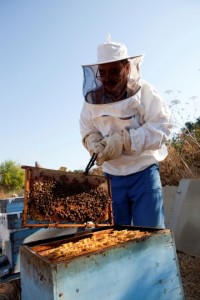 put out a press release titled “Welcome News for Honey Bees,” and went on the praise itself for its efforts to protect pollinators.
The chemical industry continues to use public relations tactics, in a similar vein to those previously employed by the tobacco industry, to downplay the nature of the crisis, spin the science, and blame everything but their own products for the ongoing crisis in our food supply. The good news is that there is no shortage of scientific, peer-reviewed studies linking toxic pesticides to adverse impacts on pollinator health. The key however, is the difficulty in translating this overwhelming evidence to policy-makers and the public, the subjects of the chemical industry’s misinformation campaigns.
For example, Bayer praised the Bee Informed Partnership’s results, noting “It’s the lowest winter loss rate since these surveys began.” However, behind this year’s “low” 21% winter loss rate, is a 10-year average of total winter losses which remains at 28.4%. And beekeepers are seeing more and more of their colonies die off in the summer months, a time when there should be few stressors on bee hives. As persistent, systemic chemicals are used year after year, they begin to build up in field margins and present substantial risks to honey bees both during and after crop pollination.
Indeed, as survey director Dennis vanEnglesdorp, PhD, notes in phys.org, “…I would stop short of calling this ‘good’ news.”
Without honey bees and other pollinators, U.S. consumers would lose one out of every three bites of food. And the crops that pollinators support are those that are the healthiest, most flavorful, vitamin and nutrient dense foods, meaning a world without pollinators is a world with bland food that endangers global health. There is already evidence that the pollinator crisis is affecting crop yields, as a study earlier this year revealed that wild bees are declining in 139 key agricultural communities in the country.
In spite of the chemical industry’s tactics, certain governments in the U.S and abroad have begun to tackle the issue through substantive action. After suspending neonicotinoid insecticides for 3 years, the European Commission recently proposed a complete ban on agricultural uses of these chemicals. The states of Minnesota, Connecticut, and Maryland have also taken steps to eliminate the use of pollinator-toxic products, and many local communities throughout the U.S. have passed pesticide reform policies.
Change always starts from the local level. If you’re interested in getting involved to protect pollinators in your community, reach out to Beyond Pesticides at [email protected] or 202-543-5450. On our Bee Protective webpage, we have resources and educational materials to get you started.
Source: Bee Informed Partnership
All unattributed positions and opinions in this piece are those of Beyond Pesticides.
Posted in Chemicals, neonicotinoids, Pesticide Regulation, Pollinators by: Beyond Pesticides
No Comments
26
May
(Beyond Pesticides, May 26, 2017) On Wednesday, the U.S. House of Representatives voted to pass a bill that would reverse an Environmental Protection Agency (EPA) requirement to obtain a permit before spraying pesticides on or near waterways. The passage of HR 953, The Reducing Regulatory Burdens Act (known by environmentalists as the “Poison Our Waters Act”), is the latest update in a multi-year string of attempts to rollback commonsense protections for the public waterways all Americans use for swimming, fishing, and other forms of recreation. It will now move forward to be considered by the Republican-majority Senate, where it will most likely pass and be signed into law.
HR 953, if signed into law, would reverse a 2009 decision issued by the 6th Circuit Court of Appeals, in the case of National Cotton Council et al. v. EPA, which held that pesticides applied to waterways should be considered pollutants under federal law and regulated under the Clean Water Act (CWA), through National Pollutant Discharge Elimination System (NPDES) permits. Prior to the decision, the EPA, under the Bush Administration, had allowed the weaker and more generalized standards under the Federal Insecticide, Fungicide and Rodenticide Act (FIFRA) to be followed. This allowed pesticides to be discharged into U.S. waterways without any federal oversight, as FIFRA does not require tracking such applications and assessing the adverse effects on local ecosystems.
To be clear, HR 953 would:
(1) undermine federal authority to protect U.S. waters under the Clean Water Act,
(2) allow spraying of toxic chemicals into waterways without local and state oversight,
(3) contaminate drinking water sources and harm aquatic life, and
(4) not reduce claimed burdens to farmers, since there are currently no burdens.
Backers of the bill continually argue that the permit requirements place undue burdens on farmers, but in reality, the majority of pesticide applicators can obtain a permit with little restriction, and agricultural activities are exempt from the requirement. What the bill will actually do is take away American’s right to know what toxic chemicals are entering their waterways. “This bill takes away the public’s right to know about toxic pesticides we may be exposed to,” Mae Wu, senior attorney for the Natural Resources Defense Council’s health program, said in a statement emailed to ThinkProgress. “It eliminates the current commonsense requirement that communities should have access to basic information about what’s being sprayed in waters that can pose risks for public health.”
The vote, which was recorded as 256-165, included 25 Democrats who voted in favor of the bill. While disappointing, many Democrats did voice their concerns with the legislation. According to U.S. News, Jim McGovern, the top-ranking Democrat on the House Agriculture Nutrition Subcommittee stated, “The Republicans are again bending over backward to help corporations and the wealthiest among us, while ignoring science and leaving hard-working families to suffer the consequences.”. . .“This administration’s decisions have placed special interests and their financial contributions ahead of the health and safety of our citizens.”
If this bill passes, citizens will be forced to take innovative local actions to protect threatened waters. Already, nearly 2,000 waterways are impaired by pesticide contamination, and many more have simply not been tested. A U.S. Geological Survey (USGS) report from 2014 finds that levels of pesticides continue to be a concern for aquatic life in many of the nation’s rivers and streams in agricultural and urban areas. The study, which documents pesticide levels in U.S. waterways for two decades (1992-2011), finds pesticides and their breakdown products in U.S. streams more than 90 percent of the time. Known pesticide water contaminants, such as atrazine, metolachlor, and simazine, continue to be detected in streams more than 50 percent of the time, with fipronil being the pesticide most frequently found at levels of potential concern for aquatic organisms in urban streams. The report also found that for urban areas, 90 percent of the streams exceeded a chronic aquatic life benchmarks. In 2015, another USGS report found that neonicotinoid insecticides contaminate over half of urban and agricultural streams across the United States and Puerto Rico.
Beyond Pesticides continues to fight to prevent water pollution and harmful agricultural practices. Visit our Threatened Waters page, and learn how organic land management practices protect waterways in the article, Organic Land Management and the Protection of Water Quality. Do your part! Contact your Senators and ask them to oppose HR 953.
Source: ThinkProgress, U.S. News
All unattributed positions and opinions in this piece are those of Beyond Pesticides.
Posted in contamination, Environmental Protection Agency (EPA), Federal Agencies, Take Action, Water, Water Regulation by: Beyond Pesticides
No Comments
25
May
(Beyond Pesticides, May 25, 2017) Four parks in Maui, Hawaii, have kicked off a year-long pesticide-free pilot program to transition to organic management. A series of training events in the county over the past few weeks focused on soil-based approaches to land management, a more effective solution than solely switching from synthetic to organic pesticides. Last Wednesday, Beyond Pesticides’ executive director, Jay Feldman, and Chip Osborne, president of Osborne Organics, taught training sessions with county Parks and Recreation staff, “discussing lawn care that relies less on outside products and aims to feed the soil, not just the plant.” Beyond Pesticides worked to support the pesticide-free parks movement in Maui by sponsoring these training sessions for Maui County Parks, Department of Transportation, Maui public schools, several local resorts, and golf course management groups.

Beyond Pesticides is working with Maui County to provide guidance on transitioning its parks to organic practices. Analysis of soil samples at each site has been conducted, which will provide a baseline to implement cultural changes to improve the biological health of the soil, making it more resistant to weed and insect pressures. The next step includes creation of a report and action plan for each county park by Beyond Pesticides and Osborne Organics, detailing the timeline for implementing practices of soil improvement and long-term management. In discussing the parks’ pilot program with Maui News, Chip Osborne stated, “There was a lot of fungal life and a lot of bacterial life [in these soils], but it wasn’t active. All the years of pesticides and salt-based fertilizers had diminished it. So the first thing that’s going to happen – far more important than a bag of fertilizer – is to restore that biological level.”
There has been “an increase in resources and attention given to organic agriculture methods, but this is the first time efforts on this scale have been made to support organic landscape management,” Maui County Councilmember Elle Cochran told Maui Now about the local training events. The county has had mixed results with other alternative management strategies, including an aeration program by the Parks and Recreation Department that reduced the amount of pesticides and fertilizers used. According to Parks and Recreation Deputy Director, Brianne Savage, “Labor costs went up, chemical costs went down, though the department would have to do more analysis to determine whether the program was truly cost effective.” The organic management approach that Osborne and Beyond Pesticides taught the county is systems-based rather than a single tactic, and will save money over the long term by reducing outside inputs and generating nutrients naturally through improved soil health.
“This pilot program has been a couple of years in the making,” according to Elle Cochran, chairwoman of the Maui County Council’s Infrastructure and Environmental Management Committee. Maui’s pesticide-free parks program highlights the powerful change residents can make when they become engaged with their local elected officials. Communities throughout the country are realizing that the risks associated with pesticide use are simply not worth their health, the health of pollinators, or the wider environment.
The work Beyond Pesticides is conducting in Maui is similar to efforts undertaken in parks in the Reno, Nevada area. These programs aim to give land managers to knowledge, understanding, and tools necessary to make a broader transition to organic land care. Hopefully, successful pilot sites in Maui will lead to the passage of an ordinance that institutionalizes safer practices, as in many communities across the country.
In the past several years, Takoma Park and Montgomery County in Maryland passed ordinances banning the use of pesticides for cosmetic purposes on all property, in favor of organic practices. Nearly 20 communities in Maine have restricted pesticide use on private property in some way, including comprehensive cosmetic pesticide restrictions passed in Ogunquit and South Portland. In the summer of 2015, the City of Minneapolis, MN passed an organic, pollinator friendly resolution, committing the City to adopt clear guidelines against the use of synthetic pesticides. Communities in Colorado, including Lafayette, Boulder County, and the City of Boulder have restricted the use of bee-toxic pesticides on public spaces. As Beyond Pesticides’ Map of U.S. Pesticide Reform Policies shows, numerous other localities have already enacted pesticide-free parks programs with good success.
If you’re interested in getting active in your community to fight for an organic or pesticide-free policy, click here to sign the petition today. We’ll send you resources and strategies that you can use to win protections for children, pets, pollinators, wildlife, and water quality. Without action from local residents, states and localities will continue to rely on an increasingly politicized and underfunded EPA for their safeguards from toxic chemicals. For more information on passing your own community pesticide policy, see Beyond Pesticides’ Tools for Change webpage, or reach us at 202-543-5450 or [email protected].
All unattributed positions and opinions in this piece are those of Beyond Pesticides.
Source: The Maui News, Maui Now
Posted in Alternatives/Organics, Hawaii, Lawns/Landscapes, State/Local, Take Action by: Beyond Pesticides
No Comments
24
May
(Beyond Pesticides, May 24, 2017) A Hawai’i woman is suing her former employer, DuPont Pioneer, stating that the company retaliated against her for bringing up concerns over pesticide safety. Shanbnell Grilho, who worked for DuPont Pioneer on Oahu’s North Shore, alleges the company required her to apply hazardous herbicides without the proper training or protection, and ultimately fired her after fabricating allegations against her. This lawsuit is the latest claim against multinational pesticide companies operating in Hawai’i, which have been at the center of local and state-level disputes over their use of toxic pesticides where Hawai’i residents live, work, and play.
 In her complaint, Ms. Grilho indicates that she began working at DuPont Pioneer as a temporary employee, during which time she was awarded a raise and named DuPont Pioneer employee of the month. At the time she did not have to apply pesticides. However soon after her award, she was hired as a full time employee and required to work with Roundup, Liberty, and Honcho herbicides, which contain the active ingredients glyphosate, glufosinate, and glyphosate, respectively. “DuPont Pioneer required plaintiff to apply herbicides and biocides while wearing a backpack sprayer, driving an ATV while applying herbicides with a backpack sprayer, and drive while others applied herbicides with a backpack sprayer,” the complaint notes.
Although these applications exposed Ms. Grilho to the aforementioned herbicides, she notes she was denied requests to have the company provide training and personal protective equipment. Her complaint further alleges that DuPont Pioneer reprimanded Ms. Grilho after she moved her coworkers to an area 500’ away from where the herbicide was applied to allow it to dissipate. She indicates she was told not to use two-way radios, where her coworkers may overhear her safety concerns, and only contact her supervisor directly with those concerns.
When Ms. Grilho went above her immediate supervisor to express her worries over working conditions, she was transferred out into crop fields, into a more physically demanding job she alleges was retaliation for her complaints. In the fields, she worked in even closer proximity to pesticide use. As the lawsuit indicates, “[her supervisor] forced plaintiff to work in areas that were supposed to be evacuated because hazardous chemicals had been applied to the area in the past 24 hours.” She again voiced safety concerns, but in response was denied funding of her Education Assistance Program, the lawsuit indicates, in retaliation for her complaints.
After injuring her knee several months later, Ms. Grilho was then terminated by DuPont Pioneer. The complaint alleges that her termination was contrived, that “DuPont Pioneer fabricated her acceptance of long-term disability benefits in retaliation for plantiff’s whistleblowing activities and in an effort to terminate her for those whistleblowing activities.” The suit additionally indicates that Ms. Grilho’s husband, Morgan Armitage, who had worked for the company for 13 years, was fired two months after his wife’s demand letter also in retaliation over her whistleblowing activities.
Stories and lawsuits over pesticide misuse are widespread in the state of Hawai’i. As far back as 2007, chemical companies operating on the islands were accused of dangerous pesticide practices. At that time, a number of incidents at Waimea Canyon Middle School on the island of Kauai led administrators and teachers to sit down with the company Syngenta and secure an agreement not to spray before school was out at 3:30 pm. Syngenta broke that promise, according to Maluhia Group, a coalition of Waimea Canyon Middle School staff, parents and community members. The group recorded the incident in a YouTube video.
In 2015, residents successfully sued DuPont Pioneer over property damage and loss of use and enjoyment of their property after being subject to the incessant blowing of pesticide-laden red dust from the company’s Waimea Research Center field. The U.S. Environmental Protection Agency (EPA) is currently investigating Terminix and Monsanto for repeat violations of pesticide law in Hawai’i. Late last year, Syngenta was fined 4.6 million by EPA after exposing a dozen of its agricultural workers to an unregistered, chlorpyrifos-based pesticide after which they were sent to the hospital.
It is evident that pesticide enforcement in the state is lacking. In addition to the aforementioned investigations and lawsuits, EPA is looking into Hawai’i’s Department of Agriculture over allegations of discrimination against Native Hawaiians as part of their pesticide program.
Community members in Kauai, Maui, and the Big Island’s fight to institute protections from pesticide use resulted in a preemption lawsuit that ultimately struck down their protective local laws. Efforts to move these protections to the state level have been struck down in the state legislature this year, despite strong grassroots support.
Even these state-level efforts would not stop pesticide use, but simply require disclosure of when are where these chemicals are used. Yet the chemical industry has consistently refused to accept any accountability for public outrage over their practices.
As consumers, the best method to eliminate the proliferating use of toxic pesticides is to vote with our wallets. Support a system that does not endanger workers with exposure to hazardous chemicals by seeking out and purchasing only organic foods. Buying organic reduces consumer demand for products which perpetuate the alleged treatment of workers like Ms. Grilho. As the marketplace shifts towards organic, communities, workers, and the wider environment will benefit from safer, sustainable foods.
All unattributed positions and opinions in this piece are those of Beyond Pesticides.
Source: Civil Beat
Posted in Agriculture, Chemicals, Corporations, DuPont, Farmworkers, glufosinate, Glyphosate, Hawaii, Label Claims, Litigation, Pesticide Regulation, State/Local by: Beyond Pesticides
No Comments
23
May
(Beyond Pesticides, May 23, 2017) Health ministers from the G20 nations, the largest advanced and emerging economies, identified Antimicrobial Resistance (AMR) as a “current and increasing threat and challenge to global health” and committed the member countries to several actions aimed at reducing the occurrence of AMR. The outcome of the first meeting of G20 health ministers, the Berlin Declaration of the G20 Health Ministers, addresses a wide range of global health issues, including AMR.
The G20 declaration contains little more than a mention of antimicrobials in agriculture, but both it and the G20 Agriculture Ministers’ Declaration support WHO’s Global Action Plan on Antimicrobial Resistance. WHO’s action plan includes measures of effectiveness of actions, including member state adoption of “policies on use of antimicrobial agents in terrestrial and aquatic animals and agriculture, including: implementation of Codex Alimentarius and OIE [Organization for Animal Health] international standards and guidelines as well as WHO/OIE guidance on the use of critically important antibiotics; phasing out of use of antibiotics for animal growth promotion and crop protection in the absence of risk analysis; and reduction in nontherapeutic use of antimicrobial medicines in animal health.”
The G20 meeting last weekend was not the first time world leaders have come together to discuss, in great detail, the issue of AMR. In September 2016, the United Nations (UN) General Assembly, comprised of delegates from 193 countries, addressed the alarming rise of antibiotic resistance. Prior to this historic meeting, the international body had only convened health-related meetings on three other issues: Ebola, HIV, and noncommunicable diseases. According to the World Health Organization (WHO), the UN health agency, “Antimicrobial resistance has become one of the biggest threats to global health, food security, and development today.” At this high-profile meeting, heads of state and heads of delegations addressed the urgency of the situation and discussed multisectoral approaches to addressing antimicrobial resistance.
The most significant agreement to come out of the Declaration is the commitment by member countries to have implementation National Action Plans on AMR as called for in the WHO Action Plan “well underway” by 2018. According to the Declaration, approximately one-third of the 194 WHO member countries currently have an AMR action plan in place, and an additional one-third have begun to develop such a plan. Other efforts outlined in the Declaration include increased public education campaigns about the causes and harms of AMR, reinvigorating research and development in the antimicrobial industry, and increased monitoring at the national and regional levels. All of these have the potential to play a critical role in the global reduction of AMR.
The development of resistance by bacterial, viral, and fungal microorganisms to antimicrobial medicines is primarily due to inadequate health care systems, the improper use and overuse of these medicines in humans, agriculture, and aquaculture, as well as antimicrobial residues that make their way into water, soil, and crop systems. In the U.S., antibiotic-resistant microorganisms cause over two million illnesses and approximately 23,000 deaths each year as a direct result of antibiotic-resistant infection. A report published this spring identified antibiotic use in conventional plant and animal agriculture as contributing to bacterial resistance to critical life-saving human medicines and the importance of organic agriculture in eliminating antibiotic use. The report, Agricultural Uses of Antibiotics Escalate Bacterial Resistance, published in Pesticides and You, finds that while antibiotic use in animal agriculture is widely acknowledged as harmful, the use of antibiotics in chemical-intensive crop production also poses unnecessary and significant risks.
The vast majority of antibiotics sold in the U.S. is used in agriculture. According to a report by Consumers Union and Physicians for Social Responsibility, the non-therapeutic use of antibiotics in livestock production accounts for nearly four times as much as are used for human illness. Typically, low levels of antibiotics are administered to animals through feed and water to prevent disease and promote growth. This is generally done to compensate for overcrowded and unsanitary living conditions, as is common in concentrated animal feeding operations (CAFOs), and to fatten livestock to get them to market sooner. This process increases the risk of infectious disease outbreaks that would be averted under living conditions appropriate to each species.
In addition, the most widely used pesticide –glyphosate or Roundup— is an antibiotic. Because glyphosate disrupts a crucial pathway –the shikimate pathway—for manufacturing aromatic amino acids in plants –but not animals— many have assumed that it does not harm humans. However, many bacteria do use the shikimate pathway, and 90% of the cells in a human body are bacteria. The destruction of beneficial microbiota in the human gut (and elsewhere in and on the human body) is, therefore, a cause for concern –and a major contributor to disease. In addition to impacts on human health, glyphosate has been linked to adverse effects on earthworms and other soil biota.
Under the Organic Foods Production Act, (OFPA) certified USDA livestock producers cannot use growth promoters and hormones, whether implanted, ingested, or injected, including antibiotics. Additionally, certified USDA Organic livestock producers cannot use subtherapeutic doses of antibiotics, meaning they cannot administer low-dose antibiotic treatments that are not for the purpose of treating sick livestock. The standards also require that producers maintain living conditions that prevent infectious diseases from becoming established and adversely affecting livestock health.
In the spring of 2014, the National Organic Standards Board (NOSB) voted to uphold the phase out in apple and pear production of the antibiotic streptomycin, which was set to expire on October 21, 2014. This vote came after a similar proposal to extend an exemption for oxytetracycline, another antibiotic used in apple and pear production, was rejected at the spring 2013 NOSB meeting. Beyond Pesticides, with other organizations, led the effort to remove antibiotics from organic apple and pear production because of their contribution to antibiotic resistance, organic consumer expectation that antibiotics are not used in organic food production, and the availability of alternative practices and inputs.
The widespread use of triclosan in antimicrobial soaps and personal care products, also has led to an increase in bacterial resistance. In a decision that was long overdue, on September 2, 2016, the Food and Drug Administration (FDA) banned triclosan in soaps, while EPA continues to allow for its use in common household products and toys. Beyond Pesticides raised concerns about the health effects of triclosan in 2004 in the piece, The Ubiquitous Triclosan, and petitioned the agencies to ban the chemical in 2009 and 2010. In 2015, triclosan was banned in the European Union. For nearly two decades, scientific studies have disputed the need for the chemical and linked its widespread use to health and environmental effects and the development of stronger bacteria that are increasingly difficult to control. For more background, see Beyond Pesticides’ triclosan page.
Through the support of organic agriculture and in pressing for even stronger organic standards and continuous improvement, consumers are moving the market away from hazardous chemicals, including antimicrobial use. For more information on what you can do to advance organic agriculture, see Beyond Pesticides’ Keeping Organic Strong website, which provides a number of resources for people to participate in the organic review process.
Source: Reuters, G20 Health Ministers Declaration via Down to Earth
All unattributed positions and opinions in this piece are those of Beyond Pesticides.
Posted in Antibacterial, Uncategorized by: Beyond Pesticides
No Comments
22
May
(Beyond Pesticides, May 22, 2017) Last week, the Maine Legislature’s Committee on State and Local Government unanimously voted to reject a bill that would have prohibited the right of municipal governments to restrict pesticide use on private property. This victory protects the 27 cities and towns across Maine which are exercising their right to adopt pesticide restrictions that incentivize land management practices supporting healthy environments and allows other communities to follow suit. Opponents of the Governor’s bill successfully argued that its weakening of local control could violate the Maine Constitution. Proponents of the bill included industry trade groups, lawn care companies, and golf courses, who argued that the legislation was necessary to address the growing “patchwork” of local regulations. There is no evidence of this, and on the contrary, there has been a long history of local communities adopting ordinances to respond to matters of public health and welfare.

According to the Portland Press Herald, the bill, LD 1505, was a “late introduction on behalf of [Governor] Paul LePage and reportedly mirrored model legislation promoted by the American Legislative Exchange Council, a conservative policy group that works with state lawmakers.” This group and others aim to suppress or preempt local democratic action to adopt public health and environmental protections in order to allow the unimpeded marketing of their products. Those industry groups that lead the charge to preempt local government action have a vested economic interest in selling toxic products and services and stifling the movement of the market toward greener alternatives. Passage of the bill in Maine would have been a significant blow to many local communities that currently regulate pesticides more stringently than the state.
There were 77 pieces of testimony submitted by individuals and organizations on the Governor’s bill, with the large majority opposing it. Many Maine residents and local organizations expressed extreme concern over this piece of legislation, based on its undemocratic basis and failure to comply with the intent of the state constitution. Maine communities want to be able to adopt standards that exceed or are more stringent than state standards as a matter of public health and environmental protection, resulting in improved quality of life. Beyond Pesticides submitted comments on behalf of its Maine members opposing LD 1505, which can be viewed by clicking here.
Legislation incorporating preemption language has led to a battle for local control of the democratic process, as more and more local grassroots organizations mobilize effectively with knowledge of the hazards that accompany many lawn care products containing pesticides and the availability of alternative products and land management systems. For a more detailed explanation of state preemption law and how it affects local communities, please see Beyond Pesticides’ State Preemption Law factsheet.
Some of the most critical victories in recent years as far as the ability local communities to regulate pesticides have come from Maine. In 2014, the town of Ogunquit became the first town in the state to prohibit the use of pesticides on public and private property for turf, landscape, and outdoor pest management activities. The ordinance was passed after a three-year education and awareness campaign, initiated by the town’s Conservation Commission, and expanded upon existing pesticide use restrictions on town-owned property. More recently, in 2016 the town of South Portland passed an ordinance banning the use of toxic lawn pesticides on private and public land. Both of these ordinances would have been affected by LD 1505, as the language of the bill states that, “An ordinance regulating the sale or use of pesticides adopted prior to the effective date of this subsection is void.”
Local policies incentivize the adoption of lawn care practices that meet community expectations by nurturing soil biology to support the natural cycling of nutrients, resulting in resilient turf systems and plants. Because the use of toxic materials undermines the soil food web by harming soil microbial life, identifying ecologically compatible products is an essential component of the system. To find out more about these ecologically sensitive products, see Beyond Pesticides’ List of Products Compatible with Organic Landscape Management.
Take Action Today
It is more important than ever to build upon the growing number of local policies and to take action to protect public health and the environment. Community activism is the best way to get your town to adopt a policy that limits toxic pesticide use similar to those passed by the town of Ogunquit or South Portland. For assistance in proposing a policy to your city council, contact Beyond Pesticides at [email protected] or 202-543-5450. For more information on joining the growing organic lawn care movement, see Beyond Pesticides Lawns and Landscapes program page. Let your neighbors know your lawn and garden are organic by displaying a Pesticide Free Zone sign.
Source: Portland Press Herald
All unattributed positions and opinions in this piece are those of Beyond Pesticides.
Posted in Maine, Pesticide Regulation, Preemption, State/Local, Take Action by: Beyond Pesticides
No Comments
19
May
(Beyond Pesticides, May 19, 2017) In spite of a growing body of evidence implicating glyphosate in a wide range of human illnesses and environmental impacts, the European Union (EU) plans to propose a 10-year extension for the approval of glyphosate use. Previously, the European Commission (the Commission), which is in charge of the approval, was forced to issue a limited license extension for the chemical because member states could not reach a consensus. The Commission was holding out for further information on carcinogenicity, which was assessed by the European Chemicals Agency (ECHA), and whose report was issued in March 2017. According to ECHA’s assessment, glyphosate is not carcinogenic.
Glyphosate is the active ingredient in Monsanto’s Roundup brand of weed-killers, and research by the World Health Organization’s International Agency for Research on Cancer (IARC) has found that it is a probable human carcinogen. Since IARC’s findings were released, Monsanto has made several efforts to discredit the research of this well respected, international body, including attempting to influence government agencies.
According to a Bloomberg BNA article, “The commission will discuss with EU member nations the prospect of a 10-year reauthorization, said Anca Paduraru, spokeswoman for the commission.” Once the Commission proposes the 10-year license approval, representatives from the EU member nations will need to vote on it. Neither pesticide manufacturers nor environmental groups were happy with the proposal –the former believing the 10-year proposal would be too short, and that the Commission was pandering to activists, and the latter believing that the Commission should look towards safer options.
Bart Staes, a Belgian Green member of the European Parliament, told Bloomberg BNA in a statement, “There are credible concerns regarding the safety of glyphosate,” and that the Commission “should promote sustainable alternatives rather than reauthorizing glyphosate.” On the other hand, Bloomberg reports that “Graeme Taylor, director of public affairs for the European Crop Protection Association, which represents pesticides manufacturers, said the EU reauthorization of glyphosate had been held up by ‘the Facebook science of NGOs and activists.’”
Glyphosate is touted as a “low toxicity” chemical and “safer” than other chemicals by industry. But glyphosate has been shown to have detrimental impacts on humans and the environment. Given its widespread use on residential and agricultural sites, its toxicity is of increasing concern. In addition to IARC’s findings, previous studies have linked the toxicant to non-Hodgkin’s lymphoma and multiple myeloma. Studies show that it is also an endocrine disruptor, causes reproductive effects, kidney and liver damage, and is toxic to aquatic organisms. In September 2015, a study published in Environmental Health News found that chronic, low-dose exposure to glyphosate leads to adverse effects on liver and kidney health. In January 2017, research was published showing that ultra-low doses of glyphosate formulations fed to rats is linked to an increased likelihood of developing non-alcoholic fatty liver disease. A lead author of that study stated that the findings are “very worrying as they demonstrate for the first time a causative link between an environmentally relevant level of Roundup consumption over the long-term and a serious disease.” Another study released this year finds that glyphosate can cause changes to DNA function resulting in the onset of chronic disease, including diabetes, obesity, and Alzheimer’s disease.
Glyphosate is an antibiotic. Because glyphosate disrupts a crucial pathway for manufacturing aromatic amino acids in plants –but not animals— many have assumed that it does not harm humans. However, many bacteria do use the shikimate pathway, and 90% of the cells in a human body are bacteria. The destruction of beneficial microbiota in the human gut (and elsewhere in and on the human body) is, therefore, a cause for concern –and a major contributor to disease..
In addition to impacts on human health, glyphosate has been linked to adverse effects on earthworms and other soil biota, as well as shape changes in amphibians. The widespread use of the chemical on genetically engineered glyphosate-resistant crops has led it to be implicated in the decline of monarch butterflies, whose sole source of nutrition for development from egg to adult, milkweed plants, is being devastated as a result of incessant use of glyphosate. In addition, the destruction of soil microbiota leads to unhealthy agricultural systems with an increasing dependence on agricultural chemicals. Other scientists have found that glyphosate starves and sickens the very crop plants that it is supposed to protect.
In April 2016, a European poll reported that the majority of people across the EU’s five biggest countries, including three-quarters of Italians, 70% of Germans, 60% of French and 56% of Britons, support a ban on glyphosate. The herbicide is the most widely used herbicide in the world, according to reports, and as a result is being detected in food and human bodies. Tests have detected glyphosate residues in German beer, at levels higher than allowed in drinking water. Glyphosate residues have been found in bread being sold in the UK. The results of the bread study also shows that glyphosate use in the UK increased by 400% in the last 20 years and is one of the three pesticides regularly found in routine testing of British bread –appearing in up to 30% of samples tested by the UK government. A pilot study conducted by the group Moms Across America in 2014 found that glyphosate may also bioaccumulate in the human body, as revealed by high levels of the chemical in the breast milk of mothers tested.
Beyond Pesticides has filed several lawsuits against companies that have produced food products containing glyphosate, and then labeling those products “natural.” In August 2016, three non-profit organizations filed a lawsuit against General Mills for misleading the public by labeling their Nature Valley brand granola bars as natural. In November 2016, Beyond Pesticides and the Organic Consumers Association (OCA), represented by Richman Law Group, filed a lawsuit in Superior Court in the District of Columbia against Sioux Honey Association, for the deceptive and misleading labeling of its Sue Bee and Aunt Sue’s honey brands.
What Can You Do?
Beyond Pesticides urges individuals concerned about glyphosate exposure to support organic systems that do not rely on hazardous carcinogenic pesticides. In agriculture, concerned consumers can buy food with the certified organic label, which not only disallows synthetic pesticides like glyphosate, but also the use of sewage sludge and genetically engineered ingredients. Instead of prophylactic use of pesticides and biotechnology, responsible organic farms focus on fostering habitat for pest predators and other beneficial insects, and only resort to judicious use of least-toxic pesticides when other cultural, structural, mechanical, and biological controls have been attempted and proven ineffective.
Source: Bloomberg BNA
All unattributed positions and opinions in this piece are those of Beyond Pesticides.
Posted in Alzheimers's, Cancer, Chronic Kidney Disease, Glyphosate, Liver failure, Monsanto, non-Hodgkin's Lymphoma, Obesity, Reproductive Health by: Beyond Pesticides
No Comments
18
May
(Beyond Pesticides, May 18, 2017) A pesticide reduction plan proposed by investors in the Dr. Pepper Snapple Group (DPS) lacks a positive vision that could accomplish the investors’ goals. The shareholder proposal at DPS, which makes Mott’s, 7UP, Snapple, and Canada Dry, was filed by the Green Century Equity Fund, a company that offers environmentally and socially responsible mutual funds, seeks to pressure DPS to reduce toxic pesticide use in its supply chain. According to their press release, the shareholder proposal suggests that DPS “use quantitative metrics to track the amount of pesticides avoided, publish goals to reduce pesticide use or toxicity, and/or provide incentives to growers to minimize the use of pesticides.” However, the shareholder group could better achieve its goals by asking that DPS use certified organic ingredients.
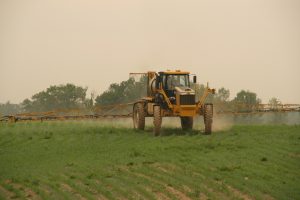
Beyond Pesticides has long sought a broad-scale marketplace transition that does not simply reduce or minimize pesticide use, but prohibits the application of toxic synthetic pesticides by law and promotes the widespread transition of conventional farmland to organic production, which is protective of health and the environment. Certified organic production, with its requirement of a detailed organic system plan and methods to foster and improve soil health, achieves the elimination of toxic pesticides and reduction of overall pesticide use.
In discussing the company’s long-term interests, Marissa LaFave, Shareholder Advocate at Green Century, stated that, “We believe that properly managing, reducing, and disclosing pesticide use could help Dr. Pepper Snapple mitigate the risk of supply chain disruption due to the loss of pollinators, along with reputational, competitive, and regulatory risks.” There is a strong economic argument for the group’s statement, given evidence that it costs more to not protect pollinator species than to allow them to suffer population declines. A 2016 UN report estimates that pollinators worldwide contribute between $235 and $577 billion in agricultural productivity annually and warns of shortages in global food supplies following further pollinator losses.
In its opposition statement on page 79, the DPS board of directors recommends shareholders vote against the proposal and states that, “We will continue to work with our agricultural suppliers, as we have always done, to ensure that they are making meaningful and impactful decisions with respect to their operations and IPM programs, and their effect on the environment.”
This focus on marketplace pressure comes on the heels of a lawsuit filed by Beyond Pesticides against Mott’s, under the District of Columbia’s consumer protection law, for false and misleading “natural” labeling of applesauce products containing residues of the neonicotinoid insecticide acetamiprid. This pesticide is particularly toxic to pollinators, and there are concerns in the scientific literature that are recognized by the European Food Safety Authority about the effect of acetamiprid on human health, particularly children. The plaintiffs maintain that by using “natural” or “all natural ingredients” labeling, Mott’s leads consumers to believe that its applesauce products do not contain synthetic substances.
This suit, as with several similar consumer protection claims, aims to challenge fraud and deception in the marketplace, as well as to protect the integrity of the U.S. Department of Agriculture (USDA) organic label. Unlike the organic label, which adheres to a strict set of rules regulated by the federal government, the term “natural” has not been defined and regulated by the Food and Drug Administration (FDA), or any other government agency. The only way to truly know if what you’re buying is free of harmful pesticides like acetamiprid or other toxic synthetic materials is to buy organic products.
In light of federal inertia and with a growing understanding about the false promises that industrial agricultural systems have provided, citizens, private companies, and policy-makers around the world must push for food systems that place biologically regenerative, organic agriculture at the center. Organic law requires farmers adopt an organic systems plan to support soil biology, ecological balance, and pest prevention. Beyond Pesticides encourages the public to use their market power to support companies that have made a commitment to sourcing only organic products, as well as to encourage new companies to make the transition away from toxic chemical use throughout their supply chains.
Beyond Pesticides also provides many opportunities to get involved in protecting and advancing the integrity of the organic label, and encourages public action to ensure organic’s strong standards remain intact. To find out more about the work Beyond Pesticides is doing on organic integrity, check out Keeping Organic Strong, or to see other reasons to go organic, visit Eating with a Conscience.
Source: Green Century
All unattributed positions and opinions in this piece are those of Beyond Pesticides.
Posted in Agriculture, Corporations, Label Claims, Litigation by: Beyond Pesticides
No Comments
17
May
(Beyond Pesticides, May 17, 2017 Fraud among producers portraying products of chemical intensive agriculture as organic –including those recently identified by the U.S. Department of Agriculture (USDA) Agricultural Marketing Service (AMS) National Organic Program (NOP)— is costly to organic producers and consumers. Imported grains –co rn and soybeans that are largely fed to livestock whose products are sold as “organic”— are the focus of claims that USDA is not doing enough to protect the integrity of the organic label.
The fraudulent documents that are the subject of the USDA alert are typically produced with the intent to circumvent U.S. organic regulations and are often forged along the supply chain with the goal of increasing the value of agricultural commodities imported to the United States. The arrival of soy and corn crops labeled as organic but later testing positive for residues of pesticides prohibited in organic production, has been well documented in recent years. USDA encourages certifying agents and organic operators to remain vigilant when purchasing organic products from suppliers, and warns of fines for up to $11,000 for anyone found in violation of selling products fraudulently labeled as organic. Additionally, the agency encourages anyone suspecting a violation has been committed to make a claim reporting the instance to the NOP Compliance and Enforcement Division.
An investigative article published in the Washington Post earlier this month put the spotlight on this issue by focusing on the importation of corn and soybean shipments labeled as “organic” that later tested positive for pesticides. The article chronicled the shipment of 36 million pounds of soybeans that were shipped to California by way of Ukraine and Turkey in late 2016 and underwent a lucrative transformation during their journey. Starting out in Ukraine as conventionally grown soybeans, by the time the load made its way to a California port they had been labeled as “USDA Organic,” increasing the value of the shipment by nearly $4 million. Receipts, invoices and other shipping records supported the organic designation, though the broker for the soybeans later made a statement admitting that they may have been “provided with false certification documents,” according to the Post.
This was not an isolated incident, and the frequency of complaints related to fraudulent certificates of organic products has grabbed the attention of groups with an interest in maintaining the integrity of the organic label. The Organic Farmers’ Agency for Relationship Marketing (OFARM), an organization that “coordinates the efforts of producer marketing groups to benefit and sustain organic producers,” has been very vocal on the issue of false representation of commodities. Last fall, OFARM joined with Food and Water Watch (FWW) to urge the USDA’s Office of the Inspector General (OIG) “to investigate the integrity of imported organic grains.” Their letter, which cites concerns over the potential for “fraudulent organic imports to undermine consumer expectations and the market for domestic organic producers,” asks the OIG to examine several issues related to the importation of organic goods, including whether the “increased imports present an opportunity for fraudulently labeled organic products to enter the United States,” given the more complicated supply chains, as well as whether organic imports undermine “the opportunity for U.S. producers to get a fair price in the market.” The full letter to OIG, sent September 1, 2016, can be found here.
In response to the Washington Post article, the Organic Trade Association (OTA), which represents a broad spectrum of organic businesses, also expressed concerns over the mislabeling or organic soy and corn and called on the USDA and NOP to “thoroughly and immediately complete investigations” related to the imports in question. In its press release on the subject, OTA also declared that the “oversight of foreign organic suppliers and the enforcement of organic standards must be rigorous and robust” in order to maintain the integrity of the USDA organic label.
The allowance of organic imports has long created costly repercussions for domestic organic farmers. According to the Post article, “the rise of [organic] imports has helped drop prices by more than 25 percent, hurting U.S. organic farmers, many of them small operations.” The increase in organic imports into the U.S. can be attributed to the fact that domestic demand for organic products outpaces the supply. Beyond Pesticides has long advocated for policies and programs that would help close the gap between domestic demand and supply. Investment by the federal government in educational and transitional programs that help reduce the financial burden of conventional farmers that wish to transition to organic production (a process that takes three years) could help close the gap. Additionally, increased funding for organic research has the potential to help domestic organic farmers increase their yields while still adhering to the organic standards maintained by USDA, with input from the National Organic Standards Board (NOSB).
Without the adoption and expansion of policies, research, technical assistance, and credit for organic farmers to increase the domestic supply of organic products, it is likely that fraud will continue to be a factor when importing organic products. John Bobbe, the executive director of OFARM, stated to the Post, “The U.S. market is the easiest for potentially fraudulent organic products to penetrate because the chances of getting caught here are not very high. In Europe and Canada, import rules for organics are much stricter.” In explaining how the breakdowns occur, he continued, “These long international supply chains increase the opportunities for breaks in the chain of recordkeeping, organic certification and verification that the USDA organic seal is built upon. We need the USDA to make sure that organic imports are meeting the same organic standards that U.S. producers do.”
According to a statement made to the Post, USDA officials claim to be investigating the grain shipments in question. However, until improvements are made to the system as a whole, it is likely that products fraudulently labeled as organic may continue to be imported and sold. A factor that contributes to this breakdown, highlighted by The Post, is that under current rules, a company only needs to verify that the shipment they are importing comes from a supplier that has a “USDA Organic” certificate, but that it does not have to be traced all the way back to the point of origin, namely the farm. Additionally, the Post article points to weaknesses in the organic system, such as the infrequency of pesticide residue testing and the practice of giving advance notice before an inspection, as creating vulnerabilities in a system designed to provide consumers with a rigorous standard when choosing to purchase organic food. Without efforts to strengthen USDA oversight, coupled with policies aimed at increasing the domestic supply of organic foods, it is probable that the U.S. will continue to import products that do not meet the organic standard.
With large-scale cuts currently being made to most government programs under the Trump administration, it is more important than ever to call your elected officials and encourage them to support organic farmers through the expansion and protection of policies and research. For more information on the history of organic agriculture and why it is the best choice for your health and the environment, please see Beyond Pesticides’ Organic Food Program Page. You can also check out Beyond Pesticides’ Keeping Organic Strong page, to stay up to state with proposed changes in organic regulations and farming practices, and to find ways to get involved in preserving organic integrity.
Source: Washington Post, Organic Trade Association, OFARM Letter to OIG, USDA
All unattributed positions and opinions in this piece are those of Beyond Pesticides.
Posted in Agriculture, Alternatives/Organics, National Organic Standards Board/National Organic Program, Uncategorized by: Beyond Pesticides
No Comments
16
May
(Beyond Pesticides, May 16, 2017) Buried in the spending bill passed earlier this month to avert a government shutdown is a provision that allots $3 million for a federal outreach campaign promoting agricultural biotechnology and genetically engineered (GE) crops. The bill tasks the U.S. Food and Drug Administration (FDA), in coordination with the United States Department of Agriculture (USDA), to use these funds, “for consumer outreach and education regarding agricultural biotechnology and biotechnology-derived food products and animal feed…” According to the Washington Post, Democrats in Congress made a failed bid to move the funding towards FDA-run pediatric medical projects, but faced unanimous Republican opposition.

Under the provision, FDA and USDA will spend taxpayer money to create, “science-based educational information on the environmental, nutritional, food safety, economic, and humanitarian impacts of such biotechnology, food products, and feed.” If such an endeavor were made truly in the public interest, educational materials produced by these agencies would reveal significant adverse effects in every listed topic.
GE crops, particularly those engineered to tolerate continuous applications of herbicides like glyphosate, are damaging to the environment. Significant increases in herbicide use as a result of these crops has been linked to the loss of milkweed habitat for Monarch butterflies, effects on soil health and soil organisms, and water contamination. There is no evidence GE foods are more nutritious than other foods in any way, and in fact studies consistently find organic products to have greater health benefits, with higher levels of essential nutrients than conventional foods. Food safety is no way enhanced with GE crops, as concerning levels of GE-dependent glyphosate herbicides have been found in the U.S. food supply, and studies find people who eat organic have lower pesticide levels in their body compared to those who eat conventional food.
Despite the professions of the chemical industry, the economic impacts of GE crop production over the past two decades have not been a boon for American farmers, but instead have taken a considerable economic toll on their livelihood. Some farmers have had their crops rejected from export markets as a result of genetic contamination, others have lost their harvest due to herbicide drift, or found that the increased expense of planting pricier GE seeds provides no real economic benefits. A recent United Nations report specifically cited human rights concerns regarding pesticide-dependent agriculture, and in low-income farming areas in Argentina, as well as in the U.S. in California’s Central Valley, proximity to glyphosate use and GE crops are considered an issue of environmental justice due to disproportionate health impacts on these communities.
As the Washington Post indicates, several members of Congress who sit on the House Agriculture Appropriations Subcommittee received funding from the agrichemical industry. Subcommittee chair Bob Aderholt (R-AL), a strong proponent of the measure, received $10,000 in campaign funds from Monsanto last year. Four of the seven Republican members (Aderholt, Yoder, Valadao, Young), and one of the four Democrats (Bishop) on the subcommittee also received contributions from Monsanto, according to OpenSecrets.org.
Although the program has yet to be established, it will be important for those in the U.S. to keep a close eye on its development, to ensure it does not become a propaganda tool for the agrichemical industry. Those wishing to push back against the growth of GE crops and subsequent increases in herbicide and insecticide use can begin today by supporting organic foods, which never allow toxic synthetic herbicides or GE crops in products under the USDA Organic Certified seal. Change can also be made at the local level by following the lead of successful campaigns like those in Boulder County, Colorado, or Jackson County, Oregon, where GE crop plantings were restricted or banned. Lastly, residents can contact their Representative or Senator and question them if they have campaign contributions and ties to the agrichemical industry (use Opensecrets.org to investigate), asking how they’ll fight for a safer, healthier and more sustainable food system based on organic principles.
All unattributed positions and opinions in this piece are those of Beyond Pesticides.
Source: Washington Post, HR 244
Posted in Corporations, Federal Agencies, Genetic Engineering, Monsanto, National Politics, Take Action, Uncategorized by: Beyond Pesticides
No Comments
15
May
(Beyond Pesticides, May 15, 2017) Last week the U.S. Environmental Protection Agency (EPA), under the direction of new Administrator Scott Pruitt, announced that it will delay for one year the implementation of a final rule that revised and updated protections for certified pesticide applicators –the workers who apply the most hazardous pesticides, restricted used pesticides. The new rules require increased training for certified applicators and increase the minimum age of a worker to 18 years, updates to which industry has objected. Against the backdrop of recent high-profile poisonings, the delay requested by industry interests places these workers and the public at continued risk.
The Certification of Pesticide Applicators Rule was made final on January 4, 2017, revising regulations regarding the certification of applicators of restricted use pesticides (RUPs). The rule was scheduled to go into effect March 6, 2017, but was delayed to March 21, 2017 by the new Trump Administration, which placed a mandatory freeze on all new regulations coming out of federal agencies. Now the Pruitt-led EPA states in the notice that it has “determined that the effective date of the revised Certification of Pesticide Applicators rule should be extended until May 22, 2018. EPA is taking this action to give recently arrived Agency officials the opportunity to conduct a substantive review of the revised Certification of Pesticide Applicators rule.”
The rule ensures that applicators of restricted use pesticides –the most hazardous pesticides –get adequate training and establishes a minimum age of 18 for pesticide applicators. It also requires that applicators be able to read and write; increases the frequency of applicator safety training to every year; and improves the quality of information that workers receive about the pesticides that they apply in agricultural, commercial, and residential settings. EPA states that the one-year extension would relieve state certifying authorities and certified commercial and private applicators of restrictions and burdens that would otherwise be imposed by the revisions to the Certification of Pesticide Applicators rule. However, a delay of one year means that these vulnerable workers will continue to receive inadequate training, and minors (under 18 years) will still be able to handle highly toxic pesticides.
Beyond Pesticides submitted comments on this rule in 2015 when it was proposed by EPA. Our comments noted that all pesticide applicators must be certified and properly trained before applying RUPs. Applications of RUPs should require the highest level of knowledge and training for an applicator. Applicators should be able to fully understand pesticide toxicology and potential health and environmental risks involved at the time of application, and must be able to respond immediately to impromptu concerns or mishaps that may occur on site at the time of application. Raising the minimum age requirement to 18 ensures that children are not given the responsibility to work with toxic substances. Research shows that adolescents are still more vulnerable to pesticide exposures and should not be exposed to hazardous substances earlier than 18 years. Additionally, at younger ages they do not have adequate judgement, capacity to assess risks, or the ability to address an emergency situation should it arise.
Astonishingly, EPA is only allowing a mere five days for public comment on their decision, less than the typical 30-day comment period, saying “EPA is reducing the duration of the comment period . . . to five days. EPA believes that five days is adequate time for interested parties to express their views on the whether the effective date of the revised Certification of Pesticide Applicators rule should be extended to allow substantive review.” (The comment period will begin May 15, 2017)
Industry critics believe the new rules are too burdensome on pesticide applicators, citing increased time to meet training requirements and increased costs. However, with recent high profile and tragic pesticide poisonings –including the 2015 poisoning incidents in U.S. Virgin Islands and Palm City, Florida, where evidence revealed that pesticide applicators made gross errors in judgement and were possibly negligent, it is more important than ever for applicators to raise their standards of knowledge and competency in making applications of hazardous pesticides.
Without proper enforcement and oversight, applicators, their clients, and the environment will be at risk. While striving to minimize adverse impact from pesticide use, stricter applicator standards are only one part of the solution. Instead of delaying important applicator standards, EPA must reduce the overall approval, sale, and use of pesticides that are proven to be hazardous to human and environmental health and for which there are safer alternatives, keeping with its mandate that these products pose no unreasonable adverse effects on people and the environment.
The widespread adoption of organic management is necessary to protect consumers and the environment in the long-term. Beyond Pesticides has long sought a broad-scale marketplace transition to organic practices that, as a default, prohibits the use of synthetic pesticides by law (unless subject to rigorous health and environmental standards and recommended by the National Organic Standards Board) and requires a systems-based approach that is protective of health and the environment. This approach never allows the use of highly toxic synthetic pesticides, such as the toxic organophosphates, and advances a viable, scalable path forward for growing food. Find out more about why organic is the right path forward for the future of farming by going to Beyond Pesticides’ organic agriculture webpage.
Source: Earthjustice press release
All unattributed positions and opinions in this piece are those of Beyond Pesticides.
Posted in Environmental Protection Agency (EPA), Farmworkers, Pesticide Regulation by: Beyond Pesticides
No Comments
12
May
(Beyond Pesticides, May 12, 2017) Researchers from the University of California San Diego, School of Medicine, in collaboration with scientists from Ecuador and Minnesota, have found that exposure to heavy pesticide use during peak periods can impact neurobehavioral performance in children. The study focused on exposure to organophosphate pesticides, which have been associated with a broad range of diseases in both children and adults.
 The study, published in NeuroToxicology, involved 308 non-worker Ecuadorian children between the ages of 4 and 9. Neurobehavioral performance for each child was tested once between 63 and 100 days after the Mother’s Day flower harvest, which is a period of high pesticide use in Ecuador. The researchers found that children examined sooner after Mother’s Day had lower scores than children who were tested later. “Children examined sooner after the flower harvest displayed lower performance on most measures, such as attention, self-control, visuospatial processing (the ability to perceive and interact with our visual world) and sensorimotor (eye-hand coordination) compared to children examined later in a time of lower flower production and pesticide use,” said Jose R. Suarez-Lopez, MD, PhD, and lead author of the study, to ScienceBlog.
Dr. Suarez-Lopez continued, “This discovery is novel because it shows that pesticide spray seasons can produce short-term alterations in neurobehavioral performance in addition to the long-term alterations that have been previously described. This is troublesome because the altered mental functions observed are essential for children’s learning, and in May-July, students typically take their end-of-year exams. If their learning and performance abilities are affected in this period, they may graduate from high school with lower scores which may hinder their ability to access higher education or obtain a job.”
Organophosphates are pesticides that were used in World War II as nerve agents. As potent neurotoxicants, organophosphates are extremely harmful to the nervous system. They are cholinesterase inhibitors and bind irreversibly to the active site of an enzyme essential for normal nerve impulse transmission, but lower levels of exposure that do not cause cholinesterase inhibition have also been found to produce serious neurotoxic effects. Their impacts have been studied in the in the long-term Center for the Health of Mothers and Children in Salinas (CHAMACOS) study. A 2016 report from CHAMACOS found lower IQs (intelligence quotients) in children born to mothers who during their pregnancy were living in close proximity to chemical-intensive agricultural lands where organophosphate pesticides were used. A 2015 report, also based on participants from CHAMACOS, found that a decrease in lung function in children was linked to exposure to organophosphates early in life. Another 2015 report found that prenatal exposure to chlorpyrifos, a potent organophosphate, is linked to tremors in children.
Other studies have found similar results, linking birth defects to peak pesticide usage. At the 28th National Pesticide Forum, Paul Winchester, M.D., delved into his experiences studying the connection between agricultural pesticides and birth defects. According to Dr. Winchester, birth defects for the entire US increase in women who conceive in the month of highest pesticide usage. He found that the counties with the highest pesticide rates have the highest rates of birth defects. Going even further, a colleague from Purdue University found that the closer the mother is to a cornfield when a child is conceived, the more likely it is that the child will have a birth defect. Dr. Winchester also found that when pesticides are measured in pregnant women, the ones with the highest levels have the shortest gestations, resulting in babies being born sooner and are smaller. According to Dr. Winchester, the size of the baby is the best predictor of brain size and ultimately the lifetime risk of being on welfare, having a job, and so on.
These studies are all consistent with a metastudy by Ross et al. published in 2013 that looked at long-term exposures to organophosphates in occupational settings and found, “The majority of well designed studies found a significant association between low-level exposure to OPs and impaired neurobehavioral function which is consistent, small to moderate in magnitude and concerned primarily with cognitive functions such as psychomotor speed, executive function, visuospatial ability, working and visual memory.”
Unfortunately, the US agencies and regulations meant to protect citizens from harm are severely lacking. The Environmental Protection Agency (EPA)’s own risk assessment process fails to look at chemical mixtures (or “inert” ingredients) and synergistic effects of common pesticide products, as well as certain health endpoints (such as endocrine disruption), disproportionate effects to vulnerable population groups, and regular noncompliance with product label directions. These deficiencies contribute to EPA’s severe limitations in defining real world poisoning, as captured by epidemiologic studies in Beyond Pesticides’ Pesticide-Induced Diseases Database.
Just recently, EPA rejected the conclusions of its own scientists, and independent scientific literature, and reversed a tentative decision from 2015 to revoke food residue tolerances of chlorpyrifos due to the chemical’s neurotoxic impacts. This would have effectively banned chlorpyrifos from agriculture, but the reversal now leaves the door open for continued neurotoxic dangers for humans, especially children.
Ultimately, the widespread adoption of organic management is necessary to protect consumers and the environment in the long-term. Beyond Pesticides has long sought a broad-scale marketplace transition to organic practices that, as a default, prohibits the use of synthetic pesticides by law (unless subject to rigorous health and environmental standards and recommended by the National Organic Standards Board) and requires a systems-based approach that is protective of health and the environment. This approach never allows the use of highly toxic synthetic pesticides, such as the toxic organophosphates, and advances a viable, scalable path forward for growing food. Find out more about why organic is the right path forward for the future of farming by going to Beyond Pesticides’ organic agriculture webpage.
Source: ScienceBlog; ScienceDirect
All unattributed positions and opinions in this piece are those of Beyond Pesticides.
Posted in Agriculture, Birth defects, Children/Schools, Chlorpyrifos, Developmental Disorders, Endocrine Disruption, Learning Disabilities, Nervous System Effects, organophosphate, Reproductive Health by: Beyond Pesticides
No Comments
11
May
(Beyond Pesticides, May 11, 2017) On Monday, a federal judge in California ruled that the U.S. Environmental Protection Agency (EPA) violated the Endangered Species Act (ESA) when it issued 59 neonicotinoid insecticide registrations between 2007 and 2012 for pesticide products containing clothianidin and thiamethoxam. The original lawsuit against EPA, Ellis v. Housenger, was filed in March 2013, by beekeeper Steve Ellis and a coalition of other beekeepers and environmental groups, including Beyond Pesticides. The 2013 lawsuit focused on the EPA’s failure to protect pollinators from dangerous pesticides and challenged EPA’s oversight of the bee-killing pesticides, clothianidin and thiamethoxam, as well as the agency’s practice of “conditional registration” and labeling deficiencies.
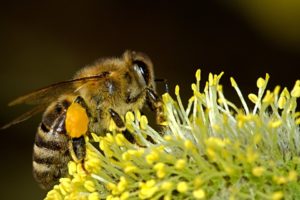
According to George Kimbrell, Center for Food Safety’s legal director and the lead plaintiffs’ counsel, “This is a vital victory. Science shows these toxic pesticides harm bees, endangered species and the broader environment. More than fifty years ago, Rachel Carson warned us to avoid such toxic chemicals, and the court’s ruling may bring us one step closer to preventing another Silent Spring.”
The judge presiding over the case rejected claims by pesticide producers and their supporters that the plaintiffs failed to establish a causal link between the pesticides and the plaintiffs’ injury. U.S. District Judge Maxine Chesney did not order EPA to consult with the U.S. Fish and Wildlife Service (FWS) and National Marine Fisheries Service (NMFS), which is required when registering a pesticide in order to mitigate risks to endangered species. Instead, she directed the parties, including the plaintiffs, defendant EPA, and intervenor Bayer CropScience, to move forward with a settlement conference to resolve the disputes. Thus, additional proceedings will follow the decision to assess the proper solution for EPA’s violations, which may lead to cancellations of the 59 pesticide registrations, including agricultural products such as seed-coating insecticides.
“Vast amounts of scientific literature show the hazards these chemicals pose are far worse than we knew five years ago – and it was bad even then,” said Center for Food Safety attorney Peter Jenkins, who was involved in the proceedings. “The nation’s beekeepers continue to suffer unacceptable mortality of 40 percent annually and higher. EPA must act to protect bees and the environment.”
The recent ruling denied other claims in the lawsuit that were based on the plaintiffs’ emergency legal petition made in March 2012, because the court lacked jurisdiction due to conflicting laws or EPA’s actions were not “approvals” subject to court challenge. Beyond Pesticides, along with numerous commercial beekeepers and environmental organizations filed this petition with EPA to suspend use of a pesticide that is linked to honey bee deaths, urging the agency to adopt safeguards. The legal petition, which specified the pesticide clothianidin, was supported by over one million citizen petition signatures and targeted the pesticide for its harmful impacts on honey bees.
This ruling comes at a time when neonicotinoid-treated seeds are pervasive and widely used across the agricultural landscape, home gardens, and public spaces. Of the two most widely planted crops in the United States, between 79 to 100 percent of corn seed and 34 to 44 percent of soybean seed were treated with neonics in 2011. A conservative estimate of the area planted with neonic-treated corn, soybean, and cotton seed totals just over 100 million acres, or 57 percent of the entire area for these crops.
Systemic neonicotinoid pesticides, which include clothianidin and thiamethoxam, move through the plant’s vascular system and are expressed through pollen, nectar, and guttation droplets. These pesticides have been found by a growing body of scientific literature to be linked to pollinator decline in general. Neonics are associated with decreased foraging and navigational ability, as well as increased vulnerability to pathogens and parasites as a result of suppressed bee immune systems. While the benefits to farmers are insignificant, the harm neonicotinoids cause to the wider environment is of serious concern. The dust released from planting coated seeds can drift off-field and contaminate field margins with high levels of these toxic pesticides. The Center for Food Safety’s report, Net Loss, cites findings that, depending on the crop, only five percent of the active chemical in a seed coating actually enters a crop. The other 95% of the chemical makes its way into the environment, either through seed dust, soil contamination, or water runoff.
In light of the shortcomings of federal action to protect pollinators, it is left up to us to ensure that we provide safe havens by creating pesticide-free habitat and educating others to do the same. You can pledge your green space as pesticide-free and pollinator-friendly. It does not matter how large or small your pledge is, as long as you contribute to the creation of safe pollinator habitat. Sign the pledge today.
Show appreciation for both wild and managed pollinators by taking local action. Get involved at the community level to pass policies that protect imperiled pollinators. Right now, without federal protection, the rusty patched bumblebee needs concerned communities throughout the country to step in and makes changes that give it a fighting chance. Use Beyond Pesticides’ resources and educational materials, including our BEE Protective doorknob hangers to get the word out. And be sure follow Beyond Pesticides’ ongoing series celebrating unsung wild pollinator heroes through the Polli-NATION campaign.
Sources: Center for Food Safety, Courthouse News Service
All unattributed positions and opinions in this piece are those of Beyond Pesticides.
Posted in Bayer, Clothianidin, Environmental Protection Agency (EPA), Litigation, neonicotinoids, Pesticide Regulation, Thiamethoxam, Uncategorized by: Beyond Pesticides
No Comments
10
May
(Beyond Pesticides, May 10, 2017) Local authority to restrict pesticides is under attack in Maine, as Governor Paul LePage has introduced a bill that would explicitly preempt the right of municipal governments to restrict pesticide use on private property. The bill, LD 1505, mirrors chemical industry efforts to suppress or preempt local democratic action to adopt public health and environmental protections in order to allow the unimpeded marketing of hazardous products. Those industry groups that are leading the charge to preempt local government action have a vested economic interest in selling toxic products and services and stifling the market from moving toward greener alternatives. Passage of the bill in Maine would serve as a huge blow to many local communities that currently regulate pesticides more stringently than the state, as the bill also includes language voiding any local regulations that predate the bill.
Communities that restrict pesticides recognize that pesticides released in the environment know no boundaries, so that use can contaminate air, water, and land throughout the community. The effort in Maine to preempt local pesticide ordinances is likely being advanced by the American Legislative Exchange Council (ALEC), given that the language is modeled after the organization’s State Pesticide Preemption Act, drafted in 1995. Similar language appears in state laws across the country that were pushed through state legislatures by a coalition of pesticide manufactures and users after the U.S. Supreme Court in 1991 upheld the right of local governments to restrict pesticides under federal pesticide law, the Federal Insecticide, Fungicide and Rodenticide Act (FIFRA). In fact, only seven states, Alaska, Hawaii, Maine, Maryland, Nevada, Utah and Vermont, currently maintain the right of local municipalities to regulate pesticides through the absence of explicit preemption language.
Legislation incorporating preemption language has led to a battle for local control of the democratic process, as more and more local grassroots organizations mobilize effectively with knowledge of the hazards that accompany many lawn care products containing pesticides and the availability of alternative products and land management systems. For a more detailed explanation of state preemption law and how it affects local communities, please see Beyond Pesticides’ State Preemption Law factsheet.
Some of the most decisive victories in recent years as far as the ability local communities to regulate pesticides have come out of Maine. In 2014, the town of Ogunquit voted to become the first town in the state to prohibit the use of pesticides on public and private property for turf, landscape, and outdoor pest management activities. The ordinance was passed after a three-year education and awareness campaign, initiated by the town’s Conservation Commission, and expanded upon existing pesticide use restrictions on town-owned property. More recently, in 2016 the town of South Portland passed an ordinance banning the use of toxic lawn pesticides on private and public land. The ban, which passed 6-1, protects 25,000 residents, the largest jurisdiction in the state to-date to adopt such as measure. Both of these ordinances would be affected by L.D. 1505, as the language of the proposed bill states that, “An ordinance regulating the sale or use of pesticides adopted prior to the effective date of this subsection is void.”
According to the Portland Press Herald, the pesticide measure introduced by the governor is the latest in a string of bills modeled to legislators by ALEC. Based on his research, staff writer Colin Woodward points out that “while ALEC claims to be a nonpartisan professional association for state legislators, virtually all of its funding comes from its corporate members [which include CropLife America, Dow Agrosciences and the American Chemistry Council], who give “scholarships” for lawmakers to attend ALEC conferences, where the group works with them to draft legislation.” He also reports that ALEC keeps the names of its members, which includes 1,500 state legislators, concealed, limiting accountability to constituents.
ALEC’s actions are primarily driven by its vested economic interest in the status quo and the profit they stand to gain by stifling the transition to green products. If successful, their preemption efforts would significantly slow the growth of a new market, as well as technologies that aid in the transition away from toxic pesticide use and dependence. Their economic motives differ significantly in scope from NGOs and other state and local organizations that are working to limit pesticide use in an effort to protect human health and the environment.
“Preemption is one of their main goals, preemption of the democratic process by having higher levels of government supersede the local level,” said Jay Feldman, executive director of Beyond Pesticides, an environmental nonprofit based in Washington, DC that promotes the rights of municipalities to restrict pesticides and consistently tracks ALEC’s efforts. “Industry adopted pesticide preemption before ALEC, but ALEC has taken up the mantle and been the predominant force in advancing it for some time.”
The bill is set to be voted on next week, and opponents of the measure are urging Maine legislators to uphold the tradition of protecting local control. Two recent legislative defeats, one regarding broadband and the other minimum wage, indicate that bills preempting local control are not well received in Maine and that there is hope for defeat. When speaking to the Portland Press Herald, head of the political science department at the University of Maine in Orono, Amy Fried, Ph.D. pointed out that, “Maine has a long tradition of localities being fairly autonomous and independent, and therefore towns guard their powers and their ability to make their own decisions.” She continued, “Legislators are from those areas and steeped in those traditions, and they are also accountable to local constituencies. And therefore they would not want to just simply hand over the powers to state government.”
Beyond Pesticides submitted comments on behalf of its Maine members opposing LD 1505, which can be viewed by clicking here.
TAKE ACTION: Community activism is the best way to get your town to adopt a policy that limits toxic pesticide use similar to those passed by the town of Ogunquit or South Portland. For assistance in proposing a policy to your city council (or its equivalent), contact Beyond Pesticides at [email protected] or 202-543-5450. For more information on being a part of the growing organic lawn care movement, see Beyond Pesticides Lawns and Landscapes program page. Let your neighbors know your lawn and garden are organic by displaying a Pesticide Free Zone sign.
Source: Portland Press Herald
All unattributed positions and opinions in this piece are those of Beyond Pesticides.
Posted in Uncategorized by: Beyond Pesticides
No Comments
09
May
(Beyond Pesticides, May 9, 2017) Last month, San Juan Capistrano (SJC) became the latest community in Orange County, CA to pass an organic landscaping policy for city parks and open spaces. The city’s move follows the passage of an organic land care policy in nearby Irvine, CA last year, and like Irvine, was brought forward by a strong contingent of local advocates, health practitioners, and city officials working together to safeguard public health and the environment. By a vote of 4-0-1, San Juan Capistrano’s City Council put the community on the cutting edge of local changes to pesticide use that are taking place across the country.
SJC’s policy is the result of persistent pressure and engagement by community group Non-Toxic San Juan Capistrano with city officials. A change.org petition hosted by the group, which received over 300 signatures, detailed the discussions and responses the group received from local leaders. At the time the City Council took up the issue at a mid-April meeting, Mayor Kerry Ferguson made a strong statement indicating that, “Chemical pesticides and herbicides have been proven to be toxic to children, pets, and the general public.”
Mayor Ferguson further said, “While [chemical pesticide] use is somewhat limited in our parks and open spaces at the present time, it would be helpful for a policy to be put into place that gives clear guidelines to present and future contractors to guide them in their practice on our city properties.”
The city’s new policy provides these clear guidelines by prioritizing “long-term prevention and suppression of pest problems” and putting a focus on “prevention and non-chemical control measures before the use of pesticide controls.”
The measure directs landscape managers to use a prioritized approach to pest management by choosing plants with low susceptibility to pests, forgoing treatment unless necessary, and, when treatment is required, apply organic pesticides first, and U.S. Environmental Protection Agency (EPA) “caution” labeled pesticides only “when deemed necessary to protect public health and economic impact…”
Bruce Blumberg, PhD, professor of Developmental and Cell Biology at University of California Irvine and member of local group Non-Toxic Irvine, addressed the city council on the science that supports the policy. Speaking to the rise in non-communicable diseases, such as leukemia, autism, obesity, fertility issues, and brain cancer, Dr. Blumberg stated, “I and my colleagues would like to offer the possibility that chemicals that disrupt the function of endocrine system have significant role to play.” Endocrine disruptors are chemicals that have the ability interfere with the proper functioning of the body’s hormonal system at low, often infinitesimal doses.
As Dr. Blumberg discusses later in his talk to the SJC City Council, there is a common misconception that government agencies are adequately testing these chemicals and protecting us. “The fact of the matter,” he notes, “is that EPA doesn’t test…a single chemical.” Instead, Dr. Blumberg explains, manufacturers perform their own tests on their own chemicals, and transmit their unpublished studies to EPA for the agency to rely on.
Given the range of deficiencies in federal protections, from inadequate testing performed by chemical manufacturers, to failure to incorporate the latest science on endocrine disruptors, to the continued allowance of undisclosed inert ingredients, to the perpetuation of pesticides permissible under dangerous “conditional registrations,” it is up to local governments to provide a path forward to protect their residents from unnecessary hazards.
The good news is that there are readily available alternatives to the use of toxic pesticides. Speaking of nearby Irvine’s experience with alternative weed abatement measures over the past year, Kim Konte, concerned mother and advocate with Non Toxic Irvine noted, “After a full year of maintaining all City properties organically, the City of Irvine shared in their annual report its total cost was only 5.6% higher.” This cost accounts for Irvine’s 570 acres of parks, more than 800 acres of right-of-way, 70,000 trees and nearly 1.5 million square feet of facilities.
“Non Toxic Irvine is encouraged to see City leaders choose to make the health of their residents their priority over weed abatement. Children should never be exposed to toxic pesticides, especially for purely cosmetic reasons,” Ms. Konte continued. As now a third community, Huntington Beach, considers organic pilot projects, the Non Toxic groups are hoping to see other communities in Orange County, the state, and the country follow their lead in ensuring broad community-wide protections from health-damaging pesticides.
For more information on passing your own community pesticide policy, see Beyond Pesticides’ Tools for Change webpage and reach to at 202-543-5450 or [email protected].
All unattributed positions and opinions in this piece are those of Beyond Pesticides.
Source: The Orange County Register, SJC City Council Session
Posted in Alternatives/Organics, California, Endocrine Disruption, Integrated and Organic Pest Management, Lawns/Landscapes, Pesticide Regulation, State/Local by: Beyond Pesticides
No Comments
08
May
(Beyond Pesticides, May 8, 2017) – A national environmental health organization last Friday sued Mott’s, under consumer protection law, for false and misleading “natural” labeling of applesauce products containing a toxic pesticide. The suit argues that the finding of residues in the company’s applesauce of the neonicotinoid insecticide acetamiprid, which is particularly toxic to pollinators, disqualifies the products from being labeled “natural” or as containing “all natural ingredients.” The case is filed under the District of Columbia’s Consumer Protection Procedures Act against Mott’s parent company, the Dr Pepper Snapple Group.
The plaintiffs maintain that by using “natural” or “all natural ingredients” labeling, Mott’s leads consumers to believe that its applesauce products do not contain synthetic substances. Plaintiffs claim that defendants know or should have known that many consumers buy foods labeled as “natural” in an attempt to “limit the amount of pesticides they and their families ingest” or eliminate the use of synthetic ingredients that adversely affect pollinators.
“People are looking for food products that are healthy for their family, children, and the environment, and deceptive “natural” labeling of products grown with pesticides undermines their best intentions,” said Jay Feldman, executive director of Beyond Pesticides.
There are concerns in the scientific literature and European Food Safety Authority about the effect of acetamiprid on human health, particularly children. Scientists are concerned that acetamiprid affects nicotinic acetylcholine receptors (nAChRs) or cerebellar neurons, causing adverse effects to brain development. Children are at elevated risk from pesticide exposure due to developing organ systems and higher intake relative to body weight.
Beyond Pesticides is represented by the Richman Law Group.
All unattributed positions and opinions in this piece are those of Beyond Pesticides.
Posted in Uncategorized by: Beyond Pesticides
No Comments
05
May
(Beyond Pesticides, May 5, 2017) Walmart and True Value have announced that beginning on Wednesday they will be phasing out neonicotinoid (neonic) pesticides from all retail supply chains. These announcements follow numerous scientific studies that have consistently implicated neonics in the decline of honey bees and other wild pollinators. The decision stems from an ongoing consumer and environmental campaigns urging retailers to stop selling plants treated with neonics and to remove products containing them from store shelves.
Neonicotinoids are systemic pesticides, or whole plant poisons, taken up by a plant’s vascular system and expressed in the pollen, nectar, and dew drops. They are also highly persistent, with research showing the potential for certain chemicals in the class, such as clothianidin, to have a half-life of up to 15 years. Studies show significant cause for concern when it comes to pollinators and exposure to these pesticides. Although little substantive action on these chemicals has been taken by the U.S. Environmental Protection Agency (EPA), the agency agreed that the pesticides do harm bees, though only in the limited situations and constrained scenarios that were actually investigated by EPA.
The European Commission (EC) has proposed a complete ban of agricultural uses of the widely used bee-toxic neonicotinoid pesticides across Europe under draft regulations. The EC cites neonicotinoids’ “high acute risks to bees.” In 2013, three neonicotinoids were temporarily banned because of concerns about their high toxicity to bees. A vote by member states can happen as early as May 2017. The Canadian Pest Management Regulatory Agency, in 2016, announced its proposal to phase out imidacloprid because, “Based on currently available information, the continued high volume use of imidacloprid in agricultural areas is not sustainable.” Uses proposed for phase out: trees (except when applied as a tree trunk injection), greenhouse uses, outdoor agricultural uses (including ornamentals), commercial seed treatment uses, and turf (such as lawns, golf courses, and sod farms).
According to a Friends of the Earth press release, “Walmart confirmed that its growers have eliminated neonics from approximately 80 percent of its garden plants. Walmart has also eliminated neonicotinoids in almost all its off-the-shelf gardening products.” The press release also pointed to a True Value announcement that stated they would no longer carry products containing neonicotinoids by the spring of 2018. These two companies join a variety of others in their pledge to do more to protect pollinators.
In April 2015, Lowe’s announced a commitment to phase out products containing neonics within 48 months. Home Depot followed shortly after that. In January 2016, Aldi Süd, the German supermarket chain with stores in the U.S., became the first major European retailer to ban pesticides toxic to bees. In April 2016, major pesticide manufacturer Scotts Miracle Gro announced that it will immediately being phasing out neonicotinoid insecticides, including imidacloprid, clothianidin, and dinotefuran from its outdoor-use Ortho brand by this year. Smaller, more local stores are leading the charge as well, by removing bee-toxic neonicotinoids from store shelves and working to reorient customers toward natural, holistic practices – over 18 retailers in the Boulder, Colorado area have signed a “pollinator safe retail” pledge!
Eliminating the sale of harmful pesticides does not mean that retailers will have nothing left to sell their customers. Last year, Beyond Pesticides released The Well Stocked Hardware Store, an online toolkit that identifies organic compatible products for hardware stores seeking to find replacement products that can be used with an organic system approach to land management. Beyond Pesticides highlights the actions of Eldredge Lumber, a hardware store in Maine, through the video Making the Switch. “You’re protecting the envirronment, your family, your children and grandchildren, and your neighbors. Nobody wants to have pesticides drifting into their front or rear yard, and people are just loving it, they’re feeding into it. I couldn’t be happier,” says owner Scott Eldredge in the video.
Beyond Pesticides encourages concerned residents to share these materials and encourage your own local hardware store to follow suit. If they already are, let us know by sending an email to [email protected]. For customers not near a forward-thinking hardware store or nursery, see the comprehensive directory of companies and organizations that sell organic seeds and plants. Included in this directory are organic seeds for vegetables, flowers, and herbs, as well as live plants and seedlings.
Source: Friends of the Earth
All unattributed positions and opinions in this piece are those of Beyond Pesticides.
Posted in Announcements, Corporations, neonicotinoids, Pollinators, Uncategorized by: Beyond Pesticides
No Comments
04
May
(Beyond Pesticides, May 4, 2017) This week, a study released in the Proceedings of the Royal Society found evidence of reduced egg development and impact on feeding behavior in wild bumblebee queens after exposure to the neonicotinoid thiamethoxam. The study, led by researchers from the University of London, investigates the impact of field-relevant levels of thiamethoxam exposure on four wild species of bumblebee queens. In a BBC News article, lead author, Dr. Gemma Barron, Ph.D., stated, “We consistently found that neonicotinoid exposure, at levels mimicking exposure that queens could experience in agricultural landscapes, resulted in reduced ovary development in queens of all four species we tested. These impacts are likely to reduce the success of bumblebee queens in the spring, with knock-on effects for bee populations later in the year.”
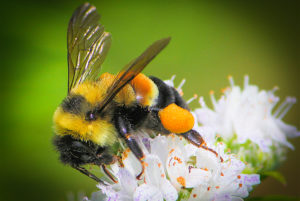
The study focuses on sublethal effects of neonicotinoids, as wild bumblebees are more likely to be exposed to low doses of these chemicals, rather than higher lethal levels. The queen bumblebees of four species were collected in the spring of 2014, with a total of 506 being used in the initial study groups. These queens were divided into three treatment groups and exposed to either a high level, low level, or no dose of thiamethoxam-treated syrup, reflecting pesticide levels found in pollen and nectar from wildflowers and oilseed flowers.
In their analysis, the researchers find that exposure to the high dose of thiamethoxam-treated syrup leads to a decline in ovary development through a reduction in the length of the reproductive cells, or oocytes, of the queens of the four species. After exposure to the high dose syrup, there is also a reduction in feeding by B. pratorum and B. pascuorum queens and no difference in feeding for the other two bumblebee species, which suggests that species sensitivity to this chemical may differ.
This research follows on the heels of another recent publication which reveals that exposure to thiamethoxam affects honey bee flight patterns as well as their physical ability to fly in ways that may be detrimental to their survival. The study is the latest in a growing body of science linking pesticide use to honey bee declines, raising concerns about overall honey bee health and longevity in the face of continued neonicotinoid use.
Thiamethoxam is a neonicotinoid insecticide used to coat seeds prior to planting. When the coated seed germinates, the resulting plant takes the chemical up through its vascular system and expresses the pesticide through pollen, nectar, and guttation droplets, and pollinators are exposed when they forage. Thiamethoxam is very closely related to the neonicotinoid insecticide clothianidin. When insects ingest thiamethoxam, their digestive system metabolizes it to clothianidin, killing the insect. These pesticides, which in addition to thiamethoxam include imidacloprid, dinotefuran, and clothianidin, have been found by a growing body of scientific literature to be linked to pollinator decline in general.
In January of this year, the U.S. Environmental Protection Agency (EPA) released a major risk assessment documents on pollinator exposure to bee-toxic neonicotinoid insecticides, finding no significant risks, despite the large and continually expanding body of science identifying the pesticides’ hazards. In the documents, EPA identifies risks posed to bees by several neonicotinoid insecticides, but suggests that no restriction on uses are imminent. And in the same month, EPA, in regulating the sale and use of pesticides in the U.S., released the ecological (aquatic) assessment for imidacloprid, which finds elevated risks to aquatic organisms. However, imidacloprid’s aquatic assessment has not been published in the Federal Register to solicit public comments, which are necessary to ensure transparency and independent vetting of EPA’s science and risk assessment conclusions. It is not clear whether EPA, under the leadership of Administrator Scott Pruitt, will follow through on the regulatory review, and, if it does, whether it will reverse earlier scientific findings of the agency.
Federal inaction, which has allowed for continued pollinator decline, points to the growing need for action from private companies to combat known threats to pollinators. In 2016, Aldi Süd, the German supermarket chain with stores in the U.S., became the first major European retailer to ban pesticides toxic to bees, including the neonicotinoids thiamethoxam, imidacloprid, and clothianidin, from fruits and vegetables produced for their stores. Beyond Pesticides recently led a marketplace effort to urge Amazon to remove neonicotinoid products from its website, with consumers taking direct action to contact the company’s CEO.
In light of the shortcomings of federal action in the U.S. to protect organisms critical to ecosystem health, it is left up to us to act. For more on what you can do to help pollinators, visit our Bee Protective program page. To assist local garden centers and hardware stores in transitioning their customers to organic practices, Beyond Pesticides released the Well-Stocked Hardware Store, which provides the products and tools necessary to support a move to healthy organic landscapes. This guide complements Beyond Pesticides’ Model Pesticide Policy and Implementation Plan for Communities, but can be used independently for hardware stores and garden supply centers looking to encourage the use of products and practices that protect the health of their customers, community, and the wider environment.
Sources: BBC News, Proceedings of the Royal Society B
All unattributed positions and opinions in this piece are those of Beyond Pesticides.
Posted in neonicotinoids, Pollinators, Thiamethoxam, Wildlife/Endangered Sp. by: Beyond Pesticides
No Comments
03
May
(Beyond Pesticides, May 3, 2017) Last week, researchers at the University of California San Diego revealed the first ever link between the use of neonicotinoid pesticides and the ability of bees to fly. Published in Scientific Reports, the study, “A common neonicotinoid pesticide, thiamethoxam, impairs honey bee flight ability,” builds on previous findings that neonicotinoid use interferes with bees’ ability to navigate, and concludes that exposure to thiamethoxam affects honey bee flight patterns as well as their physical ability to fly in ways that may be detrimental to their survival. The study is the latest in a growing body of science linking pesticide use to honey bee declines, raising concerns about overall honey bee health and longevity in the face of continued neonicotinoid use.
According to the study, both acute and chronic exposure to thiamethoxam revealed significant alterations of the ability of bees to fly -affecting flight distances, duration of flights, and flight velocity. Researchers noted significant differences in bee behavior based on short versus long term exposure, which they summarized as having an “excitatory short-term effect and a depressive longer-term effect” on the bees’ ability to fly. This means that when bees were exposed to thiamethoxam for a short, acute period of time, their average flight times and flight distances increased dramatically, by an average of 78% and 72%, respectively. In contrast, when the bees were subjected to chronic exposure patterns, it lead to a significant decrease in overall flight duration, distance, and velocity. To reveal these findings, researchers used sublethal exposure levels designed to mimic the amount of pesticide residue bees would likely come into contact with in agricultural fields.
Researchers note that increased flight distances following acute exposure to thiamethoxam offers no benefits to bees, as other studies have revealed thiamethoxam and other neonicotinoids cause flight disorientation and impaired navigation. Therefore, they opine that if these exposed bees are flying greater distances while disoriented from pesticide exposure, it may actually reduce their ability to fly home, negatively impacting overall hive health. On the same note chronic exposure, which reduced bee flight distance by 56%, also poses risks to bees, as it reduces their overall forage area. Additionally, researchers hypothesize that chronic exposure to thiamethoxam may also impact the physical ability of bees to fly by lowering their body temperature, requiring more energy to use the muscles required for flight. Based on these results, researchers predict that bees who experience chronic exposure overall a few days will “fly more slowly and in a reduced area.” Moreover, they believe that the chemically induced changes in their natural behavior patterns will “reduce the pollinator service provided to plants, nectar and pollen collection for the colony, and the nutritional biodiversity of collected pollen for the colony.”
“Our results provide the first demonstration that field-realistic exposure to this pesticide alone, in otherwise healthy colonies, can alter the ability of bees to fly, specifically impairing flight distance, duration and velocity” said Simone Tosi, a postdoctoral researcher and author of the study. Dr. Tosi continued, “Honey bee survival depends on its ability to fly, because that’s the only way they can collect food. Their flight ability is also crucial to guarantee crop and wild plant pollination.”
“Bees that fly more erratically for greater distances may decrease their probability of returning home,” said James Nieh, a professor in UC San Diego’s Division of Biological Sciences and coauthor of the study. Dr. Nieh said, “This pesticide does not normally kill bees immediately. It has a more subtle effect.” He continued, “The honey bee is a highly social organism, so the behavior of thousands of bees are essential for the survival of the colony. We’ve shown that a sub-lethal dose may lead to a lethal effect on the entire colony.”
Thiamethoxam is a neonicotinoid pesticide used on many common crops within the United States, including corn, soybeans, and cotton. Systemic neonicotinoid pesticides, the class of pesticides thiamethoxam belongs to, move through the plants vascular system and are expressed through pollen, nectar, and guttation droplets. These pesticides, which in addition to thiamethoxam include imidacloprid, dinotefuran, and clothianidin, have been found by a growing body of scientific literature to be linked to pollinator decline in general. Neonicotinoids are associated with decreased foraging and navigational ability, as well as increased vulnerability to pathogens and parasites as a result of suppressed bee immune systems.
In its most recent failure to address the harms posed to pollinators by neonicotinoids, the U.S. Environmental Protection Agency (EPA) released major risk assessment documents on pollinator exposure to bee-toxic neonicotinoid insecticides, finding no significant risks, despite the large and continually expanding body of science identifying the pesticides’ hazards. In the documents, EPA identifies risks posed to bees by several neonicotinoid insecticides, but suggested that no restriction on uses are imminent. This is just one example of EPA not taking action to protect bees and other pollinators. In 2016, EPA released the long-awaited preliminary honey bee risk assessment for imidacloprid, one of the most widely used pesticides linked to severely declining honey bee populations, and confirmed harmful residues of the chemical in crops where the pollinators forage, including citrus and other crops. However, although EPA’s assessment confirms bees’ widespread and sustained exposure to the highly toxic and persistent chemical through poisoned pollen and nectar, the document fails to address risks posed to wild bees and widespread exposure through soil and water.
In light of the shortcomings of federal action to protect these beneficial organisms, it is left up to us to ensure that we provide safe havens for pollinators by creating pesticide-free habitat and educating others to do the same. You can declare your garden, yard, park or other space as pesticide-free and pollinator friendly. It does not matter how large or small your pledge is, as long as you contribute to the creation of safe pollinator habitat. Sign the pledge today. Need ideas on creating the perfect pollinator habitat? The Bee Protective Habitat Guide can tell you which native plants are right for your region. For more information on what you can do, visit our BEE Protective page.
Source: UC San Diego News Center, Nature.com
All unattributed positions and opinions in this piece are those of Beyond Pesticides.
Posted in Pollinators, Thiamethoxam, Uncategorized by: Beyond Pesticides
No Comments