





04
Aug
Court Overturns Montgomery County, MD Pesticide Restrictions, Groups Say Decision Defies Local Authority to Protect Health
(Beyond Pesticides, August 3, 2017) A Circuit Court for the state of Maryland on Thursday struck down key components of the landmark Healthy Lawns Act pesticide ordinance passed in Montgomery County, Maryland in 2015. The court’s decision, issued by Judge Terrence McGann, eliminates pesticide use restrictions on private property, but does not touch provisions limiting toxic pesticides used on public, county owned land.
 Grassroots advocates who supported passage of the Healthy Lawns Act to protect children, families and the environment are dismayed by the court’s ruling, but nevertheless vow to keep up the fight for protections from hazardous pesticides used in their community. “The court should have recognized that, in restricting lawn pesticides throughout its jurisdiction, Montgomery County is exercising a local democratic principle under Maryland and federal law to ensure the safety of the community, including children, pets, and the environment, from a known hazard not adequately regulated by the U.S. Environmental Protection Agency or the state,” said Jay Feldman, executive director of Beyond Pesticides. “After extensive hearings and study, the county council understands that toxic chemicals are dangerous and not needed to have beautiful lawns and landscapes,” Mr. Feldman said.
By passing the Healthy Lawns Act, the Montgomery County Council acknowledged growing demand within the community for natural and organic lawn care practices and compatible products. These cost-effective lawn care methods have been shown to eliminate the need for toxic pesticide use through improvements in soil biology that support more resilient plants. Pro-pesticide plaintiffs challenging the restrictions were led by Complete Lawn Care, and supported by the pesticide industry lobby group, Responsible Industry for a Sound Environment (RISE). “Just like big tobacco’s attacks on local smoking restrictions to control secondhand smoke, the chemical industry is attempting to head-off a growing movement asking for common-sense measures that protect public health from pesticide exposure,” Mr. Feldman said.
Advocates say Judge McGann’s ruling ignores historical precedent set by Maryland counties in leading the way on health and environmental laws, including bans on plastic bags and coal-tar sealants. At times, the Judge’s written opinion is dismissive of the danger posed by pesticide use, including an aside opining “…why neighborhood children sell lemonade on the street corner and not pesticides.”
Beyond Pesticides’ Map of U.S. Pesticide Reform Policies lists over 150 communities in 23 states that restrict chemical pesticide use. In Maine, over 20 policies address both public and private pesticide applications. Eight of ten Canadian provinces, and over 170 Canadian municipalities have laws with a similar structure to Montgomery County’s Healthy Lawns Act. “For the health of Maryland’s children, pets, wildlife, and waterways like the Chesapeake Bay, we will continue to support the ever-growing movement for healthy, pesticide-free communities,” Mr. Feldman said.
The Montgomery County Council is in recess until September at which time it will consider appealing the Circuit Court ruling.
For Press Inquiries:
Contact- Jay Feldman, 202-255-4296
[email protected]
www.beyondpesticides.org

 (Beyond Pesticides, August 3, 2017) Working in close contact with pesticides over the course of one’s lifetime increases the risk of Chronic Obstructive Pulmonary Disease (COPD) and other breathing disorders, according to a
 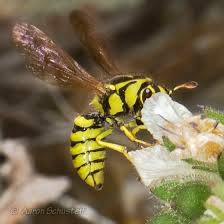 Masarinae are the only “vegetarian” wasp in the family Vespidae., They feed solely on nectar and pollen, unlike their more aggressive Vespid wasp cousins. There are 300 species of pollen wasp from 14 genera spread across the globe, however, in the U.S., all 14 species of pollen wasps originate from the genus Pseudomasaris.
 industry and the federal government to conceal from the public the real dangers associated with the use and manufacture of chemical products. The Bioscience Resource Project and the Center for Media and Democracy released more than 200,000 pages of these documents now accessible on the “
 growers, those same growers are threatened by the flooding of the market with cheaper fraudulent grains. The resulting impacts of eliminating market opportunities while at the same time threatening the value of the organic label hurt organic farmers in this country.
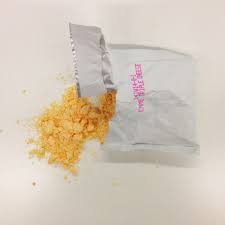 disrupting, industrial chemicals have been found in 10 varieties of macaroni and cheese products. The coalition is calling on food companies, especially the Kraft Heinz Company, maker of the iconic boxed mac and cheese, to eliminate sources of these chemicals from their cheese products.
 Farmers and Farmworkers from Nerve Agent Pesticides Act,
 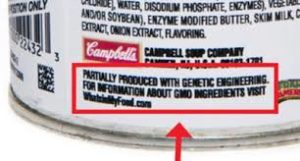 concerning labeling of genetically engineered (GE) food. Campbell’s President and CEO Denise Morrison said that while the company does not question the safety of GE food, it recognizes that most consumers want to see GE ingredients on the label. Meanwhile, Campbell’s has supported the GMA digital disclosure and lists ingredients that “may be derived from crops grown from genetically engineered seeds” on its
  term, intensive glyphosate use, and myriad resulting concerns about impacts on soil and environmental health. The review, by Robert J. Kremer, PhD, of the University of Missouri School of Natural Resources, cites
  South Florida scientist Jason Rohr, PhD and colleagues
 genetically engineered (GE) ingredients [or genetically modified organisms (GMO)] are identified on products labels, or hidden behind high tech codes.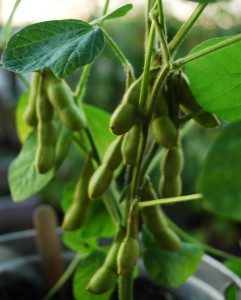
 herbicides
 have been
 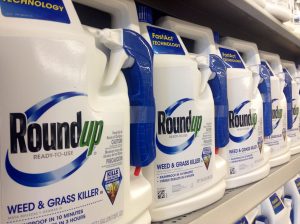 7, 2017. Now, state officials have to develop guidelines for product labels and determine what level of exposure to the pesticide will put people at risk for developing cancer. Some have argued that the state’s proposed levels are not protective enough. Meanwhile, the state continues to face pressure from Monsanto, maker of glyphosate, which continues to challenge the decision to list the chemical as a known cancer-causing agent.
 trol, in favor of simple, non-toxic practices.
 Range
Range


