07
Aug
Action: Oppose Release of Genetically Engineered Moth in New York
(Beyond Pesticides, August 7, 2017) Help stop a dangerous plan hatched in New York to control a caterpillar in cabbage. Under the plan, up to 10,000 genetically engineered (GE) male diamondback moths (DBMs) will be released each week 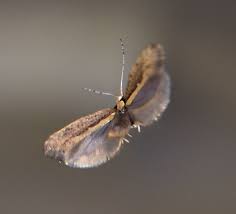 during the cabbage planting cycle (which runs about three to four months). According to USDA, “The males are genetically engineered with a lethal gene that they pass on to females when they mate.”
Because of the widespread release, this plan –a first of its kind in food crops– will contaminate organic farms with genetically engineered material. And, this is all being done based on a cursory environmental assessment, without an in-depth environmental impact assessment.
This is an issue that affects all of us –not just New Yorkers–because the moths do not respect state boundaries, and this action would set a precedent for other states.
Inadequate Environmental Review
Following a finding of no significant impact (FONSI) by USDA’s Animal and Plant Health Inspection Service (APHIS) on Cornell University’s proposed release, there is an urgent need to ensure that the state of New York addresses contamination issues that APHIS failed to consider. At the top of the list is possible contamination of organic crops, which could threaten the standing of organic products with consumers and holds the threat of decertification. Other contamination concerns are raised by scientists at the Center for Food Safety, Food and Water Watch, and GeneWatch UK.
The FONSI absolves APHIS from the duty to perform an in-depth environmental impact statement (EIS) under the National Environmental Policy Act (NEPA). The Northeast Organic Farming Association of New York (NOFA-NY) points out that this is the first food use of this particular kind of GE technology –using a genetically engineered male to produce inviable female offspring— and, as such, deserves the full investigation of an EIS, rather than the more cursory evaluation of the environmental assessment that led to the FONSI.
In addition to NEPA, New York state law requires a state agency to conduct a review under the State Environmental Quality Review Act (SEQR) when it uses its “discretionary” authority to approve, fund, or directly undertake an action that may affect the environment. In order to release the insects, Cornell must receive a permit under New York Environmental Conservation Law §11-0507 from the New York Department of Environmental Conservation (DEC), as it did for the release of caged insects in the past. However, DEC has denied responsibility for permitting the action. As a university with a state extension service, Cornell is subject to SEQR. If Cornell or DEC does not perform the required EIS, enforcement is up to citizens. According to the DEC website, “[C]itizens or groups who can demonstrate that they may be harmed by this failure may take legal action. . . . Project approvals may be rescinded by a court and a new review required under SEQR. New York State’s court system has consistently ruled in favor of strong compliance with the provisions of SEQR.” NOFA-NY has made a strong showing that organic growers may be harmed by this release.
Harm to Organic
Organic growers maybe harmed if the moths escape from the research plots. The engineered trait is designed to leave behind dead moth larvae and pupae resulting from the mating of the engineered males with wild females. These residues , if left on organic crops (cabbage, broccoli, and other brassica plants), could threaten the standing of organic products with consumers and the threaten decertification. In addition, there are plausible scenarios that would result in release of viable DBMs, which could increase damage to crops.
In general, the environmental assessment performed by APHIS ignored a number of important issues, including: contamination of crops with GE dead insects; the impacts on the ecological balance of native brassicas; the lack of research on the migration of DBMs from site to site; impacts in the future if engineered DBMs are released in commercial agriculture; other alternatives besides “no action,” such as the systems approach used by organic growers; the lack of adequate monitoring and buffer zones; food safety; impacts on predators; antibiotic resistance as a result from the use of tetracycline in breeding the moths; other ecological effects; and movement of the DBM across international borders.
Voice you Opposition
Voice your opposition to the release of genetically engineered DBMs to Cornell University (which proposes to release the moths), DEC (which is responsible for state permits of releases of wild animals), and Governor Cuomo (who is responsible for ensuring that state agencies meet their responsibilities.)

 Grassroots advocates who supported passage of the Healthy Lawns Act to protect children, families and the environment are dismayed by the court’s ruling, but nevertheless vow to keep up the fight for protections from hazardous pesticides used in their community. “The court should have recognized that, in restricting lawn pesticides throughout its jurisdiction, Montgomery County is exercising a local democratic principle under Maryland and federal law to ensure the safety of the community, including children, pets, and the environment, from a known hazard not adequately regulated by the U.S. Environmental Protection Agency or the state,” said Jay Feldman, executive director of Beyond Pesticides. “After extensive hearings and study, the county council understands that toxic chemicals are dangerous and not needed to have beautiful lawns and landscapes,” Mr. Feldman said.
 (Beyond Pesticides, August 3, 2017) Working in close contact with pesticides over the course of one’s lifetime increases the risk of Chronic Obstructive Pulmonary Disease (COPD) and other breathing disorders, according to a
 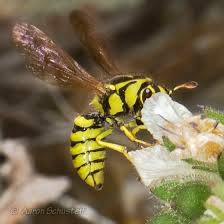 Masarinae are the only “vegetarian” wasp in the family Vespidae., They feed solely on nectar and pollen, unlike their more aggressive Vespid wasp cousins. There are 300 species of pollen wasp from 14 genera spread across the globe, however, in the U.S., all 14 species of pollen wasps originate from the genus Pseudomasaris.
 industry and the federal government to conceal from the public the real dangers associated with the use and manufacture of chemical products. The Bioscience Resource Project and the Center for Media and Democracy released more than 200,000 pages of these documents now accessible on the “
 growers, those same growers are threatened by the flooding of the market with cheaper fraudulent grains. The resulting impacts of eliminating market opportunities while at the same time threatening the value of the organic label hurt organic farmers in this country.
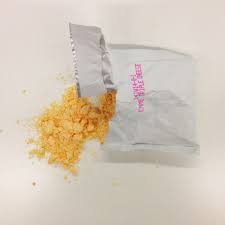 disrupting, industrial chemicals have been found in 10 varieties of macaroni and cheese products. The coalition is calling on food companies, especially the Kraft Heinz Company, maker of the iconic boxed mac and cheese, to eliminate sources of these chemicals from their cheese products.
 Farmers and Farmworkers from Nerve Agent Pesticides Act,
 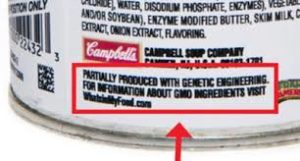 concerning labeling of genetically engineered (GE) food. Campbell’s President and CEO Denise Morrison said that while the company does not question the safety of GE food, it recognizes that most consumers want to see GE ingredients on the label. Meanwhile, Campbell’s has supported the GMA digital disclosure and lists ingredients that “may be derived from crops grown from genetically engineered seeds” on its
 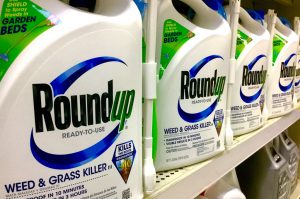 term, intensive glyphosate use, and myriad resulting concerns about impacts on soil and environmental health. The review, by Robert J. Kremer, PhD, of the University of Missouri School of Natural Resources, cites
  South Florida scientist Jason Rohr, PhD and colleagues
 genetically engineered (GE) ingredients [or genetically modified organisms (GMO)] are identified on products labels, or hidden behind high tech codes.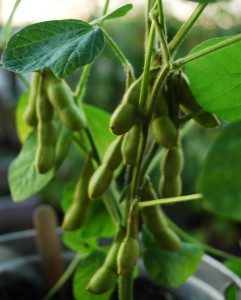
 herbicides
 have been
 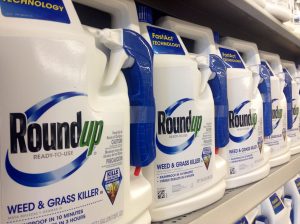 7, 2017. Now, state officials have to develop guidelines for product labels and determine what level of exposure to the pesticide will put people at risk for developing cancer. Some have argued that the state’s proposed levels are not protective enough. Meanwhile, the state continues to face pressure from Monsanto, maker of glyphosate, which continues to challenge the decision to list the chemical as a known cancer-causing agent.
 trol, in favor of simple, non-toxic practices.