08
Sep
A Healthy Wetland Shown To Be an Important Tool in Mosquito Management
(Beyond Pesticides, September 8, 2017) Wetlands are important habitats for many creatures, and provide critical environmental services that impact human, economic, and social activity and mosquito management. 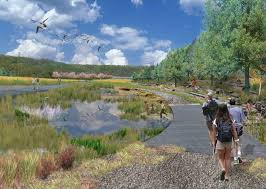 Wetlands improve water quality, sequester carbon, remove or neutralize pollutants, control flooding, protect adjacent areas from erosion, and host a multitude of beneficial plant and animal species — not to mention their recreational and aesthetic value.As recently reported in The Louisville, Kentucky Courier-Journal, a federally funded project underscores the importance of wetlands in controlling mosquito populations.
The Courier-Journal article highlights the construction of 12,000 square feet of new wetlands and marshlands in Louisville. The project was funded with a $9,500 grant from the U.S. Fish and Wildlife Service, and arose from the partnership of the Louisville Metropolitan Sewer District, the Sheltowee Environmental Education Coalition, and a local nonprofit, the Passionist Earth & Spirit Center. Thomas Biebighauser, a wildlife and wetlands biologist, designed the project, which also involved engineering students from the University of Louisville. Impetus for the initiative was in part educational, and in part, a response to the facts that as far back as the 1980s, the area had lost more than 70% of its original wetlands to agriculture and development, and stretches of the nearby Beargrass Creek had been “straightened” to enhance “flood control.”
Creation of these new wetlands might cause people reflexively to worry about increased mosquito populations. But as Mr. Biebighauser notes, these new wetlands areas are not the highly polluted wetlands of past decades, which did sometimes spread disease via mosquitoes. A training program in constructing highly functional wetlands says, “Wildlife Biologist Tom Biebighauser has sampled hundreds of natural and constructed wetlands on [Kentucky’s] Daniel Boone National Forest. He has found few to none contain mosquito larvae, and nearly all contain mosquito predators. An important fact . . . is that the watersheds of these wetlands are typically vegetated with grasses and trees, with no erosion or pesticide runoff. In other words, they’re healthy.”
Healthy, functioning wetlands actually can result in fewer mosquitoes, because such areas invite and support a host of beneficial species, many of whom predate on mosquito larvae. Among those are dragonfly larvae, damselfly larvae, water striders, diving beetles, salamanders, frogs, and toads. In addition, swallows, bats, ducks, fish, and adult dragonflies, which thrive in or near such habitats, consume adult mosquitoes. Native sedges, rushes, and wildflowers, which help attract these beneficial organisms, will be planted around the small ponding areas of the project.
Wetlands are sometimes described as Nature’s “kidneys” for their cleaning and filtering functions. Wesley Sydnor, a Louisville Metropolitan Sewer District engineer who oversees stormwater programs, and who helped with the effort, says, “There is a lot of water quality value in the practice of routing runoff through wetland treatment before it gets into the stream.” Wetlands also reduce flooding because they act as a “sponge,” absorbing excess water that might otherwise flood adjacent areas.
Use of wetlands as mosquito management mechanisms may seem ironic; people commonly think of them as sources of mosquitoes because the organisms need standing water for breeding. Indeed, mosquito “control” programs often recommend draining wetland areas as a strategy. But wetlands restoration or construction controls populations by providing good habitat for mosquito predators, and by preventing or reducing flooding in areas that aren’t normally wet and therefore support mosquitoes but not their predators.
Mosquitoes have extremely short life cycles (4–30 days), but the laid eggs can remain dormant for more than a year, only to hatch when an area again becomes wet. Areas that have been drained might need only a rainstorm to trigger hatching of existing eggs, and can produce more mosquitoes than they would have had they been left as functioning wetlands. Healthy wetlands can result in fewer mosquitoes than those that have been “managed” with some typical control approaches, such as drainage, channeling, or biological or chemical means.
The Indiana Wetland Conservation Plan points out that when the Essex County (Massachusetts) Mosquito Control Project restored a 1,500 acre wetland, the mosquito population dropped by 90%. The plan suggests, “If you own or manage drained wetlands, you can expect ‘blooms’ of mosquitoes after every rain. If you’re tired of donating blood, consider restoring or creating a healthy wetland. Within days, natural predators of mosquitoes will begin to return. Not only will you be reducing the mosquito population, you’ll also be creating excellent wildlife habitat, reducing the likelihood of flooding on adjacent ground, improving water quality, and possibly, [seeing] other benefits, as well.”
Outside of wetlands, and often on people’s residential or other properties, there are many areas of standing water that do boost mosquito populations — old tires, containers, untended bird baths, clogged gutters, hollow logs, even shallow areas that don’t percolate well and create temporary “pools.” A single tire collecting rainwater can breed more than 500 mosquitoes. People are concerned, of course, about the diseases that mosquitoes can transmit. It’s important to be aware that the West Nile Virus is transmitted primarily by Culex pipiens, the “house mosquito,” which does not like to breed in wetlands, but loves to do so in the various areas or containers people tend to provide.
There are myriad ways to support nontoxic approaches to controlling mosquito populations: one is to encourage healthy wetlands by advocate with your municipality and state for wetlands restoration or construction initiatives where that makes sense. Cleaning up any rainwater collectors is another, as is installing bat houses or tree swallow nesting boxes wherever possible to invite these avaricious mosquito predators to take up residence.
Beyond Pesticides emphasizes eliminating such collection objects or areas on one’s property to limit mosquito populations and reduce the need for more destructive or toxic controls (such as pesticides), and suggests methods for safely repelling mosquitoes. Learn more about backyard mosquito management, and share the information with neighbors, the community, and municipalities with Beyond Pesticides’ handy doorknob hanger.

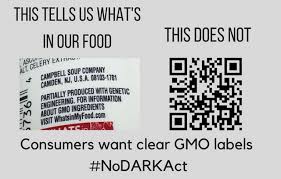 genetically engineered (GE) food,
  demographic groups, including those in farming. People working in the transportation sector registered the highest incidence of diagnosed diabetes at 10.6%. But those working as farmers and fishermen came in second, with 8.5% reporting a diagnosis of the disease.
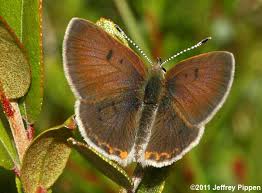 (Beyond Pesticides, September 5, 2017) The bog copper butterfly (Lycaena epixante) is a member of the second largest family of butterflies, Lycaenidae, which includes over 4,700 species worldwide. Also known as the cranberry-bog copper butterfly, the species has strong biological ties to cranberry plants and its associated habitat.
 (Beyond Pesticides, September 1, 2017)
  agricultural areas increases the risk of giving birth to a baby with abnormalities. These results are more significant for those exposed to very high levels of pesticides, underscoring the continued risks faced by farmworkers and farmworker families, especially mothers living near chemically-intensive treated fields.
 pesticides from the market, according to a study recently published by
  Environmental Protection Agency (EPA) for pregnant women. Chlorpyrifos is linked to low IQs, autism and other developmental neurological effects. Earlier this year, EPA Administrator Scott Pruitt refused to ban chlorpyrifos to the dismay of many scientists, medical professionals, and farmworker organizations.
 (Beyond Pesticides, August 28, 2017) School policies must protect children from pesticides by adopting organic land and building management policies and serving organic food in cafeterias. At the start of the school year, it is critical for school administrators to make sure that students and teachers are learning and teaching in an environment where no hazardous pesticides are used in the school’s buildings or on playing fields. It is also essential that children have access to organic food in food programs and manage school gardens organically.
 (Beyond Pesticides, August 25, 2017) While organic agriculture still represents only a fraction of the world’s food production, organic food sales have enjoyed remarkable growth over the past couple of decades, which is captured in a recent article,
 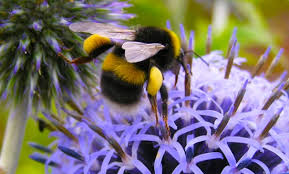 (Beyond Pesticides, August 24, 2017) Common pesticides used on canola crops significantly reduce bumblebee egg laying and may lead to local population extinction, according to new research published in the journal Nature by scientists at the Royal Holloway University of London. This is the latest study to investigate how neonicotinoids, insecticides
 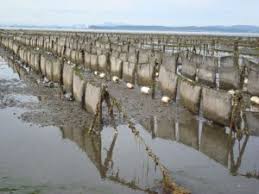 with an expansion of industrial shellfish aquaculture on the Washington state coast without any water quality or marine life protections from pesticide use and habitat loss. This is just the latest in efforts to protect sensitive coastal areas in Washington from shellfish farming that is contributing to increased pesticide use and environmental degradation.
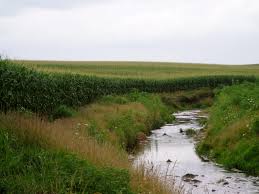 (Beyond Pesticides, August 22, 2017) Streams in the Midwestern U,S. are polluted with complex mixtures averaging over 50 pesticides each, according to a U.S. Geological Survey (USGS) report published earlier this month. This is the latest and also most extensive study on pesticide contamination in U.S. streams to date. The shocking results put many aquatic plants and animals at existential risk, leading health and environmental advocates to ask how the federal government can continue to permit U.S. streams to be used as a mixing bowl for toxic pesticide compounds.
 National Organic Program (NOP) is currently undermining this central organic principle. During a National Organic Standards Board (NOSB) webinar, NOP Deputy Administrator Miles McEvoy extolled the new “flexibility” of his program in allowing organic certification of operations not permitted by regulations. Although the webinar focused on the program’s allowance of hydroponics, Mr. McEvoy’s comments apply to a wide variety of permitted practices for which USDA has yet to approve standards.
 more interested in eating healthfully and knowing more about the sourcing of their food. The bloom may be coming off the rose just a bit, as people respond to a variety of concerns, including pricing; some perception of “preciousness” or elitism about the movement; the occasional “food fraud” — cutting corners and/or “greenwashing” — perpetrated by those looking to cash in on the trend without delivering the real goods; and ethical concerns rooted in a growing recognition of health, safety, and inequality problems in the U.S.
 2015, the
 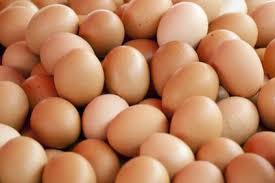 contaminated with the insecticide
 inue its food uses. [The bill is currently co-sponsored by Senators Cory Booker (D-NJ), Ben Cardin (D-MD), Richard Durbin (D-IL), Kirsten Gillibrand (D-NY), Kamala Harris (D-CA), Ed Markey (D-MA), and Jeff Merkley (D-OR).]
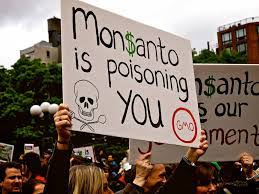 its efforts to hide information about impacts of its popular glyphosate-based herbicide, Roundup. This follows on the heels of the March 2017 unsealing, by federal judge Vince Chhabria, of internal Monsanto documents — the “
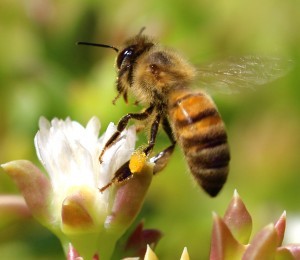 these numbers may seem to be a positive sign after over a decade of consistent pollinator declines, they are more indicative of a beekeeping industry that is using every available tactic possible to stay viable. With the continued use of highly toxic neonicotinoid insecticides in farms, gardens, and public spaces throughout the country, the long-term health honey bees and other pollinators continue to be in jeopardy.
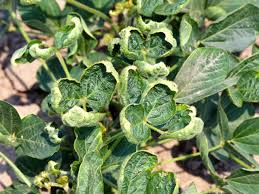 chemical used in genetically engineered (GE) fields. Dicamba, a toxic pesticide prone to drift off the target site, has been used in agriculture for decades. However, new GE crops developed by Monsanto must be paired with specific formulations of dicamba, and until now many believed these drift incidents were the result of illegal formulations of dicamba being applied to fields. But the extent of damage now being observed, covering over 2.5 million acres, is casting doubt on this theory, and raising more questions as to whether the new dicamba formulation is actually the cause of the widespread drift damage.