16
Sep
(Beyond Pesticides, September 16, 2016) Tell EPA to ban all uses of atrazine in the United States! Atrazine, widely used on food and feed crops, golf courses, and residential lawns, is a potent endocrine disruptor that is strongly associated with birth defects, cancer, sex reversal and hermaphroditism in many different animals. The European Union and other countries have banned atrazine, however EPA continues to put U.S. citizens and the environment in harm’s way, allowing nonstop use of this toxic chemical. Sign Beyond Pesticides’ petition to ban atrazine by October 5, 2016.
 Atrazine is the second-most widely used pesticide in the U.S., with over 73 million pounds applied each year. Atrazine has washed into surface water and leached into groundwater, spurring community water utilities across the U.S. to file class-action lawsuits to remove the pesticide from drinking water supplies.
Even at levels established as “safe” or acceptable by EPA drinking water standards, atrazine is linked to endocrine-disrupting effects. EPA is not adequately assessing the effects of atrazine by using high dose testing models, which are not appropriate for hormonally-active substances that often show effects at minute doses. Studies by Tyrone Hayes, Ph.D., University of California, Berkeley, and others have shown that concentrations as little as 0.1ppb impact hormone function in organisms and turns tadpoles into hermaphrodites — organisms with both male and female sexual characteristics. Research also finds that atrazine interferes with mammary gland development in the breast of mammals and is linked to certain birth defects like gastroschisis and choanal atresia, which are significantly increased for pregnant women with high levels of atrazine exposure in agricultural areas and from urban streams.
Despite these disturbing findings and the availability of other least-toxic herbicide options, EPA has taken an unacceptably slow and unresponsive approach in the regulation of atrazine. In previous approvals of atrazine, EPA has concluded that there is no evidence of adverse effects on animal development. However, in April of this year, the agency released a draft ecological risk assessmen that finds atrazine poses unacceptable risks to fish, amphibians, aquatic invertebrates, and even birds, reptiles and mammals. You can submit comments on the draft ecological risk assessment for atrazine (EPA-HQ-OPP-2013-0266) in the federal docket until October 5, 2016.
The assessments evaluated risks to animals and plants, including amphibians, birds, mammals, fish, reptiles, aquatic invertebrates, aquatic plant communities, and terrestrial plants. EPA concludes, “aquatic plant communities are impacted in many areas where atrazine use is heaviest, and there is potential chronic risks to fish, amphibians, and aquatic invertebrate in these same locations. In the terrestrial environment, there are risk concerns for mammals, birds, reptiles, plants and plant communities across the country for many of the atrazine uses.” Levels of concerns were exceeded by as much as 200-fold for some organisms!
In July, California’s Office of Environmental Health Hazard Assessment (OEHHA) announced that atrazine, its chemical cousins propazine and simazine, and its breakdown triazine compounds would be added to the list of chemicals known to the state to cause reproductive toxicity for purposes of the state’s Proposition 65.
The evidence is clear. Atrazine harms wildlife, persists in soils, and moves easily through waterways. An EPA official stated years ago that, “The ultimate decision [with atrazine] is much bigger than science, it weighs in public opinion.” Use your voice to #banatrazine!
Take Action: Sign the petition to urge EPA to end the use of atrazine. In order to protect human and ecological health, the agency should take immediate action to eliminate this chemical from our environment!
Posted in Agriculture, Atrazine, Birth defects, Cancer, Developmental Disorders, Endocrine Disruption, Farmworkers, National Politics, Pesticide Regulation, Take Action, Uncategorized, Water by: Beyond Pesticides
3 Comments
15
Sep
(Washington D.C. September 15, 2016) Beyond Pesticides today urged the U.S. Environmental Protection Agency (EPA) to immediately alert local and state mosquito control officials, elected officials, and the public throughout the U.S. to the fact that EPA’s key data reviews on the safety of widely used mosquito control pesticides, including naled and synthetic pyrethroids, are outdated and incomplete and the scientific literature raises safety concerns. In a letter to EPA, Beyond Pesticides said, “As local and state officials implement mosquito abatement programs to address the Zika virus, it is critical that they have complete transparent safety information that they are not currently getting from the Environmental Protection Agency (EPA).”
 Beyond Pesticides continues, “This information, specific to residential exposure to the insecticides naled and its main degradation product dichlorvos (DDVP), as well as synthetic pyrethroids, is necessary for officials on the ground to make fully informed decisions and for public right to know.”
According to EPA documents, the agency did not meet a planned 2015 deadline for a final review decision evaluating residential exposure to naled, a neurotoxic organophosphate insecticide that is currently being used in community mosquito spraying, and its highly toxic breakdown product DDVP. In addition to the toxic properties of naled, EPA has stated in review documents that it “has determined that the adverse effects caused by dichlorvos [DDVP] that are of primary concern to human health are neurological effects related to inhibition of cholinesterase activity.” There is also “suggestive” evidence of DDVP’s carcinogenicity, as well as concerns associated with its neurotoxicity, mutagenicity, and reproductive impacts.
Similarly, EPA has recognized in its documents that synthetic pyrethroids, including permethrin and phenothrin (sumithrin), must also have their assessments updated and completed, calling into question safety statements from EPA and the Centers for Disease Control and Prevention (CDC). Several pyrethroids are associated with cancer, hormone disruption, and reproductive effects, and thus have hazard and exposure concerns regarding widespread application for mosquito control. Phenothrin, for instance, “lacks acute, chronic, and developmental neurotoxicity studies that are required to fully evaluate risks to infants and children,” and for permethrin there are outstanding concerns regarding its developmental neurotoxicity.
According to EPA’s final work plan, published in 2009, the agency planned to begin public comment on a registration review decision for naled in 2014, with a final decision in 2015. “Given the widespread use of naled in South Florida, Puerto Rico and other states and territories over fears of the spread of the Zika virus, it is imperative that an updated risk assessment be presented for public review and comment, especially since there are important outstanding data and concerns regarding naled/DDVP exposures to residential bystanders,” Beyond Pesticides told EPA.
The use of naled in a South Carolina community last month also resulted in the death of 2 million bees. In 2012, the European Union banned naled, citing “Official Journal of the European Union” to human health and the environment.
In light of the identified hazards and unknown effects of exposure to both naled/DDVP and synthethic pyrethroids, Beyond Pesticides urges local and state officials to consider more closely the lack of efficacy associated with massive spray programs. Researchers question the efficacy of spray programs for adult mosquitoes, especially given the biology of the targeted mosquito, Aedes aegypti. This mosquito stays close to its breeding sites in residential areas and inside homes, suggesting that community spray programs are the least effective control measure.
Beyond Pesticides encourages an integrated approach to mosquito management that focuses on prevention through public education encouraging frequent removal of standing water, larviciding, and use of repellents. If prevention measures are enforced, the need to spray should be extremely limited, and balanced against the potential public health impacts of hazardous pesticides.
Download a copy of the letter here: http://bit.ly/2cFHThg.
Download a copy of the response from EPA here.
Download a PDF version of the press release here.
For more information on mosquito management, see www.beyondpesticides.org/mosquito.
Contacts:
Beyond Pesticides, Nichelle Harriott, [email protected], Jay Feldman, [email protected], 202-543-5450.
Posted in Announcements, Disease/Health Effects, Environmental Justice, Integrated and Organic Pest Management, National Politics, State/Local, Uncategorized by: Beyond Pesticides
2 Comments
14
Sep
(Beyond Pesticides, September 14, 2016) According to a recent study by the U.S. Geological Survey (USGS), high concentrations of dioxins and furans have been detected in tree swallow eggs collected near several sites around the Great Lakes. Other chemicals detected include polychlorinated biphenyls (PCBs) and polybrominated diphenyl ethers (PBDEs), which were at background levels. The study is part of efforts to clean up a toxic chemical legacy around the Great Lakes, and the researchers believe their results are critical to regulators to assess “bird or animal deformity or reproductive problems”
 The study, “Concentrations and spatial patterns of organic contaminants in tree swallow (Tachycineta bicolor) eggs at United States and binational Great Lakes Areas of Concern, 2010—2015,” used tree swallows to quantify current exposure to organic contaminants across all five Great Lakes including 59 sites within 27 Areas of Concern (AOCs) and 10 nearby locations. The Great Lakes Areas of Concern refers to a U.S.-Canada Great Lakes Water Quality Agreement (Annex 1 of the 2012 Protocol) that defines AOCs as “geographic areas designated by the Parties where significant impairment of beneficial uses has occurred as a result of human activities at the local level.” An AOC is a location that has experienced environmental degradation, and includes several water bodies in New York, Ohio, Michigan, Wisconsin and others.
Tree swallows in this study were sampled across the Great Lakes basin in 2010 through 2015 where concentrations of organic contaminants in the eggs were quantified and compared with background and reproductive effect thresholds in order to provide a system-wide assessment of current exposure. The contaminants, including polychlorinated biphenyls (PCBs), polychlorinated dibenzo-p-dioxins (dioxins), polychlorinated dibenzofurans (furans), polybrominated diphenyl ethers (PBDEs), and a suite of 26 pesticides (including chlordane, heptachlor and mirex), were selected because they are listed by the AOCs as contaminants of concern, tend to persist in the environment, and are known or suspected to cause reproductive issues.
While many of the contaminants tested in the study are at or below average background exposure, including PCBs and PBDEs, concentrations of polychlorinated dibenzo-p-dioxin and furan (PCDD-F) at the Saginaw River and Bay and Midland, Michigan exceed set benchmarks associated with reproductive effects (hatching effects). The researchers note that their findings “can be used by States and the U.S. Environmental Protection Agency (EPA) to assess ongoing restoration activities intended to reduce wildlife exposures to these contaminants, which can cause deformities or reproductive problems.”
This ongoing biomonitoring work is part of The Great Lakes Restoration Initiative, which was launched in 2010 to accelerate efforts to protect and restore the Great Lakes- largest system of fresh surface water in the world. According to the initiative, federal agencies will continue to strategically target the biggest threats to the Great Lakes ecosystem and accelerate progress toward long-term goals for this important ecosystem. Actions include, cleaning up Great Lakes Areas of Concern, preventing and controlling invasive species, reducing nutrient runoff that contributes to harmful/nuisance algal blooms, and restoring habitat to protect native species.
Legacy chemicals like dioxins and PCBs, longed banned in the U.S., continue to plague wildlife and even humans. In addition to the birds in this study, river otters in the Midwest have also been found to still be contaminated with these substances. Another study attributed to DDT the reproductive problems plaguing endangered condors in California, as a result of the birds’ feeding on contaminated sea lions. A recent study by researchers at Drexel University, which looked at PCB, DDT and other persistent organic pollutants, report that higher levels of some of these compounds during pregnancy are associated with autism spectrum disorder (ASD) and intellectual disability (ID). Dioxins, PCBs and other organochlorines are categorized as persistent organic pollutants (POPs) because they persist for long periods of time in the environment, eventually making their way up food chains, accumulating in the fatty tissues and animals and humans. Their legacy of poisoning the environment has been well documented, despite being banned for decades. Recent studies have linked these POPs to hormonal disturbances, abnormal sperm development, cancer, diabetes, obesity and environmental contamination.
Efforts to halt the pollution of the Great Lakes and other waterways has been a focus in the region for many years. Toxicants like lindane, dioxin, PCB, and microcystin, have also been detected as pollutants in the Great Lakes. In 2015, two Michigan Representatives introduced the Great Lakes Assurance Program Verification Act (HR 3120) in an effort to halt the pollution of the Great Lakes from agricultural run-off, which causes dangerous algae blooms and it a major threat to ecosystems in the region . Scientists had been tracking algal blooms in the Great Lakes for years and have recommended region-wide monitoring and a change in farm management practices. In 2014, residents of Toledo, Ohio were advised to stop using tap water after a local water treatment plant found toxic substances in dangerous quantities in the water. 500,000 residents were instructed not to drink the water, brush teeth or prepare food with the water, or give it to pets. The contamination resulted from continuously growing algal blooms on Lake Erie, Ohio’s northern water source.
Beyond Pesticides tracks the scientific literature related to pesticide exposure through the Pesticide Induced Diseases Database (PIDD). For more information on the impacts of pesticides, past and present, on human and environmental health, visit our PIDD page.
All unattributed positions and opinions in this piece are those of Beyond Pesticides.
Source: USGS
Posted in Autism, Cancer, Chlordane, Diabetes, Environmental Justice, Heptachlor, International, Obesity, Ohio, Reproductive Health, Take Action, Uncategorized, Water, Water Regulation, Wildlife/Endangered Sp. by: Beyond Pesticides
No Comments
13
Sep
(Beyond Pesticides, September 13, 2016) Land suitable for commercial beekeepers in the U.S. Northern Great Plains (NGP) is declining rapidly, according to a new study released earlier this month by the U.S. Geological Service (USGS). The region, which supports over 40% of managed honey bee colonies, is quickly replacing suitable pollinator habitat with more and more pesticide-intensive biofuel crops, particularly corn and soybean, as a result of increased crop prices and federal subsidies for biofuels. The concerning trend adds another layer of stress not only to honey bee colonies, but beekeepers whose livelihood depends on the health of their commercial livestock.
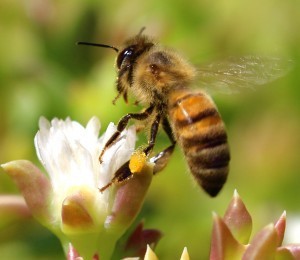 From early summer to mid-fall, roughly one million honey bee colonies make their way through the Northern Great Plains of North and South Dakota. The area is not usually a stop for pollination services, but a place where beekeepers go to generate a honey crop and improve the health of their colonies. Most of the colonies that summer in the NGP are trucked across the country to pollinate fruiting crops like apples, cherries, melons, and almonds during the winter, or are otherwise moved south to produce packaged bee colonies or queens. According to the USGS study, published in the Proceedings of the National Academy of Sciences, NGP has long been used by beekeepers as an unofficial refuge for commercial production because of its large area of pollinator-friendly habitat: uncultivated pasture and rangelands, and cultivated flowering crops like sunflower, canola, and alfalfa.
However, increased production of biofuels, driven by policy changes that subsidize the planting of soy and corn, rising prices of these crops, and reductions in conservation programs in the recent Farm Bill all add up to a significant shift in the landscape of the NGP. Researchers note that 1.6 million acres of land in North Dakota originally enrolled in the U.S. Department of Agriculture’s Conservation Reserve Program have been lost.
Although the study does not attempt to link land use changes with pollinator health criteria, it is clear that these changes do not benefit pollinators. Corn and soy biofuels are often produced with seeds that are coated in neonicotinoids, a class of highly toxic, systemic and persistent chemicals that multiple studies and sources, beekeepers, and scientists have linked to declines of both wild and managed bees. Neonicotinoids have been linked to a range of both acute and chronic effects on pollinators. Studies have found the insecticides can adversely affect reproduction, impair pollination, and alter behavior. Once these chemicals are used in the environment, their persistence and long half-life means that they remain a problem for beekeepers well into the future. A study published earlier this year found that even when attempting to protect pollinators by planting pollinator habitat and hedgerows around conventional farms, neonicotinoids used onsite can make their way into flowering crops in field margins, putting pollinators in danger.
Replacing uncultivated and flowering crops with biofuels adds additional problems for pollinators. Because most biofuels planted today are also genetically engineered, managed and wild pollinators will continue to lose habitat, as these crops are developed to withstand the use of herbicides, such as glyphosate, and the use of genetically engineered (GE) herbicides continues to increase. Widespread applications of glyphosate to cropland has been implicated in the destruction of pollinator habitat, particularly the monarch butterfly, whose migration route winds through the middle of the U.S.
It is evident that restoring pollinator populations across the country is a complex undertaking that will require a change not only in public policies and incentives for farming, but also chemical-intensive farming practices. While biofuel subsidies are acting to displace critical pollinator habitat, what is also true is that there are farming systems currently in practice that can grow healthy food, and provide safe, pesticide-free pollinator-friendly habitat at the same time. Jonathan Lundgren, PhD, acclaimed researcher who blew the whistle on USDA’s suppression of scientific findings, is now working to restore sound agricultural practices that protect bees on their property, Blue Dasher Farm, in South Dakota. As Dr. Lundgren noted in his talk to the 34th National Pesticide Forum in Portland, ME this year, the focus must be on healing the soil and changing on-farm management practices in order to address and reverse the bee problem and our broader biodiversity crisis. Consumers can assist in these efforts by supporting s
afer agricultural practices and only purchasing products certified organic. Under organic certification, farmers are required to maintain or improve the health of the soil, and through defined criteria and a public process under the NOSB, are prohibited from using highly toxic, systemic, and persistent pesticides such as neonicotinoids.
For help on how you can get involved to reverse pollinator declines, see Beyond Pesticides’ Bee Protective webpage. And for more information on why organic is the right path for the future of agriculture, see Beyond Pesticides Organic Agriculture program page.
All unattributed positions and opinions in this piece are those of Beyond Pesticides.
Source: PNAS, Scienceblog.com
Posted in Alternatives/Organics, Biofuels, Habitat Protection, Increased Vulnerability to Diseases from Chemical Exposure, National Organic Standards Board/National Organic Program, Pollinators, Uncategorized by: Beyond Pesticides
No Comments
12
Sep
(Beyond Pesticides September 12, 2016) On Thursday, September 8, a federal judge in the U.S. District Court for the Northern District of California rejected the U.S. Department of Agriculture’s (USDA) motion to dismiss a federal lawsuit (Case No. 15-cv-01590-HSG) that challenges changes to the rules that review the potential hazards and need for allowed synthetic and prohibited natural substances used in certified organic food production. Finding that plaintiffs had established both proper jurisdiction and a viable claim, this ruling allows the case to move forward on its merit. The court will now be able to review the substantive importance of formal notice and public comment regarding the rules for organic food production, which were changed dramatically by USDA in 2013.
 Plaintiffs in this case, recognized by the court as “approximately a dozen advocacy and industry groups representing organic farmers, retailers, and consumers,” filed a complaint last April asking the court to require USDA to reconsider its decision on the rule change and reinstitute the agency’s customary public hearing and comment process. Specifically at issue in the lawsuit is a rule that implements the organic law’s “sunset provision,” which since its origins has been interpreted, under a common reading of the law, to require all listed materials to cycle off the National List of Allowed and Prohibited Substances every five years unless the National Organic Standards Board (NOSB) votes by a “decisive” two-thirds majority to relist them. In making its decision, the NOSB is charged with considering public input, new science, and new information on available alternatives to the allowed synthetic substances. Under the Organic Foods Production Act (OFPA), the Secretary may not allow the use of synthetic substances in organic production unless first recommended by the NOSB.
In September 2013, without any public input, USDA completely reversed this long established process and announced a definitive change in the rule it had been operating under since the inception of the organic program. Under its new rule, a synthetic material is allowed to remain on the National List in perpetuity unless the NOSB takes initiative to remove it from the List. The judge, agreeing with the plaintiffs, identified the change as significant, as it now requires a two-thirds vote to remove a substance from the National List, unlike the prior procedure which required a two-thirds vote to renew a substance. Furthermore, he acknowledged that prior to the change in the rule that triggered this lawsuit, “USDA’s regulations required the NOSB to consider public comments and vote on” substances on the National List, a process that stands to be lessened or completely lost with USDA’s unilateral agency action to adopt this major policy change.
The judge also acknowledged plaintiffs’ allegations that USDA’s decision weakens “the integrity of the organic standards, degrading the quality of organically labeled food, and negatively affecting the personal health, economic, environmental, and consumer interests of Plaintiffs’ members” through its failure to allow the essential public participation function of organic policy making under the Administrative Procedure Act (APA), federal law that establishes the procedures for public input into federal policy making. Since USDA never subjected the sunset decision to formal notice and public comment, plaintiffs argue that USDA failed in its duty to ensure that its regulation is consistent with the Organic Food Production Act (OFPA) and the standards set forth for approving materials for the National List.
The opportunity to offer public comment on organic stands is historically important to organic consumers and farmers. When it comes to organic food production, consumers expect a high level of scrutiny and are willing to pay a premium with the knowledge that a third-party certifier is evaluating compliance with organic standards. The burgeoning $43 billion organic market relies heavily on a system of public review and input regarding decisions that affect organic production systems and the organic label. In her declaration to the court, Beyond Pesticides board member Terry Shistar, Ph.D. stated that “USDA’s development and promulgation of the Sunset Notice . . . harms [her] interest in participating in the public process as outlined by the APA [Administrative Procedure Act],” and violates her “interest in ensuring that adequate procedures are in place to protect the integrity of organic food.” Statements like this from a diverse group of plaintiffs convinced the judge that the group had sufficiently “alleged that these rules were intended to protect their concrete interests, and that it is ”˜reasonably probable’ that the challenged action will threaten those interests,” squashing arguments from the defendant (USDA) that plaintiffs had failed to state a claim upon which relief could be granted.
While the judge’s holding in this case is favorable to the plaintiffs, unfortunately this is not the only example of recent attacks to the integrity of the organic label. Another lawsuit recently decided in favor of plaintiffs Beyond Pesticides, Center for Food Safety and Center for Environmental Health challenged the National Organic Program’s (NOP) failure to follow proper legal procedures”¯in making a substantial rule change that allows contaminants in compost.”¯Though the final decision was a huge victory for organic advocates, it unfortunately was not the end of the road for those fighting to maintain the integrity of the USDA label.
While the courts are understanding that recent actions by USDA violate the federal organic law, OFPA, it is critical that the public lets their elected members of Congress (U.S. Representative and Senators) how important organic integrity is and the importance of a strong standard in accordance with the law. To that end, Beyond Pesticides has created the campaign Save Our Organic, which outlines the USDA attack on organic and the importance of Congress protecting the integrity of organic standards. Send a letter to your member of Congress and Secretary of Agriculture Tom Vilsack. It is also important to let the companies that produce organic products know that strong organic standards are critical to public trust in the organic label and the growth of the organic market. Send a letter to companies that often support the weakening of organic standards.
Beyond Pesticides also tracks the proposals and decisions of the NOSB and assists the public to engage in the public process on reviewing and updating organic standards. See the”¯Keeping Organic Strong”¯webpage to learn more about these and other issues and to find out what you can do to help uphold organic standards.
Beyond Pesticides advocates in its organic food program and through its”¯Eating with a Conscience (EWAC)”¯website choosing organic because of the environmental and health benefits to consumers, workers, and rural families. For more information on the benefits of organic agriculture, see Beyond Pesticides’”¯Organic Food program page.
The plaintiffs in the case, represented by counsel from Center for Food Safety, include: Beyond Pesticides, Center for Food Safety, Equal Exchange, Food and Water Watch, Frey Vineyards, La Montanita Co-op, Maine Organic Farmers and Gardeners Association, New Natives, Northeast Organic Dairy Producers Alliance, Northeast Organic Farmers Association Massachusetts, Ohio Ecological Food and Farm Association, Organic Consumers Association, Organic Seed Growers and Trade Association, PCC Natural Markets, and The Cornucopia Institute.
All unattributed positions and opinions in this piece are those of Beyond Pesticides.
Source: Case 3:15-cv-01590-HSG
Posted in Alternatives/Organics, Label Claims, National Organic Standards Board/National Organic Program, National Politics, Uncategorized by: Beyond Pesticides
1 Comment
09
Sep
(Beyond Pesticides, September 9, 2016) On Wednesday, City Council members of South Portland, Maine cast their final votes to pass an ordinance that bans the use of toxic lawn pesticides on private and public land. The ban, which passed 6-1, is an important public health measure in the protecting 25,000 residents, the largest jurisdiction in the state to-date to adopt such as measure. In 2014, the Town of Ogunquit, Maine was the first jurisdiction to ban toxic lawn pesticides on both private and public land.
Maine’s status as one of only seven states that does not preempt local governments’ authority to restrict the use of pesticides on land within their jurisdiction empowers local governments to take this kind of protective action. Supporters of this ordinance, led by the local organization Protect South Portland, and supported by statewide organizations and Beyond Pesticides, put together an effective campaign to educate council members, the public, and the media about the dangers of pesticides, and the effectiveness of organic land management practices that do not utilize toxic pesticides.
 Under the legislation, the provisions will be phased in, starting with city property on May 1, 2017, private property beginning May 1, 2018, and to golf courses on May 1, 2019. The law allows time for transition, training, and the development of a public education program. The measure does not establish fines for violations, opting for a community education approach as the city gauges compliance before considering instituting penalties in the future. When first proposed, the ordinance included fines of up to $1,000 per violation following an initial warning. The new ordinance puts oversight, outreach, and compliance in the hand of the city’s sustainability coordinator, Julie Rosenbach.
In August, Ms. Rosenbach wrote in a memo to the city council: “Our intention is not to approach implementation of this ordinance in a punitive way, but rather to use education and outreach to promote non-toxic land care practices and help the community to comply with this ordinance.”
Public records will be maintained detailing how complaints and compliance are handled, allowing officials the opportunity to review the effectiveness of the law. Recognizing the potential limitations of an education program alone, however, some members of the council indicated the possibility of revisiting the ordinance to add other enforcement measures after more data is known about local pesticide use, a tool that could prove very beneficial to bringing South Portland into full compliance with the new ordinance
Because the focus of the ordinance is on prohibiting use of the now banned pesticides, it does not prohibit chemical sales. In defining allowed materials, the ordinance defines allowed materials in lawn care, including “minimum risk” by the Environmental Protection Agency (EPA) and those on the U.S. Department of Agriculture (USDA)’s List of Allowed Substances. The local ban exempts commercial agriculture and provides waivers for using pesticides in situations that threaten the public health and safety, such as the presence of disease carrying pests or invasive species.
As Administrator of the U.S. Environmental Protection Agency (EPA), Gina McGarthy said during her presentation to Montgomery County, Maryland that national change starts at the local level. The passing of this ordinance in South Portland is similar to those passed in the town of Ogunquit, ME, and Takoma Park and Montgomery County, Maryland. Ordinances have been adopted in other jurisdictions in Maine and across the country that focus solely on pesticide use on public property. The legislatures of Connecticut and Maryland passed laws this year that restrict the retail sale of products containing neonicotinoid pesticides. And, the Governor Minnesota issued an executive order restricting neonicotinoid use, while numerous municipalities across the country have taken similar step to stop use on their properties.
There is movement across the country to adopt ordinances that stop pesticide use on public property and, where allowed, private property. Pesticides when used move off the target site through drift and runoff, exposing non-target sites and people. For information on this kind of organic lawn care, see Beyond Pesticides lawns and landscape program page.
Wondering how you can create change similar to that taking place in South Portland? Take action! Regardless of whether your local jurisdiction is preempted by state law, you can still work to get toxic chemicals out of your community. It takes a lot of work and commitment, but it can be done with some perseverance. It’s important to find support —friends, neighbors, and other people who share your concerns about environmental health. It’s also essential to reach out to your local elected officials and government. Beyond Pesticides has resources and factsheets available to help you organize in your community. You can also call (202-543-5450) or email ([email protected]) Beyond Pesticides for one-on-one consultation about the strategies you can take to effect change.
All unattributed positions and opinions in this piece are those of Beyond Pesticides.
Source: Portland Press Herald
Posted in Alternatives/Organics, Announcements, Events, Integrated and Organic Pest Management, Maine, Pollinators, State/Local, Uncategorized by: Beyond Pesticides
No Comments
08
Sep
(Beyond Pesticides, September 8, 2016) According to a study published last week by scientists at Iowa State, genetically engineered (GE) crops have not lived up to their promise to reduce pesticide use, and have instead led to an increase in toxic herbicide usage. The research, led by Edward Perry, Ph.D., found “clear evidence of increasing herbicide use by [GE] variety adopters over time for both soybeans and maize,” a finding that they credited partly to the emergence of weed resistance. The detailed dataset analyzed came from the company, GfK Kynetec, which conducts surveys of randomly selected farmers to assess decisions about pesticide and seed choices.
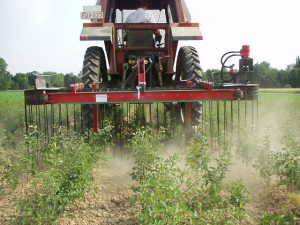 The farm-level dataset that the researchers used was collected over the years 1998-2011 and includes a yearly average of 5,424 corn farmers and 5,029 soybean farmers. One striking trend that was noted since 1998 was the increase in the use of glyphosate, the active ingredient in Monsanto’s Roundup. As of 2011, glyphosate was the primary herbicide used on soybeans, with just over 80% of total herbicide applied, and in corn it made up 40% of herbicide use, representing close to a 20-fold increase since 1998.
Marketed as Roundup and other trade names, glyphosate is a broad-spectrum systemic herbicide used to kill weeds. The International Agency for Research on Cancer (IARC) determined in March 2015 that the herbicide glyphosate is a potential cancer causing agent for humans, based on laboratory animal studies. The finding adds to the literature of adverse affects linked to glyphosate and has triggered a new round of calls to ban its use. In addition to impacts on human health, glyphosate has been linked to adverse effects on earthworms and other soil biota, as well as shape changes in amphibians. The widespread use of the chemical on genetically engineered glyphosate-resistant crops has led it to be implicated in the decline of monarch butterflies, whose sole source to lay their eggs, milkweed plants, are being devastated as a result of incessant use of glyphosate.
The authors note the fact that the pattern of change in herbicide use over this time period is consistent with the development of glyphosate weed resistance, an issue that have been widely discussed in the past. The annual increase in the herbicides required to deal with tougher-to-control “superweeds” on cropland planted to GE cultivars has grown from 1.5 million pounds in 1999 to approximately 90 million pounds in 2011. Heavy reliance on the herbicide Roundup has placed weed populations under progressively intense and unprecedented selection pressure, triggering a perfect storm for the emergence of glyphosate-resistant weeds.
In general, in regions of the U.S. where Roundup-tolerant crops dominate, there are now evolved glyphosate-resistant populations of economically-damaging weed species. Resistant species like ryegrass and horseweed have been found in crop and non-crop areas, and now grow robustly even when sprayed with four times the recommended quantity of Roundup. Scientists from USDA’s Agricultural Research Service (ARS) have noted that the relatively rapid evolution of glyphosate-resistant weed populations provides further evidence that no herbicide is invulnerable to resistance, and new weed management systems involving GE crops must be evaluated for the potential to create resistant species.
Despite the comprehensive nature of this study, one potential issue, according to Andrew Kniss, Ph.D., a weed scientist at the University of Wyoming, is the use of the environmental impact quotient (EIQ) to compare the environmental impacts of the various pesticides. Dr. Kniss told NPR that the EIQ “doesn’t come anywhere close to capturing those large differences among chemicals” that occur from differing levels of toxicity. It is also important to consider the interactive effects of mixtures of multiple pesticides on the environment and human health, also known as pesticide synergism. By failing to include metrics for pesticide synergisms in their modeling and instead relying on the EIQ as their benchmark, the authors take part in this long-running blind spot in pesticide evaluation.
For more information on the hazards associated with GE technology, visit Beyond Pesticides’ Genetic Engineering webpage. Pursuing sustainable alternatives can prevent the pesticide treadmill that results from the use of GE crops and pesticides like glyphosate. Ecological pest management strategies, organic practices, and solutions that are not chemical-intensive are the most appropriate and long-term solution to managing unwanted plants and insects. Additionally, organic agriculture is an ecologically-based management system that prioritizes cultural, biological, mechanical production practices, and natural inputs. By strengthening on-farm resources, such as soil health, pasture and biodiversity, organic farmers can minimize and even avoid the production challenges that most genetically engineered organisms have been falsely-marketed as solving. To learn more about organic agriculture, see Beyond Pesticides Organic Program Page.
Sources: Pacific Standard, NPR
All unattributed positions and opinions in this piece are those of Beyond Pesticides.
Posted in Agriculture, Alternatives/Organics, Cancer, Genetic Engineering, Glyphosate, Increased Vulnerability to Diseases from Chemical Exposure, Pollinators, Resistance, Uncategorized by: Beyond Pesticides
No Comments
07
Sep
(Beyond Pesticides, September 7, 2016) Industry giant Bayer has increased its offer to acquire Monsanto to $65 billion, making it the largest all-cash takeover bid in history. Bayer is now offering $127.50 per share- up two percent from its earlier bid of $125. The pharmaceutical giant has been pursuing Monsanto in an attempt to become the world’s largest biotechnology and pesticide manufacturer. But many are concerned that should this merger be successful, farmers would have even fewer choices for acquiring seed, ensuring that the American food supply is dominated by a few mega-corporations.
 According to The Guardian, Bayer’s proposal will create a global pharmaceutical and farm supplies giant, just as rival firms are also consolidating. ChemChina earlier this year offered to buy Switzerland’s Syngenta for $43bn, after the latter rejected takeover approaches from the St. Louis-based Monsanto. This ChemChina-Syngenta merger is all set to move forward after getting approval from the regulatory agency, Committee on Foreign Investment in the U.S. (CFIUS). U.S. firms Dow Chemical and DuPont are pursuing a $130bn merger, to be followed by a breakup into three businesses. Bayer’s previous offers for Monsanto were rejected, but Monsanto remains open to further discussion.
However, Monsanto has faced financial trouble recently. In June, Monsanto reported a 37 percent plunge in profit with farmers under increasing financial pressure due to falling commodity prices. The company’s revenue tumbled 8.5 percent to $4.19 billion, disappointing investors. Further, according to the Chicago Tribune, Monsanto agreed to pay an $80 million penalty under a settlement to resolve Securities and Exchange Commission allegations that it had not properly accounted for millions of dollars paid to distributors as Roundup rebates. That had the effect of distorting the company’s earnings reports for 2009, 2010 and 2011.
Additionally, acquiring Monsanto poses a reputational risk for Bayer, the 153-year-old German firm that built a global presence with the invention of aspirin. Monsanto has earned a bad reputation among environmental and public interests groups due to its flagship product, glyphosate (Roundup), which was recently classified by the World Health Organization as a “probable” carcinogen, and has been linked to other adverse human and environmental health impacts, and only given a last minute 18 month license extension in Europe this past June. Additionally, Monsanto’s controversial promotion (and manufacture) of genetically engineered (GE) crops has also earned the company scorn from many in Europe where GE crops and now glyphosate, are not well received.
Many warn that should this merger be successful there will be fewer options for farmers when it comes to accessing seeds. With little competition, the cost of seed, pesticides, and other farm supplies typically used in conventional farming systems could rise, leading to an increase in food prices for the consumer. While some argue that organic is too expensive, the simple fact is that chemical companies are able to externalize the social cost of their products in the form of eutrophication, soil erosion, harms to wildlife, health care costs to consumers, and numerous other adverse effects. Some researchers calculate the adverse impacts to health and the environment to be as much as $16.9 billion a year. (Tegtmeier and Duffy 2004) If consumers paid the true cost of chemical-intensive food production, prices for conventionally grown goods would certainly be more expensive than organic products, which are certified through a process that protects human health and the environment.
Good organic practices work to build the soil and maintain an ecological balance that makes chemical fertilizers and synthetic pesticides obsolete. Claims that organic agriculture cannot feed the world because of lower yields are contested by scientific studies showing that organic yields are comparable to conventional yields and require significantly lower inputs. Organic agriculture advocates say that it is not only necessary in order to eliminate the use of toxic chemicals, but to ensure the long-term sustainability of food production.
For further information, check out our webpages on Organic Agriculture.
Source: The Guardian, Chicago Tribune
All unattributed positions and opinions in this piece are those of Beyond Pesticides.
Posted in Alternatives/Organics, Bayer, Cancer, Corporations, Dow Chemical, DuPont, Farmworkers, Genetic Engineering, Glyphosate, International, Monsanto, Syngenta, Uncategorized by: Beyond Pesticides
1 Comment
06
Sep
(Beyond Pesticides, September 6, 2016) “The Food and Drug Administration (FDA) decision today to remove the antibacterial triclosan, found in liquid soaps (toothpaste use will remain), is a long time coming,” Jay Feldman, Executive Director of Beyond Pesticides, said today. He continued: “The agency’s failure to regulate triclosan for near two decades, as the law requires, put millions of people and the environment at unnecessary risk to toxic effects and elevated risk to other bacterial diseases. Now, FDA should remove it from toothpaste and EPA should immediately ban it from common household products from plastics to textiles.” Many companies had decided under consumer pressure to remove triclosan from its liquid soap products years ahead of the FDA decision today.
FDA’s announcement today indicates that soaps containing  the antibacterial ingredient triclosan do not have substantiated germ-killing health benefits. Beyond Pesticides raised concerns about the health effects of triclosan in 2004 in its piece The Ubiquitous Triclosan, and petitioned the agency to ban the chemical in 2005. In 2015, triclosan was banned in the European Union. For nearly two decades, scientific studies have disputed the need for the chemical and linked its widespread use to health and environmental effects and the development of stronger bacteria that are increasingly difficult to control. The chemical offers no more health protection than soap and water, according to studies. In fact, triclosan contributes to antibiotic resistance, which has become an international public health threat.
Meanwhile, the Environmental Protection Agency (EPA), which has jurisdiction over household products containing triclosan (microban), continues to allow the use of this hazardous chemical in numerous plastic and textile products, from toys, cutting boards, hair brushes, sponges, computer keyboards to socks and undergarments. In 2015, EPA issued a long-waited response to a Citizen Petition filed by Beyond Pesticides and Food and Water Watch in 2010, denying the organizations’ request to cancel registered products that contain the antibacterial pesticide. The agency did, however, grant one request, and will evaluate and conduct a biological assessment of the potential for effects on listed species under the Endangered Species Act (ESA) in the ongoing triclosan registration review.
Triclosan has been linked to hormone disrupting effects, bacterial and antibiotic resistance, and impacts on aquatic organisms. The Centers for Disease Control and Prevention has found that 75% of the U.S. population contain triclosan in their bodies. Triclosan enters the food chain through use of contaminated water or fertilizer on agricultural crops.
For background, see Beyond Pesticides’ triclosan page.
Posted in Children/Schools, Endocrine Disruption, National Politics, Pesticide Regulation, Triclosan, Uncategorized by: Beyond Pesticides
No Comments
01
Sep
(Beyond Pesticides, September 2, 2016) Last Sunday, beekeepers in Dorchester County, South Carolina emerged from their homes to find their yards and farms, once full of busy buzzing, littered with the honey bees. The cause was no mystery — a massive bee-kill had occurred due to aerial spraying of Naled, a highly toxic insecticide used primarily to control adult mosquitoes. The county announced plans to spray two days before the incident, when four travel-related cases of Zika virus were confirmed in the area by the state Department of Health and Environmental Control. The spraying occurred between 6:30 and 8:30am.
Naled is an organophosphate insecticide with the highest acute toxicity of any mosquitocide. According to the Environmental Protection Agency (EPA), Naled can cause cholinesterase (an enzyme necessary to the transmission of nerve impulses) inhibition in humans, meaning that it can overstimulate the nervous system causing nausea, dizziness, confusion, and, at very high exposures (e.g., accidents or major spills), respiratory paralysis and death. Naled is highly toxic to honey bees.
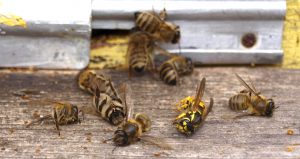 In Dorchester County, beekeepers say that the spray announcements did not come soon enough. Flowertown Bee Farm and Supply lost more than 2.3 million insects from 46 hives, according to co-owner Juanita Stanley. “Had I known, I would have been camping on the steps doing whatever I had to do screaming, ”˜No you can’t do this,’” Ms. Stanley said in an interview with Charleston’s WCSC-TV. Ms. Stanley told the Post and Courier that the bees are her income, but that “it’s not about the honey, it’s about saving the bees.” Andrew Macke, a hobby beekeeper, had two hives that he had been caring for over two years. After the plane flew over, releasing the toxic insecticide onto their property, Mr. Macke’s wife called him to tell him about the “thousands and thousands of bees dead” all around their pool deck and driveway.
The county acknowledged the bee deaths Tuesday. “Dorchester County is aware that some beekeepers in the area that were sprayed on Sunday lost their beehives,” Jason Ward, county administrator, said in a news release. He added, according to the Post and Courier, “I am not pleased that so many bees were killed.” Unfortunately, this doesn’t alleviate the devastation that occurred, nor does it repay the financial loss that some of the beekeepers now face.
Ms. Stanley worried about how to move forward from the incident. “I don’t know where to go from here,” Ms. Stanley said to the Post and Courier. “I can’t just go out and buy more bees, and right now I’m focused on how do I clean up all this mess? What can be reused and what can’t? What steps do I take?” This can be tricky, as the impacts of mosquito spraying on pollinators can be felt long after spraying has ended. Pesticide residues on vegetation, surface waters, soil and hives, which can last from several hours to months after application, results in continued exposure for non-target organisms.
While counties and mosquito abatement districts across the country gear up to prevent the spread of Zika virus, it is prudent to keep in mind that while mosquito management is a necessary public health service, common methods of control —aerial and ground spraying of pesticides— not only have questionable efficacy, but can also harm non-target organisms like pollinators, whose populations are already suffering elevated losses. In this particular case, the four documented cases of Zika virus that triggered the aerial spray were all travel-related. At the time of spraying, there were no known mosquitoes in the area that were carrying the Zika virus, which means that the spraying did not serve to alleviate a public health risk. With the continuous news coverage on the threat of Zika, many communities are quick to react, despite the fact that there are no mosquitoes in the area that are infected with the virus. Given the potential health risks and environmental impacts of adulticiding, spraying purely to control nuisance mosquitoes should be avoided.
While we do not underestimate the threat from new and current mosquito-borne diseases, an ideal mosquito management strategy adopts an integrated approach that emphasizes education, aggressive removal of breeding sites (such as standing water), larval control, monitoring, and surveillance. Alternative strategies, including introducing mosquito-eating fish, encouraging predators, such as bats, birds, dragonflies, and frogs, and using least-toxic larvicides, like Bacillus thuringiensis (Bt), can be applied successfully without endangering pollinators and other organisms.
Widespread spraying is not a solution for these mosquito-borne diseases. These methods fail to sufficiently control mosquito populations, promote pesticide resistance, and kill other species that act as natural predators to mosquitoes. In our attempts to stave off these diseases, we inadvertently harm ourselves, non-target organisms and overall ecosystem biodiversity. We can protect pollinators and manage mosquito populations at the same time. A measured approach is needed for managing mosquitoes that first involves an understanding of the mosquito’s lifecycle, reducing breeding sites, and targeting larval populations. Control of disease-carrying mosquitoes that does not endanger pollinators can be successful when emphasis is placed on public education and preventive strategies.
Individuals can take action by eliminating standing water, using least-toxic mosquito repellents, and talking to neighbors about alternatives. We have created the Mosquito Doorknob Hanger, which has great tips on speaking with neighbors on backyard and community mosquito control. Community based programs should encourage residents to employ these effective techniques, focus on eliminating breeding sites on public lands, and promote monitoring and action levels in order to determine what, where, and when control measures might be needed.
For more information, see our article on Mosquito Control and Pollinator Health, and visit our Mosquito Management and Insect-Borne Diseases webpage.
Source: The Post and Courier, The Washington Post
All unattributed positions and opinions in this piece are those of Beyond Pesticides.
Posted in Agriculture, Alternatives/Organics, Bt, Environmental Justice, Habitat Protection, Increased Vulnerability to Diseases from Chemical Exposure, Integrated and Organic Pest Management, Mosquitoes, Persistence, Pesticide Regulation, Pollinators, Resistance, South Carolina, Uncategorized by: Beyond Pesticides
3 Comments
01
Sep
(Beyond Pesticides, September 1, 2016) With the apparent mosquito transmission of the Zika virus in Florida, local officials around the United States have been feeling pressure to step-up preemptive mosquito spraying, prior to the virus actually emerging locally in infected mosquitoes. The Zika virus has been contributing to public anxiety in the U.S. for several months and, because of this, the state of Maryland has started spraying with hazardous insecticides. The state has made targeting mosquitoes its number one priority, while many argue that the state’s spraying puts the well-being of residents at risks.
As of August 24, there are 77 travel-associated cases of Zika in the state of Maryland. Without a finding of infected mosquitoes in the state, the Maryland Department of Agriculture’s (MDA) Mosquito Control Program is focusing its control actions on female (the ones that bite) aedes albopictus, commonly known as Asian tiger mosquitoes, the most common type of mosquito in Maryland that studies indicate “has the potential” to transmit the Zika virus.
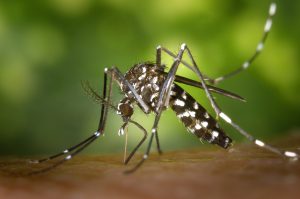 MDA’s Mosquito Control Program implements the state’s mosquito management, which is conducted in accordance with an undefined Integrated Pest Management (IPM) program; basing the approach broadly on prevention, monitoring, and control of mosquitoes. As a result, recently, MDA has conducted an increased number of unannounced insecticide sprayings throughout the state, leaving citizens uninformed of spray schedules.
An ”˜unannounced’ spray is unscheduled and not posted on program’s website, intended to be conducted by state officials after they they detect the “presence of a mosquito-borne disease.” Typically, in order to detect a disease threat, investigators set up mosquito traps overnight, and return to check on them the next day. If there are 12 female aedes albopictus mosquitoes found in a trap, officials define a 450 feet spraying radius around the trap. Despite the agency’s claim that it sprays when a disease is present, in fact, the agency is spraying mosquitoes that do not necessarily have the Zika virus, and are not tested for the virus when caught.
Whoever lives within the radius is then notified about the intention of spraying using a reverse 9-1-1 method via their landline. To notify the general public, a press release is sent out on the MDOA Mosquito Control Program’s website, as well as a ”˜tweet,’ stating the approximate time and general location where the spray will occur. Maryland residents choose to opt out of spraying on their property because they are labeled as “disease-control sprayings,” necessary for public safety against mosquito-borne disease. Concerned for their health, many Maryland residents have expressed their frustration at the burdensome process of monitoring twitter for information. Oftentimes, the range of time announced was anywhere from 4-8 hours long, leaving many individuals unsure of whether they are safe in their own house over night. Up until this week, there was no supplemental effort being made to inform chemically sensitive citizens of these sprayings, including those registered on the Maryland Pesticide Sensitive Individual Program list. Starting next week, when a press release is sent out before an unscheduled spray, the chemically sensitive residents who have previously indicated being a liaison of information to a bigger group of people, along with beekeeping organizations, will be informed as well.
Many communities around the country have a history of using ineffective and pesticide-intensive mosquito management strategies, due to a lack of adequate information. The spraying of pesticides has long been used for mosquito control, but many experts believe that these methods fail to sufficiently manage mosquito populations.
The use of pesticide spraying as a preventive method increases and accelerates the likelihood that mosquitoes will become immune to the chemicals being sprayed once the disease actually arrives in a certain area. The potential for immunity comes from the fact that mosquitoes have a very short life cycle, often times being less than a week. After spraying, each succeeding generation is an opportunity for random mutations to occur that predispose a group of mosquitoes to be immune to the pesticides being used. Spraying of these pesticides also oftentimes kills other species that would have acted as a natural predator to mosquitoes.
Washington D.C., Maryland’s neighbor, has taken a different approach over the years, acknowledging the potential adverse effects chemical usage imposes to human, animal, and environmental health. The D.C. Department of Health has an extensive mosquito monitoring system, capturing and testing over 12,000 mosquitoes this year alone, zero of which have tested positive for any mosquito-borne disease. Of these mosquitoes, less than 20 total have been aedes aegypti, the mosquito most known to carry the Zika virus where it has been found.
Consider contacting Beyond Pesticides for 25 free mosquito doorknob hangers to encourage best management practices in your neighborhood. For more information, see Beyond Pesticides’ Public Health Mosquito Management Strategy (also mosquito management strategy summary), an integrated approach that emphasizes education, aggressive removal of standing water (which are breeding areas), larval control, monitoring, and surveillance for both mosquito-borne illness and pesticide-related illness. Control of disease-carrying mosquitoes can be successful when emphasis is placed on public education and preventive strategies. Community-based programs should encourage residents to employ these effective techniques, focus on eliminating breeding sites on public lands, and promote monitoring and action levels in order to determine what, where, and when control measures might be needed. Through education of proper cultural controls, and least-toxic and cost effective biological alternatives, the use of hazardous control methods, such as toxic pesticides, can be eliminated.
All unattributed positions and opinions in this piece are those of Beyond Pesticides.
Posted in Biomonitoring, Integrated and Organic Pest Management, Lawns/Landscapes, Maryland, Mosquitoes, Pesticide Residues, Resistance, Take Action, Washington D.C. by: Beyond Pesticides
4 Comments
31
Aug
(Beyond Pesticides, August 31, 2016) Last week, a Denver marijuana company went through its first inspection for the Colorado-based Organic Cannabis Association’s (OCA) new “pesticide-free” certification. This voluntary certification program was developed by OCA following an indefinite postponement of the Pesticide-Free Marijuana Bill, HB 16-1079 by the Colorado Senate and the failure of the Colorado Department of Agriculture (CDA) to implement meaningful regulations to protect users within the state from pesticides that are not regulated for use in cannabis production by the U.S. Environmental Protection Agency (EPA) and the states. While the certification program is characterized as “pesticide-free,” it is focused on residues on the finished product, allowing the use of pesticides that do not appear on the narrow list of those restricted by the state of Colorado. The certification is a a step in the right direction for consumers who wish to protect themselves from unwanted pesticides in their cannabis products, however it is important to note that it does not equate to a USDA organic inspection, as marijuana remains illegal at the federal level and is unable to qualify for certification under the USDA National Organic Program (NOP).
 While discussing his inspiration for developing such a program, OCA founder John-Paul Maxfield, told Modern Farmer that “pesticide-free certification is crucial in helping the cannabis industry catch up with food” and “allows consumers to choose their cannabis with the same values they apply to food.” The certification is a process validation to certify that the final product has zero residual pesticides. However, it does not mean that no pesticides were used over the entire cultivation process of the cannabis. This may raise concerns for consumers who typically adhere to an organic diet or support organic methods of agriculture, as the Organic Foods Production Act and NOP takes a whole systems approach to crop production, as opposed to just testing for pesticide residues in the final product. In order to receive organic certification, growers must develop an Organic System Plan and focus on preventative, not reactive, measures to pest management and control.
In an earlier article in Westword, Mr. Maxfield stated that in order to comply with their certification, cannabis plants must have “zero residual pesticides at harvest” and may not use any products banned by the CDA. In addition, growers that adhere to using products approved by the Organic Material Review Institute (OMRI) will receive higher marks. While CDA’s list of approved products has improved since its inaugural draft, it still raises some concerns as it contains products beyond the Federal Insecticide, Fungicide and Rodenticide Act’s (FIFRA) list of 25(b) exempt pesticides, a standard Beyond Pesticides has continuously advocated for as states legalize marijuana. One chemical of particular concern is the allowance of the problematic synergist piperonyl butoxide (PBO), which is often mixed with pesticides to increase their potency. PBO is a highly toxic substance that is linked to a range of short- and long-term effects, including cancer and adverse impacts on liver function and the nervous system. It is commonly used as a synergist in pyrethrin-based pesticide products, many of which can be found on Colorado’s allowed pesticide list. Unless future clarifications state otherwise, it is conceivable that the “pesticide free” program could allow the use of products that contain PBO during the growing phase, as long as the product tests negative for the chemical at the end stage of the growing process.
As of March 30, 2016, CDA adopted rules that establish criteria to identify which pesticides are allowed for use in cannabis cultivation in Colorado. As rules for recreational cannabis in Colorado do not mandate laboratory analysis, if testing is not conducted, cannabis products must display a label statement that reads, “The marijuana contained within this package has not been tested for contaminants.” In a recent attempt to protect human health and safety in Oregon, the Oregon Department of Agriculture (ODA) issued statewide detainment of 14 horticultural products used in marijuana production and is currently sampling and testing these products. Failing the test and using any of the since-banned products, warn regulators, could lead to products being confiscated and destroyed. This move by Oregon to curb illegal pesticide use on marijuana follows widespread cannabis recalls in the City of Denver, and actions from Colorado’s Governor to declare pesticide-tainted cannabis “a threat to public safety” is a step in the right direction after ODA released a concerning list of pesticide products available for use on marijuana earlier this year.
As states continue to legalize the production of marijuana for medical and recreational purposes, regulations governing its cultivation may allow the application of pesticides untested for use in the plant’s production, raising safety issues for patients and consumers. In the absence of federal regulations governing pesticides in cannabis production, the use of pesticides not registered by EPA is understood to be illegal. Several states, including New Hampshire, Vermont, and Maine, have codified this understanding by adopting policies that prohibit all federally registered pesticides. Other states have taken the position that state policy is unnecessary, since EPA, due to cannabis’ narcotic status by the federal government, has not registered any pesticides for marijuana production and unregistered pesticide use is illegal. As OCA’s pesticide-free program progresses and more cannabis growers look to change their practices, it is important that these standards reflect a systems-based organic approach.
Taking the Organic Approach
This independent certification system represents an effort to provide growers with a premium market for “pesticide-free” marijuana, but fails to systematically change regulations at the state level to regulate cannabis production.
While state level efforts in Colorado, Oregon, and previously in California represent steps in the right direction, they also contain significant pitfalls and loopholes that allow contaminated cannabis to market where it threatens public health. Beyond Pesticides continues to encourage states to take a stronger approach to regulating this budding industry, so that it blazes an agricultural path that protects its most sensitive at-risk users. Three elements must be passed and enforced in order to do so. They are:
- A prohibition on the use of federally registered pesticides on cannabis;
- Allowance of pesticides exempt from federal registration, but not those that are only exempt from tolerances and;
- Requirements for an organic system plan that focuses on sustainable practices and only 25b products as a last resort.
Implementing these three requirements will ensure the sustainable growth of a new agricultural industry and lead to the protection of public health. For more information and background this important issue, see Beyond Pesticides’ report Pesticide Use in Marijuana Production: Safety Issues and Sustainable Options.
All unattributed positions and opinions in this piece are those of Beyond Pesticides.
Source: Modern Farmer, Denverite
Posted in Alternatives/Organics, Cannabis, Colorado, Label Claims, Piperonyl butoxide (PBO), Uncategorized by: Beyond Pesticides
No Comments
30
Aug
(Beyond Pesticides, August 30, 2016) Last week, Minnesota Governor Mark Dayton issued an executive order aimed at reversing pollinator decline in the state by limiting the use of toxic, systemic neonicotinoid (neonics) pesticides. The order tasks state agencies with a range of pollinator protective activities, and follows the completion of a Special Registration Review of Neonicotinoid Pesticides conducted by the Minnesota Department of Agriculture. Given that a change in administration could lead to a rescinding of an executive order, it is critical that advocates continue to pressure for concrete legislative changes that institutionalize bee protective practices.
“Bees and oth er pollinators play a critical role in supporting both our environment, and our economy,” said Governor Dayton. “This order directs state government to take immediate action to alleviate the known risks that pollinators face. It also will create a new task force to study the issues impacting pollinators and recommend long-term solutions.”
The executive order directs the Department of Agriculture to immediately initiate steps requiring neonics only be applied when there is “an imminent threat of significant crop loss.” This move applies to sprays, drenches, or granular applications of neonics, however, and not seed coatings, which will require separate legislative action to restrict. Under a loophole in federal pesticide law, pesticide-coated seeds are considered “treated articles” and not regulated as pesticides. Beekeepers, farmers, and environmental advocacy organizations, led by the Center for Food Safety, filed a lawsuit in early 2016 challenging this gap in protection. And there is precedent for state legislatures to pass a law establishing authority to regulate coated seeds. Earlier this year the state of Vermont granted its Secretary of Agriculture the ability to write rules addressing neonic coated seeds.
The Governor’s order also requires the Department of Agriculture to review neonic product labels and implement appropriate state-level restrictions on their use, increase enforcement of label requirements for pesticides that are acutely toxic to bees, and develop best management practices aimed at enhancing the health of pollinators in the state. “Pollinators are vital to agriculture and agriculture is a vital to the state of Minnesota,” said Agriculture Commissioner Dave Frederickson. “The Governor’s action today underscores how important it is for the state to be a leader in the response to protect our pollinator population.”
While legislation in Maryland and Connecticut earlier this year was successful in restricting residential use of neonics, Minnesota’s actions are the first in the U.S. to substantively address the use of neonicotinoids in agriculture. Studies find that agricultural landscapes pose distinct threats to bees and wild pollinators. The propensity for neonics to move off site either through drift or runoff leads to contamination of wildflowers and other areas where bees forage. The state’s new requirement, if adequately enforced, will help decrease the aggregate amount of neonics used in the state. However, given that these chemicals are long lived in the environment, persisting for months to several years, in order to truly protect pollinators, beekeepers, Beyond Pesticides, and its allies are calling for a full suspension on the use of neonics.
Measures to reduce neonic use in areas outside agriculture were also included in the executive order. The state’s Environmental Quality Board will create an Interagency Pollinator Protection Team to develop statewide pollinator goals; the Department of Natural Resources will develop strategies to minimize pesticide and improve pollinator habitat on land managed by the agency; the Board of Soil and Water Resources will incorporate pollinator protection into its projects and programs; and the Department of Transportation will enhance pollinator habitat on state-owned rights of way. The Governor also established what will become a 15–member Committee on Pollinator Protection “to ensure that Minnesota citizens have a seat at the table in shaping the solutions that will ensure a healthy pollinator population and continued strength of our agricultural economy.”
Minnesota’s state-level actions are in large part due to a groundswell of local advocacy that has succeeded in protecting pollinators. Sixteen localities in Minnesota, including its largest city Minneapolis and its capital St. Paul, have passed resolutions restricting the use of neonics by its local government. While the state’s efforts are laudable, it is critical these actions be institutionalized through legislation. It will take continued pressure from local governments and community groups to ensure that state lawmakers protect pollinators regardless of who sits in the Governor’s office.
Advocates would like to Gov. Dayton’s executive order as just the latest in a string of victories aimed at reducing honey bee and other pollinator’s exposure to toxic pesticides. With one in three bites of food dependent on honey bees, it is critical that other states, particularly those with intensive agriculture, take steps to limit the use of neonicotinoid insecticides. Although the White House established a National Pollinator Health Strategy in 2015, groups including Beyond Pesticides underscore that it does not do enough to protect pollinators from pesticides. In January of this year, EPA confirmed that neonicotinoids are highly toxic to bees, but its actions to date have also done little to reverse unsustainable declines.
Individuals concerned about the decline of pollinators in their state and community can start work now to protect them. Become a backyard beekeeper, and advocate for wholesale policy changes in the ways and reasons pesticides are used. Use Beyond Pesticides’ model community pesticide ordinance or pollinator resolution as a guide. If in an agricultural area, engage with your farming neighbors, and encourage them to plant pollinator habitat strips and eliminate their use of systemic pesticides. There’s so much to be done to protect pollinators from toxic pesticides, but none of it will happen without strong public engagement at every level of government. To help in the shift away from all toxic pesticides, see Beyond Pesticides’ organic agriculture webpage.
Source: Newsroom — Office of Governor Mark Dayton and Lt. Governor Tina Smith
All unattributed positions and opinions in this piece are those of Beyond Pesticides.
Posted in Agriculture, Connecticut, Habitat Protection, Increased Vulnerability to Diseases from Chemical Exposure, Maryland, Minnesota, neonicotinoids, Persistence, Pesticide Regulation, Pollinators, Uncategorized by: Beyond Pesticides
No Comments
29
Aug
(Beyond Pesticides August 29, 2016) Last week, the state-owned China National Chemical Corporation cleared a major hurdle in its quest to acquire Swiss seed and chemical company Syngenta, getting the nod of approval from a United States regulatory agency to move forward with the deal. The decision came from the Committee on Foreign Investment in the U.S. (CFIUS), a government body with the power to block deals it deems a threat to the nation’s security. Environmental groups opposed to the merger were waiting on this decision with baited breath, urging CFIUS to oppose the deal, given it has previously proven to be an obstacle for cross-border agreements involving Chinese companies. The agency’s authority to weigh in on the merger stems from the fact that about a quarter of Syngenta’s sales come from North America. CFIUS’s decision to let the merger move forward is a major cause of concern to those who would like to see a transition away from chemical-intensive, or conventional, agriculture, as China has been open about its plans to use this deal to increase the availability of genetically engineered seeds and their correlating herbicides and insecticides available for use within their country. Such a drastic increase in available pesticides would expose the massive Chinese population to toxic chemicals at unprecedented rates, as well as create the conditions for wide-spread crop resistance to develop.
 There has been a flurry of activity and mergers in the big agricultural and chemical industries lately. In December 2015, chemical giants DuPont and Dow Chemical Companies announced that their boards of directors unanimously approved a merger of their companies through an all-stock deal, valuing the combined market capitalization at $130 billion. Then, in May of 2016, Bayer AG made a takeover bid for Monsanto, worth $42 billion, in an attempt to swallow the global seed and chemical producer and become the world’s biggest farm chemical supplier. Though the first bid was rejected, the companies are reportedly close to reaching a final deal to move this merger forward. Specific details of the terms remain unknown. The ChemChina takeover of Syngenta would be the largest merger yet, valued at $43 billion. Many of these big agricultural and chemical companies have been struggling to cope with falling demand for farm chemicals due to falling crop prices and a strong dollar, and may believe that a merger will provide longer-term security.
However, for the billion-dollar agrichemical industry, a merger is likely to only provide short-term stability, increase the wealth of top executives, and raise the cost of food, as the new corporation will create a near monopoly that will allow it to increase prices. In the long-term, the market will reveal that relying on the promotion of chemical-intensive agricultural practices is not a sustainable business practice. Chemical-intensive agriculture depends on chemical fertilizers and toxic pesticides that have been shown to reduce soil organic matter and decrease the diversity of soil biota. These chemical inputs contaminate waterways leading to eutrophication and “dead zones,” where nothing is able to live or grow. Eventually, as chemical intensive agriculture depletes organic matter in the soil and there is nothing left with which to grow food or sustain life, toxic chemical inputs will become obsolete. Sustainability advocates say that the only way that the agricultural industry can create a sustainable business model is to produce products that are compatible with organic agriculture.
While some argue that organic is too expensive, the simple fact is that chemical companies are able to externalize the social cost of their products in the form of eutrophication, soil erosion, harm to wildlife, illness (lost productivity) and health care costs to consumers, pollination, and numerous other adverse effects. Some researchers calculate the adverse impacts to health and the environment to be as much as $16.9 billion a year (Tegtmeier and Duffy 2004). If consumers paid the true cost of conventional food production, prices for conventionally grown goods would certainly be more expensive than organic products, which are certified through a process that protects human health and the environment.
Now that the U.S. has effectively given the go-ahead to the merger, the last chance for opposition moves to Europe, where the European Commission is currently pursuing a full-blown investigation into the proposed merger of Dow Chemical and DuPont Co., looking specifically at antitrust concerns and whether the deal would reduce competition in the chemical industry. European regulators are expected to scrutinize the ChemChina and Syngenta deal with just as much detail, given the fact that ChemChina owns a majority stake in Adama, a large insecticide and weed killer supplier in the region alongside Syngenta and Dow Chemical Co. Even if antitrust violations are found, the companies would likely be able to resolve any concerns by selling off assets, eliminating avenues to stop the merger from moving forward.
Good organic practices work to build the soil and maintain an ecological balance that makes chemical fertilizers and toxic synthetic pesticides obsolete. Claims that organic agriculture cannot feed the world because of lower yields are contested by scientific studies showing that organic yields are comparable to conventional yields and require significantly lower inputs. This evidence directly contradicts the Chinese government’s claims that acquiring Syngenta will help them feed their growing middle class through the implementation of western industrial farming practices. Organic agriculture advocates say that it is not only necessary in order to eliminate the use of toxic chemicals, but to ensure the long-term sustainability of food production.
For further information, check out our webpages on Organic Agriculture.
Sources: Wall Street Journal, New York Times
All unattributed positions are those of Beyond Pesticides
Posted in Agriculture, Alternatives/Organics, Announcements, Syngenta by: Beyond Pesticides
No Comments
26
Aug
(Beyond Pesticides, August 26, 2016) Virgin Islands Superior Court Judge, Harold Willocks denied a request made by Terminix to stop a subpoena for Terminix documents in the methyl bromide poisoning case issued by Attorney General Claude Earl Walker, according to The Virgin Islands Consortium. The paper reported that the subpoena ordered the pest control company to provide documents and information relating to an ongoing investigation by the Department of Justice (DOJ). This follows two settlement agreements made by Terminix; one to pay $10 million to DOJ and the Environmental Protection Agency (EPA) for violating the Federal Insecticide, Fungicide and Rodenticide Act, and another to pay $87 million to the Esmond family, poisoned by the misuse of a neurotoxic pesticide fumigant, methyl bromide, when they vacationed in the Virgin Islands in the spring of 2015.
According to t he Virgin Islands Consortium, DOJ launched another investigation into Terminix after the Esmonds were poisoned to determine if there had been a violation of the Criminally Influenced and Corrupt Organizations Act (CICO). Attorney General Walker issued the original subpoena on April 28, requesting that Terminix surrender all information related to the purchase, use and import of methyl bromide obtained within the past three years. Terminix responded with objections to the subpoena, forcing DOJ to file a petition for enforcement. The court denied that enforcement petition by DOJ, stating that the subpoena did not adequately inform Terminix of the conduct under investigation. In response, DOJ amended its original subpoena to make clear that the conduct under investigation is Terminix’s conduct to “mislead and deceive consumers by misrepresenting and concealing material facts about the dangers and illegality of applying methyl bromide.” Terminix again voiced objections, filing a petition to stop the subpoena. Judge Willocks, though, handed down his ruling earlier this week, ordering that Terminix’s petition to stop the subpoena be denied, and further ruled that “the parties shall meet and confer in good faith to resolve as many of the discovery disputes as possible.”
Since the Esmond incident, EPA has been investigating the ongoing uses of methyl bromide in the Virgin Islands, and Terminix has stopped using methyl bromide in the U.S. and its Territories, with the exception of a government contract at the Port of Baltimore. In November 2015, the Virgin Islands revamped its pesticide enforcement and applicator training on alternatives, which advocates say are too focused on alternative pesticides, rather than building management strategies that eliminate pest-conducive conditions. In St. Thomas, U.S. Virgin Islands, the Department of Planning and Natural Resources (DPNR) and the EPA held a joint conference on “Reducing Pesticides in the U.S. Virgin Islands.” As a result of discussions that took place between the more than 100 participants, DPNR announced plans to promote natural alternatives to toxic pesticides and to draft new applications for commercial and purchase permits related to pesticide application in an effort to increase protections for residents and vacationers from pesticide poisoning.
Methyl bromide is a restricted use pesticide and is not registered for residential use, according to EPA’s 2013 Methyl Bromide Preliminary Workplan. It was taken off the market for residential use in 1984. Because methyl bromide is an ozone-depleting substance, its production is controlled under both the Montreal Protocol on Ozone Depleting Substances, which is legally binding on all signatories to the treaty, of which the United States is one, and the Clean Air Act. These laws mandated methyl bromide’s phase out, in accordance with a precise schedule, by January 1, 2005. However, due to the “critical use exemption” (CUE) loophole, the chemical is allowed to continue to be used if users petition that there are “no feasible alternatives.” As a result of uses under CUEs, application rates of methyl bromide in the U.S. have remained persistently high.
Fumigants like methyl bromide are some of the most dangerous pesticides on the market. Due to its use in agriculture, reports over the years have highlighted additional risks of exposure, particularly for children who attend school where pesticides like methyl bromide are used. Fumigants like these are applied in large quantities, vaporize easily, drift and expose nearby farmworkers and other community members to harm, with health effects linked to headaches, vomiting, severe lung irritation, and neurological effects. Some fumigants are linked to cancer, reduced fertility, birth defects and higher rates of miscarriage. Despite these concerns, EPA has continued to allow these chemicals to remain on the market. As such, the poisoning of the Esmond family raises serious issues about the continued availability and use of highly hazardous chemicals like methyl bromide, sanctioned by EPA, and compliance and enforcement of the use of restricted pesticides, in light of federal and international bans and phase out.
For the management of structures and buildings, there are clear established methods for managing homes that prevent infestation of unwanted insects without the use of synthetic chemicals, including exclusion techniques, sanitation and maintenance practices, as well as mechanical and least-toxic controls. Beyond Pesticides advocates the use of a well-defined integrated pest management (IPM) program for an indoor pest program for facilitates, homes, and other buildings. It offers the opportunity to eliminate toxic pesticide use through the management of conditions that are attractive to pests and exclusion techniques that through sealing keep pests out of structures, while only using least-toxic chemicals as a last resort. Sanitation, structural repairs, mechanical and biological control, population monitoring are a part of a sound pest management program. Based on range of successful pest prevention practices, use of these hazardous chemicals are unnecessary.
See Beyond Pesticides’ executive director on CBS Evening News, August 2, on the subject.
Source: The Virgin Islands Consortium, Memorandum Opinion
All unattributed positions and opinions in this piece are those of Beyond Pesticides.
Posted in Agriculture, Alternatives/Organics, Corporations, Environmental Justice, Label Claims, Litigation, methyl bromide, National Politics, Pesticide Regulation, Rodenticide, Uncategorized by: Beyond Pesticides
1 Comment
25
Aug
Tests Reveal Nature Valley Products Contain Glyphosate, an Ingredient in Monsanto’s Roundup
Washington, DC, August 25, 2016 – Today, three non profit organizations filed a lawsuit against General Mills for misleading the public by labeling their Nature Valley brand granola bars “Made with 100% NATURAL whole grain OATS.” It was recently discovered that the herbicide chemical glyphosate, an ingredient in Roundup and hundreds of other glyphosate-based herbicides, is present in the Nature Valley granola bars, which consumers expect to be natural and free of toxins.
Moms Across America, Beyond Pesticides and Organic Consumers Association with The Richman Law Group filed jointly on behalf of the non profit members in Washington DC under the District of Columbia’s Consumer Protection Procedures Act.
“As a mother, when I read “100% Natural” I would expect that to mean no synthetic or toxic chemicals at all. Glyphosate is a toxic chemical that the EPA recognizes as a “reproductive effector” which “can cause liver and kidney damage” and “digestive effects.” It is unacceptable that Nature Valley granola bars contain any amount of this chemical.” Zen Honeycutt, Founder and Executive Director of Moms Across America.
A national survey conducted by Consumer Reports in 2015 finds that sixty six percent of consumers seek out products with a “natural” food label under the false belief that they are produced without pesticides, genetically modified organisms, hormones, and artificial ingredients.
“Glyphosate cannot be considered ”˜natural’ because it is a toxic, synthetic herbicide,” said Jay Feldman, executive director of Beyond Pesticides. “Identified by the World Health Organization (WHO) as a carcinogen, it should not be allowed for use in food production, and certainly not in food with a label that suggests to consumers that the major ingredient —oats— is 100% natural, when it is produced with and contains the highly hazardous glyphosate,” he said.
“Food grown with dangerous pesticides like glyphosate isn’t natural. Consumers understand this. That’s why sales of natural products are booming. Unfortunately, companies’ misleading claims trick consumers into buying just what they’re trying to avoid. This has to be stopped.” -Alexis Baden-Mayer, Political Director of the Organic Consumers Association
The case specifically cites the use and presence of the weedkiller glyphosate in General Mills’ Nature Valley Granola products. The hazardous chemical is used during the production of oats, the major ingredient in these products, which are marketed as “natural” and labeled “Made with 100% Natural Whole Grain Oats.” As a result, glyphosate is present in the natural-labeled products.
Proponents of glyphosate herbicide use may claim that the residue levels found in many foods and beverages in America recently are below the EPA allowable levels established in 2014, and therefore consumers have no reason to be concerned. However, a 2015 study published in the journal Environmental Health finds that chronic, low-dose exposure to glyphosate as low as .1 parts per billion leads to adverse effects on liver and kidney health. A study released in early 2016 finds that glyphosate can cause changes to DNA function resulting in the onset of chronic disease, including diabetes, obesity, and Alzheimer’s disease.
The lawsuit alleges that, when marketing Nature Valley products, General Mills misleads and fails to disclose to consumers of the use and presence of glyphosate and its harmful effects. Plaintiffs are asking a jury to find that General Mills’ “natural” labeling is deceptive and misleading and therefore a violation of law, and require its removal from the market.
Contacts:
Beyond Pesticides, Jay Feldman, 202-255-4296, Stephanie Davio, 202-543-5450
Organic Consumers Association, Katherine Paul, 207-653-3090
Moms Across America, Blair FitzGibbon, 202-503-6141
Download a copy of the complaint here.
###
The Organic Consumers Association (OCA) is an online and grassroots non-profit 501(c)3 public interest organization campaigning for health, justice, and sustainability. The Organic Consumers Fund is a 501(c)4 allied organization of the Organic Consumers Association, focused on grassroots lobbying and legislative action. Visit: https://www.organicconsumers.org/
Moms Across America is 501(c)3 non profit and a national coalition of unstoppable moms raising awareness about GMOs and toxins in our food and environment. Their motto is “Empowered Moms, Healthy Kids.” Visit www.momsacrossamerica.org
Beyond Pesticides is a national grassroots non-profit organization headquartered in the District of Columbia that works with allies in protecting public health and the environment to lead the transition to a world free of toxic pesticides. For more information, see www.beyondpesticides.org.
Posted in Uncategorized by: Beyond Pesticides
2 Comments
25
Aug
(Beyond Pesticides, August 25, 2016) The County of Miami-Dade announced Tuesday that it will no longer conduct aerial sprayings on weekdays, to avoid exposing children and teachers. In an effort to control the spread of Zika, the county is consulting with the Centers for Disease Control and Prevention (CDC) and the Florida Department of Health (FDOH), to spray a neighborhood in the county, Wynwood, with Bacillus thuringiensis israelensis (Bti) and Naled. Mosquito officials were conducting the spraying during the early hours of the morning, when fewer people were around, the first day of the school year in Miami-Dade started this week, putting teachers and students at risk of exposure at bus stops.
The county’s move is encouraging, because as research has continuously shown, children and pesticides don’t mix. Studies show children’s developing organs create “early windows of great vulnerability” during which exposure to pesticides can cause great damage. Childhood pesticide exposure has been linked to a range of adverse health endpoints, including cancer, asthma, impaired sexual development, ADHD and other learning disabilities.
“We have adjusted our spraying schedule to avoid any inconvenience to our local school system, and the children, families, and teachers in our community,” the office of Mayor Carlos A. Gimenez said in a statement, “As of this time, no additional adulticide aerial sprayings using naled are planned. We will continue to monitor our mosquito-control surveillance data and will schedule additional sprayings as warranted on weekends.”
Since August 7, the Miami-Dade County Mosquito Control team has conducted seven aerial sprayings in Wynwood, using the larvicide Bti, and the mosquito adulticide, Naled. Bti is a strain of the biological pest control agent, Bacillus thuringiensis (Bt), which is effective against mosquitoes in their larval feeding stages. Thus, Bti is a biological larvicide that prevents mosquitoes from developing into breeding, biting adults, in standing waters that cannot be drained. Bti is proven to be effective and has low levels of toxicity to humans and wildlife. Unlike Naled, Bti will not kill natural mosquito predators, which can take up to a year to replenish and are instrumental in keeping the mosquito population in check over time.
Naled is an organophosphate insecticide with the highest acute toxicity of any mosquitocide. According to the Environmental Protection Agency (EPA), Naled can cause cholinesterase (an enzyme necessary to the transmission of nerve impulses) inhibition in humans, meaning that it can overstimulate the nervous system causing nausea, dizziness, confusion, and at very high exposures (e.g., accidents or major spills), respiratory paralysis and death. Naled and many other commonly used mosquito pesticides, such as permethrin, resmethrin, and malation, are all associated with some measure of human and ecological health risks, especially among people with compromised immune systems, chemically sensitized people, pregnant women, and children with respiratory problems, such as asthma.
Most experts agree that an efficient mosquito management strategy emphasizes public awareness, prevention, and monitoring methods. While mosquitoes may be a nuisance in many areas of the country, that shouldn’t be used as a reason to spray toxic chemicals. When a disease-carrying mosquito that puts human health at risk is present, non-toxic mosquito management strategies should be the first line of defense, however, in extreme cases, even when non-toxic methods are properly applied, disease outbreaks can occur, and communities can be faced with the decision of whether or not to use pesticides. They must determine if they should risk exposing vulnerable populations to potentially harmful diseases caused by mosquitoes, or to chronic or deadly illnesses caused by pesticides.
While there are 175 different species of mosquitoes in the U.S., only a handful of these are vectors for disease. Only adult female mosquitoes bite and require blood meals; males feed on flower nectar. Zika is primarily spread by the bite of an infected Aedes aegypti species mosquito. William Schaffner, MD, an infectious disease expert at Vanderbilt University Medical Center, points out that the Aedes aegypti mosquito is especially hard to combat for multiple reasons. “There’s a history of Aedes being relatively resistant to conventional pesticide,” Dr. Schaffner said. “When we say they’re resistant that means the mosquito inherently can shrug off the pesticide.”
As officials in Miami are working to control Aedes aegypti, the county planned to conduct it’s next spraying of Bti this Saturday, August 27. A Mosquito Control Operations Manager Chalmers Vasquez spoke in Downtown Miami early Wednesday morning, and told 7News Miami, that there are “ten percent less mosquitos in the area since they began preventative measures.” On August 19, Florida Governor Rick Scott announced:
“Today, the Florida Department of Health has confirmed a second location in Miami-Dade County where it is believed active Zika transmission is occurring. This location is a very small area that is less than 1.5 square miles in Miami Beach. While we are adding a second location, DOH is also able to continue reducing the zone in Wynwood. The ability to continue reducing that area where we believe local transmission is occurring shows that our efforts to aggressively spray for mosquitoes and educate the public are working.”
The FDOH is encouraging parents and teachers to continuously educate their children on mosquitoes by launching Spill the Water!, a mosquito bite prevention campaign which encourages students to cover up and spill any source of standing water around their home. FDOH is also suggesting that middle and high school students volunteer, in order to prevent the spread of Zika and other mosquito-borne diseases, by joining/starting student groups that participate in community cleanup efforts. If you live in Florida, and need help identifying high-risk areas in your community, or coordinating a clean-up group, help can be found by contacting your local county health department, local extension office, or mosquito control office. The FDOH can be reached by phone or e-mail at: 850-245-4444 and [email protected].
Consider contacting Beyond Pesticides for 25 free mosquito doorknob hangers to encourage best management practices in your neighborhood. For more information, Beyond Pesticides’ Mosquito Management program page has a list of resources that can help you and your community safely manage mosquitoes, including least-toxic mosquito repellents, bednets, and proper clothing that can be used to keep mosquitoes safely at bay.
All unattributed positions and opinions in this piece are those of Beyond Pesticides.
Source: Miami New Times ; 7News Miami
Posted in ADHD, Developmental Disorders, Florida, Integrated and Organic Pest Management, Mosquitoes, Uncategorized by: Beyond Pesticides
No Comments
24
Aug
(Beyond Pesticides, August 24, 2016) Researchers at Drexel University report that higher levels of some organochlorine compounds during pregnancy are associated with autism spectrum disorder (ASD) and intellectual disability (ID). The organochlorine compounds under study have long been banned in the U.S., and include pesticides like DDT, underscoring how pervasive and persistent these chemicals are, and their continued impact on human health.
The research is reported in the  study Polychlorinated Biphenyl and Organochlorine Pesticide Concentrations in Maternal Mid-Pregnancy Serum Sam
ples: Association with Autism Spectrum Disorder and Intellectual Disability, which examines whether prenatal exposure to polychlorinated biphenyls (PCBs) and organochlorine pesticides (OCPs) influences offspring risk of ASD and intellectual disability without autism (ID). According to the research, children born after being exposed to the highest levels of organochlorines during their mother’s pregnancy are roughly 80 percent more likely to be diagnosed with autism when compared to individuals with the very lowest levels of these chemicals.
The team looked at a population sample of 1,144 children born in Southern California between 2000 and 2003. Data was accrued from mothers who had enrolled in California’s Expanded Alphafetoprotein Prenatal Screening Program, which is dedicated to detecting birth defects during pregnancy. Participants’ children were separated into three groups: 545 who were diagnosed with autism spectrum disorder, 181 with intellectual disabilities but no autism diagnosis, and 418 with a diagnosis of neither. Blood tests were used to determine the level of exposure to two different classes of organochlorine chemicals: Polychlorinated biphenyls (PCBs, which were used as lubricants, coolants and insulators in consumer and electrical products) and organochlorine pesticides (which include chemicals like DDT).
According to the researchers, human exposure to PCBs and organochlorines is ubiquitous. Biomonitoring data, like those collected by the Centers for Disease Control’s (CDC) National Health And Nutrition Examination Survey (NHANES) still detect measureable levels of these chemicals in the U.S. population. However, according to lead researcher Kristen Lyall, ScD, assistant professor in Drexel University’s A.J. Drexel Autism Institute, adverse effects are related to levels of exposure, not just presence or absence of detectable levels. “In our Southern California study population, we found evidence for modestly increased risk for individuals in the highest 25th percentile of exposure to some of these chemicals.”
The study finds that two compounds in particular ”” PCB 138/158 and PCB 153 ”” stood out as being significantly linked with autism risk. Children with the highest in utero levels (exposure during their mother’s pregnancy) of these two forms of PCBs were between 79 and 82 percent more likely to have an autism diagnosis. In children with intellectual disabilities but not autism, the highest exposure to PCBs appeared to double the risk of a diagnosis when compared to those with the lowest exposure.
“There’s a fair amount of research examining exposure to these chemicals during pregnancy in association with other outcomes, like birth weight — but little research on autism, specifically,” Dr. Lyall said. “To examine the role of environmental exposures in risk of autism, it is important that samples are collected during time frames with evidence for susceptibility for autism — termed ‘critical windows’ in neurodevelopment. Fetal development is one of those critical windows.”
PCBs and organochlorines are categorized as persistent organic pollutants (POPs) because they persist for long periods of time in the environment, eventually making their way up food chains, accumulating in the fatty tissues and animals and humans. Their legacy of poisoning the environment has been well documented, despite being banned for decades. Recent studies have linked these POPs to hormonal disturbances, abnormal sperm development, cancer, diabetes, obesity and environmental contamination.
Beyond Pesticides tracks the scientific literature related to pesticide exposure through the Pesticide Induced Diseases Database (PIDD). One way to reduce human and environmental contamination from pesticides is buying, growing, and supporting organic. Consumer choices encourage the protection of the people who help put food on our table every day by purchasing organic. By buying organic, you support an agricultural system that does not permit the application of dangerous pesticides. For more information on how organic is the right choice for both consumers and the farmworkers that grow our food, see Beyond Pesticides webpage, Health Benefits of Organic Agriculture.
All unattributed positions and opinions in this piece are those of Beyond Pesticides.
Source: Drexel Now
Posted in Alternatives/Organics, Autism, Biomonitoring, Birth defects, Cancer, Children/Schools, DDT, Diabetes, Disease/Health Effects, Learning Disabilities, Obesity, Uncategorized by: Beyond Pesticides
No Comments
23
Aug
(Beyond Pesticides, August 23, 2016) “Fundamentally anti-consumer,” said U.S. Senator Richard Blumenthal (D-CT) of the new genetic engineered (GE) labeling bill signed into law by President Obama late last month. Senator Blumenthal’s frustration with the new legislation and its preemption of state-level laws such as Vermont and Connecticut’s led the Senator to announce he will be introducing a bill next session to repeal the divisive law.
Af ter years of state-level ballot initiatives in California, Oregon, Washington State, and Colorado, which were defeated after the chemical industry poured millions of dollars into ad buys that played on consumer fears of higher prices at the check-out line, Maine and Connecticut took a stand for consumer’s right to know. While their legislation required trigger clauses to go into effect, Vermont’s was passed shortly after without such a clause, and withstood a legal challenge from the multinational food and chemical industry. Vermont’s law propelled industry to move its efforts to Congress, and the state’s legislation actually went into effect on July 1, 2016, as industry was still working to garner the necessary votes for its new DARK deal.
Pushed forward by Senators Debbie Stabenow (D-MI) and Pat Roberts (R-KS), the new law has been characterized by its supporters as a compromise, and stronger than the original legislation, the Biotechnology Food Labeling and Uniformity Act (S.2621), which was dubbed the Deny Americans the Right to Know (DARK) Act. However, the law as written does little to get consumers out of the DARK on whether the food in their grocery and convenience stores contains GE ingredients. The bill permits labels to be conveyed through a range of options that will not warn consumers — quick response (QR) codes, 800 numbers, websites and on-package labeling. This approach leaves low-income Americans at a disadvantage in receiving this information, as QR code labels require the use of a smartphone to read. Allowing food companies to decide how to label all but ensures they will work to misinform the public about their products; we have already seen big food links to websites that extol the safety of GE foods.
“As a consumer and a dad, I want to know what my family is eating,” said Senator Blumenthal to the Hartford Courant. “Websites, phone numbers and barcodes – nearly impossible to access while standing in a grocery aisle with a child – create cumbersome hurdles for consumers and fall far short of providing families what they need to make educated and informed choices about what they want to put on their dinner table.”
Further, the bill includes no mandatory standards for manufacturers. Instead, it preempts Vermont’s stronger, compulsory labeling law through a voluntary process that will likely be determined by the next President’s Secretary of Agriculture. The U.S. Department of Agriculture, a big supporter of genetically engineered food production, will have two years to develop the standard, during which time it will assess the question of equitable access to the disclosure of ingredients.
Leading up to the Senate vote on the DARK compromise between Senators Stabenow and Roberts, Senator Blumenthal introduced amendments that would have preserved state laws like Connecticut and Vermont’s, and allowed additional states to pass laws that reflect the will of their citizens. “Because, at the end of the day, it should be up to consumers whether they choose to purchase food containing GMOs not food giants or big business,” said Senator Blumenthal in a Press Release.
Despite favorable public opinion to labeling GE foods, repeal legislation is likely to encounter strong headwinds in Congress. Senator Blumenthal is anticipating that new members of the Senate elected this November will be willing to revisit the issue, according to CT Mirror. “Consumers can vote with their feet and their pocketbook even if their elected representatives are not voting as they would like,” he told CT Mirror. “Every survey of public opinion shows that the American people want this information.”
While the latest developments are a set-back for pro-labeling efforts, consumers can indeed follow Senator Blumenthal’s suggestion and vote for their right to know at the ballot box and the check-out line. Check whether your Representative or Senator voted for the DARK deal (disregard the title of the bill to reauthorize National Sea Grant Colleges — the legislation was amended onto an older bill), and consider their decision when you head to the ballot box in November. In the supermarket, vote with your food dollars by purchasing organic foods whenever possible. Even with GE labeling, the answer to the presence of GE ingredients is not to switch to a product that is only non-GE. While those products do not contain genetically modified ingredients, they may still be grown with toxic pesticides and sewage sludge, or irradiated before purchase. Only by buying certified organic products can you be certain that your food was grown in a way that is healthy for you, and safer for the planet.
For more information on GE labeling and the dangers associated with GE agriculture, see Beyond Pesticides program page. And for the details on how certified organic is the right choice for your family and the environment, see our webpage on Why Organic.
All unattributed positions and opinions in this piece are those of Beyond Pesticides.
Source: Hartford Courant, CT Mirror, Senator Richard Blumenthal Press Release
Posted in Agriculture, Alternatives/Organics, Farmworkers, Genetic Engineering, Label Claims, Labeling, National Politics, Take Action, Uncategorized by: Beyond Pesticides
No Comments
22
Aug
(Beyond Pesticides, August 22, 2016) An invasive whitefly that is resistant to pesticides has been found outdoors in the U.S. for the first time, prompting a public discussion hosted by the University of Florida Extension Miami-Dade in Homestead, Florida on July 29. And while the fears amongst fruit and vegetable growers over crop devastation are valid, little attention has been paid to the viability and effectiveness of organic and cultural management practices in preventing and managing whiteflies. Meanwhile, chemical intensive agriculture, which is dependent on insecticides to control whiteflies, is harming the same beneficial insects that act as natural predators to the whitefly.
 The pest, a Q-biotype of the sweet potato whitefly, Bemisia tabaci, has been present in greenhouses around the U.S. since 2004, when it was first found in Arizona. According to Florida Agriculture Commissioner Adam Putnam, this pest “poses a serious risk to Florida’s $120 billion agriculture industry and the more than two million jobs it supports.”
Whiteflies are tiny, fluid-sucking insects that thrive in warm weather and become abundant in ornamental and vegetable plantings. This particular species breed year round and large colonies often develop on the undersides of leaves. Whiteflies draw fluid of out a plant and emit a sticky residue, known as honeydew, which can lead to mold growth and makes it more difficult for the plant to photosynthesize properly.
This type of whitefly is problematic to growers who depend on toxic pesticides to manage their systems, because it has extremely high resistance to the insecticides, pyriproxyfen and imidacloprid, compared to other types of whitefly populations in the U.S. Pesticide resistance in whiteflies has been documented in many other regions of the world in the past several decades, due to a constant cycle of insecticide use in ornamental and vegetable production around the world. This has enabled a building of a resistant strain of insects who pass on their resistance to their offspring. The fact that pesticides with similar modes of action are used repeatedly to control these pest populations is problematic and leads to these products losing their efficacy.
In addition to resistance issues, the overuse of insecticides such as imidacloprid to control for sucking insects like whiteflies is negatively affecting non-target species, particularly pollinators, and other beneficial species. Imidacloprid is also a major public health concern and is linked to reproductive effects and genetic damage in addition to being neurotoxic.
Pesticide resistance is not a new issue, and the pesticide treadmill will continue to escalate as farmers repeatedly move to even more toxic chemicals to treat what become difficult pests. Because of this, Beyond Pesticides advocates for organic management approaches that encourages biodiversity and holistic management practices which are proven to be effective in both the short- and long-term. Underpinning the success of organic in the U.S. are small-scale producers who focus on fostering biodiversity, limiting external inputs, improving soil health, sequestering carbon, and using integrated holistic approaches to managing pests, weeds, and disease. For more information about the benefits of organic agriculture, see Beyond Pesticides’ organic program page.
All unattributed positions and opinions in this piece are those of Beyond Pesticides.
Source: AFP
Posted in Alternatives/Organics, Imidacloprid, Integrated and Organic Pest Management, Pests, Resistance, Uncategorized by: Beyond Pesticides
1 Comment
19
Aug
(Beyond Pesticides, August 19, 2016) A study published earlier this week has found that the increasing use of neonicotinoid (neonic) insecticides is correlated with a steep decline in butterfly health and reproductive success — as more neonics are used, butterflies are struggling to survive. This study adds to previous evidence that demonstrates, in addition to bees, neonics can cause serious harm to other important pollinators.
The study, Increasing neonicotinoid use and the declining butterfly fauna of lowland California, looks at 67 species of butterfly fauna in the lowlands of Northern California at four sites that were monitored for approximately 30-40 years. The sites include Suisun Marsh, West Sacramento, North Sacramento, and Rancho Cordova. While controlling for land use and other factors, the researchers found a correlation between butterfly population decline and increasing neonic applications, which also appeared to be more severe for smaller-bodied species. According to the researchers, the results suggest that neonics could influence non-target insect populations when applied nearby.
This study contributes to the mounting evidence that neonicotinoid insecticides are linked to pollinator decline. Neonics have increasingly been the subject of studies that highlight a relationship between neonicotinoid exposure and harmful effects to pollinators. These effects are being identified by scientists all over the world, consistently negating industry criticism of study design. Neonics are most well-known for their association with decreased learning, foraging and navigational ability, as well as increased vulnerability to pathogens and parasites, in bees. But, in addition to toxicity to bees, pesticides like neonicotinoids have been shown to adversely affect butterflies, birds, aquatic organisms and contaminate soil and waterways, and overall biodiversity.
In November 2015, a study published in the United Kingdom used over 1,000 sites cataloged from 1984 to 2012 in the UK Butterfly Monitoring Scheme (UKBMS) database to point to the strong association between neonic use and butterfly population decline. The lead author of the study expressed serious concerns about their findings, stating, “Our study not only identifies a worrying link between the use of neonicotinoids and declines in butterflies, but also suggests that the strength of their impact on many species could be huge.” While the study authors found that the main cause for butterfly decline is habitat deterioration, they concluded that neonic use is either acting as a proxy for or helping to quantify the agricultural intensification that is contributing to habitat deterioration.
In February 2015, research from the University of Minnesota presented some of the first evidence linking the bee-killing insecticides to monarch butterfly deaths. The study found that milkweed plants, which monarch butterflies need to survive, may also retain neonicotinoids from nearby plants, making milkweed toxic to monarchs. During the course of the study, larvae from monarch butterflies and painted lady butterflies fed on plants treated with the insecticide imidacloprid, a neonic, for seven days. Researchers found that all of the monarch larvae perished, and only a few painted lady larvae made it through the trial. Monarchs lay eggs exclusively on plants in the milkweed family, and population numbers have fallen by 90% in less than 20 years.
Neonicotinoids are not the only pesticide implicated in the downfall of butterfly populations. A 2014 study on monarchs attributed the disappearance of milkweed plants primarily to the use of GE corn and soybean crops. Scientists also point to the prolific use of herbicides in the Midwest eliminating these plants, and found that 70% of the losses of milkweed between 1995 and 2013 were located in agricultural areas.
Critical to the survival of monarchs, other pollinators, and organisms essential to ecological balance is the large-scale adoption of organic farming practices. Beyond Pesticides supports organic agriculture as effecting good land stewardship and a reduction in hazardous chemical exposures for workers on the farm. The pesticide reform movement, citing pesticide problems associated with chemical agriculture, from groundwater contamination and runoff to drift, views organic as the solution to a serious public health and environmental threat. To attract beneficial insects like butterflies and protect their habitats in your own backyard, there are several steps you can take. Like any other living organisms, pollinators need food, water, and shelter in order to thrive. For more information, see Managing Landscapes with Pollinators in Mind and Hedgerows for Biodiversity: Habitat is needed to protect pollinators, other beneficial organisms, and healthy ecosystems. You can also visit the BEE Protective Habitat Guide and Do-It-Yourself Biodiversity for more ways in which you can protect our pollinator friends.
Source: Conservation Magazine
All unattributed positions and opinions in this piece are those of Beyond Pesticides.
Posted in Agriculture, Alternatives/Organics, California, Genetic Engineering, Imidacloprid, Increased Vulnerability to Diseases from Chemical Exposure, neonicotinoids, Pollinators, Uncategorized by: Beyond Pesticides
No Comments
18
Aug
(Beyond Pesticides, August 18, 2016) Decline of wild bee populations is linked to the use of toxic, systemic neonicotinoid (neonic) pesticides used on oilseed rape (canola), according to new research done by a team of scientists at the Centre for Ecology and Hydrology in the United Kingdom. In addition to corn and soybeans, canola is one of the main crops treated with neonicotinoids worldwide. Neonic pesticides have long been identified as a major culprit in bee decline by independent scientists and beekeepers, yet chemical manufacturers like Bayer and Syngenta have focused on other issues such as the varroa mite. As Beyond Pesticides put it in the spring 2014 issue of Pesticides and You, the issue of pollinator decline is No Longer a Big Mystery, and urgent action is needed now to protect pollinators from these toxic pesticides.
Neonics are associated with decreased learning, foraging and navigational ability, as well as increased vulnerability to pathogens and parasites as a result of suppressed bee immune systems. In addition to toxicity to bees, pesticides like neonicotinoids have been shown to also adversely affect birds, aquatic organisms and contaminate soil and waterways, and overall biodiversity.
The study, Impacts of neonicotinoid use on long-term population changes in wild bees in England, published in the journal Nature Communications, analyzed 18 years of UK national wild bee distribution data for 62 different species, and related it to amounts of neonicotinoid use. Researchers focused on figuring out which species of wild bees had been observed in different plots of land, and which of those species had disappeared over the course of the study (1994-2011). The results of the study show the decline of species that forage on the neonicotinoid-treated canola is on average three times more than that of species that forage on other plants. By comparing the locations of these bees and their changing populations with growing patterns of canola fields across England, researchers are able to attribute half of the total decline in wild bees to the use of neonics.
According to Reuters, Ben Woodcock, Ph.D., leader of the study, said at a briefing in London that the average decline in population across all 62 species was seven percent, but the average decline among 34 species that forage on oilseed rape is higher, at 10 percent. Dr. Woodcock, an ecological entomologist at the Natural Environmental Research Council Center for Ecology and Hydrology, emphasizes the extent of the impact that their findings show. He said,
“Historically, if you just have oilseed rape, many bees tend to benefit from that because it is this enormous foraging resource all over the countryside, but this correlation study suggests that once it’s treated with neonicotinoids up to 85%, then they are starting to be exposed and it’s starting to have these detrimental impacts on them. What we can’t say is what these detrimental impacts are but what it does suggest is you can have these population declines and they can be big – I mean 30% is a big decline.”
Over the past decade, numerous studies have illuminated the negative affect that neonics have on different pollinator species, but until now little research has been performed on the chemicals long-term effects. The results of this recent study provide some of the first evidence that links the sublethal impacts of neonic exposure and large-scale population extinctions of wild bee species.
Nick Isaac, Ph.D., macro ecologist and co-author of the paper, told the Mirror that the damaging effects of the pesticide reported in small-scale studies had been replicated. “The negative effects that have been reported previously, they do scale up,” Dr. Isaac said. “They scale up to long-term, large-scale, multi-species impacts that are harmful.”
The European Commission voted to suspend the use of neonicotinoid pesticides in 2013 for two years, in order to protect its severely declining and threatened bee populations ””a problem throughout Europe and the world. The moratorium came several months after the European Food Safety Authority (EFSA) released a report identifying “high acute risk” to honey bees from uses of certain neonicotinoid chemicals. This temporary ban is scheduled to be formally reviewed sometime this year, although to the detriment of pollinators some exemptions to this policy have already been implemented in the UK. This recent study provides even more weight to the scientific evidence that neonicotinoids play a critical role in the ongoing decline of bees and other pollinators and could make a major difference later this year by providing evidence for ESFA to consider as it considers extending the moratorium.
This critical research comes at a time when pollinators, specifically honey bees, are gaining national attention due to their importance for pollinator services and their continued decline. Globally, progress has been made towards ending the use of neonicotinoids. In July of this year lawmakers in France approved plans to totally ban neonicotinoid pesticides by 2018. In December of 2015, Montreal, the largest city in Canada’s Quebec province, announced plans for an all-out ban on the use of bee-toxic neonicotinoid pesticides. Numerous localities in the U.S. have restricted neonicotinoid pesticides, and the states of Maryland and Connecticut have removed them from the retail market.
Despite limited action in the United States by federal agencies and Congress to discontinue the use of neonicotinoid insecticides and toxic pesticides in general, consumers and advocates around the country can create safe pollinator habitat and encourage local governments to do the same. Ultimately, the widespread adoption of”¯organic management”¯is necessary to protect pollinators and the environment in the long-term. Beyond Pesticides has long sought a broad-scale marketplace transition to organic practices that disallows the use of toxic synthetic pesticides by law and encourages a systems-based approach that is protective of health and the environment.”¯For information on growing plants to protect pollinators, see our Pollinator-Friendly Seeds and Nursery Directory. Use the Bee Protective Habitat Guide to plant a pollinator garden suited for your region, and consider seeding white clover into your lawn. You can also declare your garden, yard, park or other space as pesticide-free and pollinator friendly. Sign the pledge today! Contact Beyond Pesticides for resources and factsheets available to help you organize and reach your local elected officials. Give us a call (202-543-5450) or email ([email protected]) for one-on-one consultation about the strategies you can take to have a positive impact on local pollinators. More information on the adverse effects neonics can be found in the Beyond Pesticides’ report”¯Cultivating Plants that Poison.
All unattributed positions and opinions in this piece are those of Beyond Pesticides.
Source: The Washington Post, Phys.Org
Posted in Agriculture, Alternatives/Organics, Chemicals, Increased Vulnerability to Diseases from Chemical Exposure, neonicotinoids, Pollinators, Uncategorized by: Beyond Pesticides
No Comments
17
Aug
(Beyond Pesticides, August 17, 2016) In response to dramatic scientific findings, a severe decline in bee populations, and growing public demand for bee-safe plants, a new report confirms the decision of major retailers to phase-out the sale of flowers and trees treated with the pesticides most closely associated with the decline —neonicotinoids. A new report released by Friends of the Earth, analyzes plants purchased at Home Depot, Lowe’s, Ace Hardware, True Value and Walmart. Many of these major retailers have made public commitments to stop selling bee-toxic neonicotinoids and treated plants. Additionally, the states of Maryland and Connecticut have passed legislation that stops the retail sales of neonics.
 The report, Gardeners Beware 2016, released yesterday is a follow-up to previous testing that demonstrated the presence of bee-toxic neonicotinoid insecticides in more than half of bee-attractive flowers tested. The 2016 analysis found that 23 percent of flowers and trees tested contain neonicotinoid insecticides at levels that can harm or kill bees, compared to 51 percent in 2014, indicating that stores are selling far fewer plants treated with bee-killing neonics. This reduction is likely due to changes in store policies that commit retailers to eliminate neonicotinoid use on garden plants. Retailer commitments are having a ripple effect in production methods by suppliers and have resulted in reduced use of neonicotinoids, which are systemic and expressed through pollen, nectar, and guttation droplets. With widespread supplier use of neonics and other systemic pesticides, evaluated in the Beyond Pesticides’ report Cultivating Plants that Poison, consumers are urged to purchase plants that are certified as organically grown. For information on finding organically grown plants, see Pollinator-Friendly Seeds and Nursery Directory.
Large retailers, including Home Depot and Lowe’s, have made commitments to phase out use of neonicotinoids. The new data demonstrates that these two companies are making progress toward that goal. Ace Hardware, True Value and Walmart have not yet made similar commitments to eliminate neonics in their stores.
Also released, a YouGov Poll commissioned by Friends of the Earth and SumofUs which found that 67 percent of Americans feel more positively about Home Depot and 66 percent feel more positively about Lowe’s because of their formal commitments to eliminate neonics. Following this survey, half of respondents said they are more likely to shop at Home Depot (50 percent) and Lowe’s (51 percent) because of the store’s commitment. Further, more than a third (39 percent) said they would feel more negatively about a retailer that had not formally committed to eliminate systemic neonicotinoid insecticides.
Neonicotinoids affect the central nervous system of insects, resulting in paralysis and eventual death. These pesticides have consistently been implicated as a key contributor in pollinator declines, not only through immediate bee deaths, but also through sublethal exposure that causes changes in bee reproduction, navigation, and foraging. Pesticide exposure can impair both detoxification mechanisms and immune responses, rendering bees more susceptible to viruses, parasites, and other diseases, and leading to devastating bee losses. A recent government survey finds that beekeepers lost 44 percent of their colonies between April 2015 and April 2016.
Efforts to boost pollinator populations at the federal level have largely ignored the risks posed by pesticides and instead have focused on creating pollinator habitat. This is evident is the recent White House Pollinator Protection Action Plan, which focuses primarily on actions to plant pollinator habitats, particularly in agricultural areas. While pollinators need habitat for food and shelter, a recent study by Christina Mogren, PhD, and former USDA entomologist, Jonathan Lundgren, PhD, these created habitat areas still put bees at risk for pesticide contamination, as they fail to provide spatial or temporal relief. The study underscores that meaningful solutions to reversing pollinator decline does not lie solely on planting pollinator habitat, but on eliminating pesticide contamination of plants. Flowering trees and plants are frequently used in home gardens, landscaping city streets and business campuses, providing pollen and nectar for bees and seeds for birds. The results of the new report show that systemic neonicotinoids, though reduced, are still used in plant and tree production exposing pollinators to these toxic pesticides. Also, see Dr. Lundgren’s talk Pollinators, Biodiversity, and Scientific Integrity: Heal the soil to solve the bee problem and biodiversity crisis.
In light of the shortcomings of federal action to protect these beneficial organisms, it is left up to us to ensure that we provide safe havens for pollinators by creating pesticide-free habitat and educating others to do the same. Take action by calling on EPA to suspend neonicotinoids now. Ensure the plants you purchase were produced without bee-toxic pesticides. You can also declare your garden, yard, park or other space as pesticide-free and pollinator friendly. It does not matter how large or small your pledge is, as long as you contribute to the creation of safe pollinator habitat. Sign the pledge today! Need ideas on creating the perfect pollinator habitat? The Bee Protective Habitat Guide can tell you which native plants are right for your region. For more information on what you can do, visit our BEE Protective page.
All unattributed positions and opinions in this piece are those of Beyond Pesticides.
Source: Friends of the Earth
Posted in Connecticut, Home Depot, Lowes, Maryland, Pollinators, Take Action, Uncategorized, Wal-Mart by: Beyond Pesticides
No Comments